Nigeria govment no dey introduce new telecommunication and fuel taxes - Finance ministry
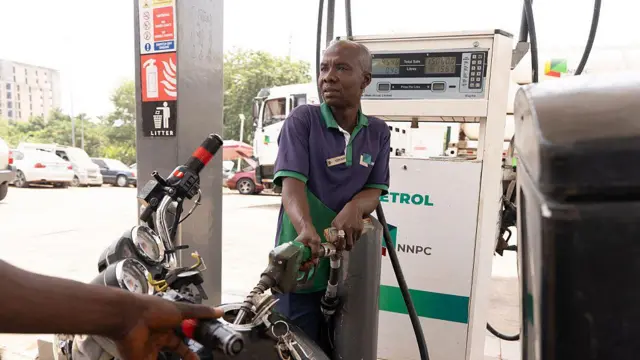
Wia dis foto come from, Light Oriye Tamunotonye / AFP via Getty Images
Nigeria govment don dismiss report say dem go adopt or consider new taxes for telecommunication services and petroleum products afta di International Monetary Fund (IMF) publish di Article IV Consultation Report on Nigeria.
Tok-tok pesin for di minister of finance, Maryann Duke tok say di reports on di proposed taxes to di IMF Article IV Consultation for Nigeria "no reflect di position of di govment."
She tok say di recommendations wey dey inside di IMF report na just advice and no be policy decision or binding action for Nigeria.
"Di federal govment no dey consider to introduce any new taxes on telecommunication services or petroleum products," di statement tok.
She explain further say di tax waiver on petroleum products still dey intace and dem go let di public know if any fuel surcharge go start through ministerial order for dia Official Gazette.
Di statement tok say di current arrangement for di oil and gas industry no let Nigerian business and household feel di impact of di global fuel prices.
"Di IMF Article IV Consultation Report contain di Fund assessment of Nigeria economy and recommendations wey authorities fit consider," di statement tok.
"Dia recommendations no be di govment policy and e no dey binding on Nigeria. Tax decisions na through established constitutional and legislative processes wey dey guided by our national priorities and prevailing economic realities."
According to di ministry federal govment don already cancel di excise duty for telecommunication industry in 2023 under di new tax laws.
Di ministry don urge Nigerians make dem ignore any claim about new telecommunications and fuel taxes.
Finance ministry tok say dem still dey focus on how on di newly signed tax policy nad how to improve revenue collection, support economic growth, and attract investment, no be to dey increase di tax load on Nigerians.
"Di govment wan clarify say di telecommunication excise duty wey dem introduce bifor 2023 dem don repeal am under di new tax laws and e no longer dey applicable," di statement tok.
"Di focus still dey on expanding economic activity, plugging leakages and improving efficiency instead of adding more tax burden on citizens."
Dis clarification dey come afta IMF suggest say make Nigeria add VAT for fuel products and start excise duty for telecommunication to raise money for di development of infrastrucrure rather dan make dem just dey settle loans.
Lastweek Tuesday, IMF release one report IMF 2026 Article IV consultation report wia dem tok say Nigeria go need to extend value-added tax (VAT) to fuel products and introduce excise duties on telecommunication services to raise government revenue, fund development and social spending.
IMF tok say di recent tax reforms no fit sustain di govment loan servicing and public spending.
"More tax policy change go dey needed - such as increasing di VAT rate, extend VAT to fuel products, rationalising tax expenditure especially VAT exemptions for extractive industries and some customs duties, and introduce telecommunication excise - to follow up wit administrative gains," IMF tok.
Wia dis foto come from, @Oyodele Taiwo/Celal Gunes/Anadolu via Getty Images
IMF tok say di higher revenue go create fiscal space for development projects and social spending, but dem also warn say if dem wan apply any new tax make dem consider di worsening social condition.
Di international lender tok say poverty don reach 63 percent according to di national poverty line, while about 27 million Nigerians dey face food insecurity.
Di IMF also warn say higher global fuel, food, and fertilizer prices fit worsen living conditions even as dem dey boost export and govment revenue.
"Higher global prices go improve exports and fiscal revenue, but e go also give rise to inflation pressure, wey fit worsen poverty and food insecurity," di institution tok.
Many Nigerians begin feel say dis recommendations fit make di living cost for Nigeria increase if federal govment agree to extend VAT on fuel wey go increase petrol and diesel prices, and telecommunication excise duties fit make airtime, voice calls, and internet subscription cost high if operators pass di cost to subscribers.
But now, di Nigeria govment don assure im citizens say e no fit happun like dat.