Video
MELVIN: Ready? Your fourth checkpoint is Varnassi.
BRIAN: Varnasi. Varanasi.
MELVIN: Varahnasi.
BRIAN: Varanasi.
MELVIN: Where do you think? Get the map out. Varanasi.
BRIAN: It's there, look. Right, so that is in India. That is on the Ganges.
NARRATOR: In northern India, the fourth checkpoint, Varanasi. This ancient city has been continuously inhabited for over 3000 years. Considered to be an abode of Lord Shiva, it is one of the seven sacred cities of Hinduism. Every year, more than a million people make a pilgrimage here to visit the mandir and purify themselves by bathing in the River Ganges.
BRIAN: To get to India, it's going to be a long way away.
MELVIN: Ooh! "It is not possible for the race to continue over land "across the Himalayas." "You must fly…"
BOTH: "to Kathmandu."
BRIAN: "where the race will resume." Whoa!
MELVIN: Wasn't expecting this.
BRIAN: Now Kathmandu is in…
MELVIN: Nepal.
BRIAN: …Nepal, isn't it? This is a double country leg.
MELVIN: So that's exciting.
BRIAN: Melv, it's going to be tough but let's go for it. We're here, Melv. Sun shining at last.
NARRATOR: Having flown from China to arrive in Nepal's capital city of Kathmandu, first-time race leaders Brian and Melvin.
BRIAN: Watch the cars.
MELVIN: Nepal feels quite vibrant. It's um, it's a different atmosphere to China. It's more colourful already.
BRIAN: Nepal looks to be completely different from anywhere that I've been to before, so it'll be a bit nerve wracking. But I'm looking forward to some new adventures.
NARRATOR: Nepal's north is dominated by the Himalayas. It is a land where many use the phrase "guest is God" and natives offer homestays as a source of income, allowing budget-conscious visitors to experience the true heart of the country… …while those hungry for adventure flock for the great outdoors.
BRIAN: We're in Nepal. One of the things we have to do, Melv, is cross the border into India at some point. So where are we going?
NARRATOR: It is the shortest leg of the race so far at just under 800 kilometres. But without the ease of bullet trains, teams will be at the whim of Nepal's basic road infrastructure. To reach Varanasi, teams could head west to take in Nepal's rural communities and abundance of wildlife. Or they could travel a similar distance southward but enter India sooner, directly into the country's spiritual heartland.
Download/print a transcript of this episode (pdf).
Video summary
A clip from the BBC series Race Across the World exploring map-reading skills whilst travelling across China, India and Nepal.
Brothers Brian and Melvyn are working out their route to their fourth checkpoint, passing through the second country in their journey from China to India and Nepal.
They need to reach the ancient city of Varanasi in India, a sacred city to Hindus.
The brothers need to use their map-reading skills to plan a route which will take them to their destination. They first need to take a flight across the Himalayas to Kathmandu in Nepal.
Teacher notes
Download/print the Teacher Notes for this episode (pdf).
Before watching the video
Show students a topographical map of China, India and Nepal and ask them to describe what challenges they think Brian and Melvyn will face when travelling between China and India.
Discuss with students what major physical geography features pose a challenge when travelling between the country, for example the Himalayas.
Introduce key terms such as:
- Homestay: A holiday or period of time spent staying in the home of a local family.
- Hinduism: One of the world’s major religions, which originated in India.
- Sacred: A connection with god or a religious purpose.
- Pilgrimage: A religious journey.
- Infrastructure: The basic structures and facilities needed such as roads, electricity and water supplies.
During the video
You may wish to stop at relevant points during this short film to pose questions and check understanding or wait until the end. Useful questions might include:
- Why is Varanasi an important location?
- What is a pilgrimage?
- Why is the River Ganges so important?
- Why do Brian and Melvyn need to take a flight?
- How do Brian and Melvyn feel about Nepal?
- Describe the landscape of Nepal.
- Why are homestays important in Nepal?
- What challenges do they face getting from Kathmandu to Varanasi?
- Describe the roads you can see in the clip of Nepal.
- What is the difference between the two different route options?
After watching the video
Return to the map of China, Nepal and India and pinpoint Shangri-La and Varanasi. Students could measure the distance between the two locations. You could use online mapping software to zoom into the region to further understand the landscape and how the Himalayas could make travel difficult between China and India. Ask students to write a locational description of Kathmandu and to describe the landscape.
Ask students to research tourism in Nepal. They could investigate why tourists visit Nepal and what they could do there. A discussion could be had with students as to why they might like to visit Nepal. Students could also investigate how tourism numbers change throughout the year, and why the numbers change.
Where next?
In the clip it shows the poor road infrastructure in parts of Nepal. Students could investigate why this is, and make links with the weather and tectonic activity in Nepal as it is a country known for earthquakes and landslides.
Students could make a list of challenges associated with poor infrastructure and how this could make Brian and Melvyn’s journey across Nepal more difficult than their journey across China.
Curriculum notes
This clip will be relevant for teaching Geography at KS3 in England and Northern Ireland, Progression Step 4/5 in Wales and 3rd and 4th Level in Scotland.
In the English National Curriculum this film can be used to help teach the following:
- Regions of Asia.
- Physical characteristics of Asia.
More videos from this collection
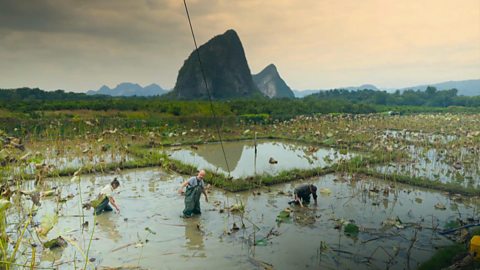
Farming in rural China. video
Yin and Gaz experience farming in rural China, staying on a farm and helping to collect lotus roots used in Chinese cuisine.
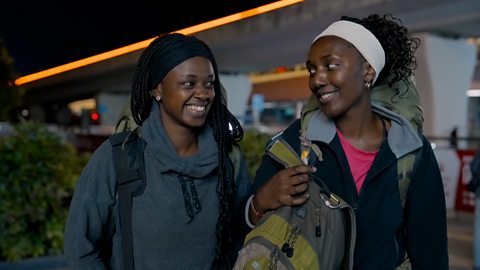
Rural and urban China. video
Sisters Letitia and Elizabeth stay at someones home in Shuiyuan Village, in a clip exploring the characteristics of rural and urban areas in China.
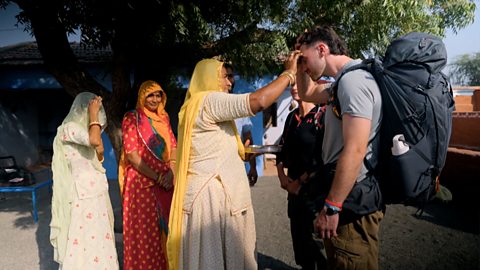
Rural life in India. video
Mother and son, Caroline and Tom, are in Salawas village near Jodhpur in a clip exploring life in rural India.
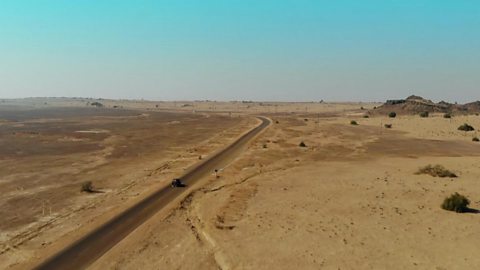
The Great Indian Desert. video
Brothers Brian and Melvyn, and mother and son Caroline and Tom, explore the largest desert in India and the communities that live there.
Comparing China, Nepal and India. video
Fin and Sioned talk about what the Race Across the World experience taught them about the food, landscape and transport of China, Nepal and India.