Summary

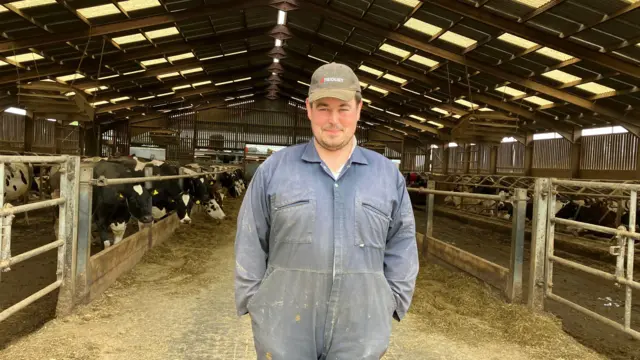
  • Watch our live 'Mooscast' as a herd of 500 dairy cows is moved from their field to the milking parlour

  • Learn about the threat to the backyard barbecue posed by "burgerflation", as the price of beef, buns and salad rockets

  • Find out what goes into making the perfect potato crisp and why some growers are enjoying a broccoli bonanza this year

  • Meet the "Lord of the Cows", the feudal lord and host to royalty who's taken charge of his island's herd of cattle

  • Tune in to your BBC Local Radio station from 19:00 for our Farm Swap evening show - including a special edition of Radio 4's The Archers

  • You can also hear more farm-to-fork stories on our dedicated BBC Sounds Farmwatch page

  1. How profitable is farming?published at 14:30 BST

    Jonathan Fagg
    BBC England Data Unit

    Each year, Defra publishes statistics on the profitability of farming in the UK. It estimates that last year UK farming businesses made a total profit of £8.4bn. That's up 21% from 2024.

    The rise was driven by the beef and dairy sectors, where higher commodity prices led to more value.

    It follows a trend where, broadly speaking, profitability has been rising over the last few years.

    However, it doesn’t reach the recent peak of £8.9bn in 2022, when a mixture of good yields and a surge in demand following Russia’s invasion of Ukraine led to the UK farming’s most profitable year in the last four decades.

    What will happen in 2026? Many prices shot up earlier this year with the start of the conflict in Iran, with notable increases for fertiliser and energy.

    But we won't get a full picture of how that’s impacted profitability until stats for 2026 are released between May and June next year.

    This Flourish post cannot be displayed in your browser. Please enable Javascript or try a different browser.

  2. Sunflowers thrive as heatwave hits wheatpublished at 14:20 BST

    Sarah Farmer
    Reporter, BBC South

    The hot, dry summer has left farmers diversifying to cope, says Peter Snell.

    The farmer from North Farm in Horton, Dorset, says many crops have ripened early.

    His wheat field would usually produce enough flour for about 160,000 loaves of bread, but this year's crop will only be enough for about 136,000 loaves.

    However, he says his sunflowers have thrived in the heat and many have grown to 6ft (1.8m) tall.

    He says he planted about 1.3 million sunflower seeds and estimates about a million germinated.

    "In the best parts of the field, they're over my head. As the name suggests they love the sun," he said.

    He is already planning for the next growing season. "I think most farmers are optimists, so we always hope for a better year and we roll the dice and sow next year's crops and hope for a better situation."

    Read more on this story here.

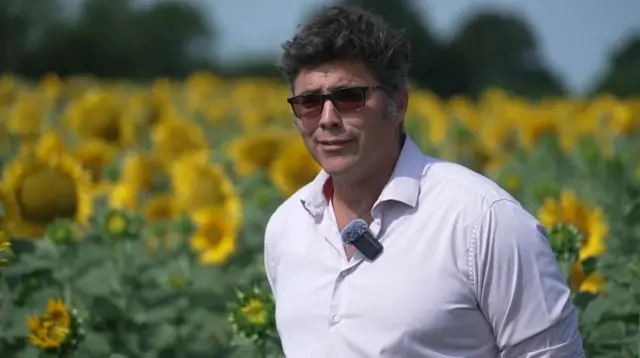
    Peter Snell stands in the field of sunflowers as he is interviewed. He has tinted glasses and short messy dark hair. He is wearing a pale lilac, long-sleeved, open collar shirt.
  3. From farm to Hollywood filmspublished at 14:12 BST

    Toby Friedner
    BBC Three Counties Radio

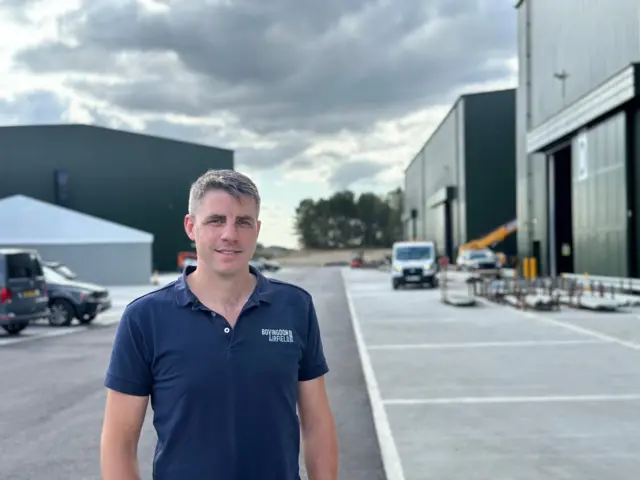
    Harvey Mash outside the stages at Bovingdon Airfield StudiosImage source, Bovingdon Airfield Studios
    Image caption,

    Despite owning a starry film studio, Harvey Mash's first love is farming

    Harvey Mash is a fifth-generation farmer with over 1,000 acres of arable land and grazing pasture across Hertfordshire and Buckinghamshire.

    In 2018 he diversified, building what has become a successful film studio on the former Bovingdon Airfield site which he owns.

    Credits include 1917, Deadpool and Wolverine, and 28 Years Later as well as TV shows such as Dancing on Ice and The Masked Singer.

    In 1895 the Mash family first bought land and started taking fruit and veg grown in Buckinghamshire by horse and cart to Smithfield Market in London.

    Then in 1988 Harvey’s father purchased a herd of pedigree Limousin cattle which have won breed champion at all four major agricultural shows.

    Despite the studio’s success Harvey says his first love has always been farming and that there is little more satisfying than a freshly harvested field.

    George MacKay plays Lance Corporal Schofield in 1917 shot at Bovingdon Airfield Studios.Image source, Entertainment One
    Image caption,

    George MacKay plays Lance Corporal Schofield in 1917, which was shot at Bovingdon Airfield Studios.

  4. ‘Whiplash weather events’published at 14:00 BST

    BBC Radio Shropshire

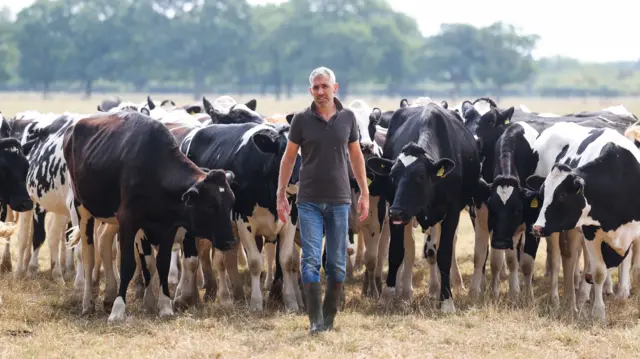
    A man with grey hair, dark T-shirt, jeans and wellies looks at the camera, standing in front of a herd of black and white cows in a field, trees blurred in the backgroundImage source, Christopher Booth Photos
    Image caption,

    Paul Tompkins says there is sufficient rainfall over the country, just not all at the best times

    “The term I’ve learned in this last week is 'whiplash weather events',” Paul Tompkins, the deputy president of the National Farmer's Union tells BBC Radio Shropshire.

    “We seem to have lurched into a drought very quickly and we’re concerned that, as we come through the rest of the year, we might lurch into another extreme weather event where too much water is about.”

    He says there is an irony to this as "we do have sufficient rainfall over the country – it’s just that it’s increasingly falling in certain parts of the year in deluges and then not for others".

    “We could do more to store the water that comes down in the winter months and, rather than pump it out to sea, reserve it for growing our crops and supplying households in the summer,” he said.

    While he acknowledges this would be a “complex process”, he says “water security underpins our food security and that is so important for us all”.

  5. Farmer fears running out of water amid dry spellpublished at 13:50 BST

    Kirk England
    South West environment and tourism correspondent

    Guy Singh-Watson is wearing a blue short-sleeved shirt as he stands in the bright sunshine in a dry reservoir on a farm at Riverford Organic Farmers in Devon.
    Image caption,

    Guy Singh-Watson says his organic vegetable business is "running out of water"

    The head of an organic vegetable box company says staff will have to choose which plants to water and which to let die "within weeks".

    Guy Singh-Watson, of Riverford Organic Farmers in Buckfastleigh, Devon, called for it to be easier and faster to get the permissions needed to install on-farm water storage, such as irrigation ponds.

    Drought was declared in Devon, Cornwall and the Isles of Scilly on Tuesday, and the Met Office said extreme weather was becoming the new normal for the UK.

    The government said it was making it easier for farmers and rural businesses to build the infrastructure they needed.

    "We're running out of water," said Singh-Watson, who founded the company about 30 years ago.

    Other farmers have also expressed their concerns to the BBC.

  6. Heatwaves and dry weather take their tollpublished at 13:38 BST

    Ema Sabljak
    England Data Unit

    Four heatwaves and a particularly dry July are taking their toll on farms across England.

    Farmers began their harvests early after the prolonged hot weather, with drought declared in seven regions yesterday.

    A recent report from the National Drought Group, external warned there was an increased risk of fires breaking out in combine harvesters.

    The heat has also led to moisture issues for cereal while spring barley yields, widely used for livestock feed, have been hit by a lack of rain.

    Paul Tompkins, deputy president at the National Farmers Union, said farmers are facing “another difficult and expensive harvest”.

    “To help farmers adapt, we must strengthen resilience to climate volatility,” he said.

    The lack of rain has resulted in some farmers in East Anglia being banned from taking water from local rivers for their crops or livestock.

    Tompkins added that there needed to be more investment in on-farm water storage.

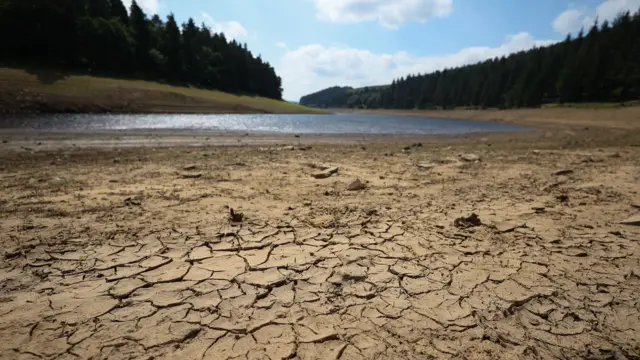
    Image showing a dry, cracked river bed, with a small amount of water and trees in the backgroundImage source, PA Media
  7. No water, no food: The drought reshaping British farmingpublished at 13:29 BST

    Alex Black
    News editor, Farmers Guardian

    Water is agriculture's most essential input and the one least talked about, from irrigation and livestock to food processing, yet it rarely features in mainstream conversations about water scarcity.

    If you look at the government’s drought map, only Yorkshire and the North East remain classified as normal - everywhere else is parched. Water underpins almost every part of the food chain, often in ways that aren't immediately obvious.

    This season's straw shortage is hitting livestock farmers hard. A 2 Sisters chicken processing plant recently had to halt production due to water restrictions and in a sector where biosecurity is critical, disruptions like that can back up fast, with serious consequences for animal welfare and supermarket shelves alike.

    There are early signs that minds are concentrating. Sainsbury's this week acknowledged the threat to continental crops and committed to British-grown cucumbers. It is a small but welcome signal.

    Summers like this are becoming the norm. Clear water policy and a serious commitment to food security cannot wait.

  8. Tropical-feeling nights stunt superfood salad growthpublished at 13:17 BST

    Katie Martin
    BBC Radio Solent

    Media caption,

    A Hampshire farm produces year-round thanks to its unique waters, but that could change.

    I’ve been to Alresford in Hampshire, where watercress grows in free-flowing water.

    Drayton Farm is situated on the clear, spring-fed chalk waters of the River Arle.

    Farmer Tom Amery told me that the crop grows well in the blazing hot sun and the freezing cold winter, because the water is a constant 10C (50F) - but the tropical-feeling nights do limit the growth.

    Watercress has been growing in Hampshire for centuries, but boom time came the expansion of the railways in the 1860s meant farms could get their crop to restaurants in London within hours.

    Today, the Watercress Company produces 500,000 bags of watercress every week - a whole lot of vitamins for very few calories.

  9. Mooscast live stream coming uppublished at 13:01 BST

    Coming up shortly, we will be live at a dairy farm in Devon as a herd of cows are brought up from their field for milking.

    Stay tuned for the Farmwatch Mooscast!

  10. 'We've run out of grass'published at 12:50 BST

    Hannah Walsh
    BBC South

    It's been a crisp and cloudy morning at Lyburn Farm.

    Based just on the Hampshire and Wiltshire border, it specialises in cheese and vegetables.

    I arrived just before 06:00 and it was already busy, with lots of jobs in full swing.

    By 07:00, the cows had been milked, the harvesting had begun and the cheese-making was in action.

    But, with Hampshire now in a drought, and prolonged hot weather, it is starting to have a big impact on the farm.

    Mike Smales, who runs it with his son Jono, says: “It’s having a huge impact and is really quite disruptive.

    “We’ve completely run out of grass and did so several weeks ago. So, the cows are on full winter ration and will be right the way through until the end of next March.

    “We’re completely in the hands of the weather at the moment.”

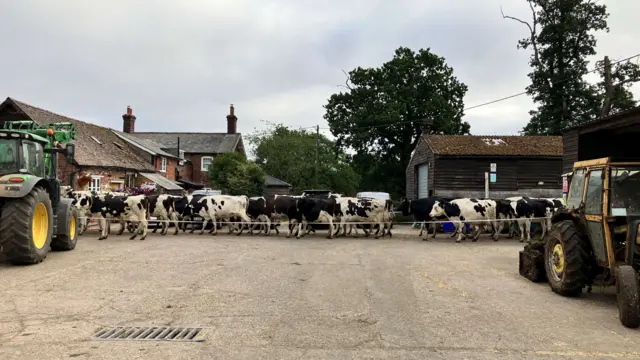
    A line of cows queue up behind a barrier, concrete in front of them and a tractor to each side.
  11. Sark's feudal lord has dual role as cattle farmerpublished at 12:37 BST

    Jon Lockhart
    Channel Islands reporter

    Media caption,

    Meet the Seigneur of Sark that has been tasked to look after the island's cattle

    When Maj Christopher Beaumont inherited the title of Sark's lord of the manor he did not expect to also take on tending the Channel Island's cattle.

    As seigneur, he is the symbolic head of the Channel Island, pays a nominal annual tribute to the Crown and hosts members of the Royal Family.

    Beaumont has been leaving his 17th Century stately home every morning for two years to look after the island's herd since the previous dairy farmers left the island.

    He said of taking care of the herd: "It's enjoyable. They're quite sweet and they don't complain. They're very stoic, I quite like them as animals.

    "I served the Queen [Elizabeth II] coffee in here," Beaumont said in the grand entertainment room of the Seigneurie residence, which was built in 1675.

    "Last year, we had Princess Anne in for lunch."

    Delve into Beaumont's story here

  12. 'I milked the cows the day after I got married'published at 12:25 BST

    Mat Trewern
    BBC Radio Manchester journalist

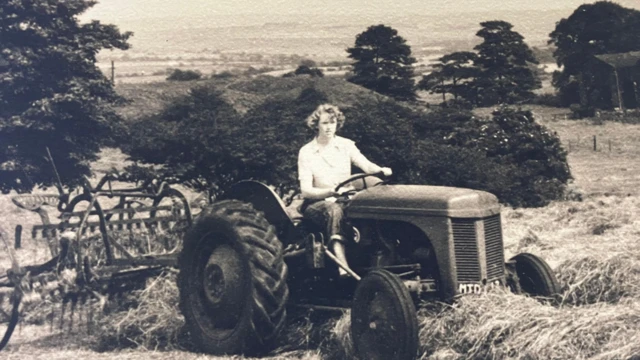
    A black-and-white photograph of Margaret Lees taken in 1955. She is sitting on a tractor in a field full of hay.Image source, Family Photograph
    Image caption,

    Margaret Lees grew up in a farming family

    A great-grandmother has described running her family's farm for nearly 70 years as a "brilliant" life.

    Margaret Lees, 89, took over Park Farm near Ramsbottom in Greater Manchester in 1957 with her late husband John.

    "We got married, jumped in the Land Rover and drove over here," she explained. "The next day I was milking the cows and starting the milk rounds."

    The thriving farm business is still family-run nearly seven decades later.

    Margaret said their farmhouse was "unbelievably basic" when she and her groom first arrived following their wedding.

    "We had a chair, a table and a bed," she remembered. "Two knives and two forks and one teaspoon.

    "We were quite poor for a while as we saved our money for the outside, for the cows."

    Over the following years, Margaret and John slowly built up the business, buying and selling pigs, increasing milk rounds and setting up a small roadside shop.

    Park Farm now has a tearoom, a farm shop and a garden centre.

    "We've worked hard, been lucky in many respects but on the whole it's been brilliant," reflected Margaret.

    She tells more of her story here.

  13. Raw milk vending machine cashes inpublished at 12:13 BST

    Louise Hobson
    BBC Radio Tees

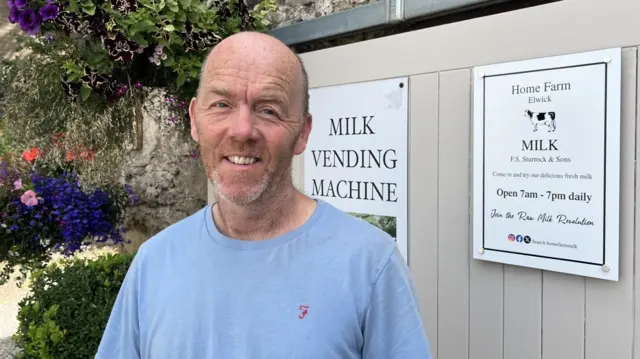
    A bald man stands in front of a sliding wooden door of a grey brick building. He is smiling at the camera and wearing a blue t-shirt. Behind him is a white sign which says "milk vending machine", to the right of this is another sign which says "Home Farm Elwick, Milk".
    Image caption,

    Andrew says the vending machine has sold more than one million litres of the milk

    Andrew Sturrock and his brother Henry grew up on Home Farm, in a pretty, rural village on the outskirts of Hartlepool, in the North East of England.

    Their parents bought the land in Elwick in the late 1950s and started dairy farming.

    Now the siblings run the farm, but will be the last generation.

    Nearly 10 years ago they installed a raw milk vending machine for customers, which Andrew said “has been popular from the start”. This summer the farm bought a second machine which can also offer flavoured milk.

    Over the last decade, Andrew said they had sold more than one million litres of the milk, with "people travelling from far and wide".

    He added that regular testing for pathogens was undertaken and there had never been an issue.

    However, the brothers reduced their dairy herd from 170 to 25 earlier this year to focus more on beef farming.

  14. The journey from spud to crisppublished at 12:01 BST

    Colson Smith and Steve Jones
    BBC Yorkshire

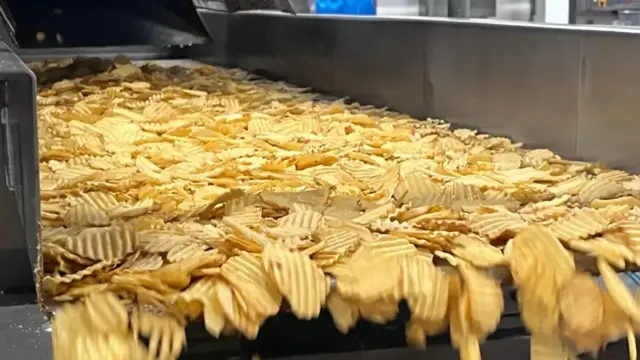
    Crinkle crisps lie in a flat layer in a metal container on a factory, the edge is blurred as if they are rolling off the side.Image source, Abigail Jayeola/BBC

    What does it take to turn a humble spud into a multipack ready for supermarkets, lunchboxes and snack trays?

    About 2.5 million potatoes have been planted on a field near York - the size of 17 football pitches. Each one is enough to be turned into a bag of crisps.

    A potato can be picked from the ground and turned into crisps within 24 hours.

    There is also one other key ingredient: rain, which has been harder to come by recently.

    Once the potatoes have been harvested, they are washed, peeled and sliced into a crinkle shape before they are fried then sent on to be seasoned in a drum while they are still hot.

    Once in the processing facility, turning a potato into a crisp takes about 40 minutes, according to Peter Bacon, preparation manager at Seabrook.

    "It's a very fast process," he says. "A day we are talking one to two million packets."

    You can find out more about the journey of a crisp here.

  15. Clarkson's Farm star to present special radio showpublished at 11:51 BST

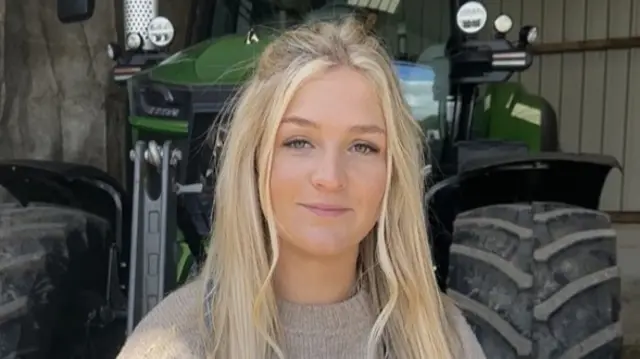
    Harriet Cowan, a Derbyshire-based farmer and former nurse best-known for her appearances on the TV programme Clarkson's Farm, is due to co-present this evening's Farmwatch show across all BBC local radio stations, along with Yorkshire-based beef and arable farmer Joe Seels.

    The show will feature a specially-written episode of The Archers in the first-ever simulcast for the BBC Radio 4 show.

    Harriet said: "I'm so excited to be back as part of Farmwatch this year. It's a project that's really close to my heart and I love being able to shine a light on the incredible people, stories and hard work that keep British farming moving.

    "Having grown up on a farm myself, it's something I feel genuinely passionate about, so being able to share that with listeners is really special.

    "I also can’t wait to be presenting the radio show again. It's such a great opportunity to connect with the farming community, hear from inspiring guests and celebrate everything that's happening across the country."

    People can tune in between 19:00 BST and 22:00 to be part of the conversation.

    Harriet Cowan, a young woman, smiles at the camera. She has long blonde hair and is wearing a light brown jumper. Behind her is a tractor
  16. It's a broccoli bonanza from picking to packingpublished at 11:40 BST

    BBC Radio Cambridgeshire

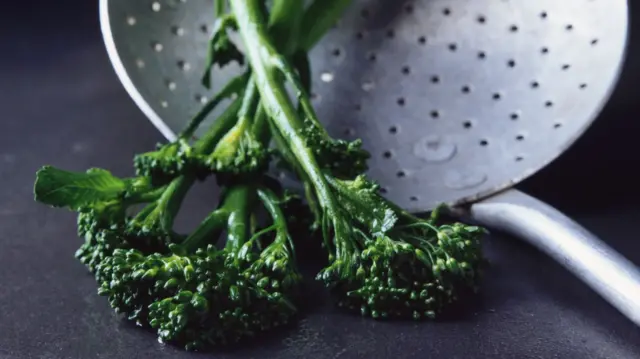
    Two green florets of tenderstem broccoli lie on a colanderImage source, Getty Images
    Image caption,

    Tenderstem broccoli has to be picked and packed quickly to preserve freshness

    We're following the process of picking and packing vegetables at Bedlam Farms, focusing on everyone's favourite: tenderstem broccoli.

    Tobias Martin, director of the farm, says it's quite a process.

    Tenderstem is planted as seed and sent to a local nursery in Wilmington to grow into small plants, before being robotically transplanted into fields. Plants are irrigated and kept clean with a robotic hoe, while a team manually picks out all the big weeds.

    When the crop is ready, field workers walk behind a harvesting rig to pick directly into trays, which are then unloaded onto a trailer, and taken to a pack house.

    It's a long day for the workers, who are in the field by 07:00 and clock off at 19:00.

    Then it's into the packing house - hands scrubbed, PPE donned and, if you have a beard, snood on.

    "You can't have any foreign bodies in you packing facility. We're very strict on personal hygiene and what everyone wears," Martin says.

    Everything that comes off the field is weighed and checked before going into a high-humidity cooler to preserve shelf life. It's then sent to an intermediary for final packing on refrigerated lorries.

    The aim is to get the broccoli from the field to the supermarket shelf within 72 hours, but it can be a bit of a race.

    "If you don't pick the crop when its ready, then it won't be any good the next morning," Martin says.

    Media caption,

    Following Cambridgeshire tenderstem broccoli on its journey from farm to fork

  17. Farmers and butchers work together as family tradition continuespublished at 11:29 BST

    Jack Maclean
    BBC News, BBC Radio Norfolk

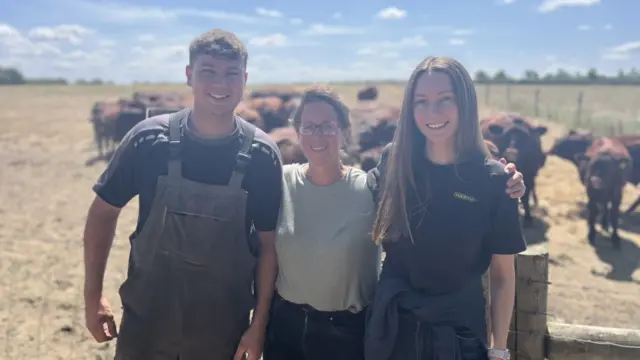
    Nicola Goodings stands with her two children, Will and Louise at Green Farm in Wicklewood, with Red Poll cattle in the background
    Image caption,

    Nicola Goodings and her children, Will and Louise at Green Farm, where the next generation is preparing to continue a family farming tradition dating back to 1854

    More than 170 years after Green Farm was established in Wicklewood, owner Nicola Goodings is proud that the family tradition will continue.

    The farm's native Red Poll cattle are raised on a 100% grass-fed diet, without additives or concentrate feed.

    The farm works with Archers Butchers in Norwich, and Nicola says she believes supporting family-run businesses is important because they care about the product.

    Jamie Archer says the beef from Green Farm is comparable to Wagyu.

    "The Red Pole are native to Norfolk and it's just lovely to work with a local farmer and how well they look after their animals. You can tell from how well marbled it is," he said.

    Looking to the future, Nicola said of her children: "They will take over and I feel very proud that they will take it on to the next stage."

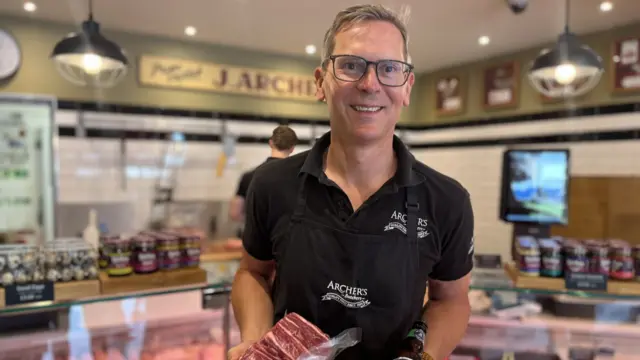
    Jamie Archer holds a cut of beef and a bottle of beer inside Archers Butchers in Norwich
    Image caption,

    Jamie Archer says beef from Green Farm is comparable to Wagyu

  18. Supermarket convenience forces farm shop to adaptpublished at 11:23 BST

    BBC Jersey

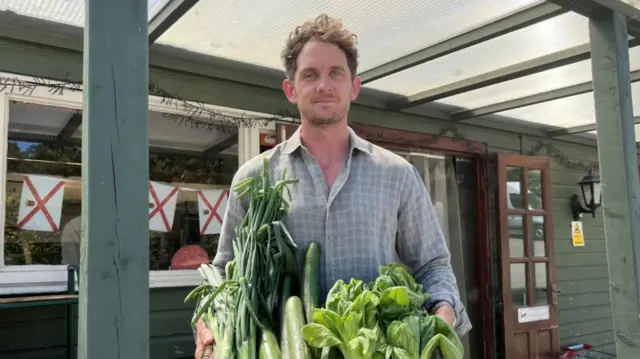
    Paul Conway holds a box full of cucumbers, pak choi and leafy onions
    Image caption,

    Paul Conway, from Homefields Farm Shop is hoping to expand in the future

    For farm shop owner Paul Conway, everyone in the industry faces the same struggle.

    "We're competing with supermarkets that have everything under one roof," said Conway, who runs Homefields Farm Shop in Jersey.

    "In the last six years or so, we have seen that customers want more convenience. They want a wider selection of produce."

    Since 2019, half of the Channel Island's long-running farm shops have closed their doors, according to a Genuine Jersey report, external.

    Despite the headwinds, those in the industry insist there is still demand for farm shops but the way they are being used is changing.

    In June, Holme Grown Jersey closed, with its owners saying they had been "swimming against a tide" after operating for nearly half a century.

    Conway says customers lack time but still appreciate fresh produce.

    "People want to buy fresh produce but really buy some other essential ingredients along with those things."

    The shop has submitted plans to extend to create a larger floor space to accommodate a butchery, outdoor area and wider local food range.

    You can read more about this here.

  19. One in eight UK households facing food insecurity - Food Foundationpublished at 11:15 BST

    Lauren Woodhead
    England Data Unit

    Data suggests there are still many households across the UK struggling to get the food they need.

    There isn’t a single agreed upon definition of food insecurity. However, a survey released last week, external by the Food Foundation, a food poverty charity, estimated one in eight (12.5%) UK households are facing food insecurity.

    The survey was conducted in July by YouGov, and the charity defined the term as meaning a household facing reduced quality, variety and desirability in their diet. It can even mean household members reducing their food intake due to a lack of money and resources.

    A House of Commons research briefing published last year, external said that the rising cost of living “seemed to be increasing household food insecurity”.

    The Food Foundation data echoes this concern, with one in three households reporting that it is more difficult to afford food compared to a year ago.

  20. 'I make £100 a week after £300k investment'published at 11:02 BST

    BBC CWR

    Farmer Paul Rowland wears blue overalls and a cap. Cows can be seen behind him.
    Image caption,

    Paul Rowland said the situation feels more real after becoming a dad

    This time last year, Paul Rowland told BBC Radio Coventry and Warwickshire he had invested £300,000 in robotic milking technology - a price he said was worth paying to secure the future of his business.

    He expected to make his money back within seven years. But, a year on and a new baby later, he's no longer making a profit. A global slump in milk prices has left him earning just £100 a week, he says.

    "There's a massive uptake in the global supply of milk so the prices has crashed," he tells BBC CWR's Dan Sambell.

    Milk prices have dropped sharply since Christmas, driven by what Rowland called a global over-supply.

    Europe and the US have increased production, processors are "flooded", and his own buyer has capped how much milk he can send each month.

    That cap has forced him to hold back production, even though robotic milking typically helps cows produce more milk.

    "We'd have made the money back if milk prices stayed good," he said. "But now we're producing milk we can't sell.

    "Some days we're literally tipping milk down the drain."

    Paul is still committed to robotic milking, and to farming.

    "It's bad at the minute. But this time last year it was good. You've just got to keep going."