Summary

  • As food production costs rise and the climate gets hotter and drier, BBC Local goes behind the scenes to find out how farmers across England are coping

  • Follow a herd of 500 cows from their field to the milking parlour when our 'Mooscast' live stream begins at about 13:00 BST

  • Learn about the threat to the backyard barbecue posed by "burgerflation", as the price of beef, buns and salad rockets - read the full story

  • The Department for the Environment, Food and Rural Affairs (Defra) reveals costs are rising faster while farm incomes dropped in the 12 months to May

  • Tune in to your BBC Local Radio station from 19:00 for our Farm Swap evening show - including a special edition of Radio 4's The Archers

  • You can also hear more farm to fork stories on our dedicated BBC Sounds Farmwatch page

  1. The journey from spud to crisppublished at 12:01 BST

    Colson Smith and Steve Jones
    BBC Yorkshire

    Crinkle crisps lie in a flat layer in a metal container on a factory, the edge is blurred as if they are rolling off the side.Image source, Abigail Jayeola/BBC

    What does it take to turn a humble spud into a multipack ready for supermarkets, lunchboxes and snack trays?

    About 2.5 million potatoes have been planted on a field near York - the size of 17 football pitches. Each one is enough to be turned into a bag of crisps.

    A potato can be picked from the ground and turned into crisps within 24 hours.

    There is also one other key ingredient: rain, which has been harder to come by recently.

    Once the potatoes have been harvested, they are washed, peeled and sliced into a crinkle shape before they are fried then sent on to be seasoned in a drum while they are still hot.

    Once in the processing facility, turning a potato into a crisp takes about 40 minutes, according to Peter Bacon, preparation manager at Seabrook.

    "It's a very fast process," he says. "A day we are talking one to two million packets."

    You can find out more about the journey of a crisp here.

  2. Clarkson's Farm star to present special radio showpublished at 11:51 BST

    Harriet Cowan, a Derbyshire-based farmer and former nurse best-known for her appearances on the TV programme Clarkson's Farm, is due to co-present this evening's Farmwatch show across all BBC local radio stations, along with Yorkshire-based beef and arable farmer Joe Seels.

    The show will feature a specially-written episode of The Archers in the first-ever simulcast for the BBC Radio 4 show.

    Harriet said: "I'm so excited to be back as part of Farmwatch this year. It's a project that's really close to my heart and I love being able to shine a light on the incredible people, stories and hard work that keep British farming moving.

    "Having grown up on a farm myself, it's something I feel genuinely passionate about, so being able to share that with listeners is really special.

    "I also can’t wait to be presenting the radio show again. It's such a great opportunity to connect with the farming community, hear from inspiring guests and celebrate everything that's happening across the country."

    People can tune in between 19:00 BST and 22:00 to be part of the conversation.

    Harriet Cowan, a young woman, smiles at the camera. She has long blonde hair and is wearing a light brown jumper. Behind her is a tractor
  3. It's a broccoli bonanza from picking to packingpublished at 11:40 BST

    BBC Radio Cambridgeshire

    Two green florets of tenderstem broccoli lie on a colanderImage source, Getty Images
    Image caption,

    Tenderstem broccoli has to be picked and packed quickly to preserve freshness

    We're following the process of picking and packing vegetables at Bedlam Farms, focusing on everyone's favourite: tenderstem broccoli.

    Tobias Martin, director of the farm, says it's quite a process.

    Tenderstem is planted as seed and sent to a local nursery in Wilmington to grow into small plants, before being robotically transplanted into fields. Plants are irrigated and kept clean with a robotic hoe, while a team manually picks out all the big weeds.

    When the crop is ready, field workers walk behind a harvesting rig to pick directly into trays, which are then unloaded onto a trailer, and taken to a pack house.

    It's a long day for the workers, who are in the field by 07:00 and clock off at 19:00.

    Then it's into the packing house - hands scrubbed, PPE donned and, if you have a beard, snood on.

    "You can't have any foreign bodies in you packing facility. We're very strict on personal hygiene and what everyone wears," Martin says.

    Everything that comes off the field is weighed and checked before going into a high-humidity cooler to preserve shelf life. It's then sent to an intermediary for final packing on refrigerated lorries.

    The aim is to get the broccoli from the field to the supermarket shelf within 72 hours, but it can be a bit of a race.

    "If you don't pick the crop when its ready, then it won't be any good the next morning," Martin says.

    Media caption,

    Following Cambridgeshire tenderstem broccoli on its journey from farm to fork

  4. Farmers and butchers work together as family tradition continuespublished at 11:29 BST

    Jack Maclean
    BBC News, BBC Radio Norfolk

    Nicola Goodings stands with her two children, Will and Louise at Green Farm in Wicklewood, with Red Poll cattle in the background
    Image caption,

    Nicola Goodings and her children, Will and Louise at Green Farm, where the next generation is preparing to continue a family farming tradition dating back to 1854

    More than 170 years after Green Farm was established in Wicklewood, owner Nicola Goodings is proud that the family tradition will continue.

    The farm's native Red Poll cattle are raised on a 100% grass-fed diet, without additives or concentrate feed.

    The farm works with Archers Butchers in Norwich, and Nicola says she believes supporting family-run businesses is important because they care about the product.

    Jamie Archer says the beef from Green Farm is comparable to Wagyu.

    "The Red Pole are native to Norfolk and it's just lovely to work with a local farmer and how well they look after their animals. You can tell from how well marbled it is," he said.

    Looking to the future, Nicola said of her children: "They will take over and I feel very proud that they will take it on to the next stage."

    Jamie Archer holds a cut of beef and a bottle of beer inside Archers Butchers in Norwich
    Image caption,

    Jamie Archer says beef from Green Farm is comparable to Wagyu

  5. Supermarket convenience forces farm shop to adaptpublished at 11:23 BST

    BBC Jersey

    Paul Conway holds a box full of cucumbers, pak choi and leafy onions
    Image caption,

    Paul Conway, from Homefields Farm Shop is hoping to expand in the future

    For farm shop owner Paul Conway, everyone in the industry faces the same struggle.

    "We're competing with supermarkets that have everything under one roof," said Conway, who runs Homefields Farm Shop in Jersey.

    "In the last six years or so, we have seen that customers want more convenience. They want a wider selection of produce."

    Since 2019, half of the Channel Island's long-running farm shops have closed their doors, according to a Genuine Jersey report, external.

    Despite the headwinds, those in the industry insist there is still demand for farm shops but the way they are being used is changing.

    In June, Holme Grown Jersey closed, with its owners saying they had been "swimming against a tide" after operating for nearly half a century.

    Conway says customers lack time but still appreciate fresh produce.

    "People want to buy fresh produce but really buy some other essential ingredients along with those things."

    The shop has submitted plans to extend to create a larger floor space to accommodate a butchery, outdoor area and wider local food range.

    You can read more about this here.

  6. One in eight UK households facing food insecurity - Food Foundationpublished at 11:15 BST

    Lauren Woodhead
    England Data Unit

    Data suggests there are still many households across the UK struggling to get the food they need.

    There isn’t a single agreed upon definition of food insecurity. However, a survey released last week, external by the Food Foundation, a food poverty charity, estimated one in eight (12.5%) UK households are facing food insecurity.

    The survey was conducted in July by YouGov, and the charity defined the term as meaning a household facing reduced quality, variety and desirability in their diet. It can even mean household members reducing their food intake due to a lack of money and resources.

    A House of Commons research briefing published last year, external said that the rising cost of living “seemed to be increasing household food insecurity”.

    The Food Foundation data echoes this concern, with one in three households reporting that it is more difficult to afford food compared to a year ago.

  7. 'I make £100 a week after £300k investment'published at 11:02 BST

    BBC CWR

    Farmer Paul Rowland wears blue overalls and a cap. Cows can be seen behind him.
    Image caption,

    Paul Rowland said the situation feels more real after becoming a dad

    This time last year, Paul Rowland told BBC Radio Coventry and Warwickshire he had invested £300,000 in robotic milking technology - a price he said was worth paying to secure the future of his business.

    He expected to make his money back within seven years. But, a year on and a new baby later, he's no longer making a profit. A global slump in milk prices has left him earning just £100 a week, he says.

    "There's a massive uptake in the global supply of milk so the prices has crashed," he tells BBC CWR's Dan Sambell.

    Milk prices have dropped sharply since Christmas, driven by what Rowland called a global over-supply.

    Europe and the US have increased production, processors are "flooded", and his own buyer has capped how much milk he can send each month.

    That cap has forced him to hold back production, even though robotic milking typically helps cows produce more milk.

    "We'd have made the money back if milk prices stayed good," he said. "But now we're producing milk we can't sell.

    "Some days we're literally tipping milk down the drain."

    Paul is still committed to robotic milking, and to farming.

    "It's bad at the minute. But this time last year it was good. You've just got to keep going."

  8. 'Supermarkets need to step up'published at 10:51 BST

    Arable farmer Clive Bailye describes farming as the "best job in the world that financially is really tough".

    He says he sees less than 1p of profit per loaf of bread, and wants supermarkets to do more to support British farming, saying he is worried for the future of the industry.

    He said: "If a loaf of bread is £1.50 from a supermarket, around 0.9p of that is our profit margin - less than a penny.

    "Imagine if you were to increase it by 1p, if the supermarkets were to pass that back to the farm gate, that would double our profit margins.

    "Right now, that's the difference between being in profit and at a loss."

    Read the full story here or listen on the link below.

    Media caption,

    Wheat farmer Clive Bailey says it's the best job in the world - but financially tough

  9. Farm income drops as costs continue to risepublished at 10:42 BST

    Ema Sabljak
    England Data Unit

    The UK inflation rate, a measure of how the price of goods is increasing, stood at 2.8% in the year to May.

    But how does that translate to the fields?

    This morning, the Department for the Environment, Food and Rural Affairs (Defra) published an update on price changes for UK farmers.

    While costs are rising faster, income from farms dropped in the 12 months to May.

    Farmers have continued to see rises to the cost of their fertiliser, energy and fuel - or their input - in recent months.

    In the 12 months to May, fertiliser prices rose by 31%, while motor fuel was up by 48%.

    The costs of these key farming products is largely associated with tensions around the Strait of Hormuz.

    Despite that, farmers were also receiving less for their products.

    The price index for milk is down 21% in the year to April, while the income from pigs was down by 51%.

    A graph marked with blue and red lines shows farming has become more expensive to run
    Image caption,

    Farmers continued to see rises to the cost of their fertiliser, energy and fuel in recent months.

  10. Early combines, mixed fortunes: The race for harvest 2026published at 10:29 BST

    Ashleigh Ellwood
    Head of Arable, Farmers Guardian

    There has been one key thought at the forefront of most farmers' minds this season – moisture – or the lack of it.

    Harvest is well under way across the country, with southern areas nearing completion, thanks to one of the earliest starts on record. The prolonged summer heat has accelerated crop maturity by several weeks in some areas, allowing combines to roll earlier than normal.

    In early spring, the season was filled with promise: crops looked flush, rainfall right when it was needed, and growers rightly thinking they might be in for bumper crops.

    However, we have been quickly reminded of how determining the weather is on crop success. Many crops have still fared impressively, maintaining average yields as growers have chased moisture in the early hours, long before the already-early alarm clocks sound.

    Across much of England, reports suggest that grain quality has generally been encouraging, even where yields have disappointed. Oilseed rape has proved a particular bright spot, with some growers hailing it the "crop of the year", as confidence has seemingly returned with a much larger national crop than last year.

    Attention will soon turn to cultivations, seedbed preparation and variety selection. With many farms facing a longer gap between harvest and drilling this year, they may use the extra time to rethink variety choices – or perhaps just stick with what they know.

    A large combine harvester harvesting crops in a wheat field. The combine is green and red, and there are green trees in the backgroundImage source, Farmers Guardian
  11. Farmers 'act as guardians of our countryside'published at 10:17 BST

    Angela Eagle outside 10 Downing Street. She has short blonde hair and is wearing black-framed glasses, a blue blazer and a white shirt. She is holding a red folder.Image source, PA Media

    The new Environment Secretary Angela Eagle has been talking about the importance of farmers, saying they "keep the nation fed, act as guardians of our countryside, and are at the heart of our rural communities across the country".

    She added: “I want to thank BBC Farmwatch for shining a spotlight on the dedication, skill and hard work that farmers show every day of the year.

    “We are backing our farmers with a record £11.8bn for sustainable and profitable farming over this parliament, protecting the sector in trade deals, and our new trade agreement with the EU will make it easier for British food to reach our largest export market.

    “Our 25-year Farming Roadmap sets out a clear vision for the future so our farmers can have the confidence once more to invest and feed the nation with pride for generations to come.”

  12. NFU concerns over hot, dry weatherpublished at 10:06 BST

    The National Farmers’ Union (NFU) says its members are concerned about how they will plant next year’s crops because of the long spells of dry weather and lack of rainfall.

    Many arable farmers don't have access to water supplies that could affect their wheat and barley crops.

    The grass is so dry that some livestock farmers are already dipping into their winter feed supplies and some fresh produce growers have used up their stored water.

    NFU president Tom Bradshaw is urging the government to "unlock the planning system" so farmers can build more reservoirs and invest in better water storage on their land.

    The Secretary for Environment, Food and Rural Affairs, Angela Eagle, said the government's 25-year Farming Roadmap "sets out a clear vision for the future... with a record £11.8bn for sustainable and profitable farming over this parliament".

    Media caption,

    NFU president Tom Bradshaw urges government to support farmers during the dry weather

  13. Farmers failing to benefit from 'burgerflation'published at 10:03 BST

    BBC Radio Lincolnshire

    Heather Oldfield stands in the centre of the image wearing a burgundy fleece gilet and sunglasses on her head. On either side of her, sitting on a wooden fence is a young girl. They are in a field with cattle behind them.
    Image caption,

    Cattle farmer Heather Oldfield, here with her two daughters, says her family "want to feed people"

    The smell of meat sizzling over charcoal may be the scent of the summer, but, as the price of beef, bread buns and bagged salad have risen sharply from last summer, a backyard barbecue may no longer be an affordable option.

    The rising cost of burgers and fast food due to general food inflation has become known as "burgerflation".

    However, farmers and producers say the increase in prices does not mean they are earning more, as the rising cost of food production and staffing costs mean they often struggle to make ends meet.

    Heather Oldfield, who farms cattle near Boston in Lincolnshire, says her family "want to feed people" - yet she also works full-time as a plant breeder because the farm does not generate enough to pay the wages for both her and her husband.

    To read the full story click here or to listen click the link below.

    Media caption,

    As BBQ costs rise, farmers, bakers and growers say they're all feeling the squeeze

  14. Welcome to Farmwatchpublished at 09:56 BST

    From the farm to your fork, this year’s Farmwatch is looking at how the food we rely on is produced during challenging economic times.

    We’ll be focusing on where your food comes from, the farmers across England who devote their lives to producing it, how rising costs are affecting the industry and shoppers, and what it all means for the nation’s future food security.

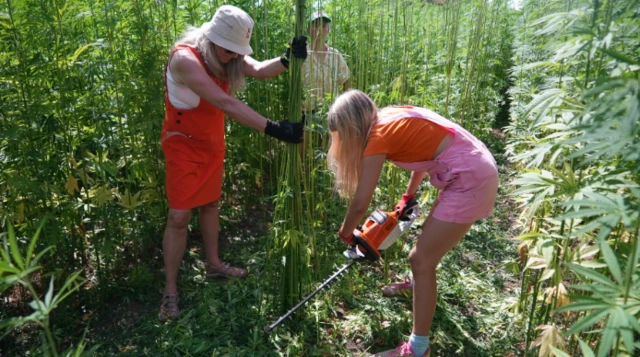
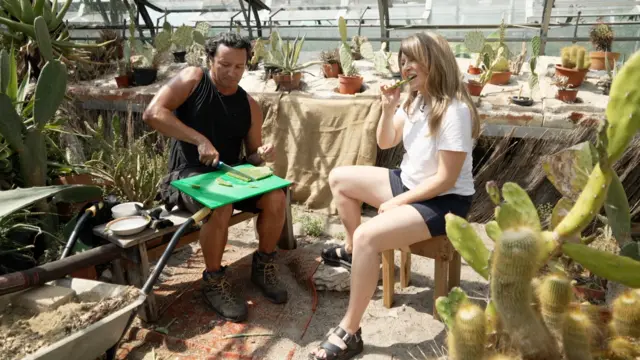
    We'll take you behind the scenes as BBC Local Radio presenters get hands‑on experience of life on a farm, while our special ‘Mooscast’ livestream will give you the chance to join a herd of cows on their journey to the milking parlour.

    Harriet Cowan from Clarkson's Farm and Joe Seels, a beef and arable farmer turned YouTuber, will also be hosting a dedicated evening show including a simultaneous broadcast of a specially-written episode of BBC Radio 4's The Archers.

    Stay with us throughout the day for all this and more!

    The BBC Farmwatch logo, depicting a drawing of a tractor alongside people and animals