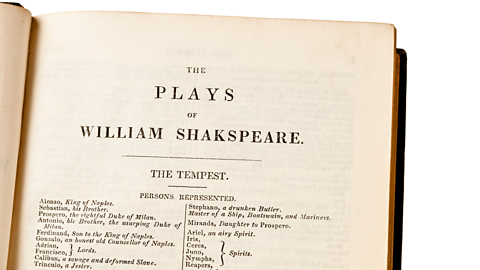
Character overview
The numerous characters in The Tempest can be divided into different groups:
The nobility
These characters belong to ruling families or the upper political class.
- Prospero – The rightful Duke of Milan
- Miranda – Prospero’s daughter
- Alonso – King of Naples
- Ferdinand – Prince of Naples, Alonso’s son
- Antonio – Prospero’s brother, the usurping Duke of Milan
- Sebastian – Alonso’s brother
- Gonzalo – An honest old counsellor to Alonso
- Adrian and Francisco – Lords attending Alonso
The colonised
These characters represent the native inhabitants of the island or those oppressed under Prospero’s rule.
- Caliban – Son of the witch Sycorax; native to the island and enslaved by Prospero
The magical creatures
These characters are supernatural beings connected to the island’s magic.
- Ariel – A spirit of the island, bound to serve Prospero
- Iris, Ceres, Juno – Goddesses who appear in Prospero’s A short theatrical performance using music, dance and mythological characters to celebrate ideas such as harmony and order.
- Nymphs, Reapers and other spirits – Magical figures who appear in various scenes
The lower-class characters
These characters provide comic relief and represent the working class.
- Trinculo – A jester
- Stephano – A drunken butler
- Boatswain – A ship’s officer
- Master of the Ship & Mariners – Crew members aboard the King’s ship
Prospero
Prospero is the central figure of the play, a powerful magician and the rightful Duke of Milan. After being overthrown by his brother Antonio, he uses his knowledge and magic to control the island and its inhabitants. Prospero’s authority shapes the entire plot: he commands Ariel to create the storm, manipulates events to test Ferdinand, and confronts those who wronged him. Although he can appear controlling and harsh – especially in his treatment of Caliban and Ariel – he ultimately seeks justice rather than revenge. His journey is one of learning to let go: he forgives his enemies, abandons his magic, and prepares to return to Milan. Prospero’s character explores themes of power, responsibility, and reconciliation. His final decision to give up magic suggests a move towards humanity and humility, making him one of Shakespeare’s most complex and compelling figures.
Words to describe Prospero
- Powerful
- Controlling
- Intelligent
- Manipulative
- Protective
- Authoritative
- Vengeful
- Reflective
- Repentant
- Determined
Key quotations for Prospero
Prospero setting aside his magical identity to speak plainly to Miranda:
“Lie there, my art.”
(Act 1, Scene 2)
This reveals the divide between Prospero’s power as a magician and his role as a father, showing a rare moment of vulnerability.
Prospero taking responsibility for Caliban at the end of the play:
“This thing of darkness I acknowledge mine.”
(Act 5, Scene 1)
This highlights Prospero’s acceptance of his faults and his part in Caliban’s suffering, reinforcing the play’s movement toward forgiveness.
Prospero preparing to give up his supernatural power:
“But this rough magic I here abjure.”
(Act 5, Scene 1)
This marks the turning point in his character, showing his decision to abandon control and return to a more human, reconciled life.
Ariel
Ariel is a swift, delicate spirit who serves Prospero and carries out much of the play’s magical action. Freed from imprisonment in a tree, Ariel works tirelessly to create illusions, control the weather and guide characters around the island. Although bound to Prospero, Ariel is loyal, energetic and often joyful in performing tasks, showing a playful and mischievous nature. At the same time, Ariel longs for freedom and frequently reminds Prospero of his promise to release him. This desire gives the character emotional depth, revealing a tension between obedience and independence. Ariel’s compassion is one of his most striking qualities: he urges Prospero to show mercy to his enemies, influencing the play’s movement toward forgiveness. As a symbol of air and imagination, Ariel represents the power of art, illusion, and transformation. His final release marks the end of Prospero’s magic and the restoration of balance on the island.
Words to describe Ariel
- Ethereal
- Obedient
- Loyal
- Playful
- Mischievous
- Compassionate
- Energetic
- Restless
- Persuasive
- Yearning
Key quotations for Ariel
Ariel reporting to Prospero after creating the storm:
“I flamed amazement.”
(Act 1, Scene 2)
This captures Ariel’s supernatural power and speed, showing how central he is to Prospero’s magical control over events.
Ariel reminding Prospero of the promise of freedom:
“Remember I have done thee worthy service.”
(Act 1, Scene 2)
This reveals Ariel’s growing frustration and desire for independence, highlighting the tension between obedience and freedom.
Ariel urging Prospero to show mercy to his enemies:
“Your charm so strongly works ’em / That if you now beheld them, your affections / Would become tender.”
(Act 5, Scene 1)
This shows Ariel’s compassion and Concerned with the principles of right and wrong behaviour. insight, influencing Prospero’s decision to forgive and helping move the play toward reconciliation.
Caliban
Check your connection, refresh the page and try again. is the island’s original inhabitant and one of the most complex figures in the play. As the son of the witch Check your connection, refresh the page and try again., he believes the island rightfully belongs to him, and he resents Prospero for taking control. Although often described as savage or monstrous, Caliban shows intelligence, sensitivity and a deep connection to the natural world. His lyrical descriptions of the island reveal a poetic side that challenges the audience’s first impressions. Caliban’s anger and bitterness stem from betrayal: he initially welcomed Prospero and Miranda, only to be enslaved and treated as inferior. His rebellion with Stephano and Check your connection, refresh the page and try again. is both comic and tragic, highlighting his desperation for freedom. Caliban’s character raises important questions about colonisation, power and identity. By the end of the play, his willingness to seek grace suggests growth, making him a symbol of resistance, suffering and the possibility of change.
Words to describe Caliban
- Resentful
- Misunderstood
- Poetic
- Earthy
- Victim
- Rebellious
- Oppressed
- Passionate
- Vulnerable
- Transformative
Key quotations for Caliban
Caliban expressing his deep connection to the island’s natural beauty:
“The isle is full of noises, / Sounds and sweet airs, that give delight and hurt not.”
(Act 3, Scene 2)
This reveals Caliban’s sensitivity and poetic imagination, challenging the idea that he is merely savage or brutish.
Caliban cursing Prospero for taking control of the island:
“This island’s mine, by Sycorax my mother, / Which thou tak’st from me.”
(Act 1, Scene 2)
This shows his sense of injustice and highlights the play’s themes of colonisation, power and rightful ownership.
Caliban submitting to Stephano in the hope of gaining freedom:
“I’ll show thee every fertile inch o’ the island; and I will kiss thy foot.”
(Act 2, Scene 2)
This demonstrates his desperation for liberation from Prospero, revealing both his vulnerability and his tendency to trust the wrong people.
Miranda
Miranda is one of the most compassionate and innocent characters in the play. Having grown up isolated on the island, she sees the world with openness and curiosity. Her kindness is shown immediately when she begs her father to help the shipwrecked sailors, revealing her natural empathy. Although protected by Prospero, Miranda is not weak; she challenges him when she feels he is being too harsh and speaks honestly about her feelings. Her relationship with Ferdinand highlights her sincerity and emotional maturity, as she expresses love without manipulation or pretence. Miranda also represents hope for renewal: through her marriage, old political conflicts can be healed. Her purity contrasts with the corruption of the courtly world, making her a symbol of innocence untouched by ambition. By the end of the play, Miranda’s wonder at seeing other people reflects her optimism and belief in human goodness, reinforcing the play’s themes of forgiveness and new beginnings.
Words to describe Miranda
- Innocent
- Compassionate
- Curious
- Honest
- Gentle
- Optimistic
- Naive
- Sheltered
- Loyal
- Hopeful
Key quotations for Miranda
Miranda pleading with Prospero to show compassion for the shipwrecked sailors:
“O, I have suffered / With those that I saw suffer!”
(Act 1, Scene 2)
This shows her deep empathy and gentle nature, establishing her as one of the play’s most compassionate characters.
Miranda expressing her immediate admiration for Ferdinand:
“I might call him / A thing divine, for nothing natural / I ever saw so noble.”
(Act 1, Scene 2)
This highlights her innocence and sincerity, revealing how sheltered she has been and how strongly she responds to new people.
Miranda marvelling at the sight of other humans for the first time:
“O brave new world, / That has such people in’t!”
(Act 5, Scene 1)
This captures her optimism and wonder, reinforcing her symbolic role as a figure of hope and renewal at the play’s end.
Ferdinand
Ferdinand is the Prince of Naples and one of the play’s most honourable and sincere characters. After being separated from his father in the shipwreck, he believes he is the sole survivor, yet he remains hopeful and determined. His first meeting with Miranda reveals his gentle nature; he falls in love with her quickly, but his feelings are genuine rather than impulsive. Prospero tests Ferdinand’s character by forcing him to perform hard labour, and Ferdinand accepts the challenge without complaint, proving his loyalty, patience and strength of character. His willingness to work for Miranda’s love shows his respect for her and his sense of duty. Ferdinand also represents the possibility of reconciliation between Milan and Naples, as his marriage to Miranda symbolises a new beginning. Through Ferdinand, the play explores themes of love, endurance and renewal, presenting him as a noble figure shaped by both hardship and hope.
Words to describe Ferdinand
- Honourable
- Loyal
- Determined
- Respectful
- Patient
- Hopeful
- Gentle
- Sincere
- Devoted
- Idealistic
Key quotations for Ferdinand
Ferdinand believing he has lost his father in the storm:
“Sit down; / For thou must now know farther.”
(Act 1, Scene 2)
This shows his grief and vulnerability, establishing him as a sincere and emotionally open character early in the play.
Ferdinand declaring his love and commitment to Miranda:
“The very instant that I saw you, did / My heart fly to your service.”
(Act 3, Scene 1)
Ferdinand accepting Prospero’s tests with patience and dignity:
“Might I but through my prison once a day / Behold this maid.”
(Act 3, Scene 1)
This demonstrates his endurance and devotion, proving his worthiness in Prospero’s eyes and reinforcing the theme of love strengthened through trial.
Alonso
Alonso, the King of Naples, is a powerful but deeply troubled figure in the play. After the shipwreck, he believes his son Ferdinand has drowned, and this grief softens his usual authority. His sorrow makes him reflective and remorseful, especially about his past involvement in helping Antonio overthrow Prospero. Unlike Antonio and Sebastian, Alonso shows a genuine capacity for guilt, which prepares him for the forgiveness that comes later. His emotional journey highlights the play’s themes of repentance and reconciliation. When he is finally reunited with Ferdinand, Alonso’s joy contrasts sharply with his earlier despair, emphasising the healing power of forgiveness. By accepting Prospero’s pardon and offering friendship, he helps restore political harmony between Naples and Milan. Alonso’s character demonstrates that even those who have committed serious wrongs can change, making him an important symbol of renewal and moral transformation within the play.
Words to describe Alonso
- Remorseful
- Grief‑stricken
- Authoritative
- Reflective
- Repentant
- Vulnerable
- Humbled
- Hopeful
- Reconciled
- Changed
Key quotations for Alonso
Alonso mourning what he believes is the death of his son after the shipwreck:
“O thou mine heir / Of Naples and of Milan, what strange fish / Hath made his meal on thee?”
(Act 2, Scene 1)
This shows the depth of his grief and highlights how loss softens his authority, preparing him for later repentance.
Alonso expressing guilt for his role in Prospero’s overthrow:
“Thy dukedom I resign, and do entreat / Thou pardon me my wrongs.”
(Act 5, Scene 1)
This demonstrates his willingness to accept responsibility, reinforcing the play’s emphasis on forgiveness and reconciliation.
Alonso reacting with overwhelming joy when he discovers Ferdinand alive:
“Now all the blessings / Of a glad father compass thee about!”
(Act 5, Scene 1)
This moment contrasts sharply with his earlier despair, showing his emotional transformation and the restoration of hope and harmony.
Antonio
Antonio is one of the play’s most cold‑hearted and ambitious characters. As Prospero’s brother, he betrays the deep trust placed in him by usurping the dukedom of Milan and sending Prospero and the young Miranda out to sea. His actions reveal a ruthless desire for power, and even on the island he continues to scheme, encouraging Sebastian to murder Alonso so they can seize control. Unlike other characters who show guilt or growth, Antonio remains unrepentant throughout the play. His silence when Prospero forgives him highlights his refusal to change or accept responsibility. Antonio’s behaviour contrasts sharply with the play’s themes of mercy and reconciliation, making him a symbol of corruption and moral decay within the play.
Words to describe Antonio
- Ruthless
- Ambitious
- Deceitful
- Manipulative
- Cold‑hearted
- Scheming
- Disloyal
- Power‑hungry
- Unrepentant
- Corrupt
Key quotations for Antonio
Antonio encouraging Sebastian to murder Alonso and seize power:
“My strong imagination sees a crown / Dropping upon thy head.”
(Act 2, Scene 1)
This exposes Antonio’s manipulative ambition and shows how easily he tempts others into betrayal, mirroring his overthrow of Prospero.
Antonio mocking Gonzalo during the island scenes:
“His word is more than the miraculous harp.”
(Act 2, Scene 1)
This highlights Antonio’s cruelty and cynicism, reinforcing his role as a source of corruption and moral decay within the play.
Antonio remaining silent when confronted by Prospero at the end:
“But you, my brother, / I do forgive thee.”
(Act 5, Scene 1)
Although the line belongs to Prospero, Antonio’s refusal to respond reveals his lack of remorse and resistance to change, emphasising his contrast with the play’s theme of reconciliation.
Test your knowledge of the characters in Shakespeare's The Tempest
Further study
The study of Shakespeare, controlled assessment guidance. activity
Unit 3 of the CCEA GCSE English Literature qualification is a controlled assessment unit based on the study of a play by William Shakespeare.
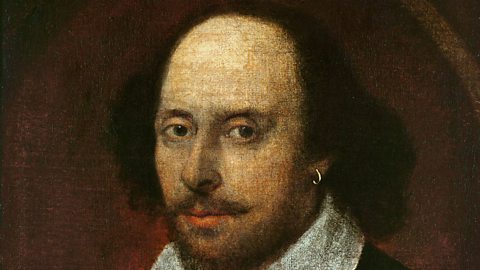
In Our Time - The Tempest. podcast
Melvyn Bragg and his guests discuss Shakespeare's play The Tempest.
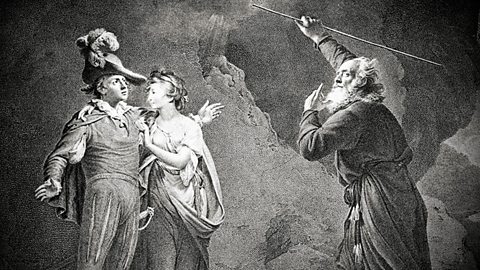
Night Waves. audio
Landmarks: The Tempest - Philip Dodd presents a programme devoted to Shakespeare's The Tempest.
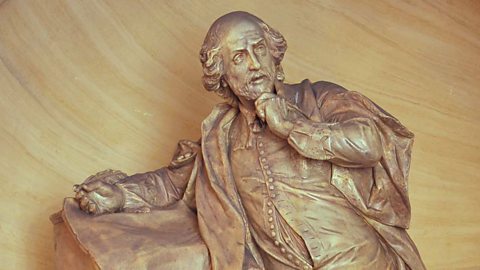
The Tempest performed
Drama on 3 - The Tempest. audio
Shakespeare's play explores the relationship between humanity and the environment.

The Tempest. video
A magic island, a stormy shipwreck and a royal mystery! Patrick Robinson is Prospero as Swashbuckle's Captain Captain helps William Shakespeare stage his play The Tempest.

Shakespeare on 3 - The Tempest. audio
Shakespeare's play of magic, romance and revenge. Broadcast as part of the Shakespeare Unlocked season.
More on The Tempest
Find out more by working through a topic
- count3 of 5
- count4 of 5
- count5 of 5
- count1 of 5