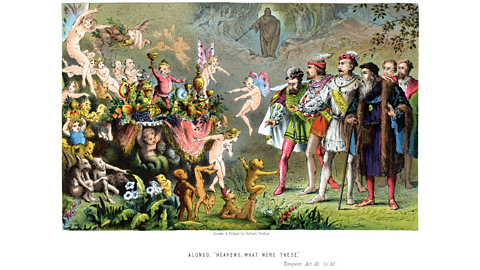
Themes of Power and control in The Tempest
Power and control shape nearly every relationship in The Tempest, driving conflict and revealing the Concerned with the principles of right and wrong behaviour. character of those who wield authority. Prospero’s command of the island is rooted in both political power and magical dominance. His control over Ariel and Caliban demonstrates how authority can be used to liberate or oppress. When Prospero reminds Ariel of past favours – “Dost thou forget / From what a torment I did free thee?” (Act 1, Scene 2) – he reinforces his power through emotional pressure rather than physical force. Similarly, his treatment of Caliban reflects a harsher, colonial form of control: “Thou most lying slave…” (Act 1, Scene 2).
Political power is also explored through Antonio and Sebastian, whose ambition mirrors Prospero’s earlier loss of Milan. Antonio’s manipulation – “My strong imagination sees a crown / Dropping upon thy head” (Act 2, Scene 1) – shows how power can corrupt and spread corruption.
Yet the play ultimately questions the value of domination. Prospero’s decision to relinquish magic – “I’ll break my staff… I’ll drown my book” (Act 5, Scene 1) – signals a rejection of absolute control. By choosing dialogue over domination, he models a more humane form of leadership. Power in the play is therefore shown not only as a force to be gained or lost, but as a moral test that reveals the true nature of those who hold it.
Magic and illusion in The Tempest
Magic in The Tempest is both a literal force and a metaphor for art, imagination and manipulation. Prospero’s magic shapes the entire plot, from the opening storm to the final revelations. His command of supernatural forces allows him to orchestrate events like a playwright directing a performance. When Ariel describes the shipwreck – “I flamed amazement” (Act 1, Scene 2) – the imagery emphasises the spectacular, theatrical quality of Prospero’s illusions.
Magic blurs the line between reality and performance. Characters frequently misinterpret what they see, such as when the vanishing banquet confronts the nobles. Ariel’s rebuke – “You are three men of sin” (Act 3, Scene 3) – appears as divine judgement, though it is merely another illusion crafted to provoke guilt.
Prospero’s magic is also tied to knowledge and control. His books are the source of his power, and Caliban recognises this: “Remember / First to possess his books” (Act 3, Scene 2). Magic becomes a symbol of intellectual authority and the ability to shape others’ perceptions.
Yet the play ultimately suggests that illusion must give way to truth. Prospero’s renunciation – “But this rough magic / I here abjure” (Act 5, Scene 1) – marks a turning point where he chooses humanity over enchantment. Magic, then, is both a tool and a test: it reveals character, exposes guilt and prepares the ground for reconciliation.
Themes of justice, betrayal and revenge in The Tempest
The play’s central conflict begins with betrayal: Antonio’s To take the place of someone in a position of power illegally of Prospero’s dukedom. Prospero recounts this treachery with bitterness – “My brother and thy uncle, call’d Antonio… / He was the ivy which had hid my princely trunk” (Act 1, Scene 2). This metaphor captures the parasitic nature of Antonio’s ambition.
Prospero initially seeks revenge, using magic to shipwreck his enemies and manipulate their emotions. Ariel’s haunting accusation – “You are three men of sin” (Act 3, Scene 3) – is part of this strategy, forcing Alonso, Antonio and Sebastian to confront their wrongdoing.
Yet the play complicates the idea of justice. Prospero’s desire for vengeance is tempered by Ariel’s reminder of compassion: “Your affections / Would become tender” (Act 5, Scene 1). This moment shifts Prospero’s perspective, suggesting that true justice requires mercy rather than punishment.
Antonio, however, remains unrepentant. His silence when Prospero forgives him – “I do forgive thee” (Act 5, Scene 1) – underscores his moral stagnation. The contrast between Alonso’s remorse and Antonio’s defiance highlights different responses to guilt.
Ultimately, the play argues that revenge cannot restore what was lost. Justice is achieved not through retribution but through recognition, repentance and the restoration of rightful order. Prospero’s choice to forgive rather than punish becomes the moral centre of the play.
Forgiveness and reconciliation in The Tempest
Forgiveness is the emotional and moral resolution of The Tempest. Although Prospero has been deeply wronged, he ultimately chooses mercy over revenge. His journey toward forgiveness begins when Ariel appeals to his empathy: “Mine would, sir, were I human” (Act 5, Scene 1). This reminder of compassion prompts Prospero to reconsider his anger.
Prospero’s forgiveness of Alonso – “I do forgive thee” (Act 5, Scene 1) – restores political harmony and personal dignity. Alonso’s own remorse, expressed earlier in his grief for Ferdinand, makes reconciliation possible. Their renewed alliance symbolises the healing of past divisions.
Forgiveness also extends to Caliban. Though Prospero calls him “this thing of darkness” (Act 5, Scene 1), he acknowledges responsibility for Caliban’s condition. This recognition suggests that reconciliation requires self‑reflection as well as pardon.
The play’s final scenes emphasise renewal. Miranda’s wonder – “O brave new world” (Act 5, Scene 1) – captures the hope that emerges when old conflicts are resolved. Prospero’s renunciation of magic further symbolises his commitment to a more humane future.
Through forgiveness, the play argues that reconciliation is not weakness but wisdom. It restores relationships, repairs political order and allows characters to move beyond the cycles of harm that once defined them.
Colonisation and the natural world in The Tempest
The relationship between Prospero and Caliban is one of the clearest expressions of colonial tension in The Tempest. Caliban claims the island as his inheritance – “This island’s mine, by Sycorax my mother” (Act 1, Scene 2) – while Prospero asserts control through language, magic and punishment. Their conflict reflects broader themes of conquest, cultural domination and resistance.
Prospero views Caliban as uncivilised – “A born devil, on whose nature / Nurture can never stick” (Act 4, Scene 1) – a line that echoes colonial attitudes toward indigenous peoples. Caliban, however, reveals deep sensitivity to the natural world: “The isle is full of noises…” (Act 3, Scene 2). His poetic connection to the island challenges Prospero’s assumptions and complicates the idea of who is truly 'civilised'.
Stephano and Trinculo’s exploitation of Caliban further mirrors colonial greed. Caliban’s willingness to serve them – “I’ll show thee every fertile inch o’ the island” (Act 2, Scene 2) – exposes how oppression can distort judgement.
The island itself is a space of both beauty and danger, shaped by supernatural forces and human ambition. It becomes a symbol of contested ownership and cultural conflict.
Through these dynamics, the play interrogates the ethics of colonisation, suggesting that domination leads to moral corruption, while genuine understanding requires humility and respect for the natural world.
Further study
The study of Shakespeare, controlled assessment guidance. activity
Unit 3 of the CCEA GCSE English Literature qualification is a controlled assessment unit based on the study of a play by William Shakespeare.

In Our Time - The Tempest. podcast
Melvyn Bragg and his guests discuss Shakespeare's play The Tempest.
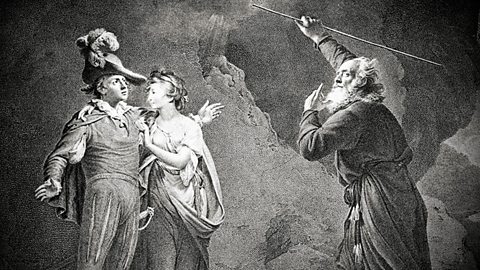
Night Waves. audio
Landmarks: The Tempest - Philip Dodd presents a programme devoted to Shakespeare's The Tempest.
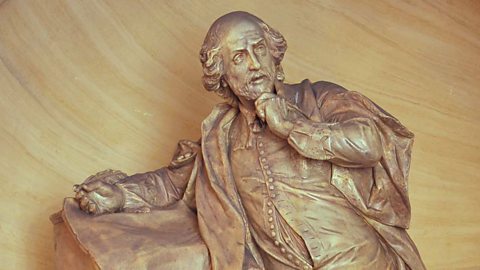
Test your knowledge of Shakespeare's The Tempest
The Tempest performed
Drama on 3 - The Tempest. audio
Shakespeare's play explores the relationship between humanity and the environment.
The Tempest. video
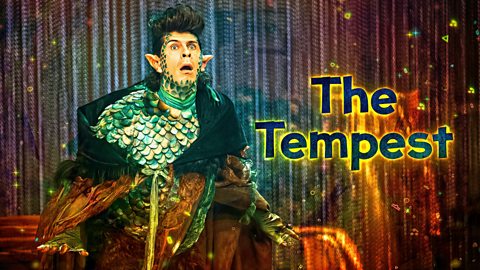
A magic island, a stormy shipwreck and a royal mystery! Patrick Robinson is Prospero as Swashbuckle's Captain Captain helps William Shakespeare stage his play The Tempest.
Shakespeare on 3 - The Tempest. audio
Shakespeare's play of magic, romance and revenge. Broadcast as part of the Shakespeare Unlocked season.
More on The Tempest
Find out more by working through a topic
- count4 of 5
- count5 of 5
- count1 of 5
- count2 of 5