Shell don dey pump oil for Nigeria pipeline for years despite pollution evidence - Documents show
Wia dis foto come from, Simi Jolaoso / BBC
- Author, Simi Jolaoso
- Reporting from, Bille
- Published
- Read am in 9 mins
British multinational Shell kontinu to dey run big oil pipeline for Nigeria for years even though dem know say e dey cause widespread pollution - despite warning from dia own staff and di technical standards, internal documents wey BBC gada, show say.
Di files, including emails and presentations, show say one senior Shell executive don caution dem since 2008 about di risk of to kontinu to dey pump millions of barrels unrefined fuel through one of di company main pipelines for Africa biggest oil producer while e dey face massive and destructive uncontrolled thieves and infrastructure failures.
Across Nigeria oil-rich southern Niger Delta, years of oil spills don leave land wey dey suffer, wetlands wey dey cover wit crude and contaminated sediment.
BBC gather di internal documents afta Shell don show dem as part of legal proceedings wey dey happn for UK, wey communities wey dey live near di creeks and mangroves of Niger Delta bring come make Shell responsible for di pollution wey come from ova 100 leaks stemming wey happun from thieves and illegal refining of oil between 2011 and 2013 wey don damage dia health, environment and livelihoods.
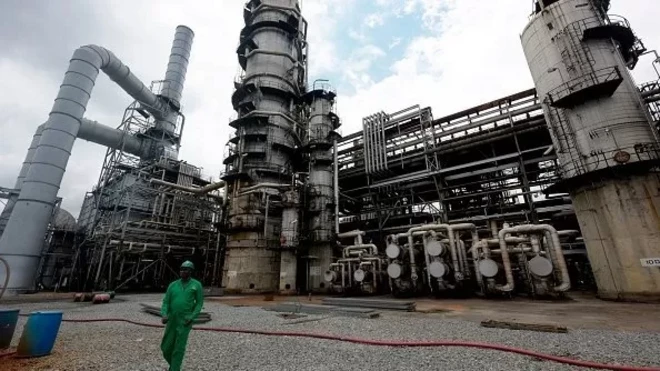
Di 60-mile (96.5km) Nembe Creek Trunk Line dey run near di riverine community of Bille community, wey get 45 islands, from inland oilfields to coastal processing site for exporting.
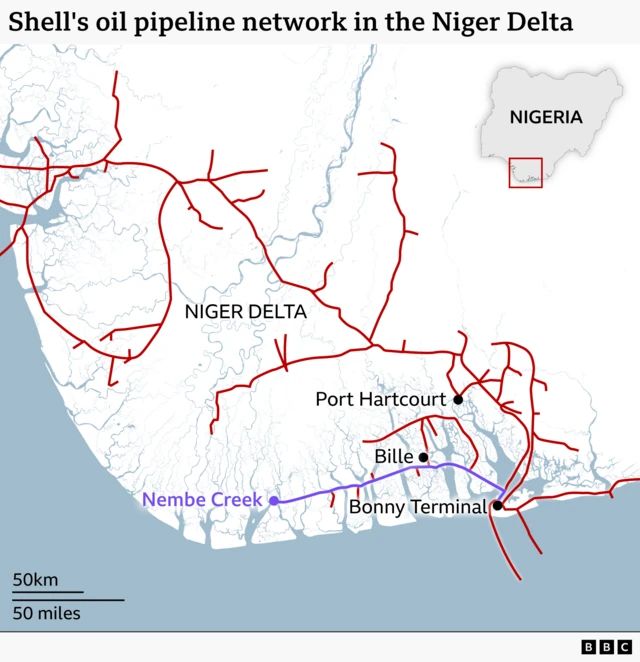
Di pipeline wey Shell sell last year na one of di biggest, most expensive and ultimately most problematic of infrastructure for Nigeria.
E dey capable of carrying up to 150,000 barrels of oil every day, but dem dey always spill oil and illegal oil thieves dey always target am.
Inside court paper di oil firm argue say most of di pollution no be dia fault, na high level oil theft, sabotage and many illegal refineries dey cause am and dia Nigerian subsidiary don invest heavily for many years to reduce di risk and response to di spills.
Before 2011, here was a beautiful area. People play here and go into the river. We used to fish around here. But because of the damage [the spills] have caused, nobody is fishing"
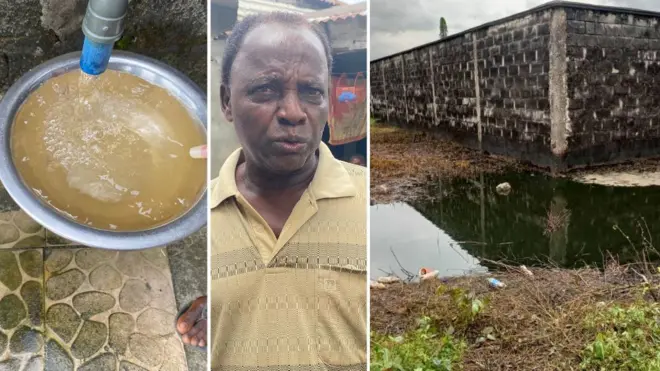
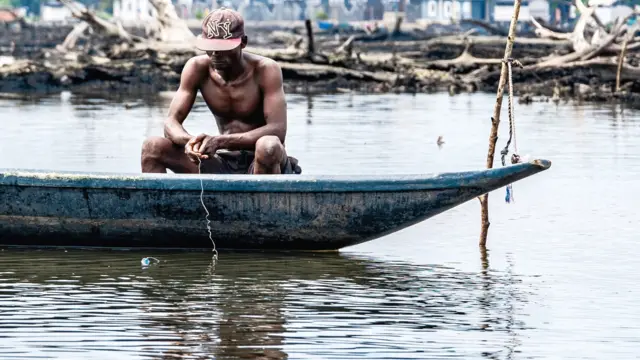
For places like Bille, wey BBC visit last week, residents tok say di once-rich fishing ground don turn toxic and dem no fit use am again.
"Bifor 2011, hia na beautiful area. Pipo dey play hia and dem dey enta into di river," 64-year-old fisherman Balafama Augustus Bruce tell BBC.
Bruce, claimant in di case against Shell, claim say bifor all di spills, e catch different fish including sardines, catfish, tilapia and even oysters, but now e hard to find or dem deyappear deformed if dem catch dem.
"We bin dey fish around here. But becos of di damage [di spills] don cause, nobody dey fish here again.
"Becos of dat I don become poor. I dey chop from hand to mouth."
Di communities throough di ongoing international lawsuit against Shell dey ask for $1bn (£742m), wey include:
- $250m in compensation
- And $750m to clean up di environmental damage.
According to di UN, since 1958 wen Shell send dia first shipment of oil from Nigeria, at least 13 million barrels - or 1.5 million tonnes - of crude oil don spill for at least 7,000 incidents.
Campaigners for long time dey try hold multinational oil firms accountable for di environmental danage wey dey dia - Ken Saro-Wiwa wey be one of Nigeria top writers bin dey criticise Shell activities, but dem execute am for 1995 afta e lead protests against di pollution for im Ogoniland region of di Niger Delta.
Tiffin of oil na long problem for di Niger Delta - wey dem dey call "bunkering," e dey involve criminal gangs wey dey tap pipelines and dey siphon off crude into boats or storage tanks. Some of di stolen oil dem dey refine am for makeshift camps wey dey hide for di creeks, while di rest dem dey sell am illegally.
For mid-2000s, oil militancy na major security issue as heavily armed militants for speedboats dey attack installations and dey kidnap foreign workers for ransom, including series of incidents for 2007 and 2008, as part of dia demand make di poor region get more benefits from di oil revenues.
2008 - di first warning
One internal email wey Shell exchange from October 2008 show disagreement between senior executives ova di risk if dem kontinu operations.
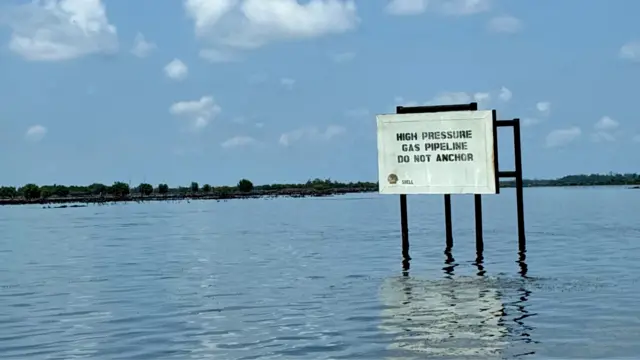
Markus Droll, di firm technical vice-president den, raise concerns about di decision to keep running di Nembe Creek Trunk Line outside di normal guidelines
"If anoda big explosive attack happun tomorrow... we fit just find ourselves in situation wey we go need to close di production," e write..
Wia dis foto come from, Simi Jolaoso / BBC
Droll also kwesion if dem get enof safeguards in place and observe say oda sections of di pipeline fit dey for bad condition: "I no gree say funding fit be di issue.
"Abeg, if I dey sound like person wey dey repeat dis - but di approach dey make me - as your Technical VP - dey vex small."
In response, Ann Pickard, wey be Shell regional executive vice-president den, come criticise am say e fail to mark di email as "legally privileged" - e go protect dem from using dia words against dem for court.
"You don expose us significantly in your official disagreement as technical manager without legal privilege," she tok.
Pickard admit say e "no be easy decision" but she argue say continuing operation na "lower risk for both pipo and environment".
"You dey right, we fit deal wit am in di future," she add.
2012 - oil thefts flag 'red'
One of di internal document wey BBC obtain na one confidential form from 2012 – at di height of di alleged Bille oil spills.
E show say Shell bosses recognise dia pipeline no dey operate within dia normal, technical standards, wit section dey classified as "red" becos of extensive illegal oil theft connections – na wen thieves drill hole to collect oil.
According to di company definition, dat status mean say make dem either shut down immediately or take "immediate corrective action".
But di document show say even as dem don raise di concern, di executives argue say if dem shut down di system, e go simply lead to "significant number of new illegal connections" wey dem install elsewhere.
Instead, senior officials allow di Nigerian subsidiary permission to continue to pump oil.
Shell tell BBC say dia decisions dey based on number of complex factors, including large-scale oil theft, illegal refining and militancy for di area at di time, and say dem dey work wit di Nigerian authorities and local communities to tackle di issues and clean up spills regardless of cause.
All that has happened in this environment is as a result of negligence"
Local leaders for Bille accept say widespread oil thieves don happun for di area, but dem still believe say Shell dey responsibile for di pollution from dia infrastructure.
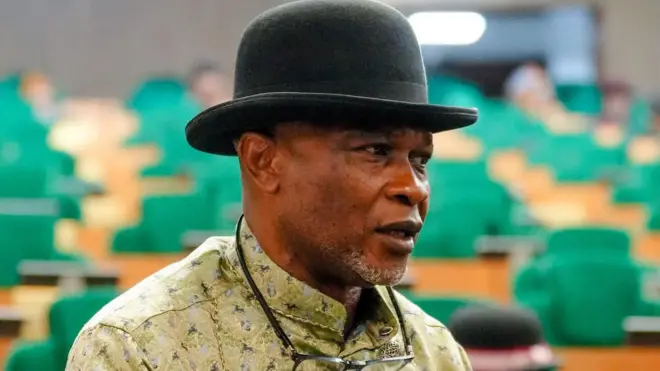
"Dem no dey concern about wetin go happun to you. Dia concern na how dem go continue to make profit," Chief Boma Renner Dappa, di tok-tok pesin for di Bille local leaders' council tok, as e explain how pipo livelihood and health dey suffer.
"Wetin don happun for dis environment na becos of negligence," e tell di BBC.
Oda files wey BBC obtain show ssay concerns some pipo wey dey inside Shell dey worry about di way dem dey operate for Nigeria at dat time.
2013 - audit caution
One email chain from February 2013 show how executives suggest say dem dey carry out audit on how di company dey manage oil theft and pipeline integrity between 2009 to 2012.
Vincent Holtam, wey be di general manager for Shell Nigeria onshore assets den, reply say make im colleagues dey careful say if dem do am e fit "do more harm dan good".
"I no doubt say dis [audit] go come out as UNACCEPTABLE, and if na so, we go dey very exposed in disputing any oil loss claims from di Government or compensation wey community dey ask," e write.
Di documents wey BBC gather no show weda di audit still go ahead.
2013 - oil spill clean-up options
Di following month, di documents show how Shell launch one "most confidential" operation, wey dem codenamed Project Madrid, to check how dem go handle di spills for Nigeria.
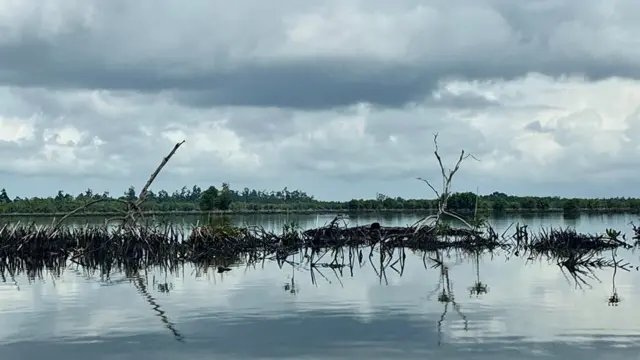
One 36-page internal presentation wey dem prepare for executives estimate say about 100 illegal refineries dey run around di pipeline, dem dey cause polllution to about 9,000 hectares (22,000 acres) of water and 9,000 hectares of land.
Wia dis foto come from, Simi Jolaoso / BBC
Dem also report say dia team dey clean up 18 places wey spill oil from about 60 bunkering points.
Dem present dia executives wit plenty options, like shutting down for repairs while dem allow oil thieves to dey operate, or stop production for years to fully tackle di problem.
Di document no show which option Shell executives take. But di pipeline start work again afta dem shut down temporary for repairs in 2013.
"Di document wey dem select no show di critical context of di operating environment for Niger Delta at di time." one tok-tok pesin from Shell tell BBC.
"In isolation, e no reflect di challenges wey we dey face wit all di organised crime wey dey happun."
Di company argue say dem take significant steps to fight the illegal theft, but Nigeria poor security environment, make am hard to stop di gang from targeting dia infrastructure.
Key decisions 'wey dem take for London'
Law firm Leigh Day tok say di communities wey dem dey represent for UK case "don always argue say Shell plc for London ultimately make di key decisions wey relate to dia Nigerian subsidiary wey cause di destruction of dia environment, and dem dey determined to hold di company responsible for di oil pollution wey still dey affect dia lives today".
Shell tell BBC say dem don tok to di three former executives wey dem mention for di documents, but none wan respond directly. Di company tok say some members of di Bille community dey among pipo wey take part in di oil theft.
BBC ask di Nigerian govment to respond to Shell claim say di authorities no fit handle di organised crime, but we neva get any response.
One Shell tok-tok pesin tok say, "We strongly believe say our case strong and we go defend di claims well-well at di trial next year."
Wia dis foto come from, Simi Jolaoso / BBC
But Bille residents like Taminoibitein Philip tok say Shell - depsite say dem don sell pipeline to Renaissance Africa Energy - still dem get responsibility as dem don benefit from collecting di oil for years.
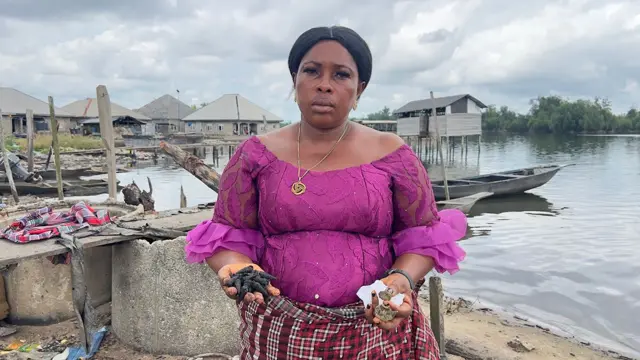
Philip na harvester of periwinkle, but e tok say di sea snail - na correct food for Niger Delta - e dey hard to see am dis days for mangrove and swamp.
"Wen you go bush, you no go see periwinkle [any more]," di49-year-old tok.
"And smell dey kill us... some places - crude [oil], some place - gas.
"We no dey benefit. We dey suffer."
She believe say di only hope wey di community get na make di court case force Shell make dem clean up di waterways: "Make dem come flush di river for us."