Summary

  1. Lebanese media reports first deadly Israeli attack since deal was announcedpublished at 16:42 BST

    The first deadly Israeli strike in Lebanon since of a framework deal between the US and Iran was announced has been reported by Lebanon's National News Agency (NNA) and daily newspaper L'Orient-Le Jour.

    The NAA report claims that an Israeli drone attack in the southern village of Kfar Tebnit targeted a car, and subsequently killed the driver.

    Israel have not yet commented on the reported attack.
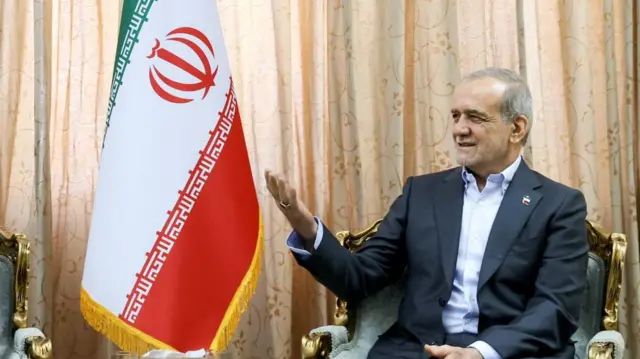
  2. Iranian president says framework deal a 'honourable document'published at 16:27 BST

    Iranian President Masoud Pezeshkian with one hand extended and the flag next to himImage source, WANA/ Reuters

    Iranian President Masoud Pezeshkian says the memorandum of understanding - if implemented properly - will be seen as an "honourable document" for Iran, according to reports by state-run news agency IRIB and the semi-official Fars news agency.

    Fars also cites Pezeshkian as saying that 90% of the members of the Supreme National Security Council voted in favour of the agreement, and the details will be approved at the "appropriate time".

  3. Strait of Hormuz to be toll-free, US vice president sayspublished at 16:07 BST

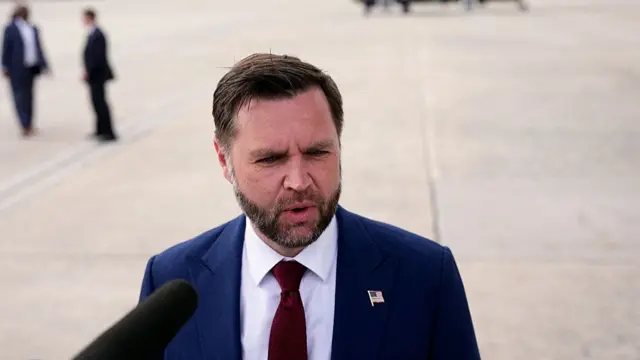
    US Vice President JD Vance speaking to the press on an airport tarmac, two people to his left in the blurred backgroundImage source, AFP via Getty Images

    US Vice President JD Vance says ships passing through the Strait of Hormuz will not need to pay a toll to Iran as part of the framework deal reached on Sunday.

    "Our expectation is that the strait is going to be opened in a toll-free way for the long term," Vance tells CNBC.

    Following the start of the conflict, Iran has implemented a system to collect levies from ships passing through the vital shipping lane.

    Vance acknowledges that toll-free access may be temporary but the plan is to continue discussions with Iran in the coming days for a more permanent solution.

    “That’s the sort of thing that we are going to figure out in these technical negotiations,” he adds.

    “There are a lot of very important details to figure out that we are actually going to sit at the table and discuss together and figure out a path forward on these details."

  4. BBC Verify

    Are ships 'starting to move', as Trump says?published at 15:53 BST

    By Joshua Cheetham

    We've yet to see a major spike in traffic through the Strait of Hormuz despite US President Donald Trump posting on his Truth Social platform earlier that “ships are starting to move, many loaded up with oil”.

    Data from MarineTraffic shows just one vessel has fully crossed from west to east: the Japanese-owned liquified natural gas tanker Disha. It left Qatar's Ras Laffan port on 13 June laden with cargo.

    Two other vessels appear to be attempting the same crossing - cargo vessels Kaiser and Blue Ocean 1.

    We’re monitoring eight other vessels that have crossed the western edge of the strait and another sailing from the Bandar Abbas area in Iran. It’s unclear if any of them will attempt to make the crossing into the Arabian Sea.

    Another ship, MSV Al Fazal, may also be crossing but its position disappeared from MarineTraffic while north of Oman making it harder to track its location.

    Signals can disappear because of poor coverage or jamming.

    It is also possible that the tracker has been turned off by the crew. Under UN regulations, a ship’s tracker must be on at all times. The only exception is when the captain believes keeping it on will pose a threat to the ship and crew safety.

  5. We and Oman will guide ships safely through Strait of Hormuz, says Iranpublished at 15:41 BST

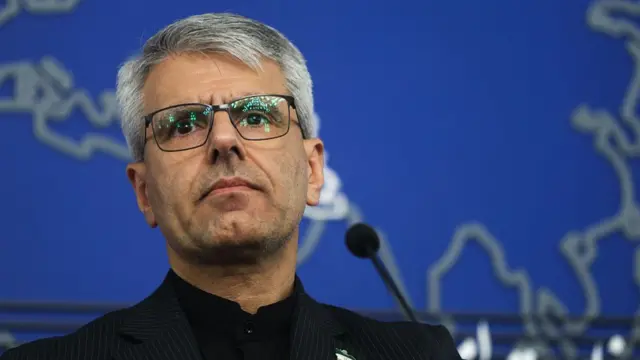
    Baghaei speaking during a press conference.Image source, gett

    More now from Iranian Ministry of Foreign Affairs spokesman Esmail Baghaei, who says that both Oman and Iran will be taking "necessary measures" to ensure the "safe" passage of ships through the Strait of Hormuz.

    He says this will be conducted "in consultation with other stakeholders".

    Baghaei also claims that the US has committed to taking action when it comes to rebuilding Iran following the damage it has seen during the war, and for lifting economic sanctions on Iran.

    He says that the US had committed to taking action in both cases.

  6. US markets soar on US-Iran peace dealpublished at 15:30 BST

    Archie Mitchell
    Business reporter in New York

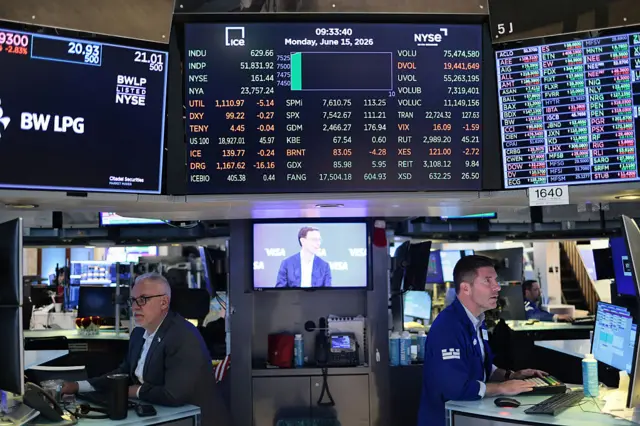
    Traders work on the floor of the New York Stock Exchange during morning trading on June 15, 2026 in New York City.Image source, Getty Images

    US markets opened sharply higher amid hopes over the US and Iran’s agreement to end the war.

    Investor optimism drove the S&P 500 1.6% higher on Monday morning, and the Dow Jones Industrial Average climbed by 1.2%. Meanwhile, the tech-heavy Nasdaq index, which had fallen last week, jumped by 2.5%.

    The conflict has pushed up Americans’ energy bills, inflation, and led to fears of interest rate hikes, heightening fears among investors.

    A deal to end the conflict, and reopen the Strait of Hormuz, raises the likelihood rates will be left on hold instead when the US central bank meets on Wednesday.

  7. 'We will do what we need to and expect friends to understand,' Israeli MP tells BBCpublished at 15:24 BST

    Lucy Williamson
    Middle East correspondent, reporting from Jerusalem

    Israel’s prime minister is facing fierce criticism from across the political spectrum – from the far-right to the liberal left – in the wake of the US ceasefire agreement with Iran

    Allies and opponents see it as side-lining Israeli interests and exposing deep divisions with Israel’s key ally, the US.

    “Israel will continue to protect itself,” Ariel Kallner, a lawmaker from the prime minister’s own Likud party, told me today. “Anything we should do, we will do.”

    Asked to clarify whether Israel would continue to attack either Iran, or Hezbollah in Lebanon, in defiance of the US agreement, he said: “We will do what we need to do. And we expect our friends to understand us.”

    “Sometimes there are disagreements between allies, and allies should also understand their allies when they are in danger.”

    Israel’s defence minister said earlier today that Israeli troops would remain in areas they have occupied in Lebanon, Syria and Gaza.

  8. Lebanon 'an inseparable part' of framework to end war, Iran sayspublished at 15:17 BST

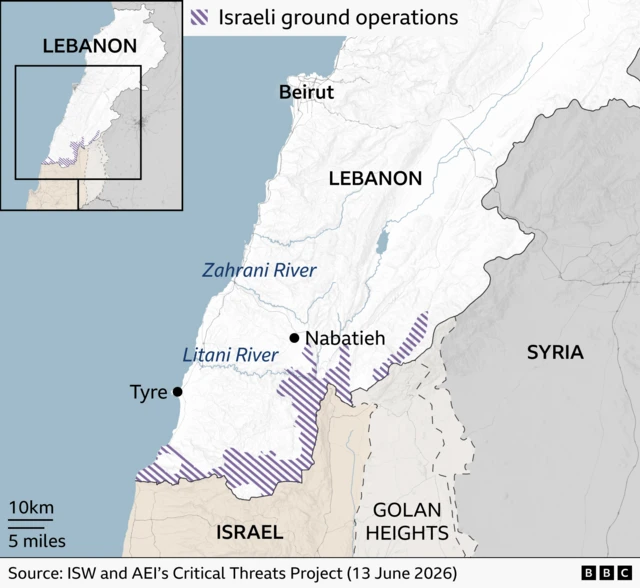
    A spokesperson for Iran's Ministry of Foreign Affairs says ending the conflict in Lebanon is a pivotal part of the framework agreement Tehran and the US reached.

    • As a reminder, negotiator Pakistan says both the US and Iran "declared the immediate and permanent termination of military operations" in Lebanon as part of the deal

    Speaking at a weekly news conference, Esmail Baghaei says: "Lebanon and the end of the war in Lebanon are an inseparable part of the agreement to end the war."

    He also says the US "must ensure" that Israel follows suit, adding that "any violation of the agreement by other actors and the United States’ allies in the region will also fall under the responsibility of the American side".

    Earlier, Israel's defence minister said the IDF intended to maintain its presence in Lebanon without any time restraints.

    A map of southern Lebanon showing towns, rivers and borders near Israel and the Golan Heights. A shaded areas shows where ISW analysis puts Israeli ground operations along the south of Lebanon. Major towns are marked with black dots, including Beirut on the coast in the north and Tyre on the coast in the south and Nabatieh inland. The Zahrani and Litani Rivers are labelled in blue, flowing west to the Mediterranean Sea. The southern border with Israel is shown, and the Golan Heights lies to the southeast, and Syria to the east.
  9. Photo shows smoke rising in southern Lebanon earlierpublished at 14:56 BST

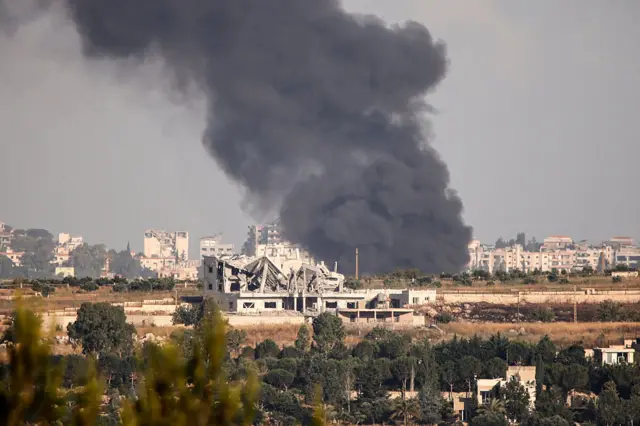
    Smoke was seen rising in Lebanon's southern village of Kfar Tibnit on Monday, the day after the deal was announced.

    Lebanon's state-run National News Agency (NNA) reported that the towns of Kfar Tebnit and Nabatieh al-Fawqa were targeted early on Monday.

    Large plumes of smoke rise near damaged buildingsImage source, Getty Images
    Image caption,

    The image was taken from the southern area of Marjayoun after reports of an Israeli artillery shelling in the southern village of Kfar Tibnit

  10. Analysis

    An agreement in the nick of time for oil marketpublished at 14:30 BST

    Dharshini David
    Deputy economics editor

    A sigh of relief for markets.

    The price of oil, however, remains higher than before the conflict, it will take months for output in the Middle East to get back to normal.

    Oil production there has halved. And the higher prices of the last few months will take a while to filter through supply chains - meaning inflation will remain elevated for some months, though by less than once feared.

    But this agreement has come in the nick of time. There had been fearful mutterings of a tipping point in the oil market lately, a looming supply crunch.

    The drop in Middle East production had been partially compensated by America ramping up production - and China in particular drawing down reserves.

    Yet the fear was reserves globally could reach perilously low levels as soon as July – risking pushing up prices and difficult choices for government, households and companies.

    That, as long as the peace holds and the shipments resume flowing, has been averted. All eyes on the strait.

  11. BBC Verify

    Two more vessels appear to be exiting the straitpublished at 14:17 BST

    By Shruti Menon

    Ship-tracking data from MarineTraffic shows two more vessels - both cargo ships - are heading out of the Strait of Hormuz and into the Gulf of Oman.

    Comoros-flagged cargo ship Blue Ocean 1 is partially laden and had its location transmitter off during the transit. It has switched it back on as it comes close to the exit.

    The vessel called at Iranian anchorages in May according to port call logs from MarineTraffic.

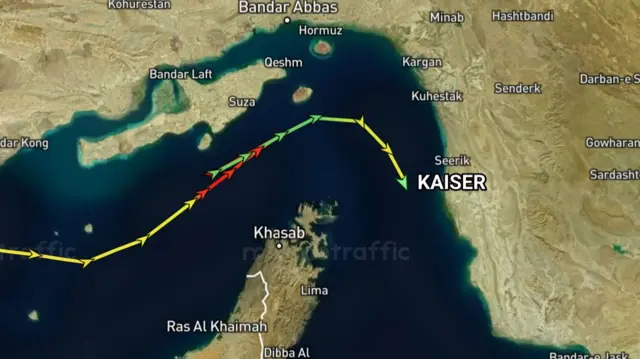
    A second cargo vessel called Kaiser attempted to pass through the strait on 12 June but turned back. We don’t know why, but it appears to be crossing again laden with cargo.

    Both vessels are broadcasting Sohar port in Oman as their destination.

    Traffic through the strait has remained low with only two to five vessel crossings a day in the past week according to maritime intelligence company Windward, compared with more than 100 ships transiting every day before the conflict started on 28 February.

    A screenshot from MarineTraffic showing the ship Kaiser heading south-east out of the Strait of Hormuz towards the Gulf of OmanImage source, MarineTraffic
    Image caption,

    Kaiser appears to be crossing the strait again laden with cargo

  12. Trump says ships are 'starting to move' through Strait of Hormuzpublished at 14:14 BST

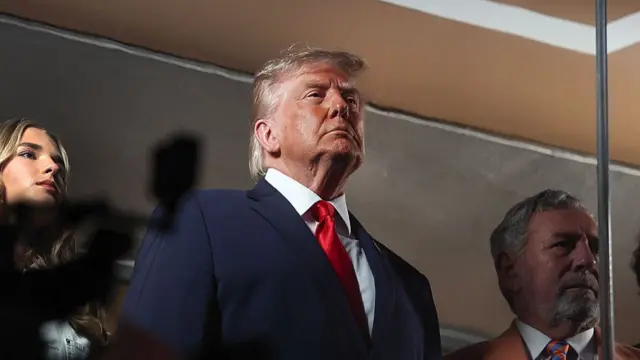
    Trump during basketball game earlier this week.Image source, Getty Images

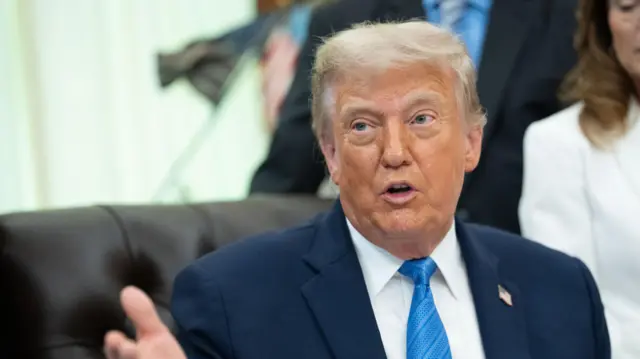
    US President Donald Trump says ships "are starting to move, many loaded up with Oil, out of the Strait of Hormuz" after the US and Iran reached a framework deal.

    Writing on Truth Social, he says: "They are going along the Southern “Highway,” which is totally safe, secure, and pristine. There are other areas of travel, also!!! President DJT".

    Our colleagues at BBC Verify have been looking at ship-tracking data and reported earlier a tanker was seen crossing the strait hours after the deal was announced. We'll have more from them very soon.

  13. Deal promising but details 'still limited', shipping industry sayspublished at 14:07 BST

    Jonathan Josephs
    BBC business reporter

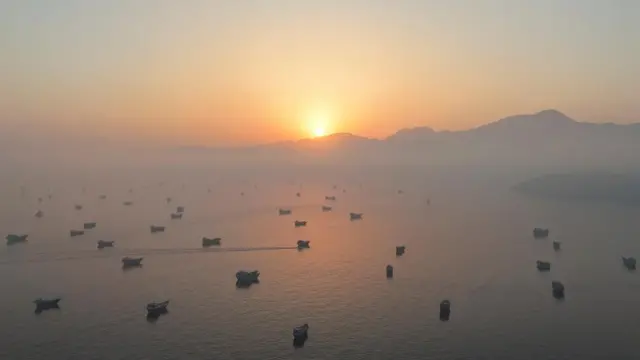
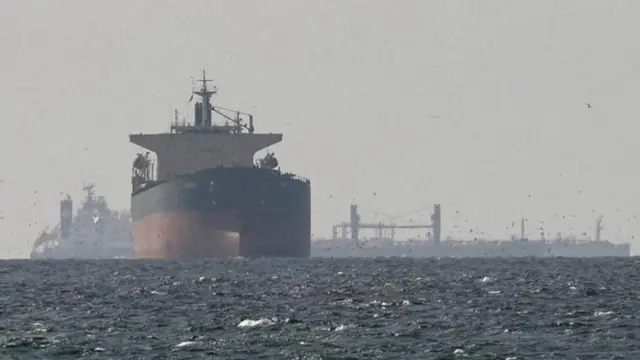
    A drone view shows vessels in the Strait of Hormuz, as seen from Musandam, Oman, June 15, 2026.Image source, Reuters

    There's been cautious optimism in the shipping industry to news of this deal between the US and Iran, where the priority remains the safety of crews and ships.

    Denmark's Maersk is the world's second biggest shipping line and has five ships that have been stuck in the Gulf because of this conflict.

    They have been able to to resupply them with food and other essentials whilst they are stuck as well as to change the crew as maritime law requires them to be manned.

    A Maersk spokesman said: “The announced agreement is a welcome and positive development, but publicly available details are still limited, and it is too early to assess how it will impact logistics and maritime operations in the Middle East. At this stage, there are no changes to our operations in the region.”

    Meanwhile German shipping giant Hapag-Lloyd has four ships stuck in the Strait and hopes to get them out this weekend, once the deal is signed and any remaining mines are cleared.

    The company says the peace agreement sounds promising and "after more than 15 weeks of the Strait of Hormuz being blocked, this is good news for us, for our crews, and for our customers".

  14. Mission to reopen Hormuz could begin 'two or three days' after deal confirmed - Macronpublished at 13:52 BST

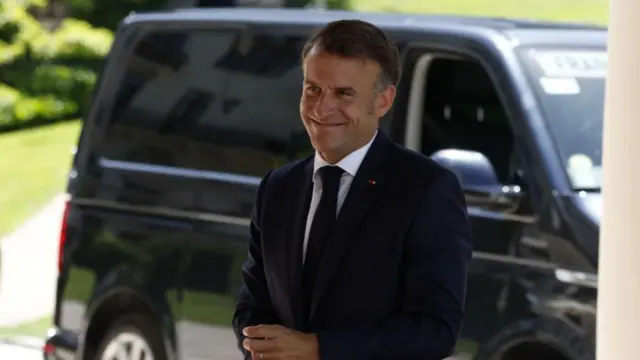
    Macron arrives at the Hotel Royal ahead of the G7 summit in Évian-les-Bains, France.Image source, YOAN VALAT/EPA/Shutterstock
    Image caption,

    Macron pictured today arriving at the G7 summit in Évian-les-Bains, France

    A joint operation to reopen the Strait of Hormuz could be launched within two or three days, French President Emmanuel Macron says after the announcement of a framework agreement between the US and Iran on ending the war.

    Speaking at the G7 summit in France today, he says the UK and France are "ready to act quickly" in order to restore the freedom of navigation in the strait.

    This, says Macron, would include sending aircraft, frigates and mine disposal experts to the area.

    "We also have our aircraft carrier, the Charles de Gaulle, with all its support equipment, which remains in the area and can be deployed within two or three days of confirmation [of the deal]," says the French President.

    He says this deployment would be conducted with America and "in parallel with the Iranians", ensuring that "the reopening of Hormuz to take place peacefully and in a lasting manner".

  15. Analysis

    Will this deal hold?published at 13:30 BST

    Frank Gardner
    Security correspondent

    The mild euphoria greeting the announcement of an end to the US-Iran war is likely to be followed by some anxious days ahead.

    The good news is that both Iran and the US want an end to hostilities and both want a full resumption of trade flowing into and out of the Gulf.

    But there are still a number of ways this deal could come unstuck.

    First, there is Lebanon. The chief mediators, Pakistan, say the deal includes Lebanon, specifically that all fighting in the region must stop, including between Israel and Iran's ally in Lebanon: Hezbollah.

    If that conflict flares up again, will Iran then target Israel and if so, will the US retaliate against Iran? Or will we see Washington leave Israel to fight that one on its own?

    Then there is the nuclear question. The 60 days mandated in this ceasefire are not long in which to hammer out how much nuclear enrichment Iran will be allowed, in return for sanctions relief, and what happens - and when - to Iran’s existing stockpile of dangerously enriched uranium.

    And then there is the Strait of Hormuz. Iran's view is that it "won" the war and now it wants recognition of its sovereignty over all or part of this narrow waterway. That is unacceptable to the Arab Gulf states who are pushing for a return to the unfettered traffic enjoyed by everyone before this war started on 28 February.

  16. US-Iran deal: What's happened today so far?published at 13:17 BST

    Manish Pandey
    Live reporter

    A man, wearing a dark suit and blue tie, looking to his right with his arm out.Image source, Reuters

    Less than 24 hours ago, the US and Iran announced they reached a framework deal to end the war, with the agreement set to be signed in Switzerland on Friday.

    The exact text of the framework terms has not yet been released, but Iranian state media has reported that among the terms are an end to sanctions, a commitment for Iran not to produce nuclear weapons and the reopening of the Strait of Hormuz within 30 days.

    Iranian Deputy Foreign Minister Kazem Gharibabadi says that talks on a final deal will happen over a 60-day period where Iran has "several issues to address".

    On Lebanon, negotiator Pakistan says both the US and Iran "have declared the immediate and permanent termination of military operations", with Lebanese President Joseph Aoun saying the people of his country look forward to "practical steps that put a definitive end to the cycle of violence".

    But it's unclear if Israel and Iran-backed armed political group Hezbollah will abide by this term of the framework. Israel's defence minister says its forces intends to stay in Lebanon, while Iran has called for a "complete halt" to action.

    Following President Trump's announcement to "let the oil flow!" - BBC Verify has been checking ship-tracking data, finding at least one oil tanker has crossed the Strait.

    Earlier, oil prices fell and, as our economics editor writes, while it will still take some time for any sense of normal to return to the world economy, "this is undoubtedly positive news".

  17. BBC Verify

    Almost 500 vessels in the Gulf west of the Strait of Hormuzpublished at 12:59 BST

    Ships in the Gulf off the coast of the UAE (file pic)Image source, Reuters

    By Barbara Metzler

    Ship-tracking data from MarineTraffic this morning shows there are more than 230 tankers and 250 cargo ships in the Gulf west of the Strait of Hormuz alongside large numbers of smaller vessels such as fishing boats and tugs.

    Only a minority of tracked tankers appear to be fully laden with cargo while most are empty or partially loaded.

    About 70% of the tankers in the data are stationary rather than moving. Many are gathered near major oil export terminals in Saudi Arabia, Iraq and the UAE. Most have remained in the Gulf over the past month.

    The total number of vessels in the area is likely to be higher, as many ships are not broadcasting their location and do not appear in the data.

  18. Gas prices drop since deal announcement, but still much higher than before warpublished at 12:41 BST

    Theo Leggett
    International business correspondent

    Natural gas prices in the UK have fallen by around 6% since the US-Iran deal was announced. But at around 110p per therm, they remain about 50% higher than they were before the conflict, and there is still plenty of uncertainty in the market.

    Qatar is normally a major producer of liquified natural gas, or LNG. The loss of those supplies due to the closure of the Strait of Hormuz has increased competition for shipments from elsewhere, and pushed up prices in Europe.

    Even though the UK gets only a small part of its gas from Qatar, the knock on effect of the reduction in global supplies has been significant.

    If Qatari shipments resume, pressure on prices should ease. But it will take time. Getting an LNG production ‘train’ up and running is a complicated process that can take up to a month.

    Then transporting the gas to where it’s needed can take several weeks. So experts say it could be six weeks from when the process begins before the new supplies become available.

    In the meantime Europe is working to refill its reserves in preparation for next winter, which is keeping demand relatively high.

  19. Israel is a wildcard in this US-Iran framework dealpublished at 12:30 BST

    Anthony Zurcher
    North America correspondent

    This was always a three-party war, and Trump told the Wall Street Journal on Sunday that he was furious at Israeli Prime Minister Benjamin Netanyahu for ordering strikes on Lebanon this weekend that he believed might torpedo the almost-completed Iran deal.

    The deal held – at least long enough for it to be publicly announced. But if Israel begins new military operations in Lebanon, Iran could decide to close Hormuz again and again jeopardise the global economy.

    Energy market experts warned that moving of oil through the strait is unlikely to immediately return to pre-war levels.

    Clearing a large backlog of tankers, removing mines and restoring regular oil shipping and production could take weeks.

    At minimum, however, Sunday's deal should help alleviate, if not entirely remove, some of the economic strain from the ongoing conflict.

  20. Deal is 'bad for Israel and the entire free world', Israeli minister sayspublished at 12:20 BST

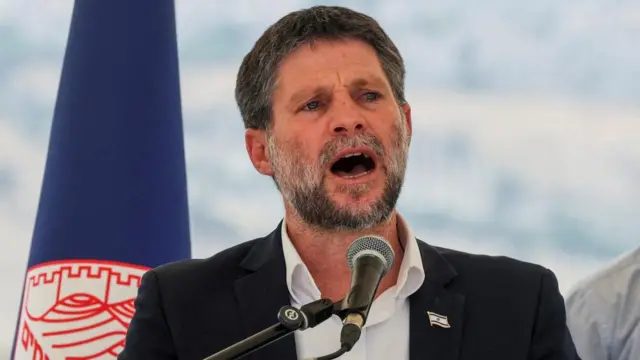
    Far-right Israeli Finance Minister Bezalel Smotrich says the deal is "bad for Israel and for the entire free world".

    He says Israel "will have to continue the campaign to bring down the regime ourselves" and "ensure that Iran never acquires nuclear weapons," in a post on X, translated by the AFP news agency.

    "The joint [US-Israeli] campaign achieved many successes in weakening Iran, and those achievements have not been in vain," Smotrich says.

    Earlier, far-right Israeli National Security Minister Itamar Ben-Gvir also criticised the deal, and said: "We are not partners to this agreement that does not ensure our security, and it does not bind us in any way."

    Like Ben-Gvir, Smotrich has had sanctions imposed on him by the UK and other countries for "repeated incitements of violence against Palestinian communities".

    Bezalel Smotrich speaking at a news conferenceImage source, Reuters
    Image caption,

    Smotrich speaking at a news conference in 2025