Summary

  • The US and Iran have agreed a deal to end the war, which mediator Pakistan says will be signed on Friday in Switzerland

  • Donald Trump says the Strait of Hormuz will be reopened and the US naval blockade of Iran will end

  • Oil prices have fallen since the announcement - and there is "now every chance of avoiding a prolonged energy shock", writes the BBC's Faisal Islam

  • The deal includes an end to "military operations" in Lebanon, which has welcomed it. However, Israel says its forces will remain in the country indefinitely

  • In Iran, the agreement is being framed as a victory for Tehran and a defeat for the US and Israel

  • The full text is yet to be published and questions remain over crucial issues, including on what happens to nuclear material in Iran, writes the BBC's Anthony Zurcher

  1. Analysis

    An agreement in the nick of time for oil marketpublished at 14:30 BST

    Dharshini David
    Deputy economics editor

    A sigh of relief for markets.

    The price of oil, however, remains higher than before the conflict, it will take months for output in the Middle East to get back to normal.

    Oil production there has halved. And the higher prices of the last few months will take a while to filter through supply chains - meaning inflation will remain elevated for some months, though by less than once feared.

    But this agreement has come in the nick of time. There had been fearful mutterings of a tipping point in the oil market lately, a looming supply crunch.

    The drop in Middle East production had been partially compensated by America ramping up production - and China in particular drawing down reserves.

    Yet the fear was reserves globally could reach perilously low levels as soon as July – risking pushing up prices and difficult choices for government, households and companies.

    That, as long as the peace holds and the shipments resume flowing, has been averted. All eyes on the strait.

  2. BBC Verify

    Two more vessels appear to be exiting the straitpublished at 14:17 BST

    By Shruti Menon

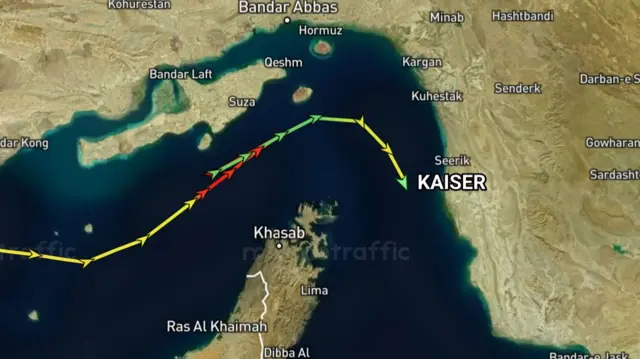
    Ship-tracking data from MarineTraffic shows two more vessels - both cargo ships - are heading out of the Strait of Hormuz and into the Gulf of Oman.

    Comoros-flagged cargo ship Blue Ocean 1 is partially laden and had its location transmitter off during the transit. It has switched it back on as it comes close to the exit.

    The vessel called at Iranian anchorages in May according to port call logs from MarineTraffic.

    A second cargo vessel called Kaiser attempted to pass through the strait on 12 June but turned back. We don’t know why, but it appears to be crossing again laden with cargo.

    Both vessels are broadcasting Sohar port in Oman as their destination.

    Traffic through the strait has remained low with only two to five vessel crossings a day in the past week according to maritime intelligence company Windward, compared with more than 100 ships transiting every day before the conflict started on 28 February.

    A screenshot from MarineTraffic showing the ship Kaiser heading south-east out of the Strait of Hormuz towards the Gulf of OmanImage source, MarineTraffic
    Image caption,

    Kaiser appears to be crossing the strait again laden with cargo

  3. Trump says ships are 'starting to move' through Strait of Hormuzpublished at 14:14 BST

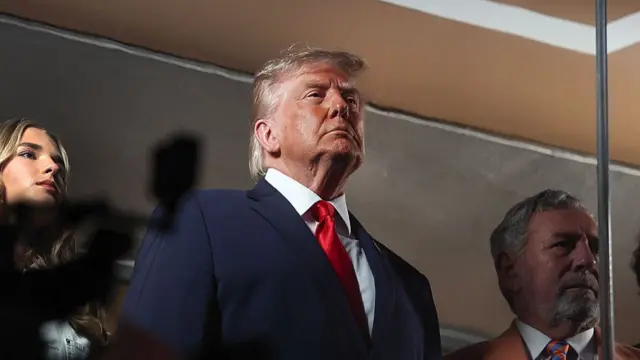
    Trump during basketball game earlier this week.Image source, Getty Images

    US President Donald Trump says ships "are starting to move, many loaded up with Oil, out of the Strait of Hormuz" after the US and Iran reached a framework deal.

    Writing on Truth Social, he says: "They are going along the Southern “Highway,” which is totally safe, secure, and pristine. There are other areas of travel, also!!! President DJT".

    Our colleagues at BBC Verify have been looking at ship-tracking data and reported earlier a tanker was seen crossing the strait hours after the deal was announced. We'll have more from them very soon.

  4. Deal promising but details 'still limited', shipping industry sayspublished at 14:07 BST

    Jonathan Josephs
    BBC business reporter

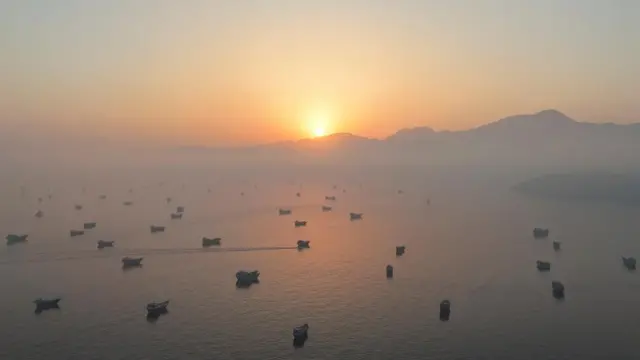
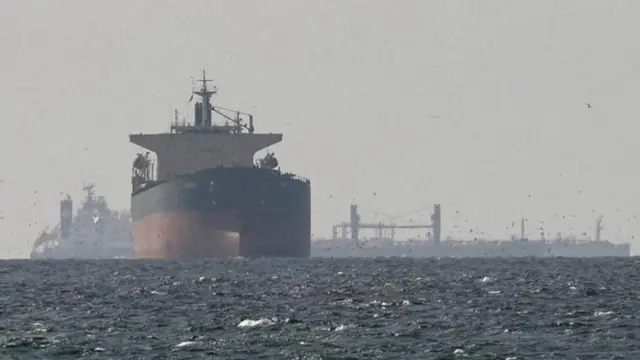
    A drone view shows vessels in the Strait of Hormuz, as seen from Musandam, Oman, June 15, 2026.Image source, Reuters

    There's been cautious optimism in the shipping industry to news of this deal between the US and Iran, where the priority remains the safety of crews and ships.

    Denmark's Maersk is the world's second biggest shipping line and has five ships that have been stuck in the Gulf because of this conflict.

    They have been able to to resupply them with food and other essentials whilst they are stuck as well as to change the crew as maritime law requires them to be manned.

    A Maersk spokesman said: “The announced agreement is a welcome and positive development, but publicly available details are still limited, and it is too early to assess how it will impact logistics and maritime operations in the Middle East. At this stage, there are no changes to our operations in the region.”

    Meanwhile German shipping giant Hapag-Lloyd has four ships stuck in the Strait and hopes to get them out this weekend, once the deal is signed and any remaining mines are cleared.

    The company says the peace agreement sounds promising and "after more than 15 weeks of the Strait of Hormuz being blocked, this is good news for us, for our crews, and for our customers".

  5. Mission to reopen Hormuz could begin 'two or three days' after deal confirmed - Macronpublished at 13:52 BST

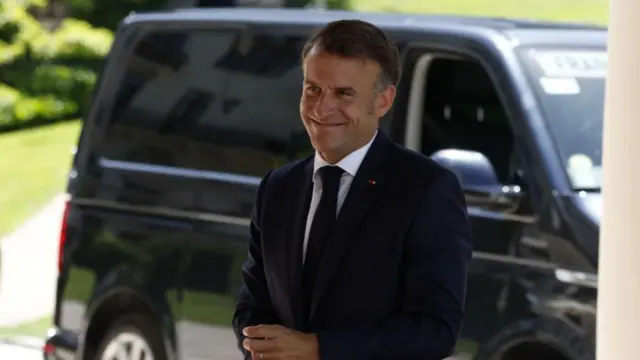
    Macron arrives at the Hotel Royal ahead of the G7 summit in Évian-les-Bains, France.Image source, YOAN VALAT/EPA/Shutterstock
    Image caption,

    Macron pictured today arriving at the G7 summit in Évian-les-Bains, France

    A joint operation to reopen the Strait of Hormuz could be launched within two or three days, French President Emmanuel Macron says after the announcement of a framework agreement between the US and Iran on ending the war.

    Speaking at the G7 summit in France today, he says the UK and France are "ready to act quickly" in order to restore the freedom of navigation in the strait.

    This, says Macron, would include sending aircraft, frigates and mine disposal experts to the area.

    "We also have our aircraft carrier, the Charles de Gaulle, with all its support equipment, which remains in the area and can be deployed within two or three days of confirmation [of the deal]," says the French President.

    He says this deployment would be conducted with America and "in parallel with the Iranians", ensuring that "the reopening of Hormuz to take place peacefully and in a lasting manner".

  6. Analysis

    Will this deal hold?published at 13:30 BST

    Frank Gardner
    Security correspondent

    The mild euphoria greeting the announcement of an end to the US-Iran war is likely to be followed by some anxious days ahead.

    The good news is that both Iran and the US want an end to hostilities and both want a full resumption of trade flowing into and out of the Gulf.

    But there are still a number of ways this deal could come unstuck.

    First, there is Lebanon. The chief mediators, Pakistan, say the deal includes Lebanon, specifically that all fighting in the region must stop, including between Israel and Iran's ally in Lebanon: Hezbollah.

    If that conflict flares up again, will Iran then target Israel and if so, will the US retaliate against Iran? Or will we see Washington leave Israel to fight that one on its own?

    Then there is the nuclear question. The 60 days mandated in this ceasefire are not long in which to hammer out how much nuclear enrichment Iran will be allowed, in return for sanctions relief, and what happens - and when - to Iran’s existing stockpile of dangerously enriched uranium.

    And then there is the Strait of Hormuz. Iran's view is that it "won" the war and now it wants recognition of its sovereignty over all or part of this narrow waterway. That is unacceptable to the Arab Gulf states who are pushing for a return to the unfettered traffic enjoyed by everyone before this war started on 28 February.

  7. US-Iran deal: What's happened today so far?published at 13:17 BST

    Manish Pandey
    Live reporter

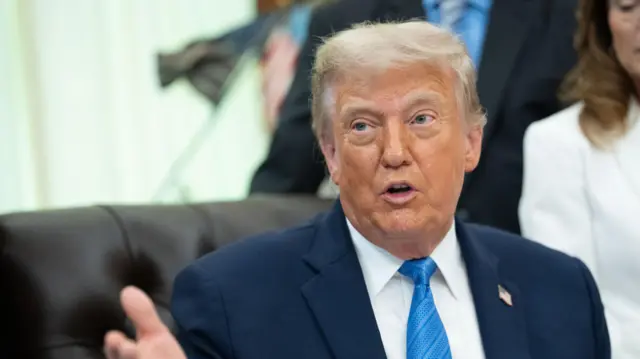
    A man, wearing a dark suit and blue tie, looking to his right with his arm out.Image source, Reuters

    Less than 24 hours ago, the US and Iran announced they reached a framework deal to end the war, with the agreement set to be signed in Switzerland on Friday.

    The exact text of the framework terms has not yet been released, but Iranian state media has reported that among the terms are an end to sanctions, a commitment for Iran not to produce nuclear weapons and the reopening of the Strait of Hormuz within 30 days.

    Iranian Deputy Foreign Minister Kazem Gharibabadi says that talks on a final deal will happen over a 60-day period where Iran has "several issues to address".

    On Lebanon, negotiator Pakistan says both the US and Iran "have declared the immediate and permanent termination of military operations", with Lebanese President Joseph Aoun saying the people of his country look forward to "practical steps that put a definitive end to the cycle of violence".

    But it's unclear if Israel and Iran-backed armed political group Hezbollah will abide by this term of the framework. Israel's defence minister says its forces intends to stay in Lebanon, while Iran has called for a "complete halt" to action.

    Following President Trump's announcement to "let the oil flow!" - BBC Verify has been checking ship-tracking data, finding at least one oil tanker has crossed the Strait.

    Earlier, oil prices fell and, as our economics editor writes, while it will still take some time for any sense of normal to return to the world economy, "this is undoubtedly positive news".

  8. BBC Verify

    Almost 500 vessels in the Gulf west of the Strait of Hormuzpublished at 12:59 BST

    Ships in the Gulf off the coast of the UAE (file pic)Image source, Reuters

    By Barbara Metzler

    Ship-tracking data from MarineTraffic this morning shows there are more than 230 tankers and 250 cargo ships in the Gulf west of the Strait of Hormuz alongside large numbers of smaller vessels such as fishing boats and tugs.

    Only a minority of tracked tankers appear to be fully laden with cargo while most are empty or partially loaded.

    About 70% of the tankers in the data are stationary rather than moving. Many are gathered near major oil export terminals in Saudi Arabia, Iraq and the UAE. Most have remained in the Gulf over the past month.

    The total number of vessels in the area is likely to be higher, as many ships are not broadcasting their location and do not appear in the data.

  9. Gas prices drop since deal announcement, but still much higher than before warpublished at 12:41 BST

    Theo Leggett
    International business correspondent

    Natural gas prices in the UK have fallen by around 6% since the US-Iran deal was announced. But at around 110p per therm, they remain about 50% higher than they were before the conflict, and there is still plenty of uncertainty in the market.

    Qatar is normally a major producer of liquified natural gas, or LNG. The loss of those supplies due to the closure of the Strait of Hormuz has increased competition for shipments from elsewhere, and pushed up prices in Europe.

    Even though the UK gets only a small part of its gas from Qatar, the knock on effect of the reduction in global supplies has been significant.

    If Qatari shipments resume, pressure on prices should ease. But it will take time. Getting an LNG production ‘train’ up and running is a complicated process that can take up to a month.

    Then transporting the gas to where it’s needed can take several weeks. So experts say it could be six weeks from when the process begins before the new supplies become available.

    In the meantime Europe is working to refill its reserves in preparation for next winter, which is keeping demand relatively high.

  10. Israel is a wildcard in this US-Iran framework dealpublished at 12:30 BST

    Anthony Zurcher
    North America correspondent

    This was always a three-party war, and Trump told the Wall Street Journal on Sunday that he was furious at Israeli Prime Minister Benjamin Netanyahu for ordering strikes on Lebanon this weekend that he believed might torpedo the almost-completed Iran deal.

    The deal held – at least long enough for it to be publicly announced. But if Israel begins new military operations in Lebanon, Iran could decide to close Hormuz again and again jeopardise the global economy.

    Energy market experts warned that moving of oil through the strait is unlikely to immediately return to pre-war levels.

    Clearing a large backlog of tankers, removing mines and restoring regular oil shipping and production could take weeks.

    At minimum, however, Sunday's deal should help alleviate, if not entirely remove, some of the economic strain from the ongoing conflict.

  11. Deal is 'bad for Israel and the entire free world', Israeli minister sayspublished at 12:20 BST

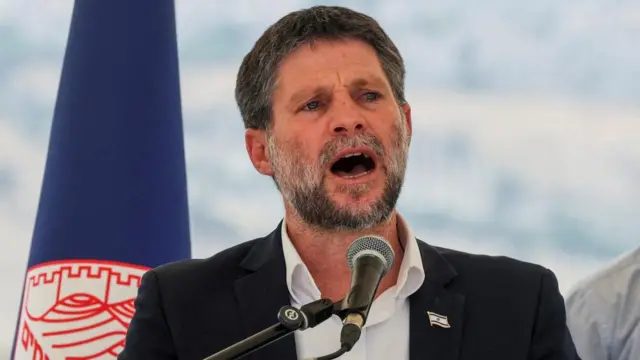
    Far-right Israeli Finance Minister Bezalel Smotrich says the deal is "bad for Israel and for the entire free world".

    He says Israel "will have to continue the campaign to bring down the regime ourselves" and "ensure that Iran never acquires nuclear weapons," in a post on X, translated by the AFP news agency.

    "The joint [US-Israeli] campaign achieved many successes in weakening Iran, and those achievements have not been in vain," Smotrich says.

    Earlier, far-right Israeli National Security Minister Itamar Ben-Gvir also criticised the deal, and said: "We are not partners to this agreement that does not ensure our security, and it does not bind us in any way."

    Like Ben-Gvir, Smotrich has had sanctions imposed on him by the UK and other countries for "repeated incitements of violence against Palestinian communities".

    Bezalel Smotrich speaking at a news conferenceImage source, Reuters
    Image caption,

    Smotrich speaking at a news conference in 2025

  12. Analysis

    The US and Israel are not on the same pagepublished at 12:03 BST

    Jon Donnison
    Reporting from Jerusalem

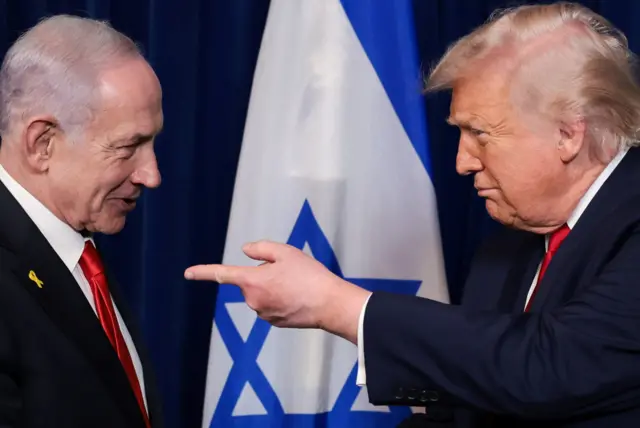
    Benjamin Netanyahu (Left) in a dark suit, white shirt and red tie, a yellow ribbon pin on his right lapel, smiles as Donald Trump (Right) in a matching outfit points at him with his left hand. In the background is an Israeli flag (Blue star of David on a white background, two blue stripes running parallel to the star at the top and bottom of the flag)Image source, Reuters

    The front-page headline of Israel’s biggest selling daily newspaper Yedioth Ahronoth this morning was "Confrontation".

    Not between the US and Iran, but between President Donald Trump and Prime Minister Benjamin Netanyahu.

    America and its strongest ally in the Middle East are not on the same page when it comes to this deal.

    Israel was told, not consulted. In a conversation with the New York Times last night, President Trump called Netanyahu "a very difficult guy".

    Under pressure in the opinion polls at home and with mid-term congressional elections coming up in November, Trump has clearly been keen to bring an end to this unpopular and costly war.

    But in Israel, Netanyahu has been under pressure to keep it going. He is also facing elections in a few months' time which opinion polls suggest could see an end to his time in office and increase the likelihood of him being jailed on corruption charges which he denies.

    Portraying himself as a war time leader, protecting Israel's security, is generally seen as increasing his chances of political survival.

  13. Lebanon shows gratitude for inclusion in framework deal, despite doubts from Israelpublished at 11:49 BST

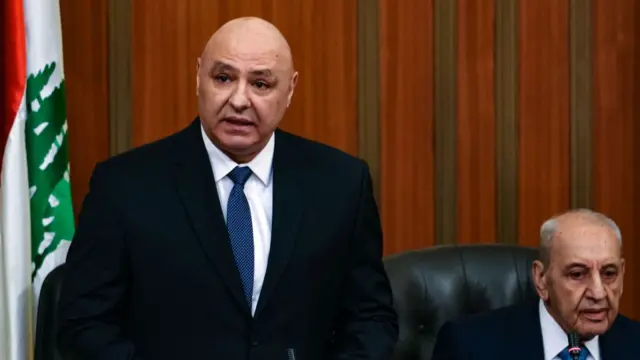
    Aoun (L) and Berri (R) pictured together during a speech in parliament.Image source, AFP via Getty Images
    Image caption,

    Aoun (L) and Berri (R) pictured together during a speech in parliament

    Political leaders in Lebanon have reacted to the Pakistan-brokered framework deal between the US and Iran - one which, Islamabad says, will halt "military operations on all fronts, including in Lebanon".

    Lebanese President Joseph Aoun says the people of his country "look forward to these understandings being transformed into practical steps that put a definitive end to the cycle of violence".

    He extends his thanks to "all" countries that have contributed to establishing the memorandum, and says he hopes that it will "mark the beginning of a broader path that enhances stability in the region".

    Lebanese parliament speaker Nabih Berri - leader of the Amal movement and a figure closely aligned with Hezbollah - has also praised the deal.

    He thanks both Iran and the US for including a "binding" clause - for Israel to end its attacks on Lebanon - as part of the agreement.

  14. Analysis

    There is now every chance of preventing a prolonged energy shockpublished at 11:36 BST

    Faisal Islam
    Economics editor

    The caveats are accurate.

    It is going to take time to fire up the engines of hundreds of tankers and ships locked in to the Gulf. It is going to take months to restart many damaged gas facilities in the region. It does depend on a fragile peace.

    The more substantial point here, however, is that there is now every chance of avoiding a prolonged energy shock.

    The world economy, and the UK economy, has already proven far more resilient than it would have been expected from a shock of this magnitude. It had never reached the extremes of what occurred when Russia invaded Ukraine four years ago.

    Petrol prices, and fixed mortgage rates, had already started to fall. Domestic energy bills will still rise in July, but the much feared hike in October ahead of winter is now very much up for grabs.

    Fears about the southern hemisphere sowing season having to use critically expensive fertilisers may now lessen, and help calm a feared food price shock. In the UK context, if sustained, inflation may not actually reach 4% as feared, a world away from double digit rates seen in 2022.

    Fixed mortgage rates have started to fall alongside falls in global government borrowing costs, including in the UK, as markets anticipate the need for fewer interest rate rises.

    The peace deal is fragile, but the assumption is that President Trump will want to avoid it flaring up again before the November mid-term elections.

    While it will still take some time for any sense of normal to return to the world economy, after a long roller coaster of uncertainty, this is undoubtedly positive news for the economy and the cost of living in the UK and around the world.

  15. What we know and don't know about the dealpublished at 11:17 BST

    Lebanon:

    • Pakistani Prime Minister Shehbaz Sharif, who has been acting as mediator, says the US and Iran "have declared the immediate and permanent termination of military operations on all fronts, including in Lebanon"
    • We don't know if Israel and the Iran-backed armed group Hezbollah will go along with this
    • Israel's defence minister says the IDF intends to stay in Lebanon while Iran calls for a "complete halt" to Israeli action in Lebanon

    Strait of Hormuz:

    • President Trump says the strait will be reopened and that "oil will flow on both ends again for the Region"
    • Iranian state media says that one of the points included in the memorandum of understanding is the lifting of the US naval blockade of Iranian ports within 30 days
    • The exact agreed upon timeline for the reopening remains unclear, as is the mechanism around how navigation in the strait will be managed going forward

    Nuclear:

    • Iranian state media reports that Tehran is committing not to produce nuclear weapons
    • It also reports that there will be a period of 60 days during which the US and Iran will have to agree on how to destroy and remove nuclear material
    • But we don't know what the restrictions on enrichment will be and what will specifically happen to the stockpile of highly enriched uranium Iran has now

    Sanctions:

    • We know there is likely to be some sort of relief on Iranian sanctions and its frozen assets
    • We don't know the timings around sanctions relief, and whether it will take place before or after negotiations on a final deal
  16. BBC Verify

    Tanker seen crossing Strait of Hormuz hours after deal announcedpublished at 11:00 BST

    By Shruti Menon

    BBC Verify has been checking ship-tracking data which appears to show that at least one oil tanker has crossed the Strait of Hormuz following President Donald Trump's announcement of a deal between the US and Iran.

    According to ship tracking website MarineTraffic, Maltese-flagged tanker Disha left Qatar's Ras Laffan port on 13 June carrying cargo.

    Another ship, the Panamanian-flagged bulk carrier MDL Kamran, left Iran’s Bandar Imam Khomeini on 11 June and transited the strait yesterday.

    Its location trackers were off while passing through the waterway and resumed transmitting after clearing the strait. The vessel is headed to Oman’s Shinas port.

  17. Analysis

    There's still time for the US-Iran deal to fall apart ahead of Friday's signingpublished at 10:43 BST

    Anthony Zurcher
    North America correspondent

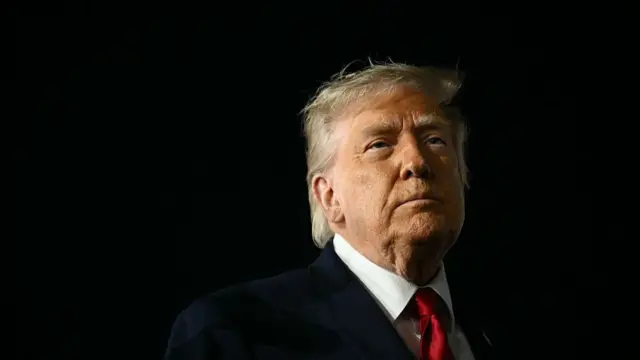
    Close up of Donald Trump in black suit and red tie as he looks to the left. Black backgroundImage source, AFP via Getty Images

    The announcement of a deal to end hostilities between the US and Iran has provided Donald Trump with a very welcome birthday present – although it's wrapped in a fair measure of uncertainty.

    In such high-stakes diplomatic agreements, success or failure usually hinges on the details. And here, the details are scarce.

    US Vice-President JD Vance said in a Sunday evening interview with Fox News that Iran never possessing a nuclear weapon was "built into this agreement" and that the US will be able to verify compliance.

    Yet questions remain over crucial issues including what the restrictions on enrichment will be and what should happen to the stockpile of highly enriched uranium Iran has now.

    As if to underscore this point, Iran's Supreme National Security Council released a statement on Sunday saying that "final negotiations will be postponed until after the implementation of the other party's commitments under the memorandum".

    What those commitments are - and how Iran interprets them - will help determine whether this deal sticks.

    With several days to go before the official signing, Iran and the US have time to settle key details to ensure the deal's success - but there's also time for it to fall apart.

    • Our North America correspondent has written a fuller analysis on the uncertainty of the US-Iran deal, which you can read here
  18. Nuclear talks will be 'key thing' going forward, says former US senior officialpublished at 10:32 BST

    Darin Selnick, the former deputy chief of staff to the US Defence Secretary Pete Hegseth, has told BBC Radio 4's Today programme that negotiations over Iran's uranium enrichment programme would be the "key thing" going forward.

    Iran's Deputy Foreign Minister Gharibabadi has said he hopes the framework will be followed by a 60-day negotiating period during which resolutions on Tehran's nuclear programme will be discussed.

    But Selnick says the US's "biggest concern" is now that Iran won't negotiate "seriously" how to "get rid of the nuclear programme", adding that that is not "going to be acceptable" to Washington.

    "If the president feels that they’re doing that… he is likely to start military operations again," he adds.

  19. Nuclear programme-related matters will be discussed in next 60 days - Iran's deputy foreign ministerpublished at 10:18 BST

    Ghoncheh Habibiazad
    Senior reporter, BBC Persian

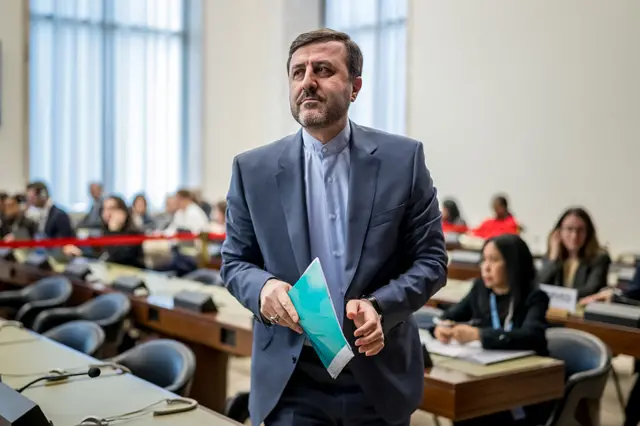
    Iran's Deputy Foreign Minister Kazeem Gharibabadi standing up and walking around some desks and chairs holding a fileImage source, AFP via Getty Images

    Yesterday, Iran's Deputy Foreign Minister Kazem Gharibabadi spoke to Iranian state TV to confirm that the deal with the US had been finalised and the official signing will happen in Switzerland on Friday.

    He reiterated Iran’s distrust of the US and said that the country will “monitor” the implementation of US commitments.

    He claimed that threats last night by Iran against Israel and the US following Israel’s attack on Beirut “helped the process of finalising the text and resolving some of the issues”.

    Gharibabadi said that Iran hopes the negotiations will conclude within a 60-day timeframe. He said ending all sanctions against Iran and resolutions against the country related to its nuclear programme will be among matters to be negotiated within the period.

    He added that the issue of economic reconstruction following the war will also be negotiated during these 60 days.

  20. BBC correspondents on what this agreement does - and doesn't - tell uspublished at 10:00 BST

    Since news of a framework agreement between the US and Israel was announced, our correspondents have been providing their analysis.

    While details are scarce and President Trump's "larger goals remain unrealised for now", the deal "should help alleviate, if not entirely remove" some of the economic strain the conflict has been causing, writes North America correspondent Anthony Zurcher.

    Our State Department correspondent Tom Bateman says this deal was needed for both the US and Iran for economic reasons, but that sticking points remain, including how to "meaningfully agree" on key issues such as nuclear and sanctions relief.

    BBC Persian reporter Ghoncheh Habibiazad has been looking into the reaction within Iran, and says this agreement is being framed as a victory for the country and defeat for the US and Israel.

    There will be "a sense of relief" for Iran's Arab Gulf neighbours, writes our Global Affairs correspondent Sebastian Usher, with the UAE, Qatar and Saudi Arabia having been hit by Iranian missiles during the war - but questions remain over what happens with Lebanon.

    There, some families have started heading back to their communities but people remain sceptical about the framework and what impact it will have on Israel's war against Hezbollah, writes Middle East correspondent Hugo Bachega.

    Any measure of a "peace deal" will be seen in the long-term, according to Security correspondent Frank Gardner and whether the danger of Iran developing a nuclear weapon has really been reduced - as President Trump claims - or if hardliners within the country will try to race for a bomb.

    And this initial agreement is "just a beginning", explains Chief North America correspondent Gary O'Donoghue with questions on issues including the Strait of Hormuz still lingering until the final text is made public.