Who were the Ancient Greeks?
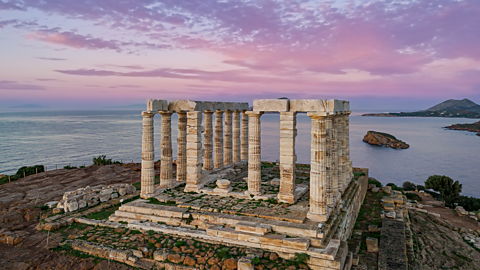
The Ancient Greeks lived thousands of years ago and became one of the most important civilisations in history. They were group of people living together with their own cities, culture and ways of life.
They built city-states which were small, independent communities in ancient Greece each with its own laws and leaders. They created new ideas about government. They told stories known as myths to explain parts of their early history. These myths often feature gods or the supernatural and are still well-known today.
Their art, writing and inventions shaped the world and continue to influence people today.
Important words
Important words who the Ancient Greeks were.
| Keyword | Definition |
|---|---|
| Archaeologists | A historian who learns about the past by finding the remains of where people lived long ago. |
| City-state (polis) | A small, independent community in ancient Greece with its own laws and leaders. |
| Civilisation | A group of people living together with their own cities, culture and ways of life. |
| Colonies | Areas lived in and controlled by another country. |
| Democracy | A system of government where citizens take part in making decisions. |
| Government | The people and rules that organised how a city-state was run. |
| Mediterranean Sea | The large sea which many Greeks travelled across to trade with other lands. |
| Myth | A traditional story that is used to explain something in the early history of a people, they often feature gods or the supernatural. |
Watch: How did the city-states of Ancient Greece differ?
Learn about the city-states of Ancient Greece and how different life could be for the people who lived in them.
Ancient Greece wasn't one big country; it was many city-states, each like a small country with its own rules and leaders. People spoke versions of the same language and worshiped the same gods, but daily life could be very different.
Two of the most important city-states were Athens and Sparta.
Athens became a democracy, meaning some people had a say in important decisions. They voted by placing objects like pebbles in jars, but only adult men born in Athens could vote – not women, children or enslaved people. Boys went to school. Girls learned household skills at home.
Sparta was ruled by two kings from powerful families. Because Sparta valued strong warriors, boys began training as soldiers when they were young. Girls were also encouraged to stay strong, and they could compete with boys in sport.
Sometimes the city-states worked together, like when they united to fight Persia. They even paused wars to compete in the Olympic Games. But they were also rivals. In the Peloponnesian War, Athens and Sparta were each supported by other city-states.
Different in many ways, the Greek city-states still managed to come together in moments of teamwork as part of one great civilisation.
How do we know about the ancient Greeks?
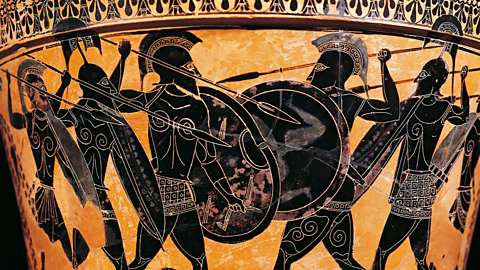
Archaeologists, who are historians that learn about the past by finding the remains of where people lived long ago, have found ruins of temples, theatres and houses that tell us about Greek buildings and daily life.
Pottery has been discovered which gives clues about religion, entertainment and family life as it was often decorated with scenes of everyday activities, sports and myths. Greek myths are traditional stories about gods, heroes and the world around them.
Ancient writers such as Homer recorded stories, histories and events.
We know about the Greeks from the buildings, art and writing they left behind.
Ruins still standing today give us clues about buildings and religion.
Why were the Greeks significant?
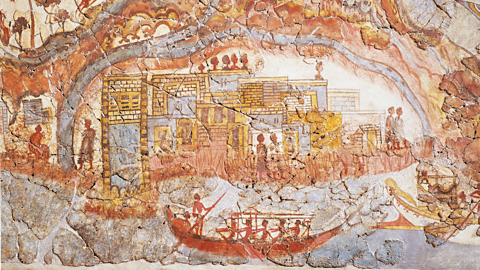
About 2,500 years ago Greece was one of the most important places in the ancient world.
The Greeks were great thinkers, warriors, writers, actors, athletes, artists, architects and politicians.
The Greeks called themselves Hellenes and their land was Hellas.
The name “Greeks” was given to the people of Greece later by the Romans. These people lived in mainland Greece and on the Greek islands, but they also lived in colonies, which were settlements controlled by another country, scattered around the Mediterranean Sea.
There were Greeks in Italy, Sicily, Turkey, North Africa, and as far west as France.
They sailed the sea to trade and find new lands.
The Greeks took their ideas with them and they started a way of life that's similar to the one we have today.
The early history of Ancient Greece
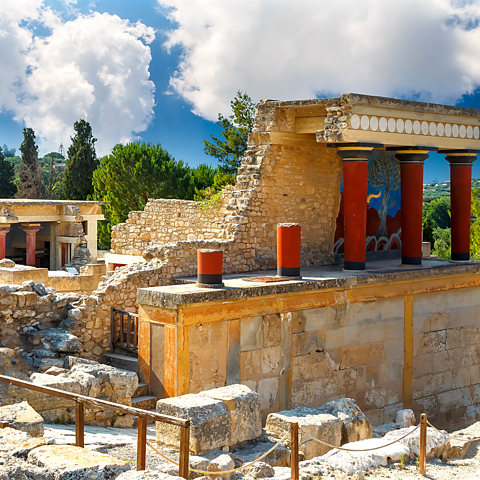
People have been living in Greece for over 40,000 years.
The earliest settlers mostly lived a simple hunter-gatherer or farming lifestyle, similar to people in Prehistoric Britain.
The Minoans were the first great Greek civilisation, they didn't live on mainland Greece but on the nearby island of Crete, between 2200BC and 1450BC.
They were known as the Minoans after their legendary king, Minos.
After the Minoans came the Mycenaean civilisation, from mainland Greece, they were fine builders and traders, but they were also great soldiers.
They famously fought in the Trojan War.
Homer, an important Greek writer, told stories of the Mycenaean age in his books The Iliad and The Odyssey.
After the Mycenaean age ended in about 1100BC, Greece entered a Dark Age, it is known as a Dark Age because nobody knows much about what happened - most written language and art disappeared.
After the Dark Age
The period of time in Greece's history after the Dark Age is split by historians into three periods. Find out more about them in this table.
| Period name | Dates | What happened |
|---|---|---|
| Archaic period | Around 800BC-480BC | - Greek civilisation slowly emerged again after the Dark Age. - Many city‑states were ruled by a king‑like figure. - The Greeks traded more with the outside world. - The first Olympic Games were held. - The Greeks fought off the invading Persian army. |
| Classical Greece | Around 480BC-323BC | - Greece entered a Golden Age that lasted about 200 years. - People built fantastic temples. - They made scientific discoveries. - They wrote plays. - They founded the first proper democracy, where citizens helped make decisions. |
| Hellenistic period | 323BC-30BC | - This period lasted from 323BC, when Alexander the Great died, to 30BC, when the Romans conquered Greece. - The Romans did not destroy Greek life. - They respected the Greeks and copied parts of their culture, including their buildings, beliefs and clothes. |
Where did the Ancient Greeks live and travel?
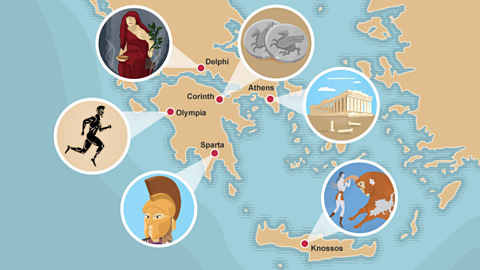
There was never one country called ‘Ancient Greece’, instead, Greece was divided up into small city-states, like Athens, Sparta, Corinth and Olympia.
The Greeks lived in city-states near the sea because the mountains made it hard to travel across the land. Each city-state ruled itself, they had their own government that organised how it was run, laws and army.
They set up colonies on islands in southern Italy and Sicily, around the Black Sea and in Africa.
The Greeks travelled and traded across the Mediterranean and Black Seas, swapping goods like olive oil, pottery and wine for wheat and other supplies.
What were the Greek city-states like?
Someone living in the city-state of Sparta would call themselves Spartan first, and Greek second. A person's identity was shaped mostly by the city state they came from.
It was well known that the city-states didn’t get on very well and often fought each other.
However, sometimes they joined together to fight against a bigger enemy, such as the Persian Empire.
Only a very powerful ruler could control all of Greece. One man did in the 300s BC, he was Alexander the Great, from the Greek colony of Macedon. He led his army to conquer an empire that stretched as far as Afghanistan and India.
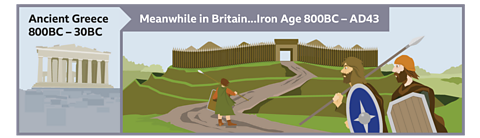
What was happening in Britain?
Think like a historian
Have a look at the thinking points below and think about your answers to the questions. You could even write them down on a piece of paper or discuss them with somebody else if you want to.
How were city-states like Athens or Sparta different from a whole country?
What were some key differences between Athens and Sparts?
How did living around the Mediterranean Sea shape Greek travel, trade and ideas?
Perhaps you thought about how each city-state ruled itself, with its own laws and army, instead of all being ruled by one leader.
Did you remember that Athens developed a democracy where citizens could vote on laws, while Sparta focused on military training and discipline from a young age?
Maybe you thought about how access to the Mediterranean Sea allowed the Greeks to travel widely, set up colonies and trade goods such as olive oil and pottery. This travel and trade spread Greek ideas and culture. It helped city-states grow richer and allowed their populations to expand into new areas.
Activities
Activity 1: Ancient Greek cities
Click on the map to find out about some of the cities of Ancient Greece.
Activity 2: Quiz – Ancient Greece
Let's find out what you know about Ancient Greece.
Game: The Argo Odyssey
Argo the dog is missing! Join Cassandra and Helenus on an adventure to find him.
Grown-ups corner
Are you a parent, carer or teacher?
Take a look at some of the links below on KS2 History which are packed full of knowledge, videos, quizzes and activities.
KS2 Ancient Greece
BBC Bitesize for Teachers
KS2 Ancient Greece: 1. Everyday life in the city-states
BBC Bitesize for Teachers
KS2 Ancient Greece: 3. Structures, statues, poems and plays
BBC Bitesize for Teachers
Horrible Histories: Raid and Trade game! game
Play Horrible Histories: Raid and Trade KS2 History
More on Ancient Greece
Find out more by working through a topic
- count2 of 15
- count4 of 15
- count5 of 15