| Getting there faster | |
|  How slowing down can reduce journey time How slowing down can reduce journey time | |
 | | |
| | |
| How can reducing speed increase flow? | |
| | |
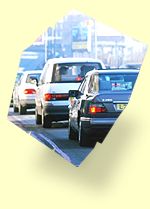
| Dr Ben Heydecker says that speed restrictions can be a good thing. He argues that at high speed cars need to spread out for safety and this reduces the number of cars you can have on the road at any one time. | |
| | |
| | Reducing the speed allows cars to travel more closely, increasing the number of cars that the road can carry at any one time. | |
| | |
| The benefits of road closures | |
| | |
| | |
| When is a road closure a good thing? | |
| | |
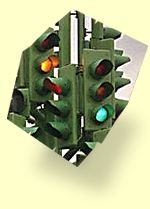
| When it improves the movement of traffic. But why doesn't closing roads cause more traffic jams? Dr Ben Heydecker argues that restricting choice can actually make travel easier. He says that in their resourcefulness road users will find a better way to travel. | |
| | |
| | The origination of zero goes back to some completely unknown Indian in the 8th century who realised the empty column on the abacus could be represented by some sort of symbol, a zero. This gave you a different representation for numbers, what we call a place-holding method. For example One hundred is one, zero, zero. | |
| | |
| | Without the zero we would be in a world of roman numerals where 100 men can go off to fight or a man can own 50 ships but where calculations are very complex and would require specialists to do them. With the introduction of zero it is possible for every man to do his own calculations. | |
| | |
| The travelling salesman problem | |
| | |
| | |
| | This is a classic mathematical problem. A salesman has to visit Madrid, Paris, Rome, Amsterdam, Budapest and Prague. He can visit these in any order. What is the shortest route that he can take? | |
| | |
| | Now add Barcelona and Berlin to the cities he must visit and the calculation becomes more complex. | |
| | |
| | The more destinations that you have, the more rapidly the number of possible routes grows and the more difficult the problem becomes to solve. | |
| | |
| | It becomes what mathematicians term a 'hard problem', a problem where if you just try to list all the possibilities it won't work. You have to look at different strategies for calculating all the different possible routes and identifying the shortest. | |
| | |
| | Ian Stewart says that what really interests mathematicians about the travelling salesman problem is not solving it each time but the theoretical problem of just how bad can it be. What is a really nasty travelling salesman problem? | |
| | |
| | "...because that tells you about the limitations of your mathematical technique and it's always worth knowing what your limits are." | |
| | |