 | | |  |  | | Magic numbers | | | Numerology by the experts | |  | | | | | |
| | | If a mathematician had a favourite number what would that number be? | | | | | | We asked three mathematicians to tell us about their favourite number and why they consider it special. | |
| | | | | 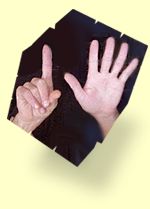 | | | | | | Tom Korner's favourite number was zero | | |  The centre of our universe The centre of our universe | | | | | | | | | Is zero a number? | | | | | | Surely a number is how many you've got, if you haven't got any then it's not a number. | | | | | | | Tom Korner claims that mathematicians can build a whole universe from nothing. They start with nothing, then consider a bag containing nothing which is an object. They then consider a bag containing the bag with nothing in it and nothing, and that is a different object. In this way they can build up an infinity of objects which they can use to do mathematics on. This is why for mathematician's zero is the foundation of everything. | | | | | | "I don't see how any mathematician could reply anything but zero." | | | | | | The value of nothing | | | | | | | | | What was life like without zero? | | | | | | Before zero people used abacuses and Roman Numerals to display numbers. Without the discovery of zero, life today could have been very complicated. | | | | | | | The origination of zero goes back to some completely unknown Indian in the 8th century who realised the empty column on the abacus could be represented by some sort of symbol, a zero. This gave you a different representation for numbers, what we call a place-holding method. For example One hundred is one, zero, zero. | | | | | | | Without the zero we would be in a world of roman numerals where 100 men can go off to fight or a man can own 50 ships but where calculations are very complex and would require specialists to do them. With the introduction of zero it is possible for every man to do his own calculations. | | | | |
| 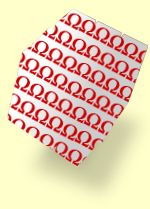 | | | | | | John Casti's favourite number was Omega | | | The invisible number | | | | | | | | | How can a number exist when we can't see it? | | | | | | When the number is Omega, a number that cannot be reproduced by computation. | | | | | | According to Dr John Casti, to describe the number Omega, one has to think about the process of carrying out a computation. | | | | | | | All computing machines today are descendants of a theoretical computing machine that Alan Turing developed known as a Turing machine. One of the central questions of computation is if you have this theoretical Turing machine what numbers can you actually compute? | | | | | | | In particular are there numbers that can never be computed ? Numbers for which we can not find a program or formula which would spit the digits out one after another. | | | | | | | What Turing found out was almost every number is uncomputable. In the whole history of the human race every number that has ever been calculated or written down amounts to only a small subset of the sum of all possible numbers. | | | | | | | Almost all numbers have an infinite number of digits and they do not repeat in any periodic way. They are irrational numbers. | | | | | | | There are algorithms which if you let them run will push out every single digit of PI. But there are other numbers, for which there are no such programs. Because there are no programs or algorithms which will reproduce them we can not see those numbers but we can prove mathematically that they exist. | | | | | | | We can produce the first few digits of Omega but we will never be able to see every digit of the number because each digit of the number becomes harder and harder to calculate and you will never get to the end of this number. | | | | | | | What are the properties of Omega?
i)It is uncomputable.
ii)It can never be compressed into a formula. It's digits are related to the solution of a particular type of algebraic equation which in turn is equivalent to Turing's famous computing machine. | | | | | | "If it were possible to actually calculate this number omega, calculate its digits, you could answer any possible question in mathematics." | |
| | | |
|





