How hot a 1976-style heatwave would be today

- Published
New research shows that the UK could reach peak heatwave temperatures of up to 45C (113F) in the next 30 years.
Prolonged periods of heat above 40C would also bring about far reaching impacts on daily life including on water supply, food production and health.
In the 50 years since the record-breaking heatwave of 1976, scientists say that the influence of human-induced climate change means that should similar weather patterns occur again we could expect our weather to be much hotter.
According to Ed Hawkins, Professor of Climate Science at the University of Reading, even peak temperatures in 2026 would be 3-4C higher in some locations compared with those in 1976.
Impact of a 1976 heatwave in today's warmer world
In the UK, warming has been happening at the rate of approximately 0.25C per decade since 1976, according to the Met Office.
Not only would this mean a more widespread area experiencing a prolonged spell of temperatures above 30C, but a large part of England and Wales would see highs of 34-38C.
According to Hawkins, such heatwaves will also become more common in the years ahead and "what felt like a freak event to grandparents in 1976 will become a new normal for their grandchildren".

Forecast projections not only show the probability of extreme heatwaves unseen before, but a prolonged periods of time above 40C. Exceptionally warm nights are forecast too
Climate projections by the Met Office show an even more pronounced rise in the potential heat we could experience over the coming decades, the levels of which would have a profound affect on daily life in the UK.
A future forecast, using climate models, for a heatwave in just 30 years' time shows that parts of south-west Scotland could peak at 38C with parts of the Midlands and south-west of England reaching up to 45C - temperatures unimaginable in 1976.
The average July daytime maximum temperature in Dubai is 41C, but the same climate models produce a forecast of "nine consecutive days which reach over 40C somewhere in the UK" says Professor Stephen Belcher, Chief Scientist at the Met Office.

People queued for bottled water in Kent after supplies dwindled in the record-breaking May 2026 heatwave
The drought experienced in 1976 remains one of the most severe to hit the country.
According to Hayley Fowler, Professor of Climate Change Impacts at Newcastle University, new research shows that rainfall would be "20% lower in parts of the country" and if the 1976 heatwave occurred today existing water supply deficits would increase by 10%.
The UK Climate Change Committee suggests that pressure on water supplies means that standpipes could make a comeback in 2056 unless there is significant investment in new water supplies, storage and a change in our relationship with water usage. In England there could be a "public water supply shortfall of five billion litres per day".
More frequent and more intense heatwaves over the coming decades will cause "multiple harvest failures in the UK and around the world," says Paul Behrens, British Academy Global Professor from the University of Oxford, and "British families will struggle to put food on the table".
The National Fire Chiefs Council also warns that fire conditions we once thought of as a rare could last for weeks or even months.

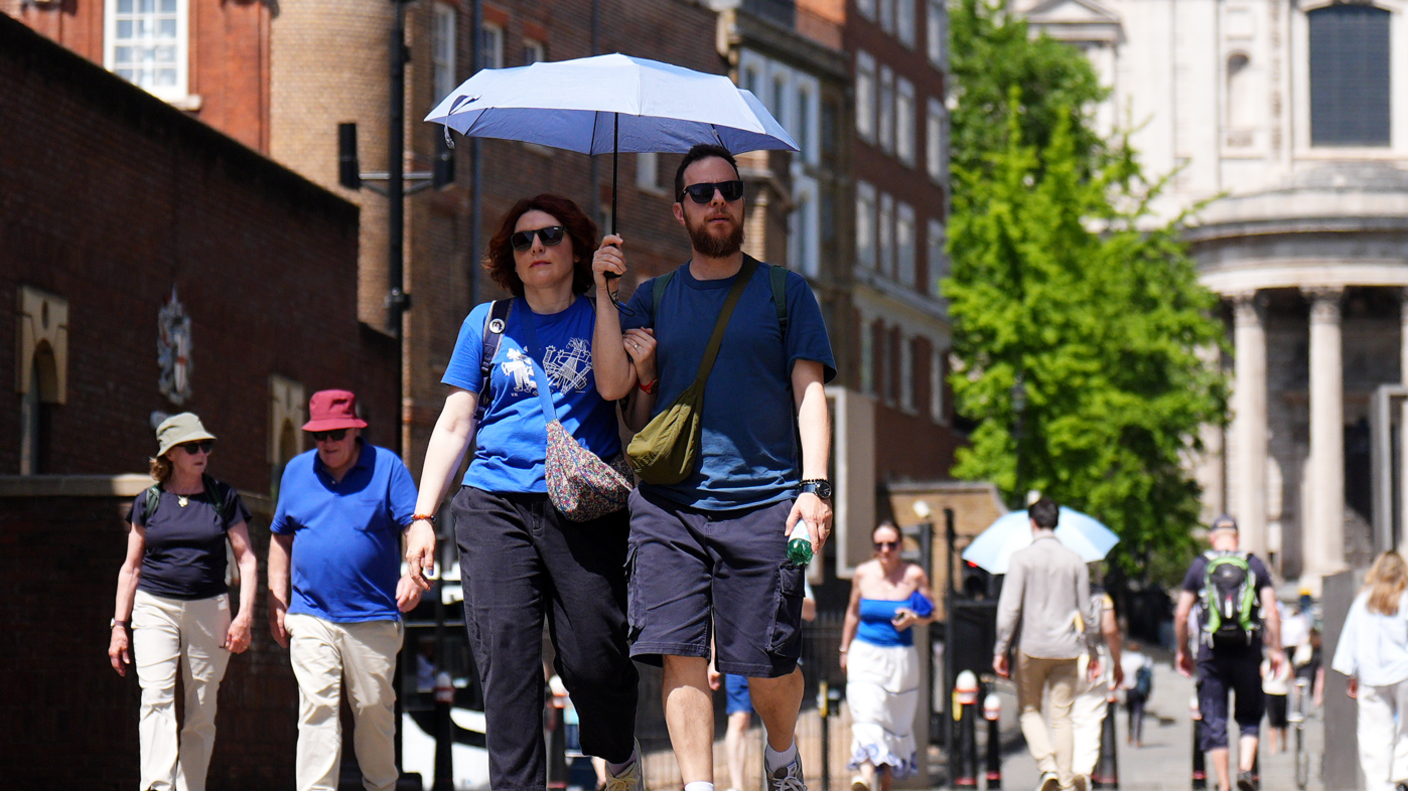
The peak temperature seen in the heatwave of 1976 has already been eclipsed numerous times, but the national June record of 35.6C set then will be exceeded by a huge amount this week
While the summer of 1976 remains a standout period in our climate history, some aspects of it have already been eclipsed.
There have been five summers since that have been hotter in terms of the average mean (day and night combined) temperature, and the highest temperature of 35.9C that summer has been exceeded on six occasions in the last decade alone.
The warmer world in which we now live means the intensity and frequency of future heatwaves will force us to change our daily lives. Daily routines will need to be adapted, work hours shifted, summer sporting events moved to cooler seasons, and buildings and infrastructure made more resilient.
Mike Tipton, Professor of Human and Applied Physiology at the University of Portsmouth, suggests that "keeping hospitals, workplaces and schools cool will become as necessary as keeping them warm today".
Why was the summer of 1976 so significant?
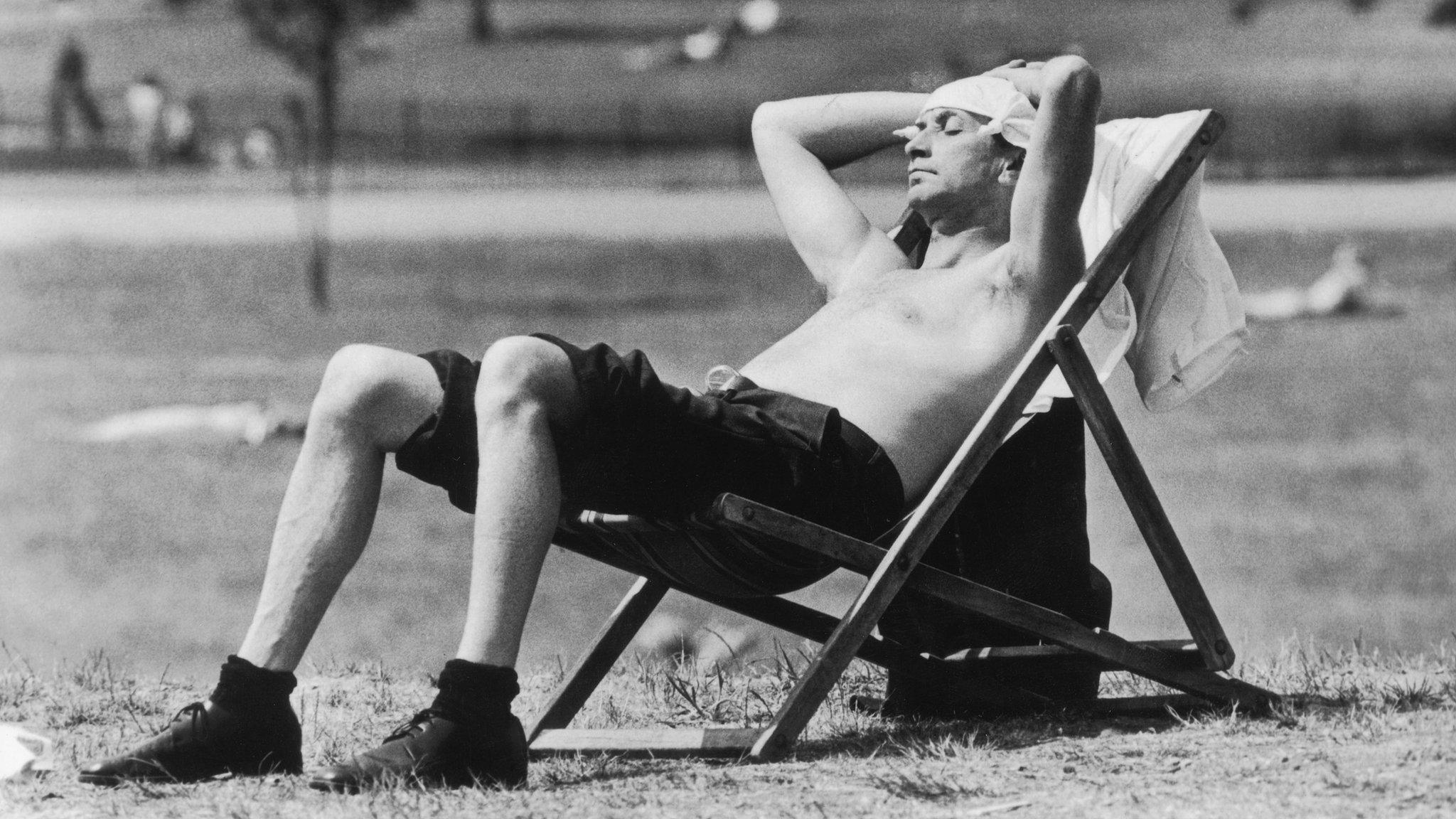
Scorched into the minds of a nation, the heatwave of 1976 is still recognised as one of the UK's most iconic weather events.
Images of dried river beds, near-empty reservoirs and queues of people waiting their turn to collect water from standpipes accompany memories relentless sunshine and heat.
The summer stood out for not just how how high temperatures got, but also how long the heat lasted.
The country experienced two distinct peaks in heat: one that straddled the end of June and early July, with another through the middle part of August.
There were an incredible 15 consecutive days, from 23 June to 7 July, where somewhere in the UK recorded a temperature of 32.2C (90F) or higher.
London Heathrow notched up 16 consecutive days of 30C (86F) or more around the same time.
The hottest day of the summer was 3 July, when the mercury soared to 35.9C (97F) in Cheltenham, Gloucestershire.
A June temperature record of 35.6C (96F) was set on the 28 June in Southampton.

Staines Reservoirs near Heathrow during the drought of 1976
What made the heatwave even more impactful was that it coincided with a 16- month-long drought. Very little rain had fallen since May 1975 meaning water resources were already seriously depleted and the ground devoid of moisture even before the heat ramped up.
The drought hit every corner of farming. Cereal harvests were already suffering by summer 1975, and by August some spring barley crops in the east and south east of England were down by as much as 50%. Potatoes were so scarce that processing factories across the UK struggled to source a supply.
In much of England and Wales, river levels in late summer 1976 dropped to record lows. Drought orders were issued and millions forced to queue at standpipes in the street just for basic water supplies.
- Published21 June 2017
- Published14 January
- Published26 May