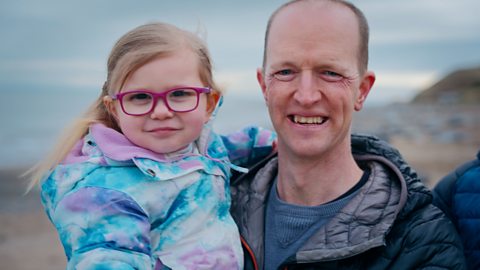
Dad-of-two Oli Rahman talked to CBeebies Parenting about what it's like having a child start at preschool, and what it helps to know before their very first day.
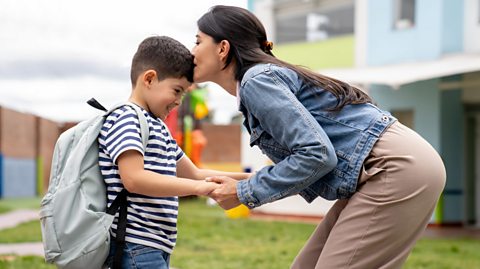
Before my daughter started preschool I worried about how she would handle being in a new environment and found myself dreading the first drop-off.
Fortunately, on her first day she wandered off towards a group of children without even saying goodbye. It was devastating for me, but reassuring, as I know plenty of parents who face daily battles at the preschool gates.
At pickup, she greeted me with a hug, and an important question:
"Where are my snacks?"
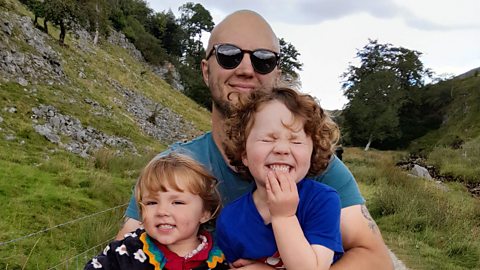
“I found myself dreading the first drop-off.”
Social learning and sharing
I spoke to child psychologist Linda Blair, who said that one of the most important things that children learn in nursery and preschool is how to interact with their peers.
She says that getting along with other children can have long-term implications.
“More important than how many blocks they stack up or how well they colour within the lines, none of that measures a bit compared to whether they can communicate well, particularly with those in charge, but also with their peers.”
At nursery and preschool, children might start to pick up on what Linda calls “street smarts,” or in other words, their ability "to read other kids’ intentions in time for them not to get in trouble.”
This might mean a child knowing when to give another child space, or turn-taking, and realising when their own behaviour is upsetting (or about to upset) another child.
Sharing is another life skill they may practise.
“You have to share when you’re in groups," says Linda, as "one person can’t have everything”.
Preschool teacher Hannah Harsley, adds that playing games with peers can be a challenge for some younger children. She says: “Some parents can think ‘I’ll let them win’ - but it’s a life skill to let them learn to lose!”
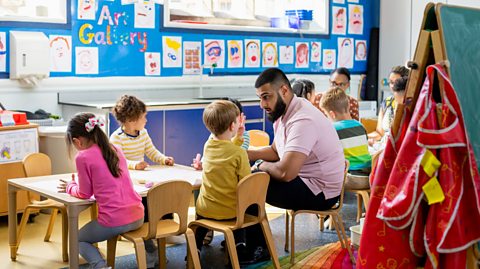
"One of the most important things that children learn in nursery and preschool is how to interact with their peers."
Dealing with anxiety
Parental positivity can be key when it comes to transitions, says Linda, as kids can be “sort of blotting paper to your attitudes and emotions.”
She adds that, “if you’re confident that this is going to be a great experience and that your child is going to thrive, the chances are that they will.”
One tip she has is for parents or carers to plan their own fun activity for when their child is at school or nursery.
“Try not to fill the time with jobs - try to have something in that period that is for you and that you enjoy. And that will rub off on your child."
When it comes to knowing whether or not your child is ready to be away from you, confidence is key.
“If you’re confident and you’re happy and you know this is the next step, your child will also feel it’s the next step.”
"Try to have something in that period every time your child’s going to be away, that is for you and that you enjoy."
Keep communicating
I also spoke to Katy Stanley, who worked in a nursery and preschool for two years and is studying Early Years and Primary School Education at the University of Cumbria.
She says regularly “keeping in communication” with your child’s nursery or preschool can help alleviate parental anxiety.
“It is a big thing for a parent, somebody else looking after their child,” Katy says.
She adds that nurseries and preschools are working with “the whole family”, not just with children.
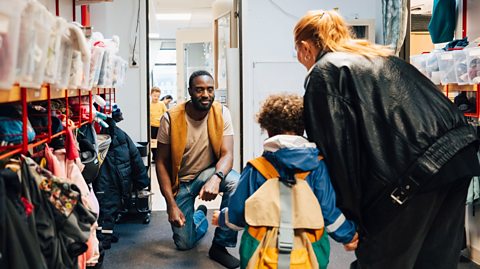
Doing it for themselves
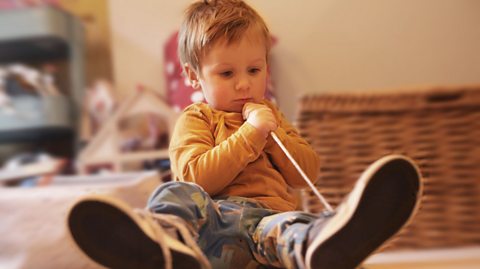
Preschool and nursery can be a great environment for children to learn 'life skills' that they might not have the time to learn at home.
An example might be putting on shoes and coats.
“We have the beauty of time with them,” says Hannah.
“We can spend time doing that, whereas at home there’s a lot of rush isn’t there?”
"One way parents can help their kids to adapt to new environments is by helping them align their [home] schedules with their preschool or nursery before they start, to prevent them feeling overwhelmed by the change," says Linda.
“So when there’s meal times and there’s nap times, if you can match it at home, then your child will settle more easily throughout the day.”
Helping kids practise their focus at home can also be a handy way of letting them learn skills that will be useful at nursery, preschool and primary school.
“When you talk to your child, turn off screens, do not answer phones and look at them and encourage them to look at you,” suggests Linda.
She adds: “This is not about their social side so much as about their cognitive side, the chance for them to learn the maximum amount while they’re at nursery. And it will do such a favour to the teacher and to you if you get the child to start focussing on the person who's speaking.”
Don't look back
Linda suggests practising saying "goodbye" to your child in the same way every time you're leaving them with a trusted adult - repeating the process a few times.
This can help build security and confidence when their parents aren’t around and it gets kids used to being around other people.
“Bring your child to the place where, for example, your friend is, or your sibling, and make sure (and this is really important) that you warmly greet them and after, say goodbye in the same way every time to your child and to that person,” says Linda.
She adds that kids are more likely to settle quickly, when they can see that their parent or carer likes the person they are with.
Once you leave, she suggests not looking back.
“And that’s the hardest part,” says Linda.