Summary

  1. Defence spending row continues as Starmer defends 'hard-edged' decisionspublished at 17:24 BST 12 June

    Freya Scott-Turner
    Live reporter

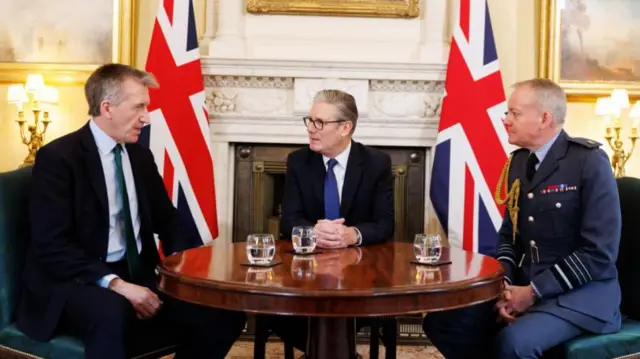
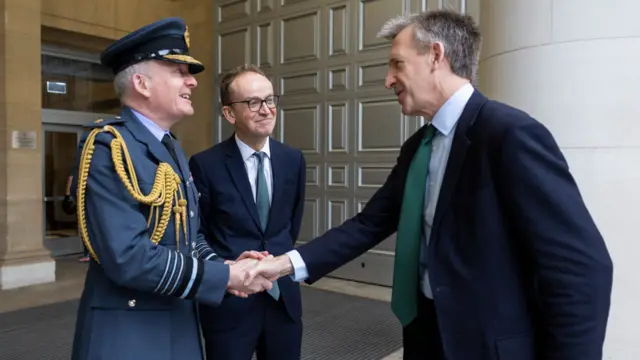
    New Defence Secretary Dan Jarvis meets Prime Minister Keir Starmer and Army chief Sir Richard KnightonImage source, No 10 Downing Street HANDOUT/EPA/Shutterstock
    Image caption,

    New Defence Secretary Dan Jarvis meets Starmer and Chief of Defence Staff Sir Richard Knighton

    Despite the appointment of new Defence Secretary Dan Jarvis, the furious debate around defence spending that's been swirling around Westminster since Thursday's double resignation shows no sign of abating.

    The row saw Starmer sit down for a lengthier-than-usual interview with the BBC earlier today, in which he defended his "hard-edged decisions" - telling our political editor that he'd reallocated funding from all other governmental departments to boost the defence kitty.

    You can listen to the interview in full on BBC Sounds.

    In his first comments as defence secretary, Jarvis - a former soldier - stated that it was "a huge honour and a privilege to serve" alongside the armed forces again, while warning that the “character of warfare” was changing fast.

    But many have raised concerns about Jarvis's ability to carry out this job, given the circumstances in which he inherited it.

    The armed forces have "lost all faith" in Starmer, said Conservative Party leader Kemi Badenoch - you can see more political reaction in our earlier post.

    This morning, Al Carns told the BBC that the government's defence investment plan displayed a "lack of innovation" and warned that "should we be tested", the military could find itself in a tricky position in "the next two to three years".

    The other question is what this all means for Keir Starmer's imperilled premiership.

    But with the Makerfield by-election looming, and his second cabinet resignation in a month, the prime minister is remaining resolute, telling the BBC it is his "duty" to continue in the job.

    We're bringing our live coverage to an end for now, but you can read our news story for further updates.

  2. Defence row exposes tensions over how to keep UK safepublished at 17:01 BST 12 June

    James Landale
    Diplomatic correspondent

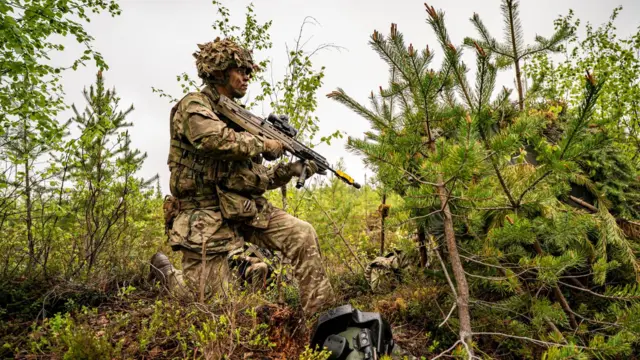
    British Army soldiers from 3 Rifles watch for enemy forces at their Forward Line of Own Troops (FLOT) in an undisclosed training ground less than 50 kilometres from the Russian border in Finland, 26 MayImage source, PA Media

    Defending the realm is supposed to be a prime minister's first priority, yet Keir Starmer is accused by two departing defence ministers of failing to provide the means to meet that vital aim.

    So who is right? Is the government not doing enough to keep us safe? Or is this merely a Whitehall spending row that has gone catastrophically wrong?

    The government currently allocates about £66bn for defence. That supports the UK's armed forces which remain highly regarded by friend and foe alike.

    The money also pays for the nuclear deterrent. The UK is surrounded by water and has strong allies. All of these factors contribute to keeping us safe.

    But successive governments have struggled to get a grip on defence spending, failing to spend more as the world became more dangerous - leading to the UK's army, navy and air force contracting.

  3. Listen: Starmer defiant in BBC interview following double resignationpublished at 16:49 BST 12 June

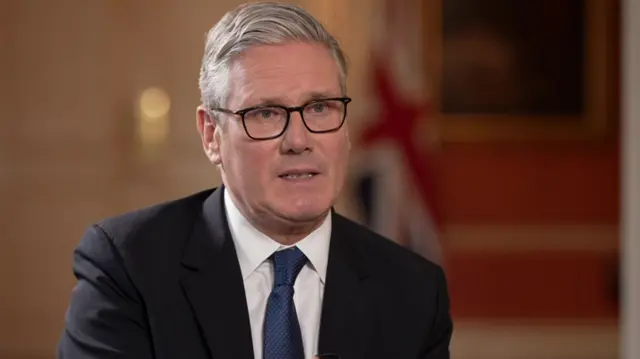
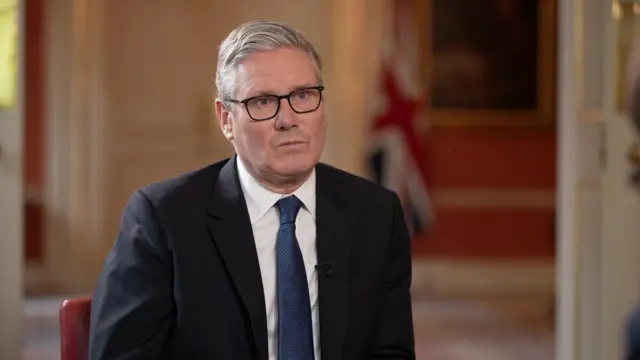
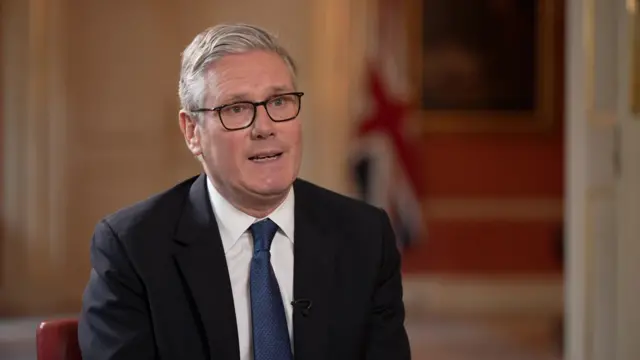
    Prime Minister Kier Starmer wearing a black suit and glasses in a sit down interview with the BBC

    Earlier, Prime Minister Keir Starmer remained defiant in the face of the resignations of two ministers over the government's planned defence spending.

    Starmer told BBC political editor Chris Mason that he has a "duty" to stay on as prime minister and that he does not want to "plunge" the country into the "chaos" of a leadership contest.

    As a reminder, Defence Secretary John Healey and Armed Forces Minister Al Carns stepped down yesterday, with both criticising the government's plans for defence.

    The prime minister described defence spending as his "number one priority" and said he had made "hard-edged decisions" to increase military funding.

    You can listen to the full interview on BBC Sounds.

  4. 'Character of warfare is changing,' new defence secretary sayspublished at 16:34 BST 12 June

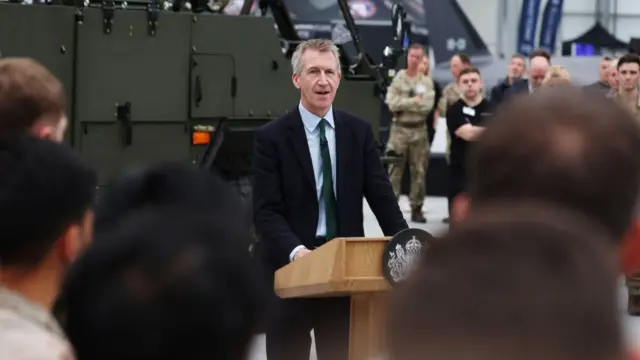
    Dan Jarvis stands at a lecturn at a military facility surrounded by men in camouflage fatiguesImage source, Ministry of Defence

    Dan Jarvis has made his first public comments since being appointed defence secretary yesterday.

    "The character of warfare is changing, and it is changing fast," says Jarvis, opening a new drone testing facility in Swindon, which the government describes as Europe's biggest.

    Jarvis says that "from Ukraine to the Middle East, we are seeing right now how uncrewed systems are rapidly evolving and reshaping conflicts - on land, in the air and at sea".

    He says that the new facility will "help us ensure the UK embraces technologies that are redefining warfare".

    "Where once new technology could take years from inception to reaching our Armed Forces, we will now be able to develop and field new tech in a matter of weeks," he says.

    "In this new era, those who innovate fastest will win."

  5. Trump official calls for 'more British military strength'published at 16:17 BST 12 June

    Elbridge Colby in a dark suit and light shirtImage source, EPA

    A senior official from the Trump administration has reacted to the resignations of John Healey and Al Carns, saying there is a "great need for more British military strength".

    In a post on X, Under Secretary of Defense Elbridge Colby responds directly to Healey's resignation statement by saying the UK has an "extraordinarily proud military history" that commands US "respect".

    But he adds there is a "great need" for more British military strength and calls on the UK to "meet that need with urgency, scale, and determination".

    As a reminder, Donald Trump has long called for European countries, including Britain, to boost defence spending, an issue that is likely to come up at next month's Nato summit in Ankara.

  6. BBC Verify

    UK defence spending has fallen in most years since 1990published at 16:00 BST 12 June

    By Anthony Reuben

    In a letter to John Healy following the former defence secretary’s resignation yesterday, Prime Minister Keir Starmer said he had delivered “the highest sustained increase in defence spending since the Cold War”.

    The government is currently planning to spend 2.5% of GDP (a key measure of the size of the economy) on defence in by 2027.

    The PM has been using a slightly higher figure of 2.6% by factoring in spending on the UK’s security and intelligence services.

    But it doesn’t take much to achieve the highest, sustained increase following the end of the Cold War, given defence spending has fallen or stayed flat in most years since 1990.

    In the 1950s, defence spending was over 7% of GDP.

    In 1990 after the Berlin Wall came down it was 3.3% and since then it has at times fallen below 2%, as successive governments took advantage of what’s been called the “peace dividend” by many politicians and experts.

    But the government is right to say the plan to spend 2.5% of GDP on defence would eclipse any of the small increases since the 1990s.

  7. Chief of the defence staff welcomes Jarvis to new rolepublished at 15:41 BST 12 June

    Chief of the Defence Staff Sir Richard Knighton greets Dan Jarvis on his first day as defence secretaryImage source, Ministry of Defence

    Chief of the Defence Staff Sir Richard Knighton says he is "pleased to welcome" Dan Jarvis into his new role as defence secretary.

    Writing on X, he says: "I look forward to working closely with him, continuing the unceasing work of supporting our Armed Forces and keeping our country safe."

    Pictures released earlier showed Knighton, Jarvis and Keir Starmer meeting at Downing Street this morning.

  8. Security 'number one priority' says Starmer on new defence secretary's first day in jobpublished at 15:28 BST 12 June

    Jacob Phillips
    Live reporter

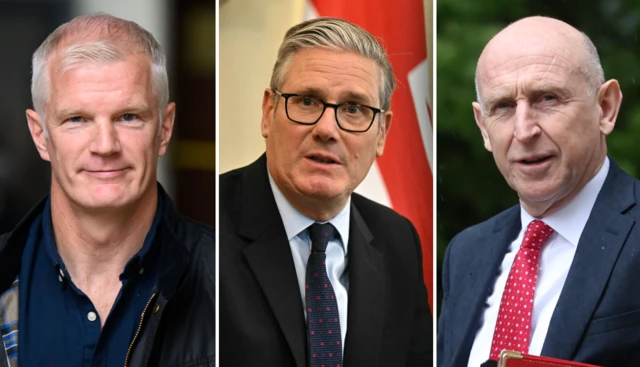
    A composite image of Al Carns, Keir Starmer and John Healey, wearing sutisImage source, Getty Images

    Keir Starmer has told the BBC that defence and security are his "number one priority" following the resignations yesterday of both his defence secretary and armed forces minister.

    In the interview with our political editor Chris Mason, he also says it is his "duty" to carry on as prime minister.

    Armed Forces Minister Al Carns’s resignation yesterday followed Defence Secretary John Healey’s departure. Healey said the defence investment plan falls "very short of what is required for defence and the country at this dangerous time".

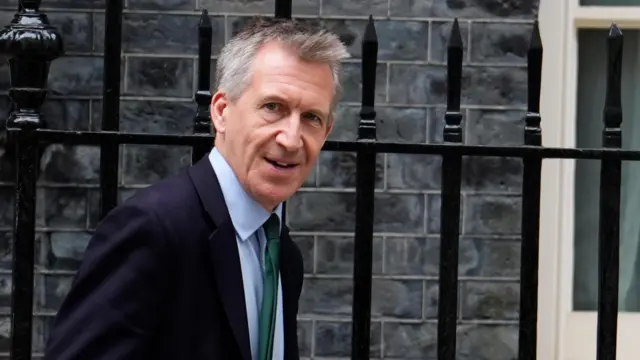
    Newly appointed Defence Secretary Dan Jarvis leaving 10 Downing Street,Image source, PA
    Image caption,

    Newly-appointed Defence Secretary Dan Jarvis pictured leaving Downing Street today

    Healey's replacement Dan Jarvis has met with the PM on his first day in the job and his colleague Peter Kyle earlier told BBC Breakfast that Jarvis has spent a lifetime preparing for the role.

    Kyle has defended the government's defence plans and says the full review will be released shortly before the Nato summit in Turkey next month.

    Meanwhile, Leader of the Opposition Kemi Badenoch says the resignations show the armed foces have "lost all faith" in Starmer.

  9. 'Make choices. Decide. Lead' - Streeting questions Starmer after BBC interviewpublished at 15:02 BST 12 June

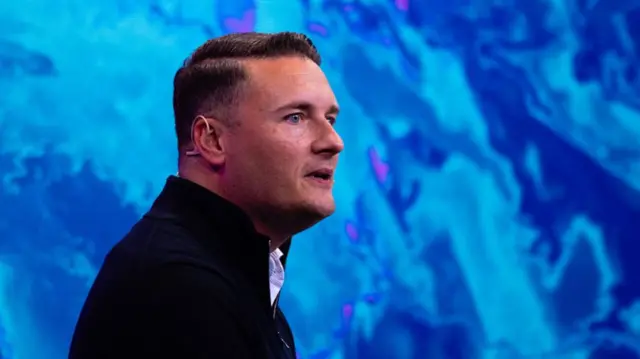
    Wes Streeting, former UK health secretary, speaks at South by Southwest (SXSW) in London, UK, on Wednesday, June 3, 2026Image source, Getty Images

    Former health secretary Wes Streeting says the "failure to make the right choices" on defence spending is a "symptom of the indecision at the heart of the government."

    Writing on X, Streeting - who resigned last month after saying he had lost confidence in the prime minister - questioned Starmer for telling the BBC that defence was his "number one priority".

    "Growth was meant to the number one priority, is it still?" Streeting writes.

    "There's not enough money for defence, but today the government announced £4.5 BILLION for walking and cycling," he continues. “Make choices. Decide. Lead."

  10. The UK is 'not ready' for the next war, says Carns after stepping downpublished at 14:44 BST 12 June

    Former Armed Forces minister Al Carns (R) is shown mine detecting equipment during a visit to RFA Lyme Bay in GibraltarImage source, Getty Images

    Former armed forces minister Al Carns, who stepped down yesterday, says the UK's next war will not be won by the armed forces alone, but by coders, drones and energy independence.

    Writing on X, Carns says “It'll be won by the country whose 19-year-olds can code, whose factories can build drones in weeks not years, and whose grid stays on when someone tries to switch it off.

    "Industry. Society. Economy. That's the fight now. We're not ready. And we're not being honest about what getting ready will cost."

    Earlier, Carns told the BBC after his resignation that the UK's defence plan is "looking at how to fight the last war rather than the next one".

  11. Where will extra defence funding come from?published at 14:26 BST 12 June

    Paul Seddon
    Political reporter

    The prime minister has previously committed to spending billions more on the armed forces long into the future, without needing to specify how this would be paid for.

    But haggling over the defence investment plan has forced the difficult trade-offs involved in funding defence out into the open.

    Unlike Germany, which relaxed its borrowing rules last year to pay for extra military spending, the government says its fiscal rules are not going to change.

    When Keir Starmer announced a spending increase for defence last year, he said the funding boost would come from raiding the UK’s foreign aid budget.

    This time, he says every government department has been asked to trim their long-term spending budgets to find extra money.

    The painful political choices involved have also turned attention towards more creative solutions to paying for military kit.

    Talks over joining the EU’s new rearmament fund have so far stalled, whilst a proposed Canada-based defence bank has received a cool response from the Treasury.

    But the Ministry of Defence said earlier this year it planned to team up with four EU countries to develop new air defence weapons, whilst the Treasury has also said it is looking at a yet-to-be-defined “mechanism” to fund defence investment alongside Finland and the Netherlands.

  12. Labour is wounded, angry and nervous, but Starmer is digging inpublished at 14:11 BST 12 June

    Chris Mason
    Political editor

    One thing I took away from my interview with the prime minister earlier was that he felt an absolute imperative to address the gravity of John Healey’s accusation yesterday - that his defence plans would leave the country unsafe.

    Clearly that is one heck of a thing for an outgoing defence secretary to say, so I think Starmer felt he had to take that on.

    Secondly, on leadership, yes, it is what we’ve heard him say before, but circumstances have become considerably sharper from his perspective.

    To a degree there are certain things a prime minister is always going to say up to the point where they pretty much are no longer there.

    But he is absolutely digging in, he is making the barrier to entry for a potential rival contender as high as possible and is saying, under repeated questioning, that if there is a leadership contest, he will stand.

    The Labour party is wounded, it is angry, it is nervous, it is jittery and it currently has a distraction project that is the Makerfield by-election.

    That distraction project ends in under a week, and then I think there is every likelihood that what we saw a month ago, and arguably what we had a blast of yesterday - fizzing anger breaking out- will return.

  13. Reaction continues to come in following yesterday's resignationspublished at 13:50 BST 12 June

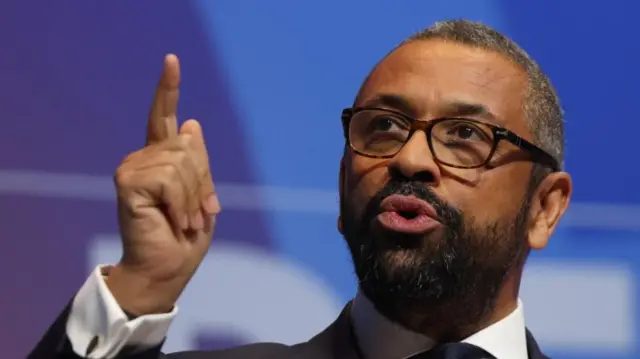
    Shadow housing secretary James Cleverly wears black-rimmed glasses and a suit, he gestures with one finger pointed in the air while speakingImage source, EPA-EFE/REX/Shutterstock
    Image caption,

    Shadow housing secretary James Cleverly

    Figures from across the political spectrum are continuing to react to the fallout following the surprise resignations of both the defence secretary and armed forces minister on Thursday.

    Shadow housing secretary James Cleverly - both a former home and foreign secretary - says: "I like Dan Jarvis but I cannot see how he speaks with allies at Nato next week with any credibility.

    “Healey and Carns said publicly what everyone was saying privately, Starmer and Reeves don’t take defence seriously,” Cleverly continues in a post on X. “A reshuffle doesn’t hide that truth.”

    Leader of the Green Party Zack Polanski also writes on X that "real security means traditional defence, yes. But also resilient public services, a world class health service."

    And "Labour has failed us all", says Reform UK's Nigel Farage, who adds that John Healey and Al Carns are "leaving because the government will not commit to increase defence spending at a time when we've probably never been more under threat".

    Yesterday, leader of the Liberal Democrats Sir Ed Davey posted on X saying Healey's resignation was "a wake-up call for Starmer and Burnham."

    "We cannot afford years more political chaos while our national security is put at risk," he wrote.

  14. Analysis

    A different type of interview from the prime ministerpublished at 13:24 BST 12 June

    Chris Mason
    Political editor

    This felt like a different kind of interview with the prime minister from the ones I tend to do.

    The big difference was time.

    Sir Keir Starmer wanted time to set out his argument. Perhaps little wonder, given the volume and breadth of criticism he is currently facing.

    Often when I talk to him he is doing a series of back to back interviews, so we have six or seven minutes each, in other words interruptions are frequent because time is so short.

    Given more time, there is still chance for proper scrutiny, but an opportunity for an interviewee to flesh out.

    Across BBC News today, you’ll be able to watch or listen to the interview both at length and in shorter form.

  15. Starmer says it is his duty to carry on as PMpublished at 13:21 BST 12 June

    Media caption,

    Watch: Starmer tells BBC he is "not going to walk away" from leadership

    Keir Starmer is asked if he would stand in a potential future Labour leadership contest.

    "I am not going to walk away," he says of his job as prime minister. "I don't think we should plunge the country into the chaos of a leadership election."

    He adds: "In the last few weeks others have made their own case. I have been concentrating on the job I was elected to do, which is to deliver for this country.

    "This is about a sense of service and duty. It's not vanity. It's not stubbornness. It's duty," Starmer says.

  16. 'We are reforming welfare'published at 13:19 BST 12 June

    Starmer

    Chris Mason asks Starmer whether he lost credibility in the vote on welfare reforms last year - and whether he has been unable to recover since.

    "We are reforming welfare," the prime minister replies, referencing the youth guarantee, steps taken to rebalance Universal Credit, and the introduction of the "right to try".

    "They are all measures to get people into work" and free up resources, Starmer says.

    Asked whether the government can get to a point where the bill is coming down in future years, the PM says: "Yes, I do want to free up more resources," adding the measures already outlined are the right way of doing this.

  17. Every government department is contributing - Starmerpublished at 13:16 BST 12 June

    Asked if every governmental department is contributing to an increased defence budget, Starmer says: "Yes, everybody is contributing to this".

    "It's very important that they do", he says, but adds that "what I'm not doing is taking out day-to-day spending because I'm not prepared to cut out public services".

    He continues saying a decision "taken in recent weeks" saw governmental departments reallocate funds outside of an official Spending Review.

    Starmer describes this as a "collective effort, if you like, towards a really important priority of the government".

  18. Starmer: It's very important commitments are properly fundedpublished at 13:13 BST 12 June

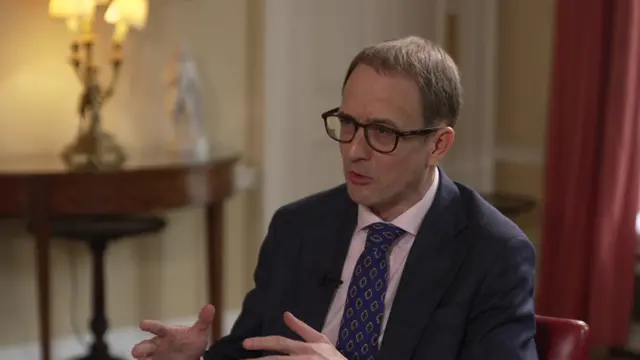
    The BBC's Chris Mason interviews PM Keir Starmer wearing dark suit jacket and patterned tie

    Chris Mason next puts it to the prime minister that the central critique from former Defence Secretary John Healey is that the numbers are "fanciful".

    Is it credible that the government will get to 3.5% of GDP on defence spending by the middle of the next decade, he asks?

    It is "very important" that commitments are properly funded, he says, and this particular plan is outside of the spending review, which makes conditions "difficult".

    The Strategic Defence Review was "intended to provide and answer the capability within the 2.5% that we had risen to on defence spending", he says, adding that the plan came back with a "much bigger price tag".

    Starmer continues by saying he has "taken the decision to reallocate from other departments... that's not an easy thing to do, but it is the right thing to do”.

  19. Defence will be number one priority at every spending review - Starmerpublished at 13:08 BST 12 June

    Media caption,

    Defence 'the number one priority' at spending review, says PM

    Starmer is asked to unpack the government's upcoming defence investment plan. “The critique is that the words are there, but the numbers aren't,” Mason says.

    The prime minister says the government has put "considerable" money into defence already, and that the plan outlines "further money on top of that”. He adds the question is whether that's going to give us capabilities for the future.

    Starmer continues by saying this is why the government is investing in next-generation fighter jets and long-range missiles.

    This has to be seen in the context of "the commitment I've made... to get to 3% in the next Parliament", Starmer says.

    He adds: "I can tell you now that defence will be the number one priority at every spending review, including the next spending review."

  20. Starmer: We're living in a very volatile worldpublished at 13:05 BST 12 June

    PM Keir Starmer wearing dark suit jacket and navy blue tie with dark-framed glasses

    Keir Starmer's first asked how he will convince people that he is not leaving the country "unsafe" - referencing a critique levelled at him by John Healey.

    "We're living in a very volatile world," he says. This requires "hard-edged decisions", he says.

    "Defence and security are my number one priority," he says, and explains that this is why he's decided to increase defence spending to 2.6% by 2027 and take money from overseas development aid.

    "It's my number one priority," he says and "I have taken the difficult decisions to make sure we are safe as a country".