Summary

  1. Venezuela ill-prepared for emergency, says humanitarian body chiefpublished at 20:00 BST

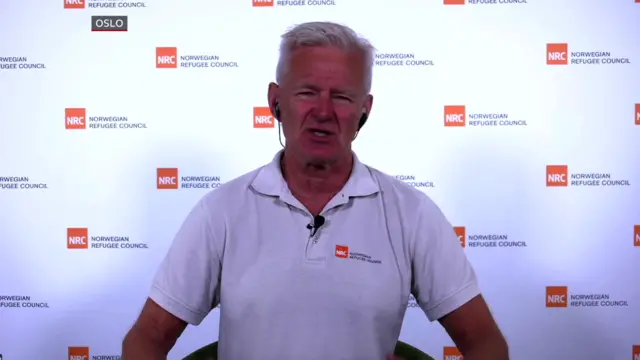
    Jan Egeland, the Norwegian Refugee Council Secretary General

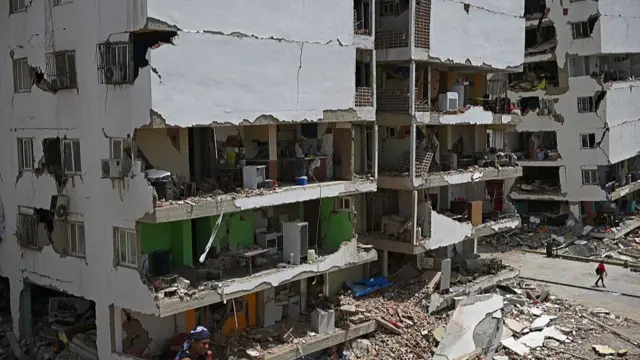
    Jan Egeland, secretary general of the Norwegian Refugee Council, tells the BBC that humanitarian teams on the ground are seeing "horrific damage".

    Egeland says Venezuela is ill-prepared and vulnerable in an emergency situation, as it already has a "crumbling infrastructure" after decades of underinvestment.

    He says poor economic and social conditions have seen millions of young people leave the country, with the least resilient sections of society left behind.

    Egeland says: "If there is a rebuilding and there must be a rebuilding, this could be the opportunity for a restart, a reboot between the acting government of Venezuela, the neighbouring countries, the international community and especially the US.

    "There has to be a major investment not only in the humanitarian relief which is underfunded, but also in reconstruction - water, electricity, sewage, healthcare - all of what is needed to have a functioning society."

  2. 'They are pulling people out with their bare hands'published at 19:39 BST

    Cecilia Barría
    BBC News Mundo

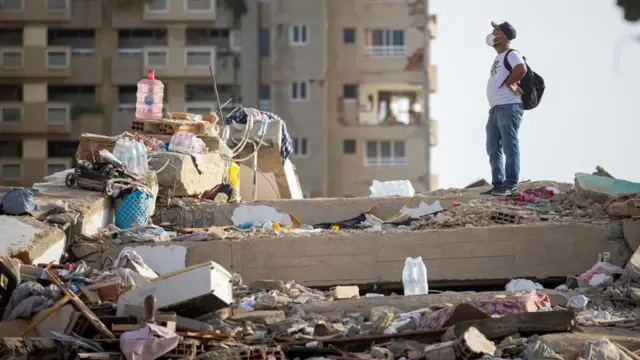
    A man stands on the rubble of a damaged building in Catia La Mar, Venezuela, on 26 June 2026Image source, EPA

    Emergency teams are still searching for people trapped in buildings that collapsed in the earthquakes.

    "Rescue workers are overwhelmed. They are pulling people out with their bare hands," student Antoan Marín told BBC News Mundo from Caracas.

    Disrupted communications and a lack of resources made the initial emergency response difficult. But now rescue teams are being deployed more quickly to the most critical areas.

    One case that has given hope to people across Venezuela is the rescue in La Guaira of three young siblings, who emerged from the rubble with dust covering their faces, according to footage broadcast on state television.

    "Come here, my child, come here," a man says to the first child as he emerges alive from a gap between chunks of concrete.

    A girl then comes out, and the man asks her: "Are you siblings?", to which she replies: "Yes, there are three of us."

    Shortly afterwards, with a little more difficulty, the third sister emerges, sobbing and covered in dust from head to toe.

  3. Despair and destruction on streets of La Guaira, as disaster response continuespublished at 19:18 BST

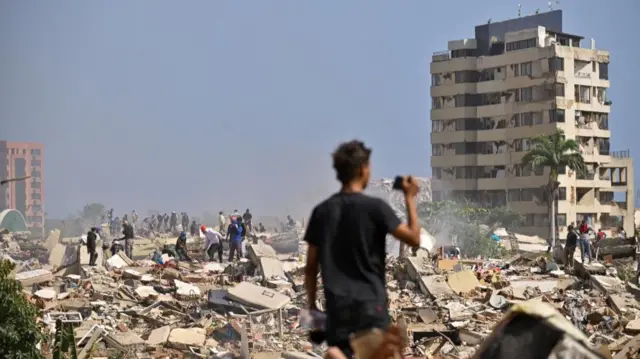
    A boy stands filming a landscape of rubble on his phoneImage source, Reuters
    Image caption,

    La Guaira has been among the worst-affected areas of Venezuela

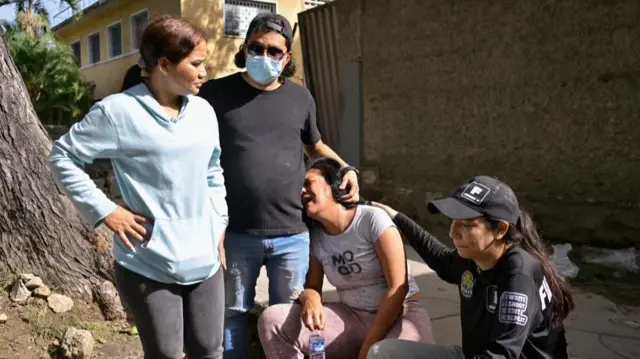
    Three people comfort a fourth woman who is crying, she leans against a man for supportImage source, Reuters
    Image caption,

    As the death toll climbs to 920, many earthquake survivors are mourning loved ones

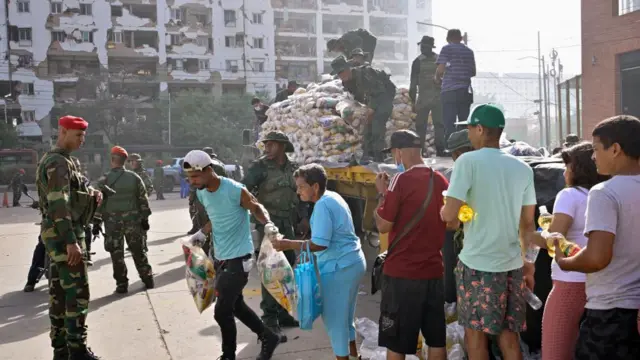
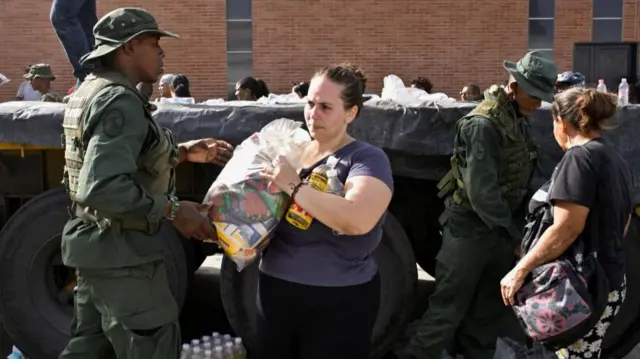
    A woman holds a bag of groceries, surrounded by military personnelImage source, Reuters
    Image caption,

    Army members on the streets of La Guaira distribute supplies to those affected by the disaster

  4. Aid arrives in La Guaira amid criticism of slow government responsepublished at 19:02 BST

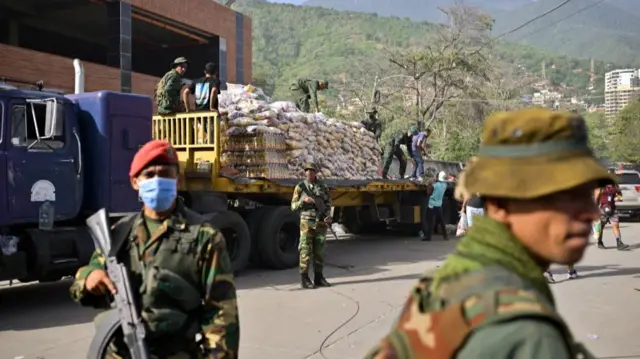
    Military members seen outside a truck filled with white packages of aidImage source, Reuters

    We're seeing images showing military personnel guarding aid on a large lorry, presumably to help people affected by the earthquakes.

    This comes after criticism that the government has not responded in time to the disaster.

    The images show supplies on a lorry in La Guaira, one of the worst-impacted areas. Our colleague Vanessa Silva, who is there, reported earlier that she has yet to see international rescue teams deployed in the state.

  5. More than 240 rescued from La Guaira, Rodríguez sayspublished at 18:46 BST

    As well as the rising death toll - now at 920 people - 383 buildings have been damaged, including 13 hospitals and 25 shopping centres, lawmaker Jorge Rodríguez says on Venezuelan television.

    At least 1,000 other infrastructure sites have sustained damage, he adds.

    He also says 243 people have been rescued from La Guaira, one of the areas worst affected by the earthquakes.

  6. Death toll rises to at least 920 - Venezuelan lawmakerpublished at 18:35 BST
    Breaking

    The death toll in the two powerful earthquakes has reached at least 920 people, top Venezuelan lawmaker Jorge Rodríguez says on Venezuelan television.

    In addition, at least 3,360 people have been injured and 172 are believed still to be trapped, according to state TV.

    Earlier today, Venezuela's acting president, Delcy Rodríguez, said the death toll was 589, with 2,980 injured.

  7. UK rescue teams, search dogs and drones heading to Venezuelapublished at 18:19 BST

    Nick Johnson
    News correspondent

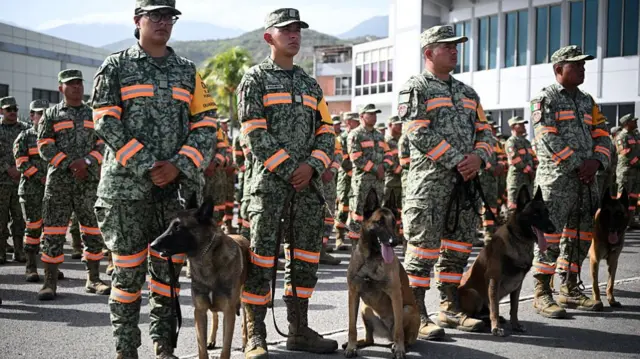
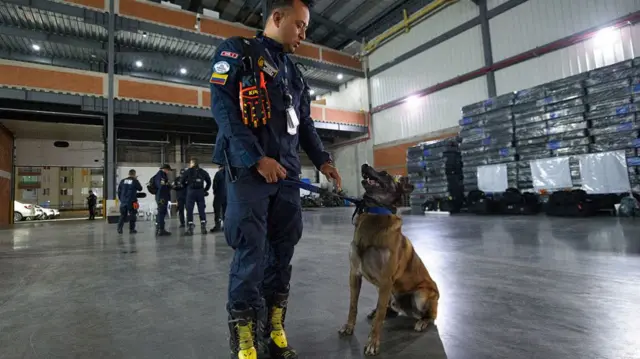
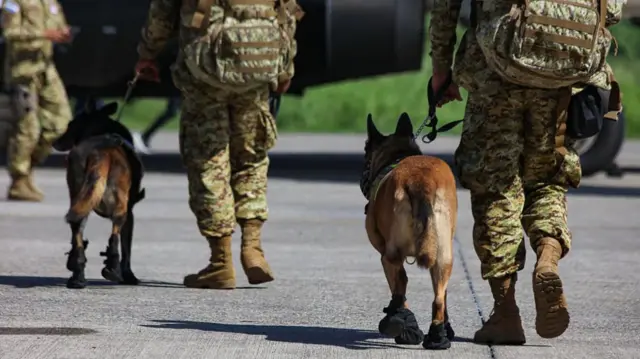
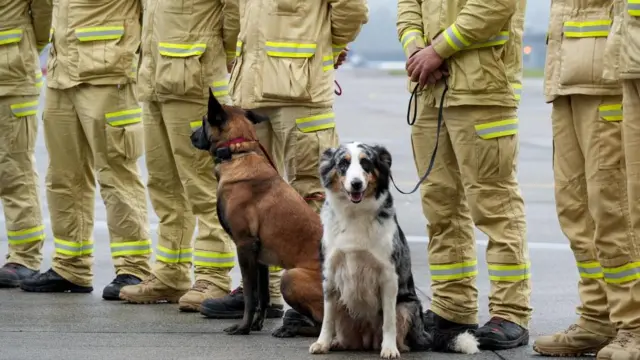
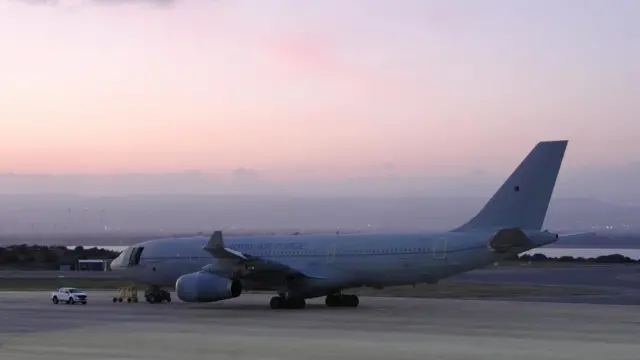
    A UK military flight carrying British search and rescue teams, specialist search dogs and drones has taken off from RAF Brize Norton in Oxfordshire, bound for Venezuela.

    The team on board the Voyager aircraft includes specialists from 14 UK fire services, led by Merseyside Fire and Rescue.

    Prime Minister Keir Starmer says: “The UK stands in solidarity with all those affected, particularly those who have lost loved ones, homes and livelihoods."

    He adds that the government is "making £2 million of emergency humanitarian funding available and are working closely with international partners to ensure vital support reaches those most in need as quickly as possible".

    A Voyager at RAF Akrotiri in CyprusImage source, PA Media
    Image caption,

    A Voyager aircraft carrying rescue teams to Venezuela - photo taken in March 2026

  8. 'They are all I have' - mother holds out hope her daughters will be foundpublished at 18:08 BST

    "There was a small shopping centre here," says Natacha Diaz, standing next to the site of a destroyed building in La Guaira. "It was where my two daughters worked."

    She tells the BBC her missing daughters are aged 22 and 23.

    "They were with their friends," she says. "I just want them to be found. I have faith and hope that they are there."

    "I just want them back with me. They are all I have, please."

  9. Mother dies saving daughter in Venezuela earthquakespublished at 17:53 BST

    Olivia Ireland
    Live reporter

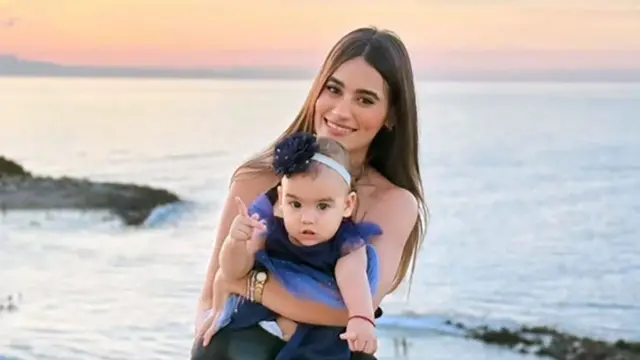
    A woman holding her baby in front of the seaImage source, Instagram

    The wife of Venezuelan footballer Héctor Bello died while saving their daughter during this week's earthquakes.

    Bello wrote on Instagram that "his precious love", named by Venezuelan news outlets as his wife Andrea, saved the life of their toddler during two powerful quakes.

    "I'll tell her the story of how you saved her, my love - how you gave your own life for our daughter, how you were a brave woman who never abandoned her, even as you took your last breaths," Bello wrote in his post.

    In a series of posts, Bello said he travelled to Caracas, where his daughter was in hospital.

    "My daughter and her aunt are doing well, they won't be discharged today - they're staying at the hospital. Thank you so much for supporting me through this immense pain," he posted overnight on Friday.

    In a separate Instagram story, Bello wrote: "How do I explain to your daughter that you lost your life to save hers, and that I wasn't there to do anything? How do I explain it? Give me strength now."

    You can read more here.

  10. Communication issues, poor roads and cut-off communities make rescues harderpublished at 17:38 BST

    Dan Johnson
    On the Venezuela border in Cúcuta, Colombia

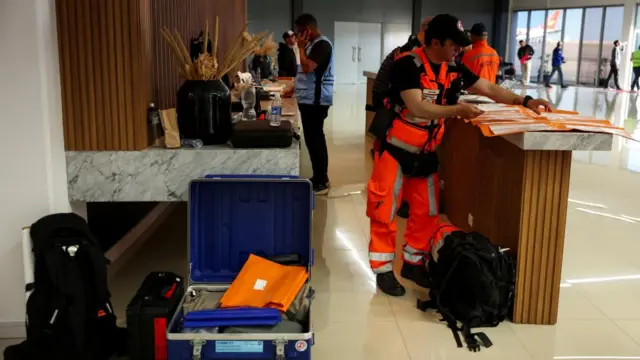
    Cúcuta airport is close to the Venezuelan border. At arrivals, we met a Mexican firefighter who’d got on a plane and offered his expertise in search and rescue.

    The Venezuelan military is going to pick him up and drive him to the worst-hit areas to join the frantic effort to save people from the ruins of collapsed buildings.

    Thousands are reported missing. The uncertainty of that wait for news is also drawing people here.

    A Venezuelan man who didn’t want to share any details told us he was returning to his country after years living overseas because he hasn’t heard from relatives since the earthquake hit. He wants to see for himself what’s happened to their neighbourhood and whether they survived.

    Communication issues, poor roads and cut-off communities all make co-ordinating the search more challenging.

    There are hopeful stories of successful rescue but as this disaster goes into a third day it’s becoming harder to stay optimistic.

  11. Watch: BBC reports from La Guaira - one of the worst-hit areaspublished at 17:20 BST

    Our colleague Vanessa Silva is now in La Guaira, one of the areas worst affected by the earthquakes in Venezuela.

    She says the situation on the ground is still difficult - while international rescue teams are arriving in Venezuela, they have not been deployed to all the places she is visiting today.

    Watch her report below.

  12. As aid arrives, locals look for alternative shelterpublished at 17:01 BST

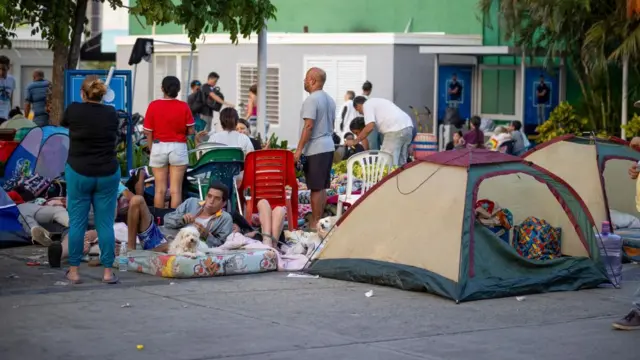
    Buildings collapsed and roads were damaged after two earthquakes struck in Venezuela, forcing residents to find alternative shelter - with some resorting to mattresses and tents on the streets.

    Here are some of the latest pictures from the scene.

    A man lies on a mattress with a dog among several people on a pedestrianised area of VenezuelaImage source, EPA
    Image caption,

    Tents are set up in the city of Catia La Mar as rescuers continue to look for survivors

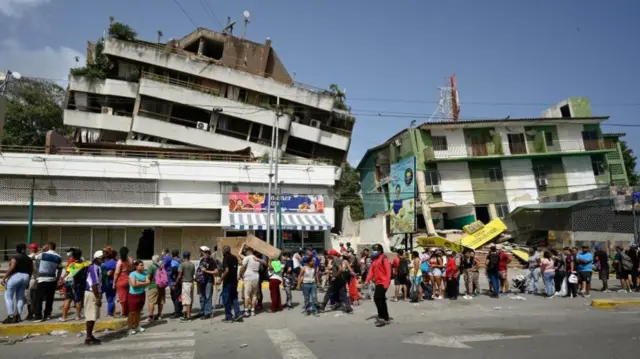
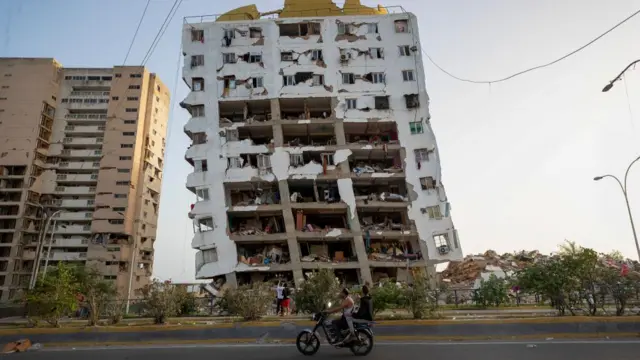
    Two men on a motorbike ride past a destroyed building on the verge of collapseImage source, EPA
    Image caption,

    Also in Catia La Mar, a residential building appears to be very unsteady after the two earthquakes

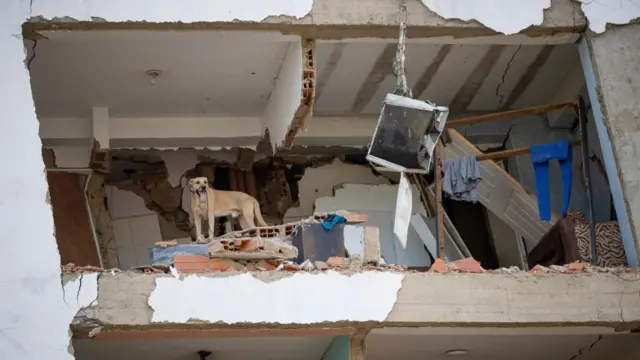
    A dog looks out from a destroyed apartment buildingImage source, EPA
    Image caption,

    On the third floor, a dog looks for a way out

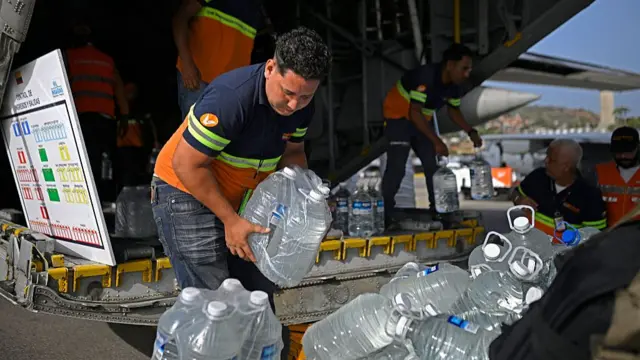
    Aid workers transferring bottled water from a planeImage source, Getty Images
    Image caption,

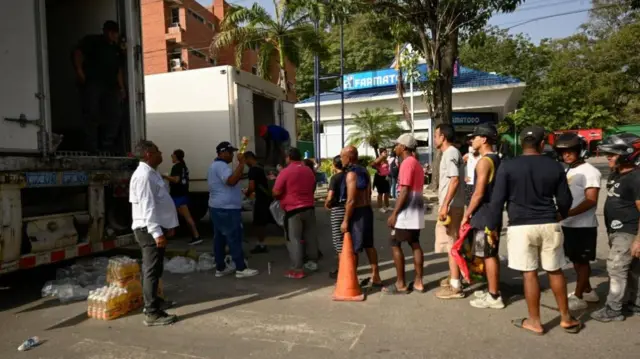
    Meanwhile, aid has started to arrive - here bottles of water delivered by the Colombian air force arrive in Venezuela

  13. 'The floor was like liquid' - Caracas-based teacher describes earthquakepublished at 16:40 BST

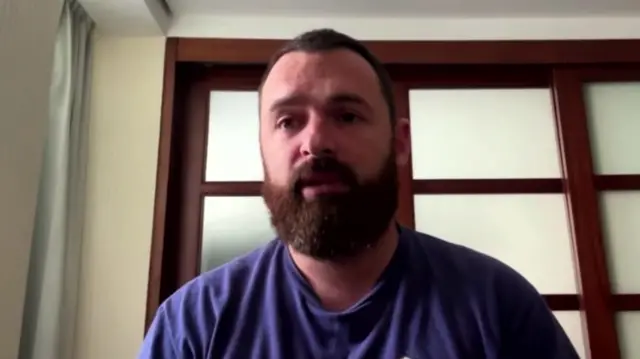
    Muir Gibb speaks to camera from inside a room during a BBC interview

    Muir Gibb, a teacher at The British School in Caracas, was watching the Scotland v Brazil World Cup match in a bar when the earthquake struck.

    He tells the BBC News Channel how "the floor started to shake", and "parts of the wall, parts of the glass started to fall down".

    "Even trying to walk was difficult," he adds, because the floor "was like liquid".

    He describes returning to his apartment building to get some clothes for the night.

    "All of the walls were cracked and damaged," he says. "It was eerie, it was like being in a horror movie."

    Gibb says he feels "very lucky" he could sleep on the floor of his school that night. "I'm certainly not complaining because I think that's probably much better than the majority of people."

    Muir Gibb's apartmentImage source, Muir Gibb
    Image caption,

    Muir Gibb's apartment building has been heavily damaged by the earthquake

  14. Watch: moment earthquake hit during festival celebrationspublished at 16:26 BST

    Venezuela's Fiesta de San Juan Bautista was in full flow when the earthquakes struck on Wednesday.

    The festival, a celebration of African culture, is held in towns and villages with a strong Afro-Venezuelan heritage.

    You can watch the moment the earthquake hit as the drums played below.

  15. What causes an earthquake?published at 16:08 BST

    Mark Poynting
    Climate and science reporter

    The outer layer of the Earth is divided into different sections called tectonic plates - a bit like the Earth’s puzzle pieces.

    These plates move very slowly - perhaps only a few centimetres a year, which is roughly the same rate as your fingernails grow.

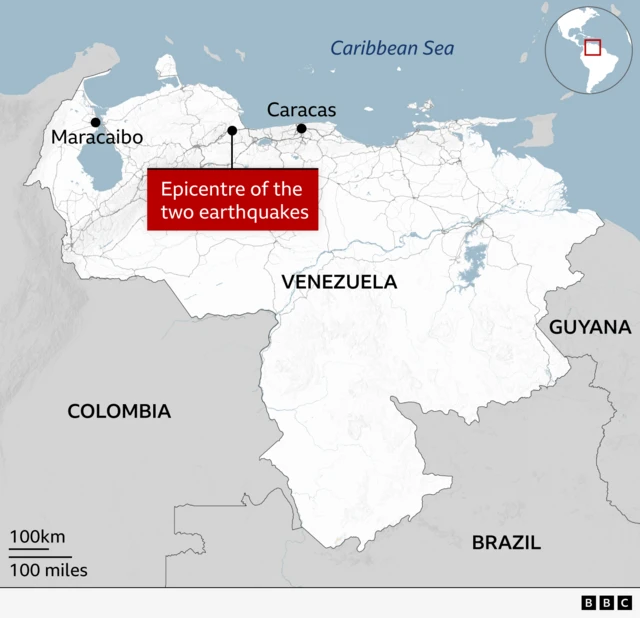
    Northern Venezuela sits on the boundary of the Caribbean and South American plates.

    As they move relative to one another, parts of the plates can get "stuck", and stress builds up over a long period of time.

    Eventually, this stress becomes too much and the plates jolt or slip back into place.

    That releases the huge amounts of energy experienced as an earthquake.

    A map showing the location of the epicentre of the two earthquakes
  16. How the 40 hours since the double earthquakes unfoldedpublished at 15:49 BST

    A person stands silhouetted among the remains of a damaged building in La GuairaImage source, Reuters

    It’s been just over 40 hours since Venezuela was rocked by twin earthquakes. The death toll has continued to climb, as international teams head to the country to help with recovery efforts.

    Here’s a timeline of how events unfolded.

    Wednesday, 18:04 local time (23:04 BST): An earthquake of magnitude 7.2 strikes in the north of Venezuela.

    About 39 seconds later: A second earthquake of magnitude 7.5 strikes, 28km (17.4 miles) south-east of Yumare, a town in Yaracuy state. This was the strongest to hit the country since 1900.

    Thursday, about 00:50: Venezuela’s acting president Delcy Rodriguez reports at least 32 deaths and more than 700 injured. She says this doesn’t include any figures from the state most affected by the earthquakes, La Guaira.

    Throughout the day: As rescuers and the army mobilise to clear debris, aid groups around the world scramble to deliver help to Venezuela, with the US pledging $150m (£113.4m) in assistance.

    Friday morning: Support teams from countries including Mexico, El Salvador, Switzerland and Spain land in Venezuela, with personnel from more countries and organisations expected.

    Around 08:30 local time (13:30 BST): Rodriguez says the death toll has risen to 589 people and the number of injured stands at 2,980. She adds that the hard-hit state of La Guaira will be "militarised".

  17. Why this tragedy feels particularly hard for Venezuelans living abroadpublished at 15:29 BST

    Jorge Pérez
    BBC News Mundo

    I'm Venezuelan and have been living abroad for six years. I see among my family and friends in the diaspora how difficult it is to face - once again - a situation of national upheaval in Venezuela.

    Many tell me how they've organised and are gathering aid to send home.

    And although we've lived through difficult times on several occasions, this one feels particularly hard.

    Those abroad find themselves in a state of dissociation between a tragedy striking their country and the normality of their own routines far away from Venezuela.

    And there's an additional element, too. This is the biggest natural disaster that Venezuela has experienced in the age of social media.

    During the Vargas disaster of 1999 - when that deadly landslide killed and left missing thousands of La Guaira’s residents - we heard the stories through TV, radio or newspapers. It wasn't immediate - we had to wait for the information.

    After the earthquakes, it is the victims themselves who are using their own mobile phones and social media posts to show straight to us the horrific reality in which the country is plunged.

    For those abroad, this brings you home in a more personal way, but also more bleak, more dismal.

  18. Watch: Children rescued from damaged buildingpublished at 15:19 BST

    Police in Venezuela have released the video below showing children being rescued from a damaged building.

    Dozens of people have been rescued alive since the earthquake, acting President Delcy Rodriguez said earlier.

  19. 'My heart tells me he is alive'published at 15:14 BST

    Valentina Oropeza
    BBC News Mundo, reporting from Caracas

    Marianella (top right) and Juan Diego (top left) with their parents at a family gatheringImage source, Marianella Cremi
    Image caption,

    Marianella and Juan Diego with their parents at a family gathering

    Marianella Cremi is sitting on the pavement next to her mother, just a few blocks from the Petunia building in Caracas, where her brother Juan Diego was watching the Brazil-Scotland football match when the roof collapsed as the quakes hit the city.

    "My heart tells me my brother is alive," Marianella, 25, says in a WhatsApp call from a street in Los Palos Grandes, one of the hardest-hit areas in northern Caracas.

    Marianella and her parents were in Acarigua, some 320km (200 miles) from Caracas, when they saw videos of the collapse of the Petunia building on social media.

    The three of them got into the car and drove for more than four hours, arriving in Caracas at midnight.

    Others have been pulled out of the rubble of the building alive, so Marianella and her family hope Juan Diego, 23, and his girlfriend Sabrina Bolognesi, 22, will be found.

    Of the people they know who were in the building at the time, "only Juan Diego and Sabrina are still missing," says Marianella. "We have faith and trust in God that we will find them alive."

    Sabrina and Juan DiegoImage source, Marianella Cremi
    Image caption,

    Juan Diego and Sabrina are still missing

  20. Volunteers set up care centre in town near quake epicentrepublished at 15:04 BST

    Volunteers have set up a makeshift care centre in the seaside town of Morón in Carabobo state, near the epicentre of the quake.

    Water and electricity supplies are scarce after the quakes hit the town.

    Ambulance at a care centre in Moron, Carabobo State on June 26, 2026.Image source, AFP via Getty Images
    Care and rescue workers at a makeshift centre in Moron, Carabobo State on June 26, 2026.Image source, AFP via Getty Images
    People are treated at a care centre in Moron, Carabobo State on June 26, 2026.Image source, AFP via Getty Images