Summary

  1. Mother dies saving daughter in Venezuela earthquakespublished at 17:53 BST

    Olivia Ireland
    Live reporter
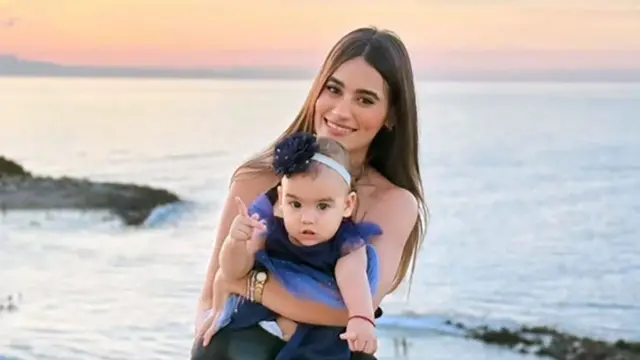
    A woman holding her baby in front of the seaImage source, Instagram

    The wife of Venezuelan footballer Héctor Bello died while saving their daughter during this week's earthquakes.

    Bello wrote on Instagram that "his precious love", named by Venezuelan news outlets as his wife Andrea, saved the life of their toddler during two powerful quakes.

    "I'll tell her the story of how you saved her, my love - how you gave your own life for our daughter, how you were a brave woman who never abandoned her, even as you took your last breaths," Bello wrote in his post.

    In a series of posts, Bello said he travelled to Caracas, where his daughter was in hospital.

    "My daughter and her aunt are doing well, they won't be discharged today - they're staying at the hospital. Thank you so much for supporting me through this immense pain," he posted overnight on Friday.

    In a separate Instagram story, Bello wrote: "How do I explain to your daughter that you lost your life to save hers, and that I wasn't there to do anything? How do I explain it? Give me strength now."
    You can read more here.

  2. Communication issues, poor roads and cut-off communities make rescue harderpublished at 17:38 BST

    Dan Johnson
    On the Venezuela border in Cúcuta, Colombia

    Cúcuta airport is close to the Venezuelan border. At arrivals, we met a Mexican firefighter who’d got on a plane and offered his expertise in search and rescue.

    The Venezuelan military is going to pick him up and drive him to the worst-hit areas to join the frantic effort to save people from the ruins of collapsed buildings.

    Thousands are reported missing. The uncertainty of that wait for news is also drawing people here.

    A Venezuelan man who didn’t want to share any details told us he was returning to his country after years living overseas because he hasn’t heard from relatives since the earthquake hit. He wants to see for himself what’s happened to their neighbourhood and whether they survived.

    Communication issues, poor roads and cut-off communities all make co-ordinating the search more challenging.

    There are hopeful stories of successful rescue but as this disaster goes into a third day it’s becoming harder to stay optimistic.

  3. Watch: BBC reports from La Guaira - one of the worst-hit areaspublished at 17:20 BST

    Our colleague Vanessa Silva is now in La Guaira, one of the areas worst affected by the earthquakes in Venezuela.

    She says the situation on the ground is still difficult - while international rescue teams are arriving in Venezuela, they have not been deployed to all the places she is visiting today.

    Watch her report below.

  4. As aid arrives, locals look for alternative shelterpublished at 17:01 BST

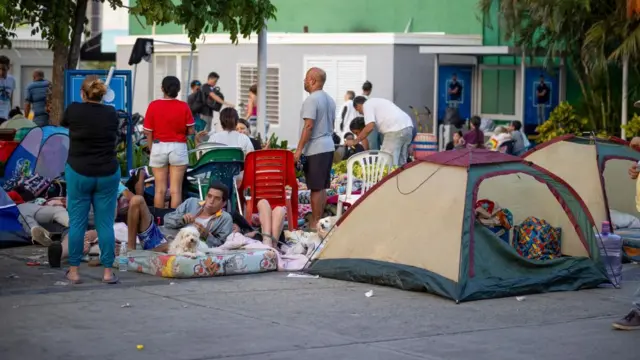
    Buildings collapsed and roads were damaged after two earthquakes struck in Venezuela, forcing residents to find alternative shelter - with some resorting to mattresses and tents on the streets.

    Here are some of the latest pictures from the scene.

    A man lies on a mattress with a dog among several people on a pedestrianised area of VenezuelaImage source, EPA
    Image caption,

    Tents are set up in the city of Catia La Mar as rescuers continue to look for survivors

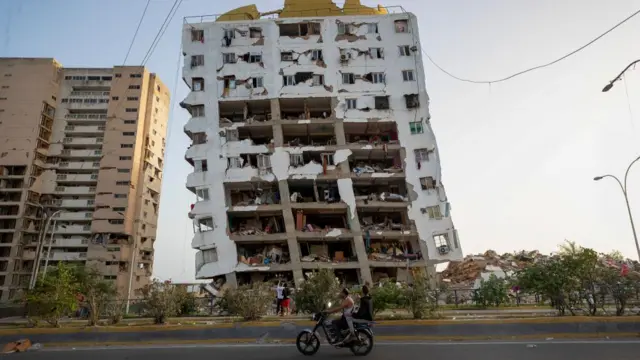
    Two men on a motorbike ride past a destroyed building on the verge of collapseImage source, EPA
    Image caption,

    Also in Catia La Mar, a residential building appears to be very unsteady after the two earthquakes

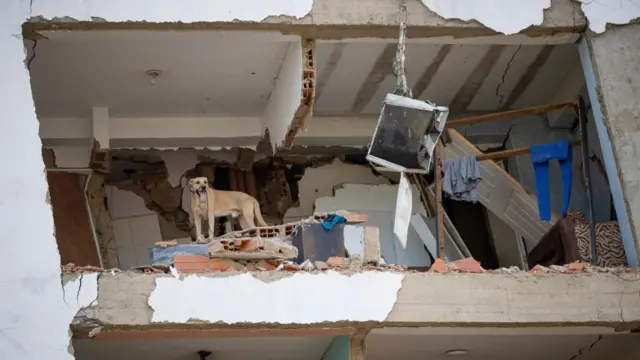
    A dog looks out from a destroyed apartment buildingImage source, EPA
    Image caption,

    On the third floor, a dog looks for a way out

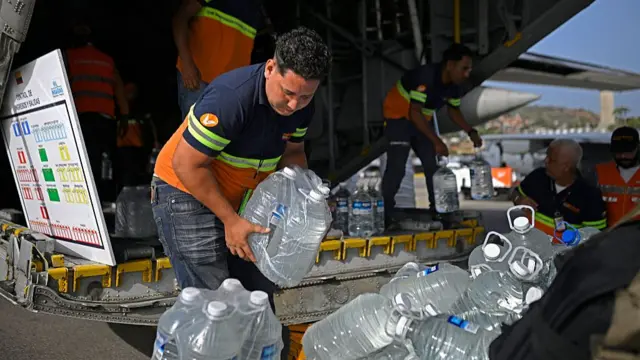
    Aid workers transferring bottled water from a planeImage source, Getty Images
    Image caption,

    Meanwhile, aid has started to arrive - here bottles of water delivered by the Colombian air force arrive in Venezuela

  5. 'The floor was like liquid' - Caracas-based teacher describes earthquakepublished at 16:40 BST

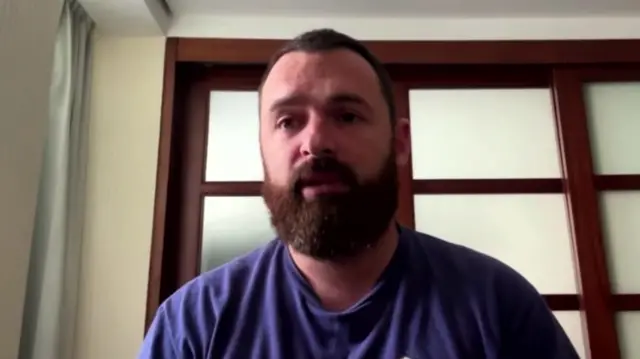
    Muir Gibb speaks to camera from inside a room during a BBC interview

    Muir Gibb, a teacher at The British School in Caracas, was watching the Scotland v Brazil World Cup match in a bar when the earthquake struck.

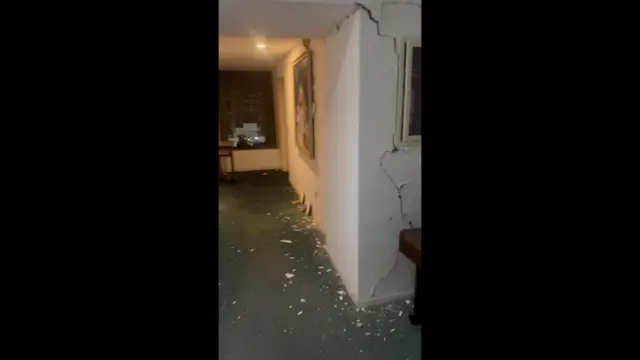
    He tells the BBC News Channel how "the floor started to shake", and "parts of the wall, parts of the glass started to fall down".

    "Even trying to walk was difficult," he adds, because the floor "was like liquid".

    He describes returning to his apartment building to get some clothes for the night.

    "All of the walls were cracked and damaged," he says. "It was eerie, it was like being in a horror movie."

    Gibb says he feels "very lucky" he could sleep on the floor of his school that night. "I'm certainly not complaining because I think that's probably much better than the majority of people."

    Muir Gibb's apartmentImage source, Muir Gibb
    Image caption,

    Muir Gibb's apartment building has been heavily damaged by the earthquake

  6. Watch: moment earthquake hit during festival celebrationspublished at 16:26 BST

    Venezuela's Fiesta de San Juan Bautista was in full flow when the earthquakes struck on Wednesday.

    The festival, a celebration of African culture, is held in towns and villages with a strong Afro-Venezuelan heritage.

    You can watch the moment the earthquake hit as the drums played below.

  7. What causes an earthquake?published at 16:08 BST

    Mark Poynting
    Climate and science reporter

    The outer layer of the Earth is divided into different sections called tectonic plates - a bit like the Earth’s puzzle pieces.

    These plates move very slowly - perhaps only a few centimetres a year, which is roughly the same rate as your fingernails grow.

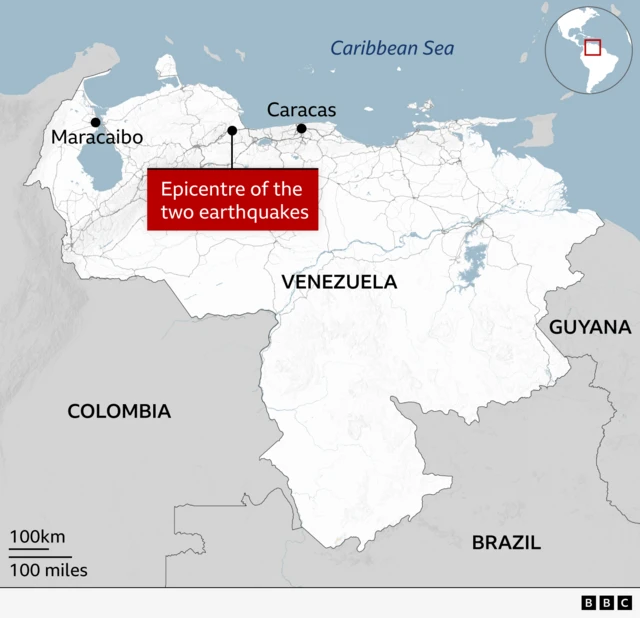
    Northern Venezuela sits on the boundary of the Caribbean and South American plates.

    As they move relative to one another, parts of the plates can get "stuck", and stress builds up over a long period of time.

    Eventually, this stress becomes too much and the plates jolt or slip back into place.

    That releases the huge amounts of energy experienced as an earthquake.

    A map showing the location of the epicentre of the two earthquakes
  8. How the 40 hours since the double earthquakes unfoldedpublished at 15:49 BST

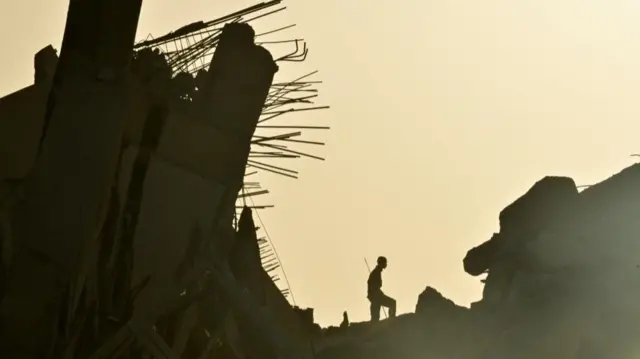
    A person stands silhouetted among the remains of a damaged building in La GuairaImage source, Reuters

    It’s been just over 40 hours since Venezuela was rocked by twin earthquakes. The death toll has continued to climb, as international teams head to the country to help with recovery efforts.

    Here’s a timeline of how events unfolded.

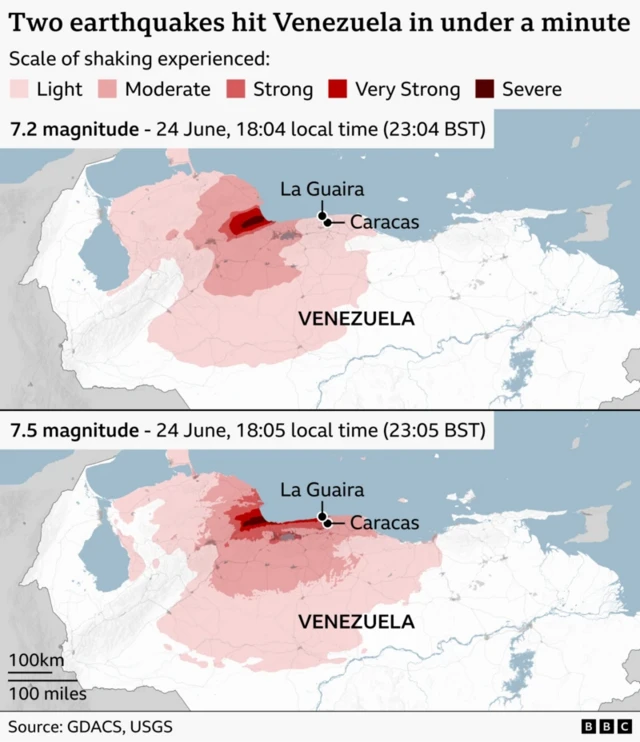
    Wednesday, 18:04 local time (23:04 BST): An earthquake of magnitude 7.2 strikes in the north of Venezuela.

    About 39 seconds later: A second earthquake of magnitude 7.5 strikes, 28km (17.4 miles) south-east of Yumare, a town in Yaracuy state. This was the strongest to hit the country since 1900.

    Thursday, about 00:50: Venezuela’s acting president Delcy Rodriguez reports at least 32 deaths and more than 700 injured. She says this doesn’t include any figures from the state most affected by the earthquakes, La Guaira.

    Throughout the day: As rescuers and the army mobilise to clear debris, aid groups around the world scramble to deliver help to Venezuela, with the US pledging $150m (£113.4m) in assistance.

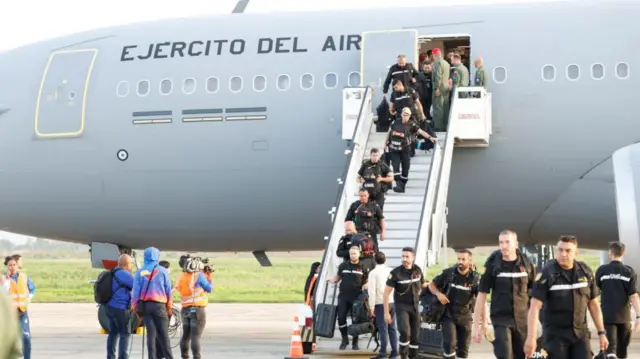
    Friday morning: Support teams from countries including Mexico, El Salvador, Switzerland and Spain land in Venezuela, with personnel from more countries and organisations expected.

    Around 08:30 local time (13:30 BST): Rodriguez says the death toll has risen to 589 people and the number of injured stands at 2,980. She adds that the hard-hit state of La Guaira will be "militarised".

  9. Why this tragedy feels particularly hard for Venezuelans living abroadpublished at 15:29 BST

    Jorge Pérez
    BBC News Mundo

    I'm Venezuelan and have been living abroad for six years. I see among my family and friends in the diaspora how difficult it is to face - once again - a situation of national upheaval in Venezuela.

    Many tell me how they've organised and are gathering aid to send home.

    And although we've lived through difficult times on several occasions, this one feels particularly hard.

    Those abroad find themselves in a state of dissociation between a tragedy striking their country and the normality of their own routines far away from Venezuela.

    And there's an additional element, too. This is the biggest natural disaster that Venezuela has experienced in the age of social media.

    During the Vargas disaster of 1999 - when that deadly landslide killed and left missing thousands of La Guaira’s residents - we heard the stories through TV, radio or newspapers. It wasn't immediate - we had to wait for the information.

    After the earthquakes, it is the victims themselves who are using their own mobile phones and social media posts to show straight to us the horrific reality in which the country is plunged.

    For those abroad, this brings you home in a more personal way, but also more bleak, more dismal.

  10. Watch: Children rescued from damaged buildingpublished at 15:19 BST

    Police in Venezuela have released the video below showing children being rescued from a damaged building.

    Dozens of people have been rescued alive since the earthquake, acting President Delcy Rodriguez said earlier.

  11. 'My heart tells me he is alive'published at 15:14 BST

    Valentina Oropeza
    BBC News Mundo, reporting from Caracas

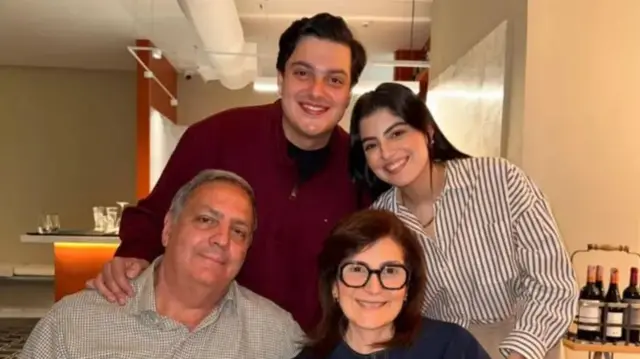
    Marianella (top right) and Juan Diego (top left) with their parents at a family gatheringImage source, Marianella Cremi
    Image caption,

    Marianella and Juan Diego with their parents at a family gathering

    Marianella Cremi is sitting on the pavement next to her mother, just a few blocks from the Petunia building in Caracas, where her brother Juan Diego was watching the Brazil-Scotland football match when the roof collapsed as the quakes hit the city.

    "My heart tells me my brother is alive," Marianella, 25, says in a WhatsApp call from a street in Los Palos Grandes, one of the hardest-hit areas in northern Caracas.

    Marianella and her parents were in Acarigua, some 320km (200 miles) from Caracas, when they saw videos of the collapse of the Petunia building on social media.

    The three of them got into the car and drove for more than four hours, arriving in Caracas at midnight.

    Others have been pulled out of the rubble of the building alive, so Marianella and her family hope Juan Diego, 23, and his girlfriend Sabrina Bolognesi, 22, will be found.

    Of the people they know who were in the building at the time, "only Juan Diego and Sabrina are still missing," says Marianella. "We have faith and trust in God that we will find them alive."

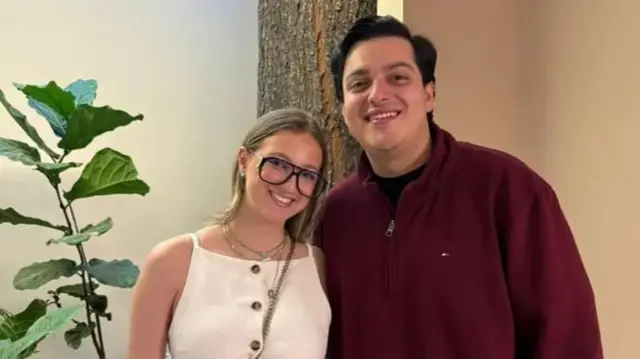
    Sabrina and Juan DiegoImage source, Marianella Cremi
    Image caption,

    Juan Diego and Sabrina are still missing

  12. Volunteers set up care centre in town near quake epicentrepublished at 15:04 BST

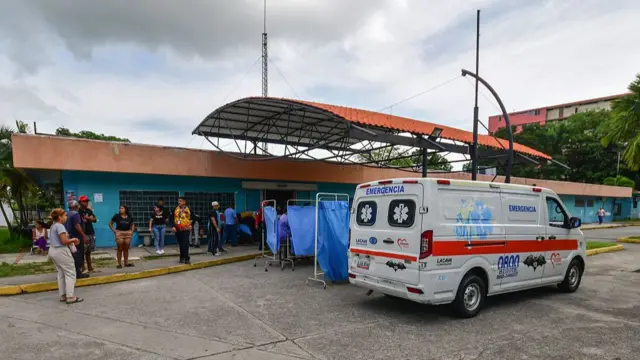
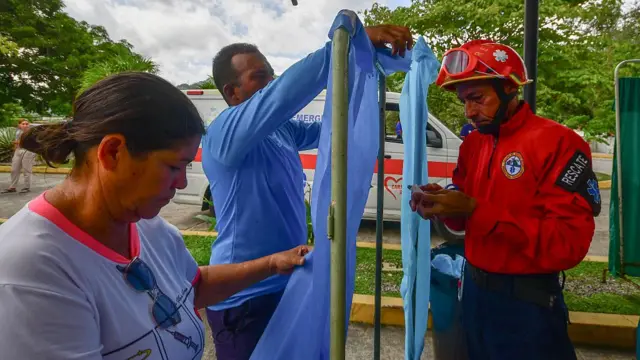
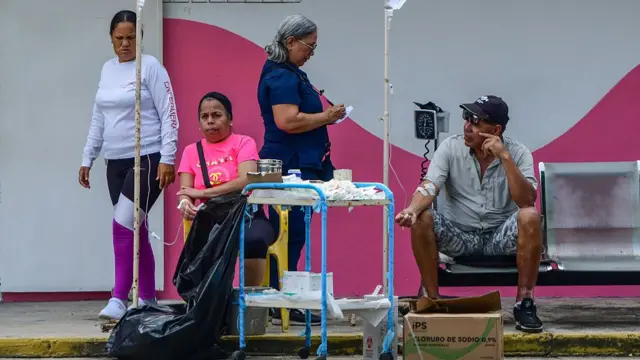
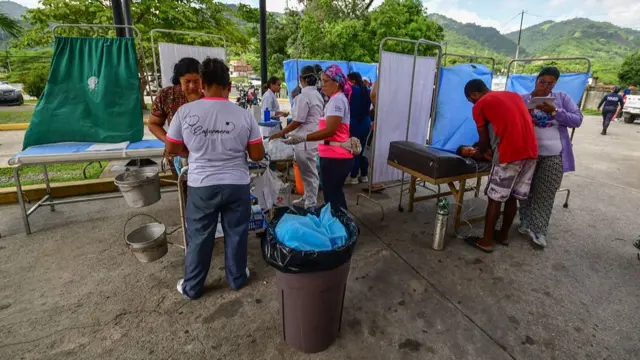
    Volunteers have set up a makeshift care centre in the seaside town of Morón in Carabobo state, near the epicentre of the quake.

    Water and electricity supplies are scarce after the quakes hit the town.

    Ambulance at a care centre in Moron, Carabobo State on June 26, 2026.Image source, AFP via Getty Images
    Care and rescue workers at a makeshift centre in Moron, Carabobo State on June 26, 2026.Image source, AFP via Getty Images
    People are treated at a care centre in Moron, Carabobo State on June 26, 2026.Image source, AFP via Getty Images
  13. Search and rescue steps up as death toll hits 589 - recappublished at 14:54 BST

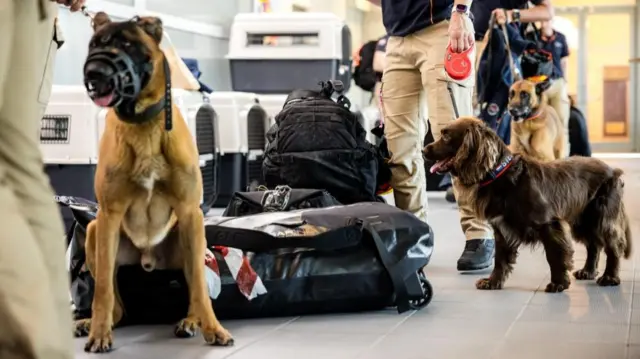
    Dogs from a Dutch rescue team depart from Eindhoven Air Base for Venezuela to provide aid following the earthquakesImage source, EPA/Shutterstock
    Image caption,

    Dogs from a search and rescue team wait to depart The Netherlands for Venezuela

    Venezuela's interim President Delcy Rodriguez says the number of deaths in Wednesday's earthquakes now stands at 589, with 2,980 injured.

    Rodriguez has also instructed the military to take control of La Guaira, one of the worst-hit areas.

    Hospitals are said to be overwhelmed. Medics tell the BBC that even before the earthquake, medical supplies were insufficient for the population.

    The United Nations says more than 1,000 international search and rescue workers have been deployed, including teams of sniffer dogs.

    The UN's humanitarian chief Tom Fletcher told BBC Radio 4's Today programme: "I want people to know in Venezuela that help is coming."

    Venezuela is a country already mired in uncertainty - it has been less than six months since Nicolás Maduro, the leader who had ruled the country since 2013, was seized by US forces in a dawn raid - you can read analysis on that here.

    We also wrote a timeline earlier on how the disaster and the following rescue efforts unfolded.

  14. International teams heading to help Venezuelapublished at 14:35 BST

    Rescue personnel of Spain’s Emergency Military Unit (UME) arrive in Venezuela to provide assistance in rescue efforts after earthquakesImage source, Reuters
    Image caption,

    Spain's Emergency Military Unit arrives in Venezuela

    Spanish rescue workers have been pictured arriving in Venezuela, after Swiss workers were reported to have arrived earlier today.

    Many other international teams are on their way or preparing to help.

    These include Italy, Czechia, France, Germany, Luxembourg, Portugal and the Netherlands - which we saw depart a short while ago. They are all sending search and rescue teams, according to European Commission President Ursula von der Leyen.

    The UK Foreign Office said on Thursday that the UK's International Search and Rescue team "stands ready for deployment".

    The UN humanitarian chief Tom Fletcher said on Thursday that his team in Venezuela was co-ordinating a "surge of urban search and rescue teams from across the world with more on the way".

    And World Health Organization (WHO) chief Tedros Adhanom Ghebreyesus also said on Thursday that teams are "on standby to deploy additional staff" and supplies.

  15. Hard-hit La Guaira is an economically important part of Venezuela that's suffered beforepublished at 14:27 BST

    Daniel Gonzalez Cappa

    Acting President Delcy Rodríguez says La Guaira state has been "militarised" for emergency response. Images and videos circulating on social media show many collapsed buildings and devastation.

    La Guaira is one of Venezuela's smallest states, but it's economically important. It sits on the central northern coast on the Caribbean Sea, north of Caracas, and is a popular destination for visitors from the capital.

    The state is also home to one of the country's two main ports and to Simón Bolívar International Airport in Maiquetía - Venezuela's main airport.

    The images coming out of the area are a reminder of another catastrophe in December 1999, when torrential rains triggered a series of landslides. The death toll then was in the thousands.

    La Guaira never fully recovered from those landslides. Even today, the enormous rocks that destroyed buildings are still there.

    Two maps showing powerful earthquakes striking northern Venezuela less than a minute apart on 24 June. The first, magnitude 7.2 at 18:04 local time, produced strong to severe shaking concentrated inland near the coast, while the second, slightly larger magnitude 7.5 at 18:05, spread more intense shaking across a wider area particularly along the northern coast. The maps use a colour scale from light to severe to illustrate shaking intensity, highlighting heavily affected zones around La Guaira and Caracas, with broader regions experiencing moderate to strong tremors. The source is GDACS and the USGS
  16. La Guaira state 'militarised' for emergency response, Venezuela leader sayspublished at 14:13 BST

    A bit more now from acting President of Venezuela Delcy Rodríguez, whose comments have been reported by local media outlets and Reuters news agency.

    Rodríguez says dozens of people have been rescued alive.

    "It brings us joy that they can embrace their families and loved ones," she says.

    She says there have been 214 aftershocks so far. "This demonstrates and reflects the seismic activity in our territory."

    She also says the state of La Guaira will be "militarised" to help the emergency response.

    La Guaira is one of the areas worst affected by the twin earthquakes.

  17. Death toll rises to 589 - acting President Rodríguezpublished at 13:41 BST
    Breaking

    The death toll in Venezuela has risen to 589, and the number of injured is now 2,980, acting President Delcy Rodríguez has said.

    The previous official update, from the country’s health minister, put the death toll at 235 people, with 4,300 injured.

    We will bring you more from her updates soon.

  18. Venezuelans desperately try to contact loved ones amid disasterpublished at 13:31 BST

    Jorge Pérez
    BBC News Mundo

    Several people treating injured patients ina makeshift care centre in VenezuelaImage source, Getty Images
    Image caption,

    Care centres are being set up in affected areas to treat the injured

    I am chatting with several people I know in Venezuela who have missing relatives in La Guaira, the most affected area after the twin earthquakes.

    They know the buildings where their relatives lived have collapsed, and despite their best efforts, they cannot get any information. Phones are going unanswered. And official information for them feels virtually non-existent.

    One of them told me she finally found her aunt, who had left her apartment to walk her dog minutes before it collapsed. Both her aunt and the pet have lost their home, but they are unharmed.

    Another person I have been chatting with - who lives in Europe - told me yesterday they had two close relatives trapped in the rubble in a neighbourhood also close to the coast.

    They were trying to do what they could from miles away, and across a five-hour time difference. People in the area told them they heard voices from the rubble. They thought it was one of their relatives.

    This morning I woke up to her message confirming that both of her relatives were found, but they did not survive.

  19. BBC Verify

    Why is there earthquake damage so far from the epicentre?published at 13:25 BST

    By Thomas Copeland

    BBC Verify has consulted seismologists to understand why satellite imagery and social media videos show such significant damage to cities along Venezuela's coast, some more than 100 miles away from the earthquakes' epicentre.

    "Instead of imagining an earthquake as a point, it's like a line on the map. It'll start at that epicentral region and then extend," says Dr Laura Gregory, an associate professor of earthquake geology at the University of Leeds.

    This is because earthquakes are caused by movements of fault lines, the geological term for fractures in the earth’s crust.

    These movements, Gregory says, are called ruptures and the "closer that you are to that earthquake rupture, the worse the shaking is going to be".

    Scientists say preliminary data indicates these earthquakes caused ruptures in the San Sebastián Fault, which extends from the epicentre of these quakes along Venezuela's coast.

    "These earthquakes were large, so we'd expect the length of the fault that ruptured to be between 100km and 200km long," according to Dr Amy Gilligan, a lecturer in geophysics at the University of Aberdeen.

    Geology can play a role too, Gilligan adds, with places built on soft sediments like sand likely to experience "more shaking than if you're on hard bedrock like granite".

  20. Dutch rescue team heading to Venezuelapublished at 13:16 BST

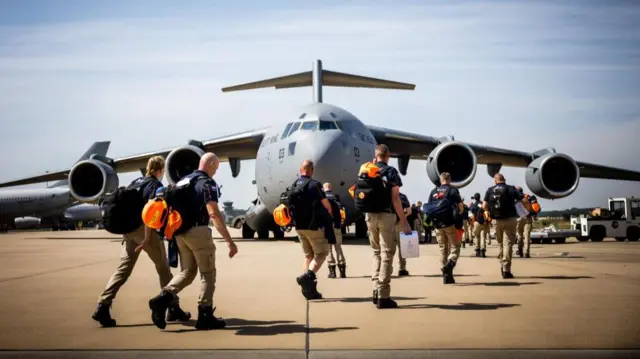
    Emergency workers in brown trousers and blue shirts with orange helmets slung over their backs walk across the tarmac onto a plane.Image source, EPA/Shutterstock

    A Dutch rescue team has departed Eindhoven Air Base for Venezuela to assist with recovery efforts.

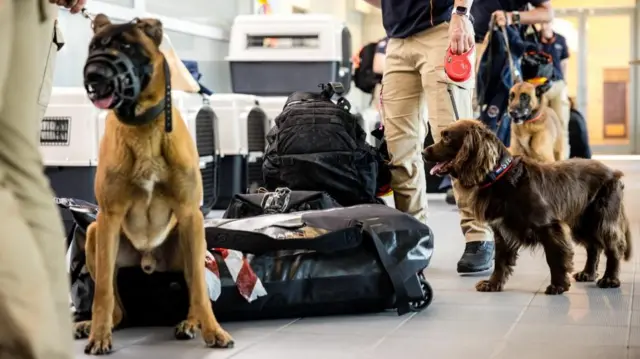
    The team is made up of 65 rescue workers and eight dogs, according to the European Press Agency.

    A team from El Salvador has also arrived in the country, alongside rescue personnel from Mexico and Switzerland.

    Earlier, the UN's humanitarian chief Tom Fletcher told BBC Radio 4's Today programme that this disaster "needs an international global response and we'll co-ordinate that and we will deliver".

    "I want people to know in Venezuela that help is coming," he said.

    Three rescue dogs held on leads by Dutch workers by kennels at an airportImage source, EPA/Shutterstock
    Image caption,

    Search dogs among the Dutch rescue team heading to Venezuela