_____________________________________________________________________________________________________
Download a free 6 Minute English worksheet and transcript!
Try our free interactive quiz!
______________________________________________________________________________________________________


Introduction
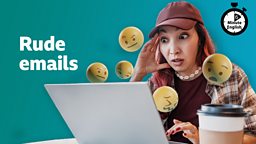
What is the rudest email you have ever received? We all deal with emails on a daily basis, but sometimes people can write them too quickly, without thinking enough about how it makes the other person feel. Is there anything that people write in emails which you find impolite? And have you ever sent a rude email yourself...? Phil and Becca discuss this and teach you some new vocabulary.
This week's question
Who sent an email last year asking thousands of US government workers to justify their job by listing five things they had accomplished that week or resign?
a) Donald Trump
b) JD Vance
c) Elon Musk
Listen to the programme to hear the answer.
Vocabulary
put (someone) on the defensive
(idiom) make someone feel unsure or threatened by what you do or say
uncivil
not polite; rude
belittle
make someone feel inferior or not important
put (someone) in their place
(idiom) show or tell someone that they are less important or clever than they think they are
get (something) off your plate
(idiom) pass a task or problem from your workload to someone else for them to deal with
frazzled
tired, nervous or anxious because you have to do too many things at the same time
TRANSCRIPT
Note: This is not a word-for-word transcript.
Phil
Hello, this is 6 Minute English from BBC Learning English. I'm Phil.
Becca
And I'm Becca.
Phil
Sending emails is a big part of modern work, and most people try to write emails politely. Most, but not all! Recently, BBC Radio 4 programme All in the Mind asked listeners to tell them what they find rude in emails. Here, presenter Claudia Hammond and guest Pete Olusoga discuss what listeners had to say:
Claudia Hammond
Rachel in Manchester says what annoys her is people who start their emails with just your name and without a simple greeting like 'hi'. She says the unnecessary formality always has the effect of puttingher immediately on the defensive.
Dr Peter Olusoga
We've got an anonymous one here, who recently received a single emoji in response to a carefully considered and worded email.
Becca
One listener doesn't like emails which start with just her name because they put her on the defensive. The phrase to put someone on the defensive means to do or say something which makes them feel threatened or unsure.
Phil
Another listener found it rude when their email was answered with a single emoji, and I think that would annoy me too. These emails are examples of people being uncivil – an adjective meaning rude or impolite. And just to note, the noun that goes with this is incivility. In this episode, we'll be hearing more about rude emails at work and, as usual, we'll be learning some useful new vocabulary, all of which you can find on our website, bbclearningenglish.com.


Becca
But first, I have a question for you, Phil. Last year, thousands of US government workers received an email requiring them to justify their job by listing five things they had accomplished that week… or resign. But who sent this email? Was it:
a) Donald Trump,
b) JD Vance, or
c) Elon Musk?
Phil
Ooh, I don't know... Maybe JD Vance?
Becca
We'll find out later in the programme. Now, according to some psychologists, rudeness in emails is based on a fight-or-flight response humans feel when stressed. Here, psychologist Dr Emma Russell explains these responses for BBC Radio 4's All in the Mind.
Dr Emma Russell
So, a fight response is usually when we try to dominate or belittle other people. Emails that are hostile in tone and language, or even cc'ing senior personnel in on the message in order to elevate an issue and put someone in their place. Then the flight response is when people try to protect themselves by withdrawing or avoiding. They won't reply, or if they do reply, maybe they don't answer all of the points in the email. They're just trying to get it off their plate.
Phil
The fight response can make us belittle someone – make them feel inferior or unimportant. For example, a boss sends a group email in which they give someone else the credit for the work you did. The boss wants to put you in your place – an idiom meaning to show someone that they are less important than they think they are.
Becca
The flight response, meanwhile, can be seen when co-workers ignore your message or give a quick, unhelpful reply. Such colleagues want to get work off their plate – another idiom, meaning to remove tasks from your own workload and give them to someone else to deal with.
Phil
Unfortunately, when stressed and working to a deadline it's hard to make sure all your emails are polite. That's what Emma Russell said when she spoke to BBC Radio 4's All in the Mind.
Dr Emma Russell
Because we're operating in these environments where we are all quite frazzled, we are more at risk of engaging in incivility.
Becca
We're more likely to be uncivil when we're frazzled – an informal adjective describing feeling tired or anxious because you're doing too many things at the same time.
Phil
Luckily, there are ways to help. If you feel angry when writing an email, pause before you hit send. One day it might save your friendship or even your job! OK. Becca, I'm going to politely ask you to please reveal the answer to your question.
Becca
Of course, Phil. I asked you who sent the email requiring workers to justify their employment or resign.
Phil
I said that I thought it might have been JD Vance.
Becca
Well, we're not going to fire you, Phil, but you are wrong. The correct answer was Elon Musk. OK. Let's recap the vocabulary we've learnt, starting with the idiom put someoneon the defensive, meaning to make someone feel threatened or unsure.
Phil
The adjective uncivil means impolite, and we have a similar noun that's incivility.
Becca
To belittle someone means to make them feel inferior or unimportant.
Phil
If you put someone in their place, you show them that they're not as important as they think they are.
Becca
To get something off your plate means to give someone else a task or problem instead of dealing with it yourself.
Phil
And finally, if you're frazzled, you feel tired or anxious because you're doing too much. Once again, our six minutes are up.
Becca
If you want to know more about communication at work, check out our series Office English.
Phil
It's on our website, along with a quiz and a worksheet for this episode, and that's bbclearningenglish.com. But now it's goodbye.
Becca
Bye!

Next
Find an A-Z list of our programmes.
Learn more about jargon in this Business jargon podcast series.
Practise your reading skills with The Reading Room.
6 Minute English ล่าสุด


Can apps teach you a language?
Episode 260910 / 10 Sep 2026
What's better for learning languages – an app or a class?

Climate change and extreme weather
Episode 260903 / 03 Sep 2026
Every year we see damage, death and destruction caused by hurricanes, cyclones and typhoons - tropical storms. Is climate change making this impact worse?


Sharing the road with driverless cars
Episode 260820 / 20 Aug 2026
Would you trust a robot to drive you around a city?
Who does the housework?
Episode 260813 / 13 Aug 2026
When you were growing up, did your mum or dad do more household chores?
How do climate scientists make predictions?
Episode 260806 / 06 Aug 2026
What is the difference between a prediction and a projection?
The Enhanced Games
Episode 260730 / 30 Jul 2026
Would you watch a sport if you knew the athletes had taken drugs?
What's in a footballer's brain?
Episode 260716 / 09 Jul 2026
How do footballers cope with high-pressure scenarios like penalties and corners?
Stress-free family meals
Episode 260625 / 25 Jun 2026
What foods did you dislike when you were growing up?
Limiting screen time for children
Episode 260618 / 18 Jun 2026
Children are spending too much time with electronic devices.

How advertisers make us spend money
Episode 260611 / 11 Jun 2026
When was the last time you bought something you didn't need?

How reading shapes your brain
Episode 260514 / 14 May 2026
Can learning to read alter the way your brain works?

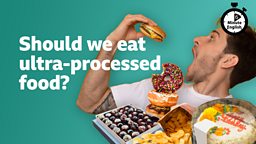
Should we eat ultra-processed food?
Episode 260430 / 30 Apr 2026
Ultra-processed food can be tasty, but what is it doing to our health?




Weight loss drugs
Episode 260326 / 26 Mar 2026
How do weight loss drugs like Ozempic and Mounjaro help people lose weight?

How do we adapt to the cold?
Episode 260319 / 19 Mar 2026
Would you prefer to be too hot or too cold?
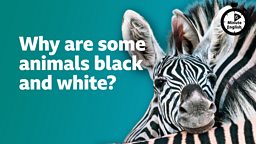
Why are some animals black and white?
Episode 260305 / 05 Mar 2026
The answer is not as black and white as you might think!



Why are billionaires building bunkers?
Episode 260129 / 29 Jan 2026
Is the end of the world closer than we thought?

Scared of speaking English?
Episode 260122 / 22 Jan 2026
Beth and Pippa talk about why we often find speaking a new language scary.
What English phrases really mean
Episode 260115 / 15 Jan 2026
Why don't British people say what they mean, or mean what they say?