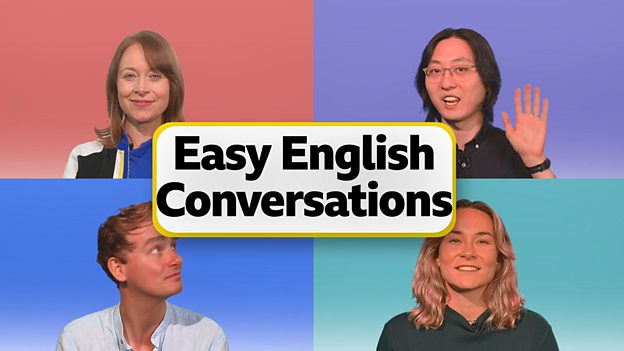
6 Minute English now comes with a video! It's the same programme that you know and love, but now you can see us!
_____________________________________________________________________________________________________
Download a free 6 Minute English worksheet and transcript!
Try our free interactive quiz!
______________________________________________________________________________________________________


Introduction
Have you ever had the feeling of lying awake at night, unable to get to sleep? Many of us know what it is like to struggle with sleep, especially if we have drunk too much tea or coffee before bed! But did you know that your sleep quality can be affected by other parts of your diet too? Georgie and Phil discuss this and teach you some new vocabulary.
This week's question
What percentage of people in the UK say they get less than seven hours sleep per night?
a) 15%
b) 25%
c) 35%
Listen to the programme to hear the answer.
Vocabulary
nutrients
important substances that all lifeforms need to survive and be healthy
saturated fats
fats that are thought to be worse for our health, often found in meat and dairy
deep sleep
stage of the sleep cycle when the brain is at its slowest and the body can rest and repair
supplements
tablets and other consumables that contain particular nutrients that you might not get in your everyday diet
feed information
give lots of information continuously
magic bullet
simple and effective solution, usually one that doesn't exist in reality

TRANSCRIPT
Note: This is not a word-for-word transcript.
Phil
Hi Georgie.
Georgie
Hi Phil. Now, Phil, do you ever struggle to get a good night's sleep?
Phil
You know, I do sometimes. If I've been thinking about something a lot, or even worse, if I've had a cup of coffee later than I should, sometimes I can lie there for hours.
Georgie
Yes. Well, many of us will be familiar with that feeling of lying in bed, feeling really tired, but just not being able to go to sleep, but what causes us to struggle to sleep and is there anything we can do about it? Well, researchers have for a while been interested in the link between what we eat and how we sleep. Today on 6 Minute English, we'll be talking about this and asking, "What should you eat for a better night's sleep?"


Georgie
OK. Phil, let's start with a quiz question. So, adults need between 7–9 hours sleep a night to stay healthy, according to experts, but what percentage of people in the UK say they get less than this? Is it:
a) 15%,
b) 25%, or
c) 35%?
Phil
OK. I think people find sleeping hard, so I think it's going to be c) 35%.
Georgie
OK. Well, we'll find out the answer later in the programme.
Phil
Georgie, you've been looking at the research on this. Do scientists think that what we eat affects how we sleep?
Georgie
Yes, they do. Scientists have done some long-term studies. So, looking at large groups of people over a long period of time, and they found that a healthier diet is associated with better quality sleep. They've also done some smaller studies looking in more detail at exactly what people are eating and then studying how they sleep in a laboratory.
Phil
OK. And in these studies, have they found that particular foods are better for our sleep than others?
Georgie
Well, it's less about particular foods and more about particular nutrients. So, nutrients means important things your body needs to survive and be healthy. For example, protein is a nutrient. BBC World Service programme The Food Chain has been speaking to researcher Professor Marie-Pierre St-Onge about which nutrients are important for sleep.
Marie-Pierre St-Onge
So, diets that look more like a Mediterranean pattern – higher in fruits and vegetables, whole grains, lower in animal-based foods, lower in sugar. But then from our own research, where we evaluate food intakes in the lab, we see different... similar patterns, really. But when we talk about nutrients, diets that are higher in fibre, which we find in fruits and vegetables and whole grains, and lower in saturated fats, which we find in more plant-based types of foods, are associated with more deep sleep at night.
Georgie
Marie-Pierre says that Mediterranean-style diets are associated with good sleep. A Mediterranean diet includes lots of vegetables and less animal-based foods such as meat and dairy.
Phil
Yes, and Marie-Pierre's own research shows that some nutrients, such as fibre, are important for sleep and others, such as saturated fats, are less important. Saturated fat is a type of fat mainly found in meat and dairy that's thought to be bad for your health.
Georgie
Right. And according to Marie-Pierre, eating less saturated fat and more nutrients like fibre is associated with more deep sleep at night. A deep sleep is when you are more fully asleep and your body is able to rest.
Phil
So, Georgie, it sounds like thinking about our diets is important if we want to improve our sleep. And now I've heard that certain foods have a lot of nutrients that can be helpful for sleep. Is that true?
Georgie
Well, there is some limited research on specific foods and their impact on sleep. So, for example, scientists have been studying kiwi fruits and also tart cherry juice. And you may also see adverts for supplements that claim to improve sleep. Supplements are tablets you take, which contain particular nutrients that you might not get in your everyday diet. But experts say that focusing on our whole diet, rather than one particular fruit or supplement, is going to be the most effective. Here's sleep doctor Allie Hare explaining more to BBC World Service programme The Food Chain.
Allie Hare
I think people are looking for the one supplement often or the... you know, we're fed a lot of these things, aren't we, on social media? This magical powder or this magical tablet that you can take that will, you know, help you sleep better immediately from tonight. And of course, you know, Marie-Pierre and I know that there is no such magic bullet, unfortunately. And if there was, I'm sure, you know, we would be... we would be doing very well for ourselves.
Phil
Allie says people are looking for a supplement that can help them sleep.
Georgie
Yes. She says we are fed information on social media about magical tablets. If you are fed information, you are given lots of it in a continuous way.
Phil
But Allie argues that experts know there's no magic bullet to help you sleep, and a magic bullet refers to a simple and effective solution to a problem that's usually one that doesn't exist. OK. Well, now I think it's time to find out the answer to your quiz question, Georgie.
Georgie
Yes. I asked you what percentage of UK adults say they get less than seven hours sleep a night.
Phil
And I said I thought it was c) 35%.
Georgie
You are correct, Phil. Yes, 35% of adults say they get six hours or less sleep a night, according to a study by YouGov. OK. Let's recap the vocabulary we learned in this programme, starting with nutrients, which are important things your body needs to survive and be healthy.
Phil
Saturated fats are fats mainly found in meat and dairy products that are thought to be bad for our health.
Georgie
A deep sleep is when your body is fully asleep and able to rest.
Phil
Supplements are tablets or other things which contain particular nutrients you might not get in your everyday diet.
Georgie
To feed information means to give lots of it in a continuous way.
Phil
And a magic bullet is a simple and effective solution, and it's often one that doesn't exist.
Georgie
Once again, our six minutes are up, but don't forget you can test what you've learned with the worksheet on our website. Go to bbclearningenglish.com.
Phil
Thanks for joining us and goodbye.
Georgie
Goodbye!

What do you think of the new version of 6 Minute English? Email us at learningenglish@bbc.co.uk.
Next
Find an A-Z list of our programmes.
Find more programmes for your level here.
Practise your reading skills with The Reading Room.
Latest 6 Minute English

What should you eat for a better night’s sleep?
Episode 261022 / 22 Oct 2026
How much sleep do you get each night?


Can apps teach you a language?
Episode 260910 / 10 Sep 2026
What's better for learning languages – an app or a class?

Climate change and extreme weather
Episode 260903 / 03 Sep 2026
Every year we see damage, death and destruction caused by hurricanes, cyclones and typhoons - tropical storms. Is climate change making this impact worse?


Sharing the road with driverless cars
Episode 260820 / 20 Aug 2026
Would you trust a robot to drive you around a city?

Who does the housework?
Episode 260813 / 13 Aug 2026
When you were growing up, did your mum or dad do more household chores?
How do climate scientists make predictions?
Episode 260806 / 06 Aug 2026
What is the difference between a prediction and a projection?
The Enhanced Games
Episode 260730 / 30 Jul 2026
Would you watch a sport if you knew the athletes had taken drugs?


What's in a footballer's brain?
Episode 260716 / 09 Jul 2026
How do footballers cope with high-pressure scenarios like penalties and corners?



Stress-free family meals
Episode 260625 / 25 Jun 2026
What foods did you dislike when you were growing up?
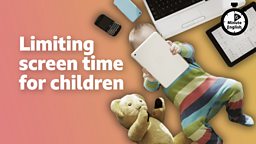
Limiting screen time for children
Episode 260618 / 18 Jun 2026
Children are spending too much time with electronic devices.

How advertisers make us spend money
Episode 260611 / 11 Jun 2026
When was the last time you bought something you didn't need?



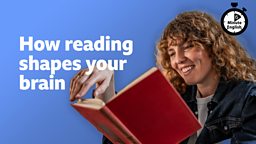
How reading shapes your brain
Episode 260514 / 14 May 2026
Can learning to read alter the way your brain works?
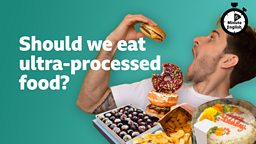
Should we eat ultra-processed food?
Episode 260430 / 30 Apr 2026
Ultra-processed food can be tasty, but what is it doing to our health?



Weight loss drugs
Episode 260326 / 26 Mar 2026
How do weight loss drugs like Ozempic and Mounjaro help people lose weight?
How do we adapt to the cold?
Episode 260319 / 19 Mar 2026
Would you prefer to be too hot or too cold?
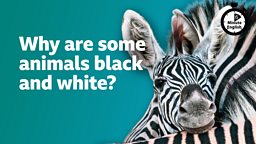
Why are some animals black and white?
Episode 260305 / 05 Mar 2026
The answer is not as black and white as you might think!




Why are billionaires building bunkers?
Episode 260129 / 29 Jan 2026
Is the end of the world closer than we thought?
Scared of speaking English?
Episode 260122 / 22 Jan 2026
Beth and Pippa talk about why we often find speaking a new language scary.
What English phrases really mean
Episode 260115 / 15 Jan 2026
Why don't British people say what they mean, or mean what they say?