6 Minute English now comes with a video! It's the same programme that you know and love, but now you can see us!
_____________________________________________________________________________________________________
Download a free 6 Minute English worksheet and transcript!
Try our free interactive quiz!
______________________________________________________________________________________________________


Introduction
Anyone who has had their heart broken will know how horrible it feels. But did you know that the pain you feel is not just imaginary – it registers in the same part of the brain that processes physical pain. So, why do we feel this pain? And if it feels so bad, what is the point of being in love in the first place? Neil and Georgie discuss this and teach you some new vocabulary.
This week's question
Which theory, developed by psychologists in the 1950s, describes a link between children's early bonds with their parents and their romantic relationships as adults?
a) contraction theory
b) attachment theory
c) superstition theory
Listen to the programme to hear the answer.
Vocabulary
heartbreak
feeling of intense, painful sadness after the end of a relationship
addicted to
unable to cut a connection with someone or something because you depend on it or want more of it all the time
orientated/oriented towards
focused on someone, so that you think about them before others
social bonds
close relationships between family, friends and romantic partners
longevity
length of time you will live
ex
previous romantic partner

TRANSCRIPT
Note: This is not a word-for-word transcript.
Neil
Hi Georgie.
Georgie
Hi Neil.
Neil
Now, I want you to think back to the last time you had your heart broken. How did it feel?
Georgie
It was a couple of years ago. And I just remember a really intense, sad emotion. But it also sometimes feels like a physical pain in your stomach, doesn't it?
Neil
It does. It's like real pain, isn't it? And today, in 6 Minute English, we're talking about heartbreak. Now, heartbreak is the feeling of sadness we get when we lose someone we love. And that pain you feel, it's not just imaginary. In this podcast, we'll be understanding how our brains change when we fall in love and asking the question, why does heartbreak hurt so much?
Georgie
And as usual, we'll be learning some useful new vocabulary. You can find the full list and the definitions at bbclearningenglish.com.


Neil
Georgie, we're going to start with a quiz question. Are you ready?
Georgie
I am very ready.
Neil
So, in the 1950s, psychologists noticed a link between children's early bonds with their parents and their romantic relationships as adults, but what is this theory called? Is it:
a) contraction theory,
b) attachment theory, or
c) superstition theory?
Georgie
I think it's b) attachment theory.
Neil
OK. Well, we will find out at the end of the programme.
Georgie
What's going on in our brains when we fall in love?
Neil
Well, scientists have scanned people's brains while they're looking at a photo of their romantic partner. And they found that looking at someone you're in love with activates a part of the brain that also reminds us to eat and drink.
Georgie
And do scientists know why being in love impacts our brain in this way?
Neil
So, it's all about survival. Our brains have evolved to be this way. Dr Lucy Brown explains more to the BBC World Service.
Dr Lucy Brown
This is a survival system. Nature gave us these systems to be addicted to each other – for reproduction, for protection. You're oriented completely toward the other person. It's like hunger or thirst.
Georgie
Lucy says our brains make us addicted to our romantic partners. If you're addicted to something, you want more of it. You can literally be addicted to things like drugs or alcohol, but we also use it metaphorically to talk about things we love.
Neil
She says that romantic partners are oriented to each other, which in British English we say orientated, and it means they are pointed towards each other. They think of each other before other people.

Georgie
Neil, is there anything else scientists have discovered from scanning the brains of people in love?
Neil
Well, being in love doesn't just change the way we think. It changes our whole identity. A 2013 study showed us more about this. People were shown statements about themselves – for example, Neil is kind – and the part of the brain we use to think about ourselves lit up. When showing the same statements about their partner, the same part of the brain was active – not the part of the brain we generally use to think about others.
Georgie
So, Neil, are all of these brain changes that come with being in love actually good for us?
Neil
Well, studies suggest that good social connections help manage stress and support our immune system. Professor Zoe Donaldson explained more to the BBC World Service.
Professor Zoe Donaldson
Having really strong social bonds increases your likelihood that you'll survive from just about anything, whether that be cancer, depression, etc. And it overall is the number one predictor of longevity. So, if you are lonely and you don't have bonds, then your mortality risk goes up in a way that's equivalent to being obese or smoking.
Georgie
So, having strong social bonds or close relationships with other people makes you more likely to survive disease, according to Zoe.
Neil
Yes, it's an important factor in our longevity, which means how long we live. In fact, Zoe says, being lonely and not having good social bonds increases your mortality risk, your risk of dying, by as much as being obese or smoking.
Georgie
OK. So, what happens when these bonds are broken, when we experience heartbreak?
Neil
Well, scientists have been looking at this by asking people to look at photos of their exes, their former partners, and scanning their brains. They found that heartbreak activates parts of the brain we use when we're in danger or in pain. Professor Zoe Donaldson explains more.
Professor Zoe Donaldson
It's literal pain in your brain. So, if you look at the parts of the brain that light up, they overlap with the same brain regions that are activated when you feel visceral pain – when you feel actual, you know... like you get a burn, or you break a... you break a bone.
Neil
OK. So, now it's time for the answer to the quiz question I asked you. It was about a theory developed by psychologists in the 1950s, which says that children's early relationships with their parents impact their relationships as adults. What's the name of the theory?
Georgie
I was quite confident about this, wasn't I, Neil? I said attachment theory.
Neil
Well, you had a reason to be confident because you are correct.
Georgie
Yay! OK. Let's recap the vocabulary we learnt in this programme, starting with heartbreak, which is the feeling you experience after you lose someone you love.
Neil
If you're addicted to someone or something, you want more of it all the time.
Georgie
Oriented or orientated towards is used metaphorically to mean that someone or something is your main focus.
Neil
Social bonds are the close relationships we have with family, friends and romantic partners.
Georgie
Longevity means how long you'll live.
Neil
And an ex is a past romantic partner that you are no longer in a relationship with.
Georgie
Once again, our six minutes are up, but you can test what you've learned with the worksheet on our website. Go to bbclearningenglish.com.
Neil
Thanks for joining us and goodbye.
Georgie
Goodbye.

What do you think of the new version of 6 Minute English? Email us at learningenglish@bbc.co.uk.
Next
Find an A-Z list of our programmes.
Find more programmes for your level here.
Practise your reading skills with The Reading Room.
最新 6 Minute English


Can apps teach you a language?
Episode 260910 / 10 Sep 2026
What's better for learning languages – an app or a class?

Climate change and extreme weather
Episode 260903 / 03 Sep 2026
Every year we see damage, death and destruction caused by hurricanes, cyclones and typhoons - tropical storms. Is climate change making this impact worse?


Sharing the road with driverless cars
Episode 260820 / 20 Aug 2026
Would you trust a robot to drive you around a city?

Who does the housework?
Episode 260813 / 13 Aug 2026
When you were growing up, did your mum or dad do more household chores?
How do climate scientists make predictions?
Episode 260806 / 06 Aug 2026
What is the difference between a prediction and a projection?
The Enhanced Games
Episode 260730 / 30 Jul 2026
Would you watch a sport if you knew the athletes had taken drugs?

What's in a footballer's brain?
Episode 260716 / 09 Jul 2026
How do footballers cope with high-pressure scenarios like penalties and corners?



Stress-free family meals
Episode 260625 / 25 Jun 2026
What foods did you dislike when you were growing up?

Limiting screen time for children
Episode 260618 / 18 Jun 2026
Children are spending too much time with electronic devices.

How advertisers make us spend money
Episode 260611 / 11 Jun 2026
When was the last time you bought something you didn't need?



How reading shapes your brain
Episode 260514 / 14 May 2026
Can learning to read alter the way your brain works?
Should we eat ultra-processed food?
Episode 260430 / 30 Apr 2026
Ultra-processed food can be tasty, but what is it doing to our health?


Weight loss drugs
Episode 260326 / 26 Mar 2026
How do weight loss drugs like Ozempic and Mounjaro help people lose weight?
How do we adapt to the cold?
Episode 260319 / 19 Mar 2026
Would you prefer to be too hot or too cold?
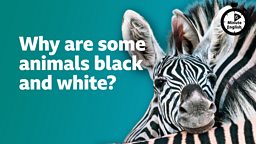
Why are some animals black and white?
Episode 260305 / 05 Mar 2026
The answer is not as black and white as you might think!



Why are billionaires building bunkers?
Episode 260129 / 29 Jan 2026
Is the end of the world closer than we thought?

Scared of speaking English?
Episode 260122 / 22 Jan 2026
Beth and Pippa talk about why we often find speaking a new language scary.
What English phrases really mean
Episode 260115 / 15 Jan 2026
Why don't British people say what they mean, or mean what they say?