What was daily life like in Ancient Rome?
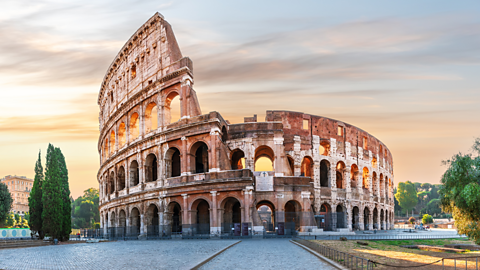
Daily life in Ancient Rome would depend on what type of person you were.
Ancient Rome was an enormous city that, at one point, may have had around one million people living there.
There were lots of different groups of people in Roman society.
Rich people, poor people, men, women, children and slaves would all have had a very different daily life depending on their circumstances.
Important words
Important words on life in Ancient Rome.
| Keyword | Definition |
|---|---|
| Forum | A central, open-air area where people could meet. It often had markets and held ceremonies. |
| Gauls | A group of ancient people from parts of France, Germany, Belgium and Italy. |
| Goths | A group of ancient people who lived near the Visigoths, likely coming from Scandinavia. |
| Sacked | To destroy and loot somewhere. |
| Vandals | A group of ancient people who are thought to have originally come from Poland. |
| Visigoths | A group of ancient people from parts of Eastern Europe. Their exact location is difficult to pinpoint. |
Timeline of Ancient Rome
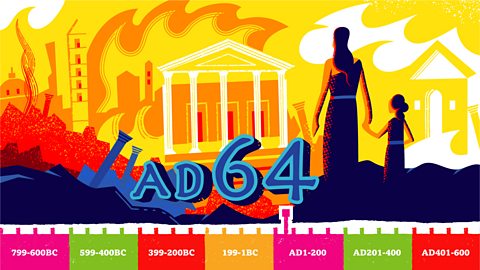
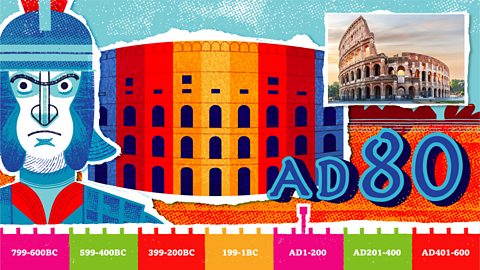
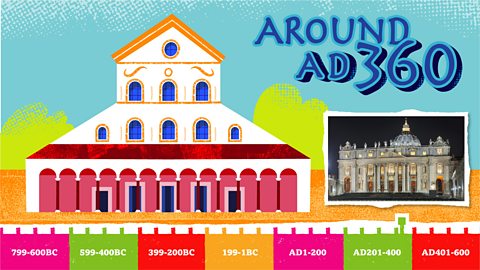
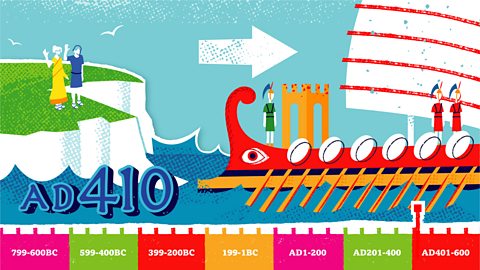
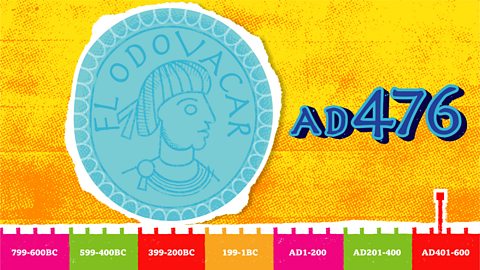
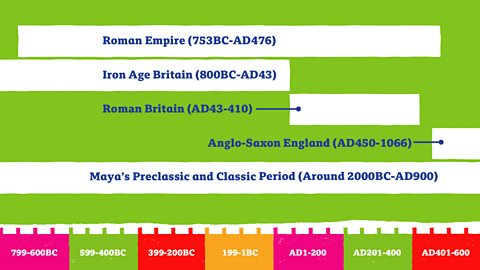
Image caption, Click the arrows learn more about the timeline of the Roman Empire!
1 of 9
When did Ancient Rome exist?
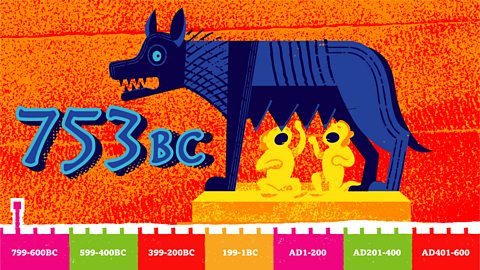
Rome was thought to have been built around 753BC and still exists today, although it has changed a lot.
According to legend, Rome grew from a small town built by Romulus.
As babies, Romulus and his twin brother Remus were left to drown in the River Tiber by their evil uncle, but they were rescued by a wolf.
Romulus eventually killed his twin brother Remus after they couldn’t decide where their new city should be built.
Rome expanded and a port (a place for boats to sail into) at Ostia was created around 630BC, becoming the city’s main port for bringing in goods to Rome from across the empire for a long time.
The city continued to grow and reached its largest between the years AD1 and AD200.
Finally, in AD476, a German general called Odoacer claimed himself to be the King of Italy and this brought the end of the Roman Empire.
Rome in ruins
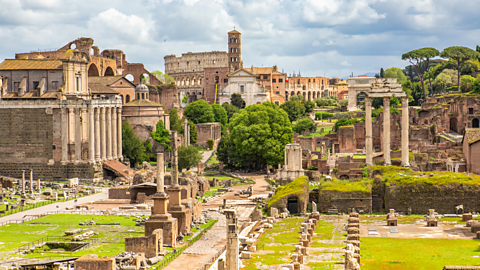
Throughout its long history, Rome was attacked several times by different groups of people.
As the centre of a large empire, it was open to attack from different groups who fought against the Romans.
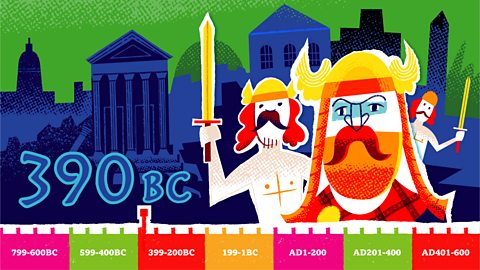
Around 390BC, the Gauls (from France, Belgium, Germany and Italy) sacked the city.
In AD410, the Visigoths (from Eastern Europe) burned Rome, the first time that it had been sacked in nearly 800 years.
The Vandals came and robbed the city for two weeks in AD455.
Rome also had a number of terrible fires with the Great Fire of Rome in AD64 causing so much damage that a group of firefighters was established in case it happened again.
What was there to see and do?
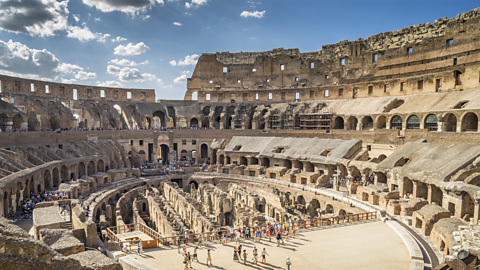
The city of Rome was filled with people from all across the empire and there was no shortage of things to see and do.
Rich men would have met at the forum (a central, open-air area where people could meet, it often had markets and held ceremonies) to do business, talk or have meetings about politics.
Rich women might have gone to the public baths, market places or visited the many temples.
Ordinary people would have had jobs, such as blacksmiths, carpenters and bakers, and visited the many baths of the city.
Entertainment was hugely popular, many people watched Gladiators at the Colosseum or watched chariot races at the Circus Maximus.
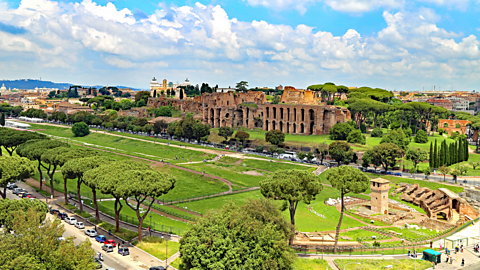
Children from poorer families could be made to work or join the Roman army.
Children from richer families would have been educated.
Slaves would have been taken to market to help carry goods, others worked in their owner’s villa, some did hard work in quarries or mines.
The treatment of slaves was varied - some received their freedom and better living conditions, but many were punished or even killed.
What did Romans do in their free time?
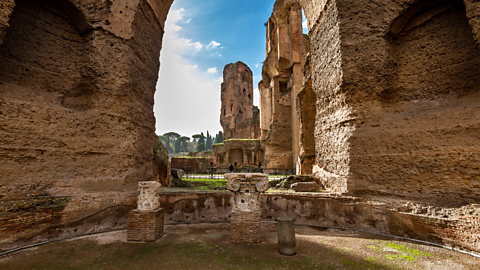
Ancient Rome spread over a huge area and was filled with lots of different places to see and visit.
Many Romans would visit the public baths, using them for a number of reasons.
People would often meet here to talk and have meetings whilst cleaning themselves and exercising.
Public baths often had multiple types of pools and areas, ranging from cold rooms and pools to warm and hot rooms.
People would often visit the many temples inside Rome too.
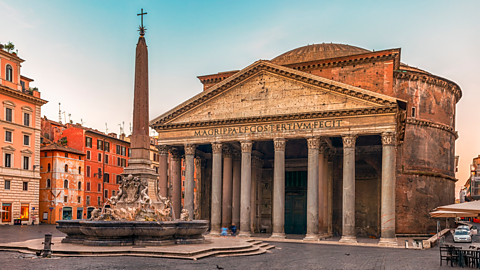
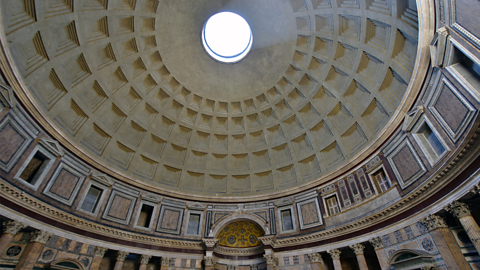
One of the largest and most impressive was the Pantheon.
This had the world’s largest domed concrete roof that didn’t need support to keep it up.
Many gods were worshipped here such as Jupiter (King of the gods), Minerva (goddess of wisdom) and Mars (god of war) along with many others.
Markets and shops would also have kept the people of Rome very busy and well-stocked.
Goods and materials from across the empire would have flowed into Rome such as glass from Egypt, wine from Greece, spices from India, purple dye from Phoenicia and slaves from across most of the empire.
Slideshow: Ancient Rome
Explore the slideshow and see some of the key areas of Ancient Rome.
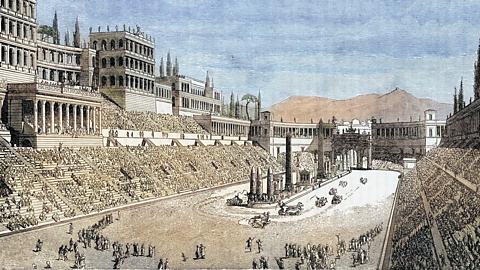
Image caption, An 19th century artist’s impression of chariot racing at the Circus Maximus.
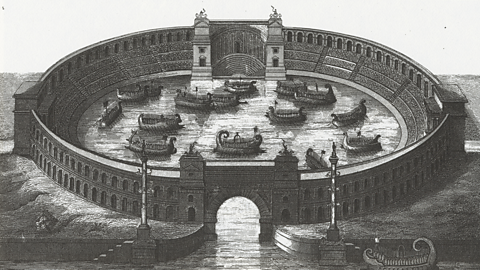
1 of 4
Think like a historian

Have a look at the thinking points below and think about your answer to each question. You could even write them down on a piece of paper or discuss them with somebody else if you want to.
Why might Rome have grown into such a large and significant city?
What might have caused other groups to attack Rome?
What sources and evidence do we have of to tell us about Ancient Rome today?
The Romans grew their empire and brought goods, resources and people back to Rome. As it was a powerful empire, people wanted to be close to its capital as this was where most of the important individuals would be and you would likely have access to a wide range goods from around the empire.
The Romans conquered lots of places?, some of the people in those places would have been angry about losing their land or people. Destroying or looting Rome would have taken soldiers away from other parts of the empire to defend it.
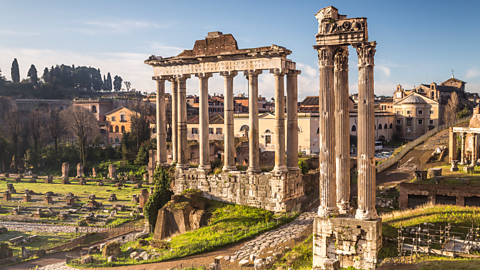
There are still the ruins and remains of lots of buildings in Rome, such as the Colosseum, the Pantheon, the Forum, the Circus Maximus and other valuable ruins like roads, sewers and public baths.
Activities
Activity 1: What did Romans do with their spare time?
Click on the Romans below to find out what activities they did.
Activity 2: Quiz – Introduction to Ancient Rome
Grown-ups corner
Are you a parent, carer or teacher?
Take a look at some of the links below on KS2 History which are packed full of knowledge, videos, quizzes and activities.
KS2 History: The Romans
BBC Bitesize for Teachers
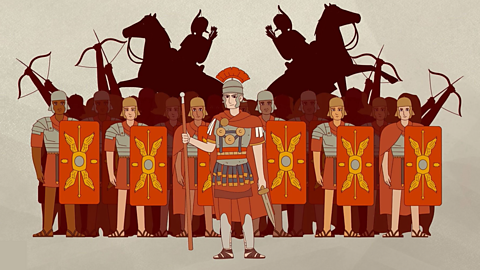
KS2 History: The Romans. 5: The legacy of Ancient Rome
BBC Bitesize for Teachers
KS2 History: The Romans. 6: Growing up in Ancient Rome
BBC Bitesize for Teachers
Horrible Histories: Raid and Trade game! game
Play Horrible Histories: Raid and Trade KS2 History
More on Roman Empire
Find out more by working through a topic
- count2 of 4
- count3 of 4
- count4 of 4
