The plot of Our Town
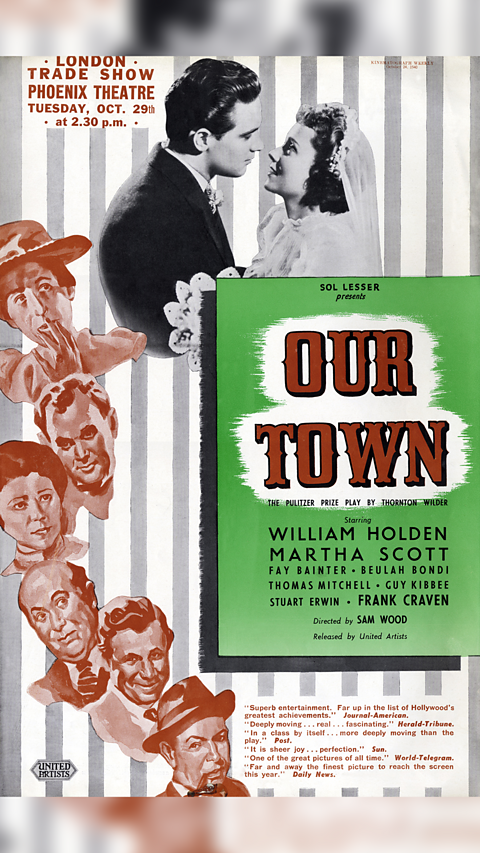
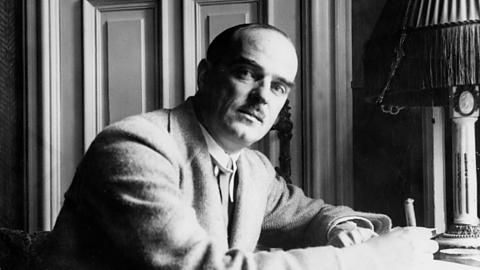
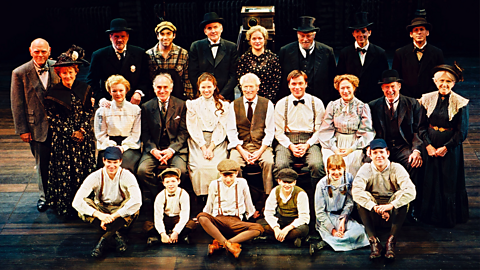
Our Town was written by Thornton Wilder in 1938, but is set across a span of years from 1899 to 1913. It focuses on the fictional New Hampshire town of Grover’s Corners and its residents, showing details of their everyday lives and relationships. In three acts, which the stage manager states are entitled “Daily Life”, “Love and Marriage” and “Death” (the last title he implies rather than stating), Wilder presents what he called “an attempt to find a value above all price for the smallest events in our life”.
Summary: A When a play reminds you it is a play. It tells the audience they are watching a performance, rather than trying to create a completely believable “real world”. play introduced by the character of the Stage Manager, who acts as an intermediary between the audience and the world of the play. The play is a drama which mixes aspects of A literary movement and style that aims to present life as it really is, focusing on ordinary people, everyday settings and plausible events. and Modernism was a movement in art and literature in the late 1800s and early 1900s. It aimed to break away from old traditions and explore new ways of thinking, writing, and creating.; it contains multiple shifts in time and has minimalistic staging, allowing slices of everyday life to be easily Two things placed side by side to highlight their differences. with snippets of the past and future to create a sense of how quickly things change in ordinary human lives. The audience come to see that even small moments in life contain significance, and that life itself is precious because it is so brief and ephemeral.
Title: Our Town – the plural possessive shows a kind of equality, where the place belongs equally to everyone and the lives lived there are shared; it does not specify or celebrate the specific town name, but alludes more generally to something universally relatable – a place where people live their lives.
Setting: Grover’s Corners, a fictional example of a small American town in New England, the most Northeastern section of the US. The play is located entirely within the town, but takes place across a span of years in the early twentieth century.
Themes: Family, community, loneliness and connection, relationships, everyday life, time, mortality and death, change.
Plot summary for Our Town
Act One
The Stage Manager puts out chairs and tables on stage to represent the Gibbs and Webb houses, then announces the play and names the actors who will be appearing. He points around the stage to different ‘areas’ of the town, sets the scene as very early morning and introduces Dr Gibbs coming home from delivering twins and chatting to Joe Crowell (delivering newspapers) and Howie Newsome (delivering milk).
Mrs Webb and Mrs Gibbs rise, begin breakfast and call their children – Wally and Emily, and George and Rebecca – down to eat. The children chat and set off for school; Mrs Gibbs goes across to Mrs Webb and tells her how a second-hand furniture buyer offered her three hundred and fifty dollars for a “highboy” (tall chest of drawers) she owns. She would love to sell it and use the money to go to Paris. She doesn’t think Dr Gibbs would go to Europe because he prefers staying in Grover’s Corners and occasionally visiting Civil War sites.
The Stage Manager politely dismisses the women and invites Professor Willard to give an overview of the town’s history and demographics, and Editor Webb to give a “political and social report” on the town. During which he takes questions from actors seated amongst the audience.
The Stage Manager returns the focus to the afternoon of the same day when the children are coming home from school. Emily comes along first, then George, and they briefly chat about school, the future and the possibility of Emily helping George with some homework. In the house Emily tells her mother about the successful speech she gave in class and then asks if she’s pretty – Mrs Webb calls the idea “foolishness” and is businesslike in telling her she’s “pretty enough”.
The Stage Manager dismisses Emily and her mother and speaks about the time capsule that’s being put in the cornerstone of the new bank in Grover’s Corners. It contains a copy of the Bible, Shakespeare’s works, newspapers including the ‘Grover’s Corners Sentinel’ and “a copy of this play” – meaning Our Town itself. This is a way of informing future generations about the everyday lives of the townspeople.
It becomes evening. The choir practises ‘Blessed Be The Tie That Binds’; George and Emily study, they chat through their bedroom windows and Emily tries to help George with one of the maths problems. Dr Gibbs speaks gently to George about helping around the house more and offers to raise his allowance, then wonders when choir practice will be over. Mrs Webb, Mrs Gibbs and Mrs Soames walk home from choir practice and stop to chat; Mrs Soames tries to gossip about the drinking problem of Simon Stimson, the church organist, but the other women resist and they part for their respective homes.
Mrs Gibbs brings Dr Gibbs outside for a stroll in the garden as it’s a nice moonlit night; she talks with a little concern about Stimson, but Dr Gibbs stoically says there is “nothing anyone can do”. She brings up the idea of a “rest”, meaning the trip to Europe, but he says there’s “no sense” talking about it again. He lets her know he spoke to George about the chores, and they go back inside.
Rebecca joins George at his window as she wants to see the moonlight, and he reluctantly lets her stay. Mr Webb and Constable Warren chat in the street about Simon Stimson, who unsteadily approaches but does not reply to them when they speak to him. Emily is still awake looking at the moonlight; Mr Webb asks her if she’s trouble, butt she says no. Rebecca tells George about a letter her friend received that began with a normal address but shifted outwards to include “Western Hemisphere; the Earth; the Solar System; the Universe; the Mind of God” and George marvels that it was still delivered. The Stage Manager announces the end of Act One.
Act Two
The Stage Manager announces that three years have gone by and that this second act of the play will be about love and marriage; he claims the first was “Daily Life” and hints at what the third act will contain. It’s early in the morning on the 7th of July. Mrs Webb and Mrs Gibbs come down to make breakfast as before; Howie Newsome delivers milk and Si Crowell, Joe’s younger brother, delivers the papers. They chat with Constable Warren and it becomes apparent George Gibbs is getting married to Emily Webb today.
Dr Gibbs comes down to breakfast and chats with his wife about the couple-to-be and about their own wedding and marriage, including how nervous they both felt. George comes down and insists on going over to Emily’s house; Mrs Webb refuses to let him see the bride but gives him coffee and he chats to Mr Webb. Mr Webb says his father advised him to be dominant and unforgiving in marriage, and that he did the opposite and has been happy that way. Mrs Webb returns from upstairs and tells George to leave so Emily can come down to breakfast; George says goodbye and returns home.
The Stage Manager returns and instigates a A scene enacting something that happened in the past; the enactment of a character's memory of a past event. to the beginning of George and Emily’s relationship – they are returning home from school after George has been elected President and Emily made Secretary and Treasurer of their high school class. On the way home they chat slightly awkwardly and Emily admits she doesn’t like how George has been acting, saying she and others have found him to be “stuck-up” lately. George thanks her for her honesty and they go to the A type of American shop which sells medicines, toiletries and sometimes small meals and snacks. to have an ice cream soda together. During this, they talk about the future and discover they have feelings for each other – George impulsively decides he will forego college to stay in Grover’s Corners with Emily and work his uncle’s farm.
Back in the present, the Stage Manager takes on the role of the minister who will marry the two, and people start arriving at the church for the wedding. Separately, both George and Emily panic about leaving their childhoods and homes and starting a new life together, but “fall into each other’s arms” and are comforted when they see each other just before the ceremony. The wedding goes ahead; the Stage Manager muses fondly on marriage itself, and then announces the end of Act Two.
Act Three
Chairs on stage in rows signify graves; people including Mrs Gibbs, Simon Stimson, Mrs Soames and Wally Webb are seated, with one empty chair beside Mrs Gibbs in the front row. The Stage Manager announces it is nine years later, introduces the cemetery and discusses the attitudes of the dead towards those still living in the town.
Joe Stoddard, the undertaker, is met by Sam Craig who he initially doesn’t recognise as someone who once lived in the town but moved away. Sam reveals he is back for today’s funeral and it is gradually revealed that Emily has died in childbirth, leaving behind George and another son.
Emily appears on stage, seeming a little dazed, and takes a seat by Mrs Gibbs. She tries to talk to her about life and the farm, but Mrs Gibbs seems politely uninterested and tries to soothe her. Emily is restless, missing her life and feeling new and strange among the composed and detached deceased characters; she asks the Stage Manager if she can visit her life again. The others try to dissuade her, saying it will be painful, but she says she must try it; Mrs Gibbs advises that if she must go, she should at least pick an unimportant day. Emily feels this means she cannot pick a day she has lived since marrying George and having the baby, so she instead decides to go back to her 12th birthday. The Stage Manager obliges.
We see the morning begin, with Howie Newsome delivering milk and Joe Crowell delivering papers. Emily is initially overjoyed to see everything as she remembers it but is soon overcome by the fact that life happens so fast and no one is appreciating it or taking the time to look at one another. She breaks down in tears, overwhelmed, and asks to return to the cemetery, where the others gently agree with her that the living don’t understand how precious life is as they live it. George kneels at her grave, clearly heartbroken by the loss. The Stage Manager draws a curtain over the scene and tells the audience that most of Grover’s Corners is asleep now, bids them to get some rest and wishes them goodnight.
Test your knowledge of the plot of Our Town
More on Our Town
Find out more by working through a topic
- count2 of 4
- count4 of 4