What are some of the uses of everyday materials?
Everyday materials are the things we use that are all around us. Each one has special properties that make it good for certain jobs.
| Material | Properties and uses |
|---|---|
| Wood | It is strong and comes from trees. It’s great for building houses, furniture and pencils because it’s sturdy but not too heavy. |
| Metal | It is strong and can be shaped into lots of things. It is used in for cars, tools and bridges because it doesn’t break easily. Metal is also shiny and can be used for mirrors. |
| Plastic | It is light, waterproof and can be made into almost any shape. It is often used in bottles, toys, umbrellas and containers because it doesn’t rust or rot like wood and metal. |
Each material helps make our lives easier. Choosing the right material means things work better and last longer.
Watch: Wrong Material Fairy Tales
Classic fairy tales might well be a bit different if you used alternative materials…
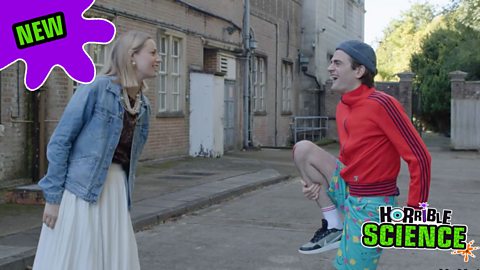
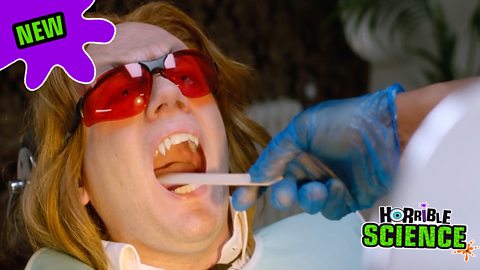
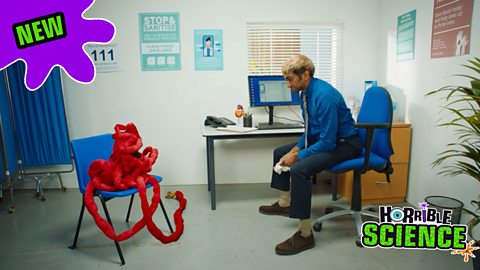
VOICEOVER: Horribly Scientific Movies presents: Wrong Material Fairy Tales, featuring the legendary stories you love magically retold using the wrong materials for the job.
CARPENTER: There you are. Your Majesty. Your mirror is ready.
VOICEOVER: Like Snow White.
QUEEN: Mirror, mirror, on the wall. Who is the fairest of them all?
MIRROR: How would I know? Can't see anything.
QUEEN: Why is the mirror made of wood?
CARPENTER: Well, Your Majesty, you told me that wood was good for furniture so…
QUEEN: Yes, for things like tables and chairs. Because it is strong and long lasting.
Obviously a mirror needs to be made of glass, which is transparent and backed with metal which is shiny. Might as well chop that up into firewood.
MIRROR: Harsh!
CARPENTER: My bad, Your Majesty. Obviously don't worry about paying me.
QUEEN: Oh, I wasn't.
Unrelated. Here, have a poisoned apple.
CARPENTER: A what apple?
QUEEN: A normal apple.
MIRROR: I can't believe he didn't see that coming.
VOICEOVER: Also featuring Hansel and Gretel.
HANSEL: So hungry. We haven't eaten in three days.
GRETEL: You were the one who threw our bread on the floor.
HANSEL: I was leaving a trail.
GRETEL: Oh, yeah? Because wild birds and animals famously leave food alone when they find it lying around in the forest.
HANSEL: Oh! A cottage. Maybe we can eat that.
GRETEL: Wait, what? How are you going to eat the cottage? That makes no sense.
HANSEL: Oh, my teeth!
GRETEL: Oh, why did you do that?
HANSEL: I thought it would be gingerbread.
GRETEL: Why would it be gingerbread? That's a terrible material to make a house out of. You need something strong and durable like these bricks.
VOICEOVER: All the tales you love…
WITCH: Children! What's wrong with my delicious brick house?
VOICEOVER: …told with the wrong materials.
WITCH: Ow! Okay. I did it.
VOICEOVER: Like Jack and the Beanstalk.
JACK: You're never gonna get me giant.
Okay. Mental note. Next time buy the metal axe and not the rubber one.
GIANT: FEE FI FO FUM!
VOICEOVER: And of course, Cinderella.
PRINCE CHARMING: I will marry whoever can fit this elastic slipper upon their foot.
UGLY STEPSISTER 1: You won't narrow it down mate. An elastic slipper is gonna fit everyone.
PRINCE CHARMING: Whoa!
UGLY STEPSISTER 1: My turn.
PRINCE CHARMING: Oh, I'm not sure that's how it works. I think it fit her.
UGLY STEPSISTER 2: Stop it!
VOICEOVER: Your favourite fairy tales. Made in the wrong way. Coming soon.
How do you compare and group together everyday materials?
Everyday materials can be compared and grouped by looking at their properties. These are the special features that show what materials are like and how they behave.
*Grouping**means sorting materials into similar properties.Comparing means looking at how materials are the same or different.
Testing the properties of materials helps us group them into sets of similar materials. This helps scientists, engineers, and designers choose the right material for every job!
Here are some examples of materials and the properties that make them useful:
Wood is hard, light and doesn’t let water pass through it easily**. This makes it great for furniture and doors.
Metal is usually shiny, strong and a good conductor of heat and electricity. That’s why it is often used to make cars, pans and wires.
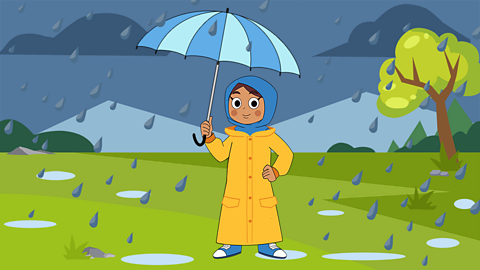
Plastic is flexible, waterproof, and sometimes transparent. It’s sometimes used to make clear bottles, raincoats and umbrellas.
Horrible Science fact
Scientists and inventors are creating new materials made from plants to replace plastic and help the environment. One example is bioplastic which can be made from corn, potatoes, or sugarcane instead of oil.
Other eco-friendly materials, like seaweed packaging or paper made from bamboo, are also being used for food wrapping and straws. They’re strong like plastic but much kinder to nature!
Find out more about testing materials.
Quiz
How to use Horrible Science in the classroom
If you're looking to bring energy, humour and curriculum-aligned content into your science lessons, Horrible Science might just be your new secret weapon.

More on Horrible Science
Find out more by working through a topic
- count8 of 50
- count10 of 50