What is in our blood?
Blood is a very special liquid that travels all around the body keeping it alive and healthy. It’s made up of four main parts.
| Part | Function |
|---|---|
| Red blood cells | Transport oxygen from the lungs to every part of the body, providing energy to move and grow. They make blood look red! |
| White blood cells | Act as tiny bodyguards that fight off invaders such as bacteria to help keep the body healthy. |
| Platelets | Help blood clot and form a scab when there is a cut, stopping too much bleeding. |
| Plasma | Carries all the other parts of the blood, as well as nutrients and waste, around the body. It is a yellowish liquid. |
Your blood is like a busy transport system, always moving and delivering what your body needs to stay strong and healthy!
Watch: The grazed knee
You might think your body is just chilling and doing its thing - but there’s a whole army of parts inside you, working to keep you fit and strong.
RUNNER: Hey, Thea. Morning. Hello. Oh don't think she can hear me. Hello? Oh. I'm fine. Embarrassing.
THEA: You okay?
RUNNER: Oh, yeah. It's just a grazed knee.
THEA: Well, that'll heal easily enough.
RUNNER: Yeah. No problem.
BRAIN CELL 1: No problem? It's a grazed knee! This is not a drill. Invaders are getting into the body right now. We need a rapid response to the disaster zone yesterday!
BRAIN CELL 2: Get a grip, brain cell. We've got a rapid response system. Every drop of blood in the body contains up to 20,000 white blood cells. Ordered, specially trained to root out and destroy invaders.
BRAIN CELL 1: Whoa! Yeah…
WHITE BLOOD CELL SERGEANT: Go go go! Whoa! Look at the size of that graze. We need clotters to stop the bleeding. Where are my platelets to clot?
PLATELET: Platelets reporting for duty, sir!
WHITE BLOOD CELL SERGEANT: Time for you to stop that bleeding!
PLATELET: Don't worry sir. We'll form a protective layer of scabs over the wound. Scab team, scab like you've never scabbed before. Let's go!
WHITE BLOOD CELL SOLDIER: We're not out of the woods yet. We've still got to deal with the bacteria that got in through the wound.
WHITE BLOOD CELL SERGEANT: If we don't neutralise them, they'll make the whole wound infected.
WHITE BLOOD CELL SOLDIER: Let's go. Charge! AHHH! Whoa! I didn't even know we could do that.
WHITE BLOOD CELL SERGEANT: Oh, yeah. We can shapeshift to chase bacteria. It's quite cool, you know.
WHITE BLOOD CELL SOLDIER: Get off the sarge!
WHITE BLOOD CELL SERGEANT: Tell my husband I love him. Oh!
WHITE BLOOD CELLS: We've done it. The battle's over.
WHITE BLOOD CELL SOLDIER: Yeah, but at what cost? Noo!
WHITE BLOOD CELL SERGEANT: Oi! Do you mind? I'm trying to have a rest here.
RUNNER: Oh, well, at least that's scabbing up nicely.
BRAIN CELL 1: You're welcome.
RUNNER: Who said that?
What are scabs?
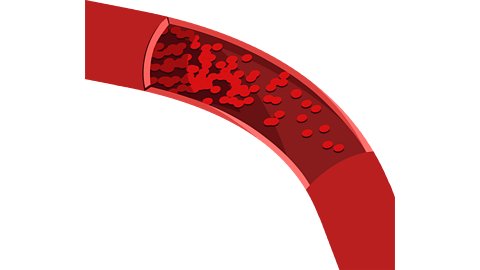
A scab is the body’s clever way of fixing itself when it gets a cut or a graze. When the skin is injured and starts bleeding, platelets rush to the area through the network of blood vessels. They work together to make a sticky plug that stops the bleeding. Then they release chemicals that help form a clot which soon dries and turns into a scab.
It's like the body making its own plaster. The scab acts as a protective shield keeping bacteria out while the new skin grows underneath. As the skin heals, the scab slowly shrinks and falls off on its own.
Scabs are like natural bandages built with the help of amazing platelets they keep the body safe and help it heal!
Horrible Science fact
Frogs don’t make scabs like humans do because they live in wet environments and scabs need dry air to form. Instead, frogs have a clever slimy healing system!
When a frog gets a cut, it releases mucus (a slippery slime) that quickly covers the wound. This slime protects the injury from germs and helps keep it clean while the frog’s body makes new skin cells underneath.
Find out more about blood and the circulatory system.
Quiz
How to use Horrible Science in the classroom
If you're looking to bring energy, humour and curriculum-aligned content into your science lessons, Horrible Science might just be your new secret weapon.

More on Horrible Science
Find out more by working through a topic
- count11 of 50

- count12 of 50

- count13 of 50

- count14 of 50