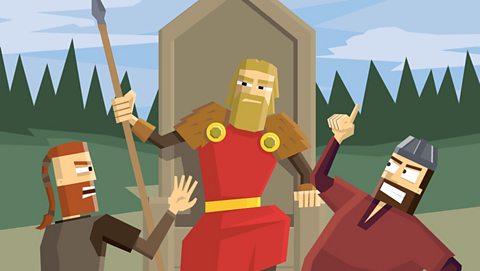
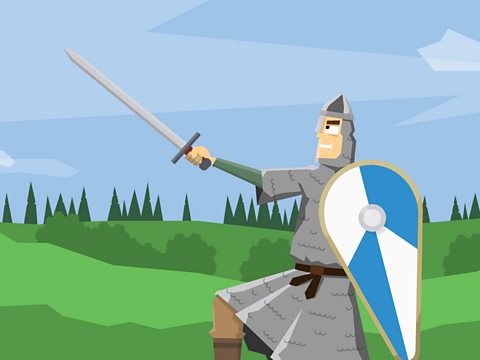
How did the Vikings prepare for battle?

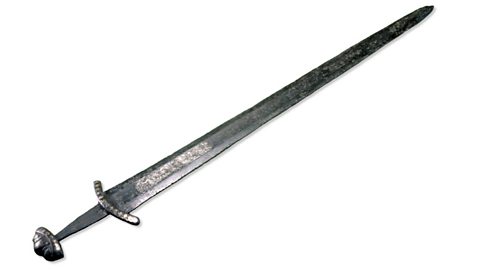
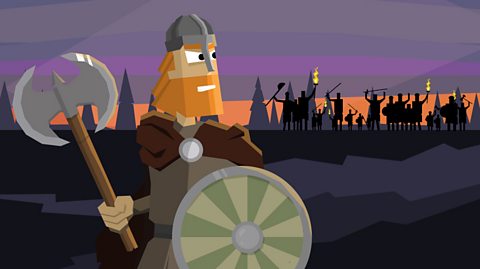
Viking warriors fought using long swords, spears and axes. They did not wear much armour and carried wooden shields. They launched surprise attacks. A good sword was handed down from father to son, but Vikings also buried weapons with their owner when he died.
In AD892, the Vikings fought King Alfred of Wessex but he defeated them.
The Vikings built different ships for different needs. They used longships for raiding and war.
The Battle of Stamford Bridge in 1066 was the last Viking battle in England.
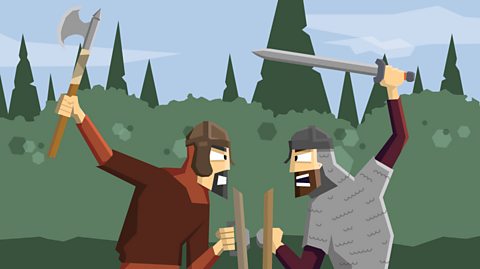
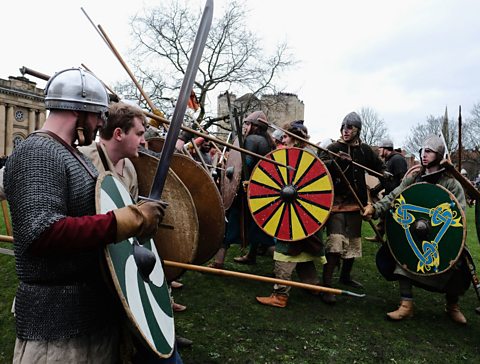
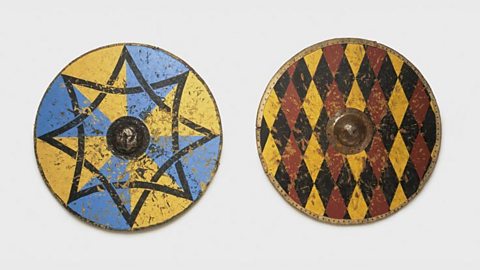
Vikings did not wear much armour. Some chieftains wore mail coats, made of thousands of metal rings but most relied on a round wooden shield for protection since these were very expensive.
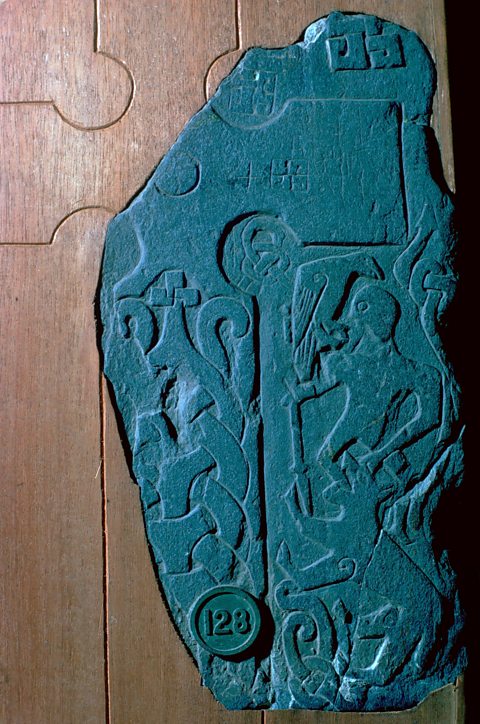
Some Viking warriors went into battle wearing wolf or bear skins. These warriors were called ‘berserkers’ from Old Norse ‘bear-shirt.’ Berserkers believed that Odin, the god of war, gave them superhuman powers and that they didn't need to wear battle armour for protection and they fought in a frenzy.
The Vikings, like the Anglo-Saxons, fought on foot (not horseback) and in battle formed a ‘shield-wall’ where they locked together side-by-side, shields in front, and pushed their enemy back until they broke up.
There were no prisoners taken in these battles. Those who could not run fast enough were killed and their helmets, weapons and armour were stolen.
Important words for the Vikings
| Keyword | Definition |
|---|---|
| Warriors | People who fight in battles. |
| Armour | Metal covering that protects people. |
| Defeated | To lose against someone. |
| Longships | Long, narrow ships designed for speed. |
| Raiding | Quick, surprise attacks. |
| War | Armed fighting between groups or countries. |
Watch: Why did the Vikings invade?
Watch as Eirik explains why and how the Vikings invaded.
Eirik: Greetings!
I am Eirik, a Dane, a warrior of the north.
We sail for Britain. For glory, for farmland… and for wealth!
Here's my get rich quick scheme.
In Britain, there are monasteries stuffed with silver, fight back very well. Easy pickings, like apples from a tree.
Look here: dried fish, barley bread, smoked meat.
Mmm. I thank the Gods for every bite, because food is hard to come by at home.
The ground is poor for farming, the winter’s long, a man must eat and eat - just to stay strong.
Other Viking: Oi Eirik! Easy on the rations.
Eirik: But what we lack in fields, we make up for at sea. Our strength rides on the waves.
These longships are as swift as the wind.
They carry us across oceans, and far up the rivers too.
Every man here can row, fight, and endure the hardest journey.
That is why the world fears us.
Shh!
We're near the rivers of Britain. Time to hide.
There. Smooth as a spear through cloth.
This is why our raids strike so fast.
Our longships bring us straight into the heart of kingdoms before a soul even knows we’ve come.
We don't need harbours.
We drag the ships straight onto the land.
By the time anyone hears of us, we are gone again.
Soon, we’ll feast on whatever riches and whatever food we can find.
I hope it's good!
Britain, here we come!
How did the Vikings attack?
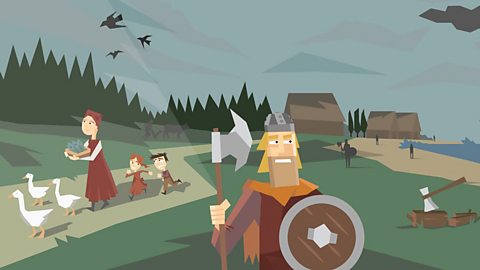
The Vikings did not send many ships on their first raids. They made surprise attacks on places like Lindisfarne in AD793.
There was no English navy to guard the coasts so it was easy for small groups of Vikings to land on a beach or sail up a river.
But it was not long before larger Viking armies attacked Britain in AD866 almost conquering the English.
King Alfred and the Vikings
In AD892, over 300 Viking ships invaded Britain to fight King Alfred of Wessex. No one knows how big the Viking army was but if there were 20 men in each Viking ship, the army of AD892 numbered 6000!
That was a huge army for the time. Most Viking armies were smaller, perhaps 1000 to 2000 men.
King Alfred was prepared though, having fortified the towns and organised a large army drawn from his own warriors and the male population called up to do service.
One army stayed to guard the forts whilst the king shadowed the raiding ships, forcing them stay in their ships. Raids, ambushes and the occasional full battle went on for five years, until AD897.
Longships and dragon ships
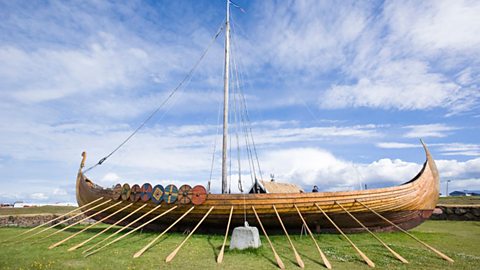
The Vikings were skilled shipbuilders and built fast dragon ships and longships for raiding and war.
A ship carried everything needed at sea – drinking water, dried meat to eat, tools, weapons, and furs to keep warm. Men slept on the deck, so they could row easily when the wind dropped.
They also had slower passenger and cargo ships called ‘knorrs’. They built smaller boats too, for fishing or short trips.
A ship carried everything needed at sea – drinking water, dried meat to eat, tools, weapons, and furs to keep warm.
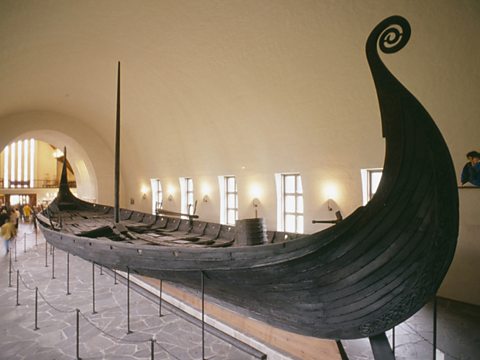
Viking longships could sail in shallow water so they could travel up rivers as well as across the sea. One of the largest known longships was 36 metres long and carried up to 300 warriors.
In a raid, a ship could be hauled up on a beach. The Vikings could jump out and start fighting, and then make a quick getaway if they were chased.
In France, bridges along the River Seine were built to prevent them getting too far into France!
The Battle of Maldon poem
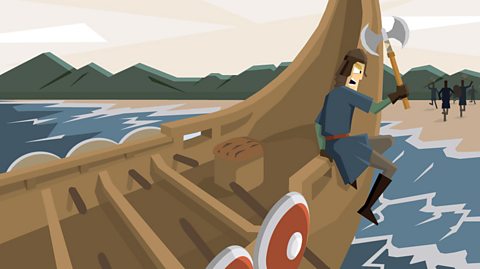
In AD991, a Viking force landed off the Essex coast. There were perhaps several thousand of them and the local English earl, Britnoth, allowed them to land safely on the causeway to give battle. This was probably to prevent them sailing elsewhere and attacking defenceless people.
In the heat of battle, Britnoth was betrayed and all his men died fighting with him. A famous Anglo-Saxon poem called The Battle of Maldon celebrated Britnoth’s bravery and tells us something of the battle:
Then loosed they from their hands the file-hard lance.
The sharp-ground spears to fly
Bow were busied – buckler met point
Bitter was the battle-rush, warriors fell…
What was the last Viking battle?
- The Battle of Stamford Bridge in September 1066 was the last major Viking battle in England.
- It was between King Harald of Norway and Tostig and King Harold of England.
- King Harold won the battle.
The Battle of Stamford Bridge

Image caption, In 1066, there were different kings fighting for the English throne. King Harold of England was chosen. However, King Harald Hardrada from Norway wanted to be king of England. He sailed to England with a large Viking army and Tostig Godwinson (King Harold’s brother).


1 of 3
Think like a historian

Have a look at the thinking points below and think about your answer to each question. You could even write them down on a piece of paper or discuss them with somebody else if you want to.
Why do you think the Vikings launched surprise attacks on places like Lindisfarne in AD793?
How did King Alfred of Wessex defeat the Vikings in AD896?
Why was the Battle of Stamford Bridge in 1066 a significant event?
Here are some ideas you might have thought of. Well done if you did! Are there any other ideas you thought about?
Surprise attacks did not allow the English to prepare. In the Lindisfarne attack in AD793, there was no English navy guarding the coasts, so it was easier for the Vikings to land on a beach or sail up a river.
King Alfred had fortified towns (burhs) and a large army. One army stayed to guard the forts while King Alfred shadowed the raiding ships, forcing them to stay in their ships.
It was the last major Viking battle in England. King Harold of England defeated King Harald of Norway and Tostig Godwinson.
Activites
Activity 1: Viking weapons
Click on the labels below to find out more about a Viking warrior’s weapons and armour.
Activity 2: Viking long ships
Click on the labels below to find out more about the parts of the a Viking long ship.
Activity 3: Viking battles
Grown-ups Corner
Are you a parent, carer or teacher? Take a look at some of the links below with your children on KS2 History which are packed full of knowledge, videos, quizzes and activities.
Viking clothing
Bitesize for Teachers
Viking beliefs
Bitesize for Teachers
What happened to the Anglo-Saxons and Vikings?
KS2: History
Horrible Histories: Raid and Trade game! game
Play Horrible Histories: Raid and Trade KS2 History
More on Vikings
Find out more by working through a topic
- count4 of 5
- count1 of 5
- count2 of 5