How did the Anglo-Saxons and Vikings struggle for power?
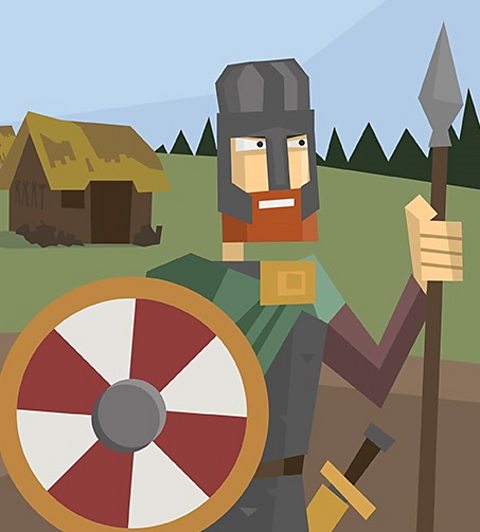
In AD793 some Vikings attacked and destroyed the monastery of Lindisfarne, killing the monks and taking precious ornaments.
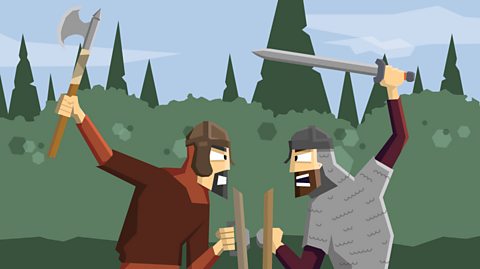
There was a long struggle between the Anglo-Saxons and the Vikings for the control of Britain. Around AD801-AD900, King Alfred of Wessex agreed to peace if the Vikings settled in the north and east of England (Danelaw).
After King Alfred, Ethelred the Unready gave the Vikings gold and land (Danegeld) to stop them invading. The Vikings attacked them anyway.
When Cnut became King of England, England became part of the Viking empire.
When Edward the Confessor died in 1066, it was unclear who would become the next king. At the Battle of Stamford Bridge in 1066, King Harold of England defeated King Harald of Norway. But at the Battle of Hastings, Duke William of Normandy defeated King Harold of England. The Anglo-Saxon and Viking Age had ended and the Norman period started.
Important words for the Vikings
| Keyword | Definition |
|---|---|
| Struggle | Something that is difficult. |
| Danelaw | The area of northern and eastern England that belonged to the Vikings. |
| Danegeld | The large sums of money and land given to buy off the Vikings. |
| Invading | Entering a place forcefully. |
| Empire | A group of people or land that are ruled by one ruler. |
| Defeated | To lose against someone. |
| Raid | A quick, surprise attack. |
How did the Anglo-Saxons take control of England?
After Alfred, Anglo-Saxon kings took the Danelaw territories back from the Vikings. Alfred's grandson, Athelstan, pushed English power north as far as Scotland and was the first king to claim to be ‘King of all England’.
In AD954, the Anglo-Saxons drove out Eric Bloodaxe, the last Viking king of Jorvik. Later, when Eric was killed in battle, the Vikings agreed to be ruled by England's king.
The most powerful Anglo-Saxon king was Edgar. Welsh and Scottish rulers obeyed him as well as the English, and his court at Winchester was one of the most splendid in Europe.
Anglo-Saxon England reached its peak during Edgar's reign.
How did King Cnut become king?
In Viking times, a king had to be strong to fight and keep his land. Ethelred the Unready was thought of as a weak king of England in the 11th century.
Ethelred gave the Vikings gold and land to stop them invading. This money was called Danegeld. But it didn’t work – the Vikings took the gold and attacked anyway.
Ethelred's soldiers killed many Viking families in the Danelaw. This made King Sweyn of Denmark angry. He invaded England and Ethelred fled to France.
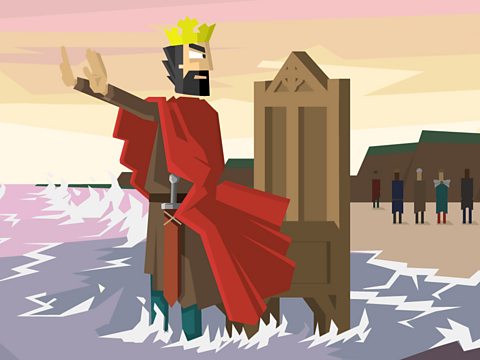
Sweyn's son Cnut (also known as Canute) became king of England. Cnut was a strong ruler and England became part of his Viking empire, later along with Denmark and Norway.
Who was 'Edward the Confessor'?
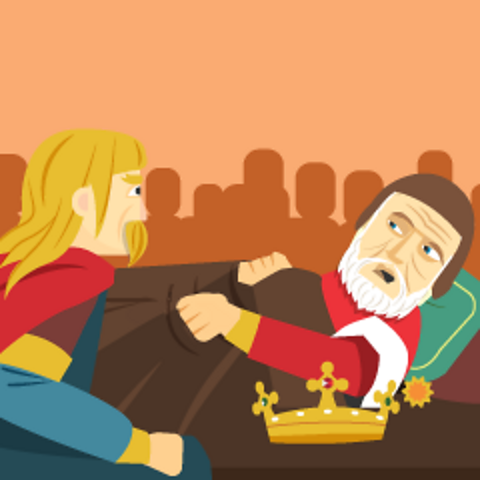
In 1042 there was a new king of England called Edward, also known as Edward 'the Confessor.'
He had no children so it was unclear who would become king next.
After Edward died, the English Witan (council of Anglo-Saxon kings) chose Earl Harold of Wessex as the next king.
How did Anglo-Saxon England come to an end?
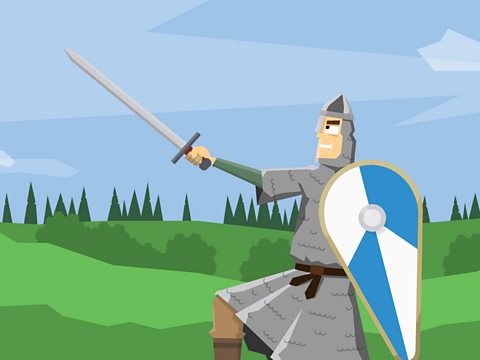
Duke William of Normandy and Harald Hardrada, the King of Norway, were not happy that Harold became king. They both believed they had a claim to the throne.
In 1066, England was invaded twice.
- First, a Norwegian army led by Harald Hardrada landed in the north.
- King Harold killed Harald Hardrada at the Battle of Stamford Bridge.
Three days later William's Norman army landed in the south of England.
- William and Harold's armies fought at the Battle of Hastings.
- The Normans won, King Harold was killed, and William became king.
This brought an end to Anglo-Saxon and Viking rule. A new age of Norman rule in England had started.
Think like a historian

Have a look at the thinking points below and think about your answer to each question. You could even write them down on a piece of paper or discuss them with somebody else if you want to.
Who was it that agreed to peace with the Vikings and how did this change England?
Why do you think Ethelred the Unready was thought of as a weak King of England?
Why was the death of Edward the Confessor historically significant?
You might have thought about some of these ideas below. If you did, well done! Was there anything else you thought about?
King Alfred of Wessex agreed to peace with the Vikings and gave them their own area of northern and eastern England, called Danelaw. This stopped the Vikings taking over England.
Ethelred the Unready has been thought of as a weak King of England because he gave the Vikings gold and land (Danegeld) to stop them invading. The Vikings still attacked.
The death of Edward the Confessor was historically significant because he had no children. It was unclear who would become the next king of England.
Activities
Activity 1: King Edward of England timeline
Edward was the son of Ethelred the Unready and ruled England from 1042. Find out about his life by clicking below.
Activity 2: Quiz – How Anglo-Saxons and Vikings struggled for power
Grown-ups Corner
Are you a parent, carer or teacher? Take a look at some of the links below on KS2 History which are packed full of knowledge, videos, quizzes and activities.
How was Anglo-Saxon Britain ruled?
KS2 History
Who was Alfred the Great?
KS2 History
Anglo-Saxon village life and work
Bitesize for Teachers
Horrible Histories: Raid and Trade game! game
Play Horrible Histories: Raid and Trade KS2 History
More on Vikings
Find out more by working through a topic
- count1 of 5
- count2 of 5
- count3 of 5
- count4 of 5