How do we know so much about Ancient Egypt?
The Ancient Egyptian civilisation lasted for around 3000 years.
We know about Ancient Egypt from:
- tombs (special places where people were buried after they died)
- pyramids (a huge, triangular-shaped structure used as a tomb for pharaohs)
- artefacts (object made or used by people long ago that helps us learn about how they lived) left behind.
Studying these items is called Egyptology and the people who study them are called Egyptologists.
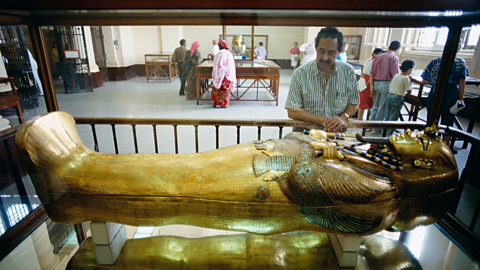
An Egyptologist is an archaeologist who specialises in Ancient Egypt.
Tombs, pyramids and the Valley of the Kings show us how Pharaohs and important people lived and were buried.
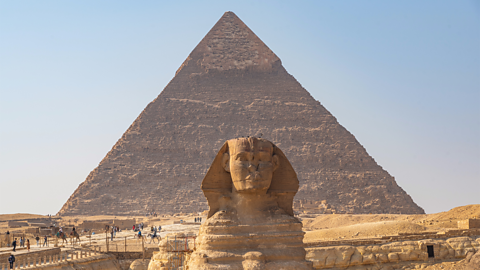
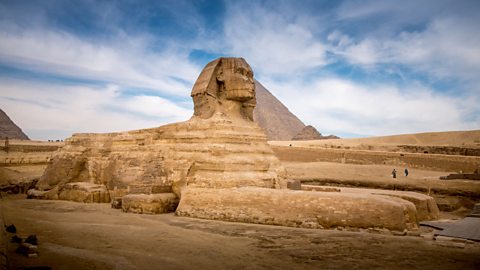
Statues, the Sphinx (a statue with the body of a lion and the head of a human) and temples like Karnak tell us about their gods and daily life.
Mummies (wrapped and preserved bodies of the dead) show how they treated the dead and what they believed about the afterlife. Pharaohs, the rulers of Ancient Egypt, were considered important to the gods, and turning them into mummies kept them looking lifelike.
Important words
Important words on what remains in Ancient Egypt.
| Keyword | Definition |
|---|---|
| Archaeologist | A person who studies the past. |
| Artefacts | Object made or used by people long ago that helps us learn about how they lived. |
| Egyptologist | A person who studies Ancient Egypt. |
| Egyptology | The study of Ancient Egypt’s people, buildings and objects. |
| Hieroglyphs | Pictures and symbols used by Ancient Egyptians for writing. |
| Inscriptions | Words carved into stone or something hard. |
| Pyramid | A huge, triangular-shaped structure used as a tomb for pharaohs. |
| Sphinx | A statue with the body of a lion and the head of a human. Some statues also give the sphinx the wings of a bird. |
| Tombs | Special places where people were buried after they died. |
| Translate | To change writing from one language into another. |
Watch: What remains of Ancient Egypt?
Watch the video to learn more about what remains of Ancient Egypt.
Child: The ancient Egyptian civilisation and language died out nearly 1,500 years ago. So, how do we know so much about them?
Teacher: The answer is right in front of you!
Child: What do you mean?
Teacher: This is the Rosetta Stone!
The writing on it says the same thing in three languages! Ancient Greek, Demotic, and Egyptian Hieroglyphs.
Before it was discovered, archaeologists couldn’t read Hieroglyphs or Demotic, but they could read ancient Greek!
By comparing the three texts, they could work out how hieroglyphic writing worked!
This means people have been able to read hieroglyphs and discover what life what like at the time.
Of course, we’ve learned a lot from the buildings and monuments of Ancient Egypt that are still standing. Like the pyramids! Or the Temples of Karnak!
People can still walk amongst the ruins of the ancient city of Luxor or visit the mortuary temple of Queen Hatshepsut!
And we mustn’t forget the Sphinx! These places have lasted thousands of years, and survived war, theft, and extreme weather.
But you don’t have to go to Egypt to find ancient Egyptian artefacts. Museums across the UK hold a vast range of items!
Some of my favourites are the ones that tell us about everyday life back then. Like combs, jewellery and bottles of make-up.
Some of these things are over 5,000 years old, but it often feels like they could have been used yesterday!
Slideshow: What Ancient Egyptian ruins can we see today?
Click through the slideshow to learn more about some of the Ancient Egyptian ruins we can still see today.
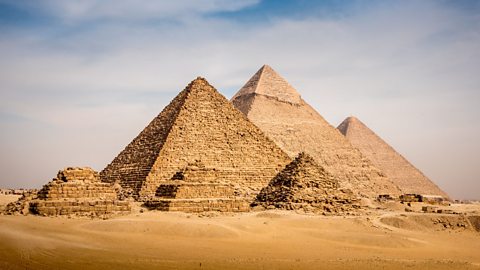
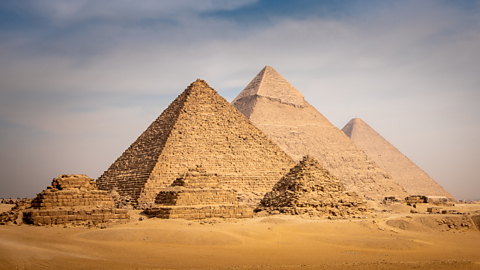
Image caption, The largest Egyptian pyramid ever built was Pharaoh Khufu’s Great Pyramid of Giza, over 4,500 years ago. It is the tallest pyramid that you can see in this picture. It is made from over two million stone blocks.
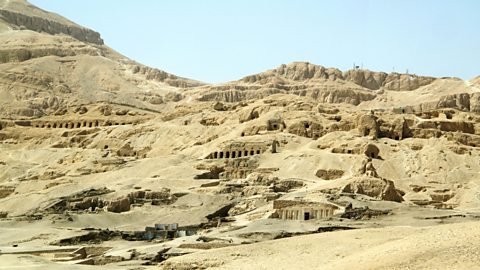
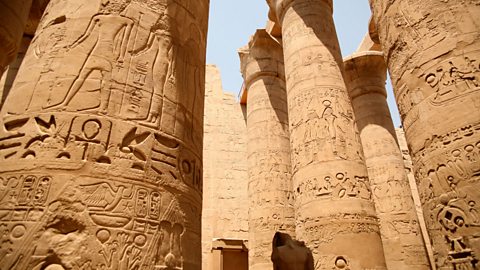
1 of 4
The Rosetta Stone
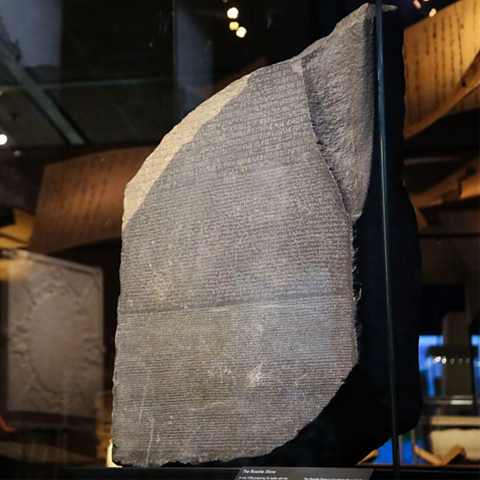
Ancient Egyptians wrote using hieroglyphs (pictures and symbols used by Ancient Egyptians for writing).
People stopped using them soon after the end of the 4th century AD.
For over 1,400 years no one could read what was written.
In 1799, a soldier in the French army found a large stone in Egypt.
This stone is called the Rosetta Stone.
The Rosetta Stone is over one metre high and more than 2000 years old.
It is part of a bigger stone slab and has a message carved into it.
The Stone helped scholars translate hieroglyphs for the first time.
They looked at the inscriptions (words carved into stone or something hard) on the stone which are in Ancient Greek, a language people could already read, demotic and hieroglyphs.
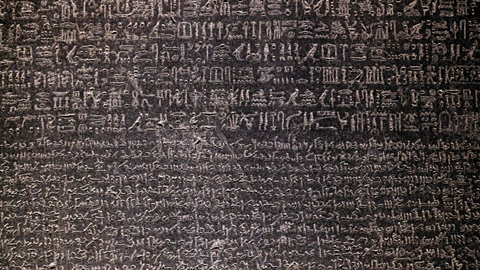
The Rosetta Stone and other Egyptian artefacts were captured by the British Army and brought back to London.
It has been on display at the British Museum since 1802.
Artefacts in the UK
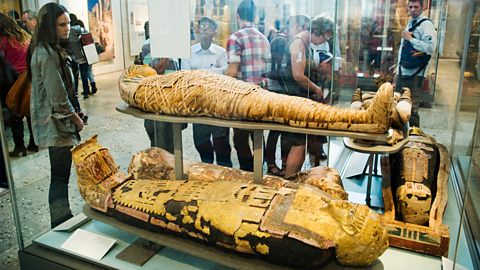
The UK we have some of the biggest collections of Ancient Egyptian artefacts in the world.
The British Museum in London has the largest collection of Egyptian objects outside of Egypt.
However, not all of these objects were willingly donated to the museum. Many were taken by British explorers and soldiers during the 19th and 20th centuries, when Britain ruled a large Empire.
Think like a historian
Have a look at the thinking points below and think about your answer to the questions. You could even write it down on a piece of paper or discuss it with somebody else if you want to.
- How do tombs, statues and pyramids help us understand what was like in Ancient Egypt?
Perhaps you thought about why tombs, statues and pyramids were important to the ancient Egyptians?
- Tombs and pyramids show us how important pharaohs were, because so much time, effort and resources were used to build them for the afterlife.
- Statues show us what pharaohs looked like and how powerful they were.
- These objects help us understand how Ancient Egyptians lived, worked and worshipped their gods.
Activities
Activity 1: Where can you see Ancient Egyptian artefacts today?
Click on the map to find an exhibition near you.
Activity 2: Quiz – Remains of Ancient Egypt
Activity 3: History Explorer game
Play this game to test your knowledge and learn even more facts about Ancient Egypt.
History Explorer: Secrets through time
History Explorer: Secrets through time: KS2 History
Grown-ups corner
Are you a parent, carer or teacher?
Take a look at some of the links below on KS2 History which are packed full of knowledge, videos, quizzes and activities.
KS2 History: Ancient Egypt
BBC Bitesize for Teachers
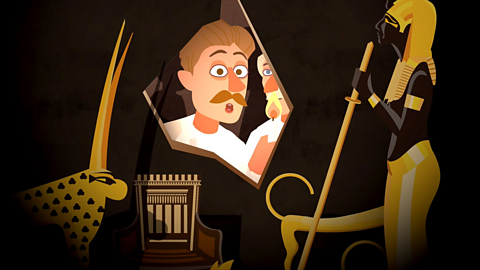
KS2 Music: Ancient Egypt. Song: 'Out of the gloom, Tutankhamun'
BBC Bitesize School Radio
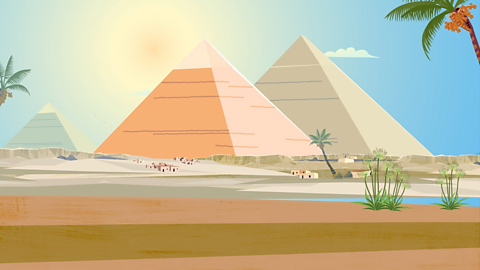
KS2 History: How the pyramids were built
BBC Bitesize for Teachers
Horrible Histories: Raid and Trade game! game
Play Horrible Histories: Raid and Trade KS2 History
More on Ancient Egypt
Find out more by working through a topic
- count3 of 18
- count4 of 18
- count6 of 18