What jobs did people have in Ancient Egypt?
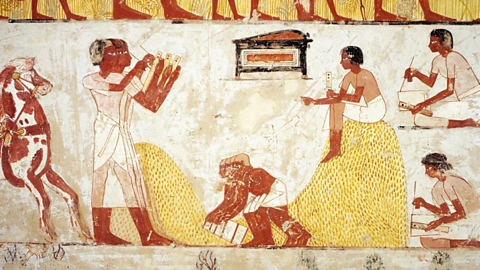
Farmers, bakers, priests, craftspeople, merchants (a person who trades goods), scribes (a person who wrote hieroglyphs or documents) and doctors were some of the jobs they had in Ancient Egypt.
Jobs were usually inherited (something passed on to the next generation) from parents, so if your father was a farmer, it was likely you would become a farmer too.
Important words
Important words on what life was like in Ancient Egypt
| Keyword | Definition |
|---|---|
| Apprenticeship | Learning a trade, skill or job by working with someone experienced. |
| Enslaved | Someone who is a slave and forced to work. They are not free to make their own choices. |
| Harvest | Gathering the crops. |
| Inherited | Something passed on to the next generation. |
| Merchant | A person who trades goods. |
| Scribe | A person who wrote hieroglyphs or documents. |
Watch: Life in Ancient Egypt
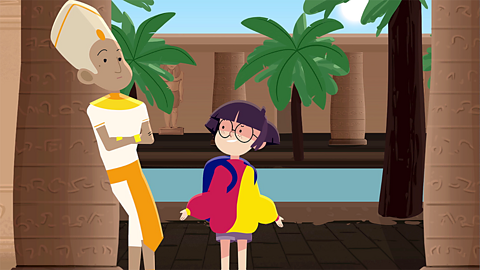
Watch the video to learn more about what life was like for the Ancient Egyptians.
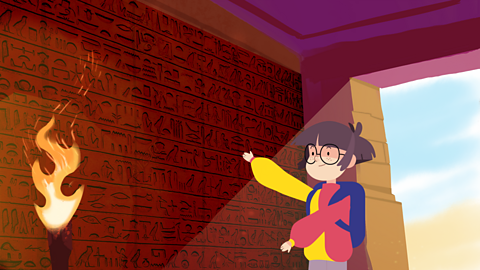
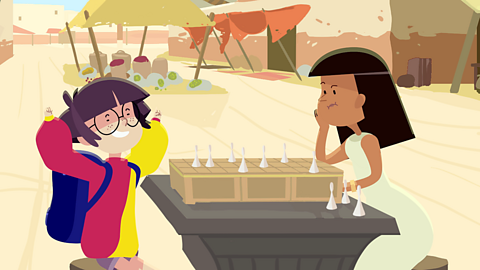
Child: A head rest for sleeping. That looks really uncomfortable!
Ancient Egyptian child: It’s not that bad. Anyway, what would you use?
Child: Uhh… a pillow maybe?
Ancient Egyptian child: A what? Oh, never mind! I’ve got to get to work.
Child: Work? Seriously? How old are you?
Ancient Egyptian child: Twelve.
Everyone ‘round here starts work at my age. What’s your job?
Child: I don’t have one. I’m at school.
Ancient Egyptian child: Wow! You can actually read and write?
Only people like Priests, Scribes and Royalty learn to do that!
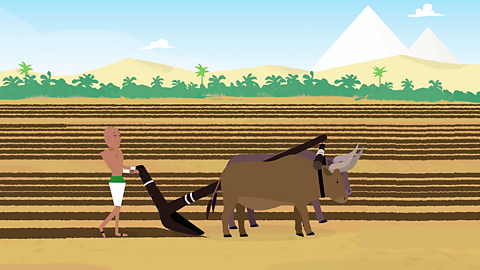
We’re farmers, so we’re too busy working in the fields to be learning.
We do proper work!
Child: Oh, I see.
Mum: Are you nearly ready?
Ancient Egyptian child: Just putting my makeup on!
You could do with some makeup too!
Mum, have you got my lunch?
Mum: I’ve got some fresh bread from the oven, and some garlic and some grapes.
Here you are my little kitten!
Ancient Egyptian child: …Mum!.. You ready?
Child: Ready for what?
Ancient Egyptian child: Working in the fields, it’s harvest time!
Child: Yeah sure… uh… I need the loo.
Ancient Egyptian child: No problem! Here you go.
Child: Woah!
Ancient Egyptian child: I know, it’s the latest model!
You can take the bowl out from underneath, and chuck everything away!
Child: …Uhh… Great. Does everyone here farm?
Ancient Egyptian child: Our way of farming is so efficient, not everyone has to help grow crops!
We have people like Merchants, Builders and Doctors here too!
Child: Wow!
Ancient Egyptian child: I know, have you ever seen so much barley?
The harvest is going to be amazing this year!
Child: Yeah, it’s going to be great!
How did you get a job?
Women had special rights and were able to own property, work in trade and run farms alongside their husbands.
Marriage was important and women were respected as mothers and wives.
People divorced and remarried.
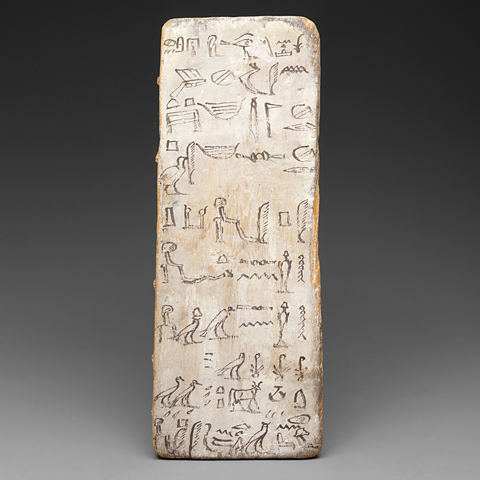
There weren’t schools like the ones we have today, but ancient Egyptians did have apprenticeships (learning a trade, skill or job by working with someone experienced).
This meant that many children had jobs or were learning a trade.
Enslaved people (someone who is a slave) worked as forced labour but also traded goods as a job. Surprisingly, some slaves were able to own property and were paid in food not wages.
How important is Deir-el Medina?
After Tutankhamun’s tomb was discovered in 1922, work began excavating (digging up) an entire village at Deir-el Medina, near the Valley of the Kings.
This gave us the most detailed information we have of life in an Ancient Egypt from 1500 BC.
There were around 68 houses, made of mud-brick and built on stone foundations.
Letters, legal documents, statues and tombs we've found there tell us about family and working life.
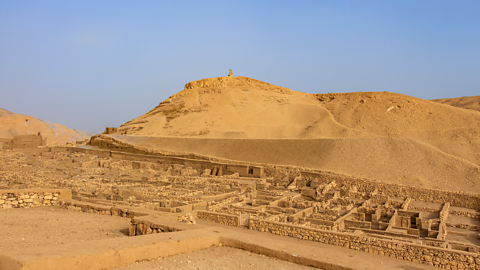
From the evidence found in the ruins we know that:
- Many of the men and women could read.
- Women baked bread and brewed beer.
- The village had a court of law and everyone had a right to a trial.
- There was a local police, the Medjay, to keep order.
- The people of Deir-el Medina also had medical treatment.
- They could get prescriptions of ingredients, prayers and spells from the physicians (doctors).
What were ancient Egyptian houses like?
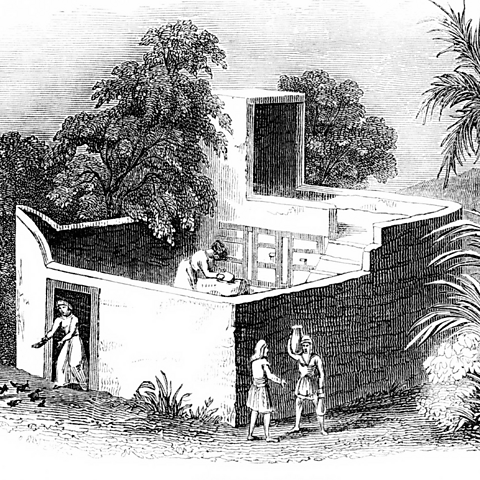
Not many examples of ancient Egyptian houses have survived because they were built a very long time ago.
Houses would have been built of mud-bricks with floors made from earth.
They had living rooms, kitchens and bedrooms.
Many of the large objects that we can move around in our modern-day homes (like seats and ovens) were built into the house.
There was no gas or electricity, meaning that food was cooked in stone ovens, using a fire for heat.
To keep food and drinks cool, pits were dug and food was stored below ground level.
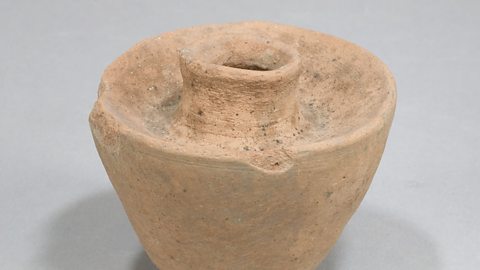
Slideshow: What did Ancient Egyptians have in their homes?
Click through the slideshow to see the kinds of things Ancient Egyptians had in their homes.
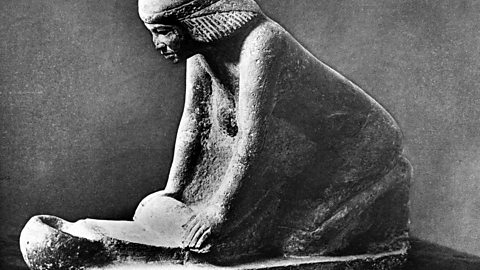
Image caption, Querns
A quern is a stone tool used for grinding wheat into flour. This Egyptian statue shows a person using a quern.
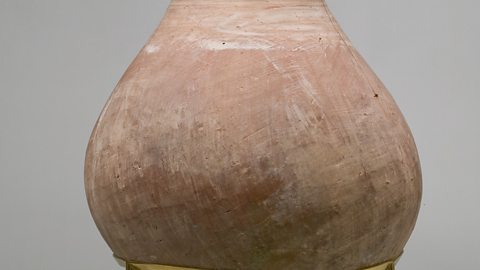
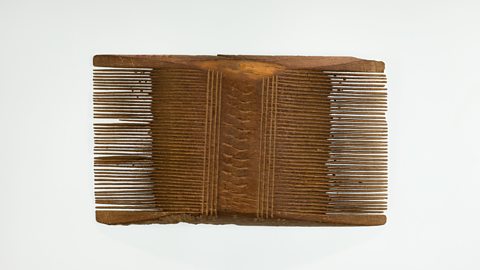
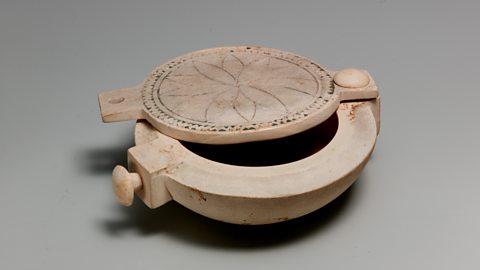
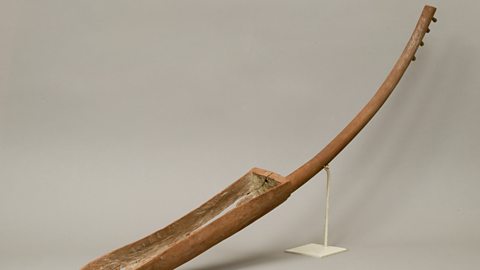
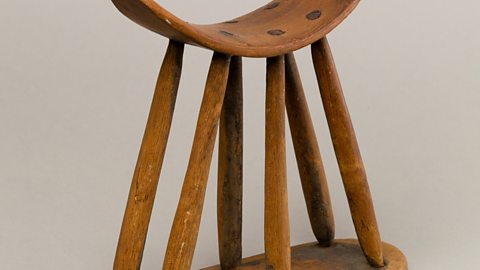
1 of 7
What food did the Ancient Egyptians eat?
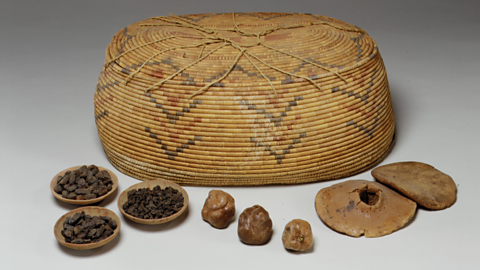
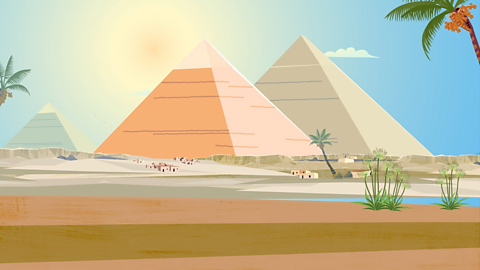
The area around the River Nile was fertile (the soil was easy to grow things), due to the annual flood.
This meant that lots of different foods could be grown and harvested (gathering the crops).
Foods that we eat today, like tomatoes, bananas and potatoes were not eaten in Ancient Egypt because they had not been discovered yet!
Like many civilisations, the food you ate depended on your class.
Richer people, like Pharaohs and priests, ate meat, eggs, figs and grapes.
Poorer people, like farmers, ate bread, onions and garlic.
Think like a historian
Have a look at the thinking points below and think about your answer to the questions. You could even write it down on a piece of paper or discuss it with somebody else if you want to.
How has the discovery of the Deir-el Medina helped historians learn about Ancient Egyptian life?
How did living near the River Nile affect the types of jobs people could do?
Perhaps you thought about how the Deir-el Medina was a village of workers? When it was discovered, archaeologists found houses, letters, tools and tombs that showed how people there lived. Many people could read and write, that women baked bread, brewed beer and ran farms. There were laws, courts and even doctors in the village. This discovery gave historians a clear picture of family life, jobs and community in Ancient Egypt.
Did you think about how living near the River Nile gave people water and fertile land? People could grow crops like wheat, barley, fruit and vegetables. This created jobs for farmers, bakers and food sellers. The river also made it possible to fish, trade and travel, which led to jobs like fishermen, merchants and boat builders. Without the River Nile, these jobs would not have been possible.
Activities
Activity 1: Ancient Egyptian villages
Click the labels below to find out about life in Ancient Egypt.
Activity 2: Ancient Egyptian food
It's time to pack your lunch bag. Sort the foods below.
Activity 3: Quiz – Life in Ancient Egypt
Grown-ups corner
Are you a parent, carer or teacher?
Take a look at some of the links below on KS2 History which are packed full of knowledge, videos, quizzes and activities.
KS2 History: Ancient Egypt
BBC Bitesize for Teachers
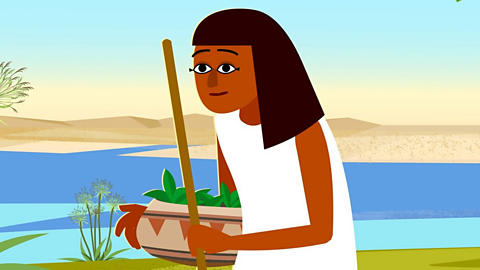
KS2 History: Ancient Egypt - Nanu - The Farm Girl
BBC Bitesize for Teachers
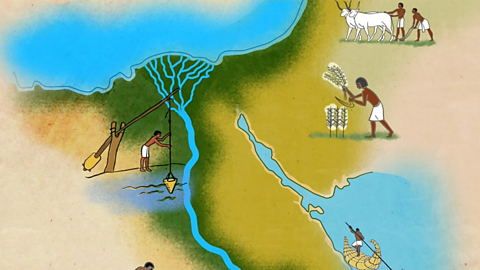
KS2 Music: Ancient Egypt. Song: 'Living, living River Nile'
BBC Bitesize School Radio
Horrible Histories: Raid and Trade game! game
Play Horrible Histories: Raid and Trade KS2 History
More on Ancient Egypt
Find out more by working through a topic
- count6 of 18
- count7 of 18
- count8 of 18