How did the ancient Egyptian civilisation start?
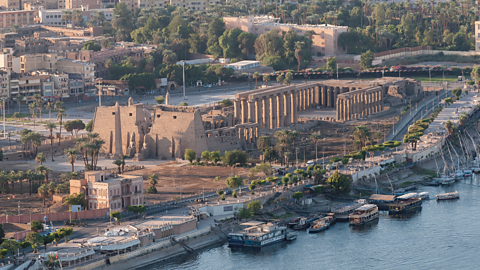
The Ancient Egyptian Civilisation began over 5000 years ago, It was in north-east Africa.
Around 3000BC, people began to build settlements next to the River Nile because it gave them water and they could grow crops.
This civilisation (a large group of people who follow the same rules and ways of living) lasted for around 3000 years.
Important words
Important words on Ancient Egypt.
| Keyword | Definition |
|---|---|
| Afterlife | A belief that a part of a person continues to exist after their body dies. |
| Flax | A flowering plant used for its seeds and to make clothes. |
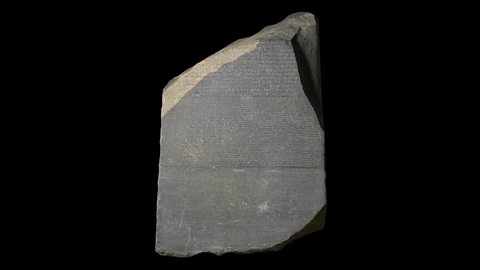
| Hieroglyphs | Pictures and symbols used by Ancient Egyptians for writing. |
| Mummification | The process used to preserve a dead body so it does not rot. |
| Papyrus | A material made from a plant, used as paper to write and paint upon. |
| Tomb | Special places where people were buried after they died. |
| Shaduf | A tool used to lift water from the river onto the land. |
Watch: Introducing the ancient Egyptians
Watch the video to learn more about the Ancient Egyptians.
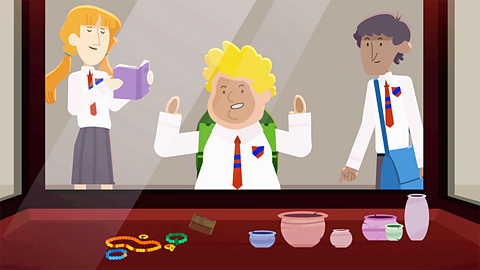
Child: The ancient Egyptian civilisation began 5,000 years ago and lasted 3,000 years!
It was located along the River Nile in north-east Africa. I better write this down!
Oh! I’ve lost my pen.
Ancient Egyptian: You’re clearly not Egyptian, are you?
Child: No, I’m from Britain.
Ancient Egyptian: Haha! No wonder you don’t have a pen. I’m surprised you even know what they are. We’re way ahead of anyone in Britain.
Stonehenge is nothing, compared to these!
Child: Woah!
Ancient Egyptian: What have you got in this linen sack thing anyway? Oh, a calendar! Now that is useful. It’s similar to our own solar calendar which has 365 days in it.
You do have bread at least!
We have some of the most efficient tools for making flour. And we use the River Nile to provide water for our crops. And you’re even using papyrus.
Child: It’s paper actually.
Ancient Egyptian: Well, whatever you call it, we invented it.
We use it to write down our language using small pictures called hieroglyphs.
It’s quite complex, so it takes a scribe like me to do it.
Child: Can you see my pen in there?
Ancient Egyptian: No, which is a shame as record keeping, organisation and planning are key to any successful civilisation.
All these things have helped us become one of the greatest civilisations in world history!
Child: Wow, it’s true what they say. The pen is mightier than the sword.
Ancient Egyptian: Swords have helped a little along the way…
What’s known about the ancient Egyptians?
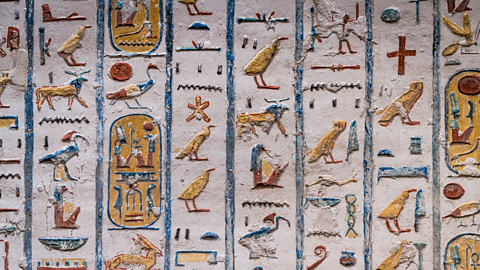
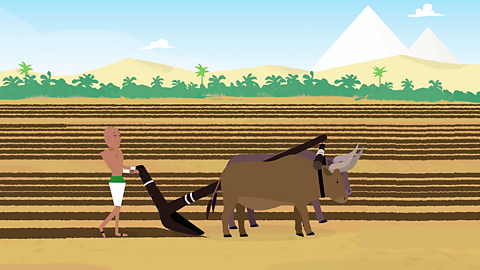
The Ancient Egyptians were experts at farming and construction because they were very inventive.
They invented a solar calendar (a calendar based on the sun).
They also created a writing system called hieroglyphs that used pictures as words and sounds.
The Ancient Egyptians were ruled by kings and queens who were called Pharaohs.
Religion was an important part of their civilisation.
They worshipped over 2,000 gods and goddesses!
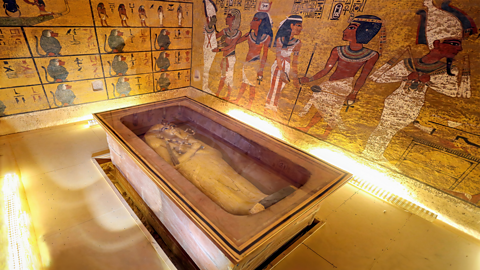
The ancient Egyptians also believed in a never-ending afterlife (a belief that a part of a person continues to exist after their body dies).
They thought it was more important than their life on Earth, so they spent a lot of time planning for their death.
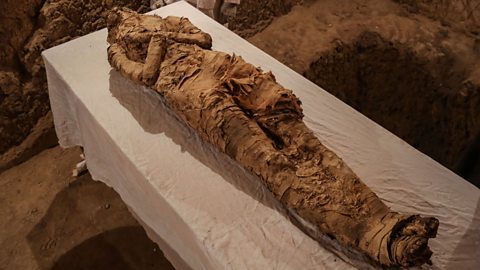
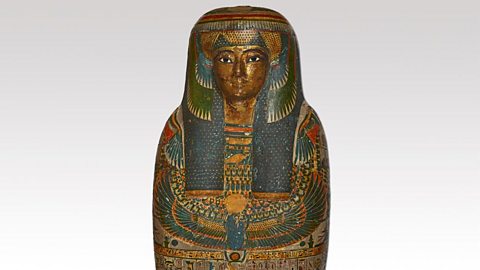
The ancient Egyptians preserved the bodies of important people through mummification (the process used to preserve a dead body so it does not rot).
They built special tombs (special places where people were buried after they died) to be buried in, which they filled with all their favourite things.
Some Pharaohs built their tombs in the shape of giant pyramids.
What were the pyramids?
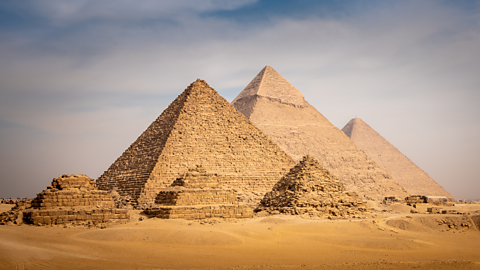
The pyramids are giant tombs.
Each side is triangular, and they meet in a point at the top.
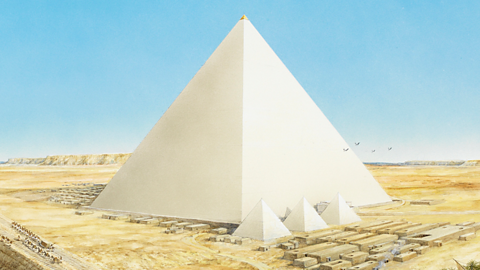
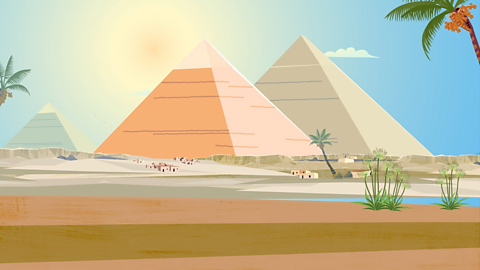
The most famous is the Great Pyramid of Giza at 480 feet high made from 2.3 million large blocks of rock.
The Great Pyramid of Giza is around 4,600 years old. It was the tallest human-made structure in the world for 3,800 years.
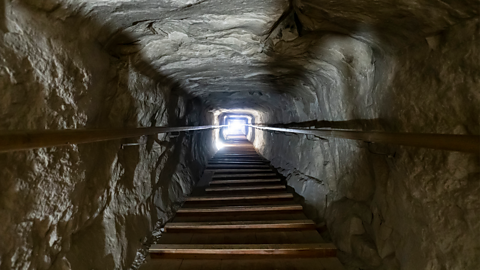
After it was finished, it was covered in white limestone. There were three chambers and two entrances. However, the inside was looted (robbed) and nothing remains except for some large sarcophagi (coffins) of the early Pharaohs.
The Great Pyramid was part of a group of pyramids outside Giza, which also included the Great Sphinx.
Slideshow: The pyramids of Giza
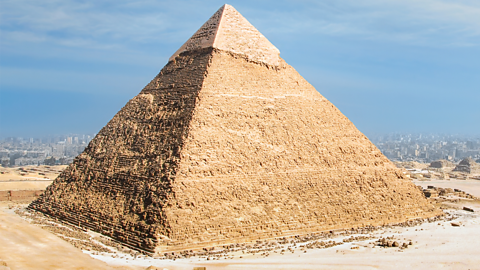
Image caption, The pyramid of Khafre in Giza, Egypt. The middle of the three ancient pyramids, it was the tomb of the Pharaoh Khafre (2558−2532BC).
1 of 3
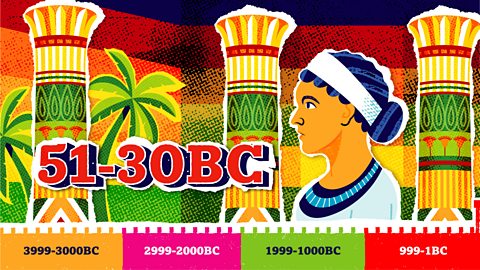
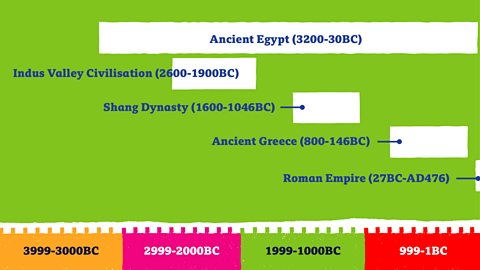
A timeline of Ancient Egypt
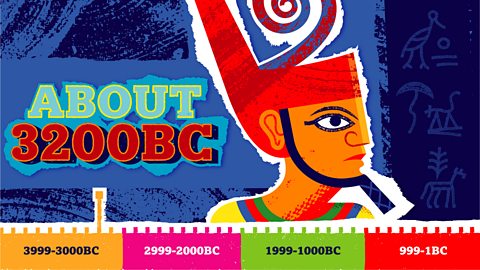
Image caption, Click the arrows learn more about the timeline of Ancient Egypt!
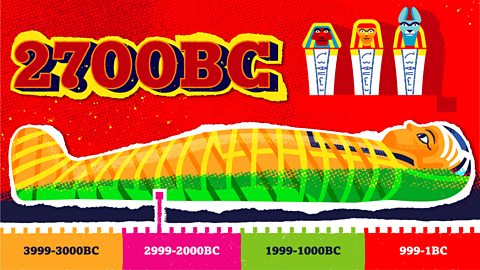
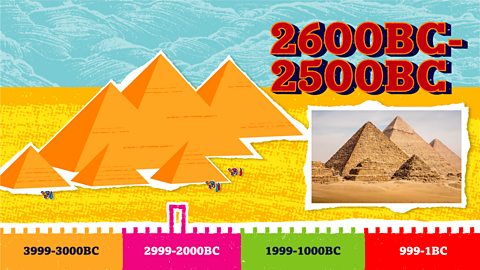
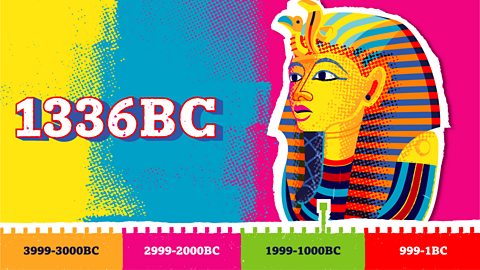
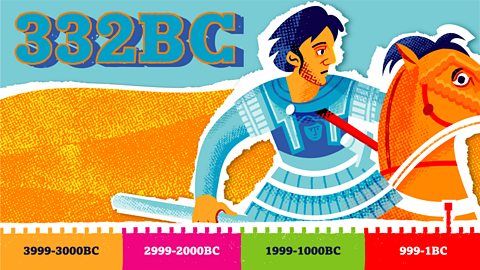
1 of 8
Think like a historian
Have a look at the thinking points below and think about your answer to the questions. You could even write it down on a piece of paper or discuss it with somebody else if you want to.
Why did the Ancient Egyptians settle near the River Nile?
The Ancient Egyptian civilisation changed the world. Can you think of any evidence that shows this?
Did you think about the importance of the River Nile? The Ancient Egyptians settled near the River Nile because it gave them water in the hot, dry desert. The river’s water allowed them to grow crops like wheat, barley, fruit and vegetables. They also grew flax to make clothes and papyrus to make paper. It also helped them fish and trade with other villages. Living by the River Nile helped the Ancient Egyptian civilisation grow strong and last a long time.
Maybe you considered that the Ancient Egyptians were very inventive, especially at building pyramids and temples. They were experts at farming and used the River Nile to water their crops. They even invented the shaduf, a tool to help water the crops, so they could grow more food. The ancient Egyptians also invented the solar calendar to keep track of time and a writing system called hieroglyphs. All of these ideas and inventions helped the Ancient Egyptian civilisation grow and influenced other people around the world.
Activities
Activity 1: Explore ancient Egyptian artefacts
- Image source, The Trustees of the British Museum
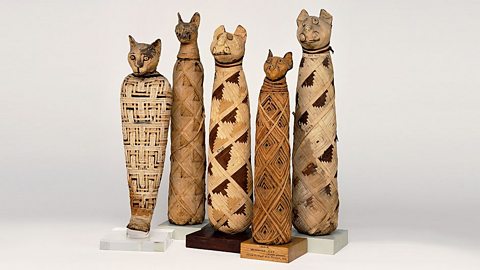
Image caption, Mummified cats
Ancient Egyptians thought cats were very special. They wanted to take their cats with them into the afterlife so they often mummified them and put them in their tombs.
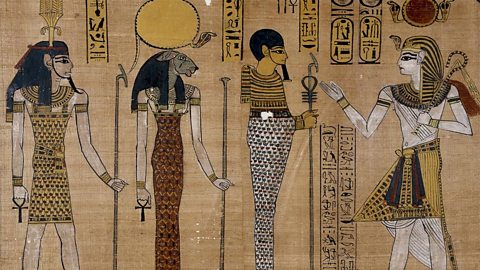
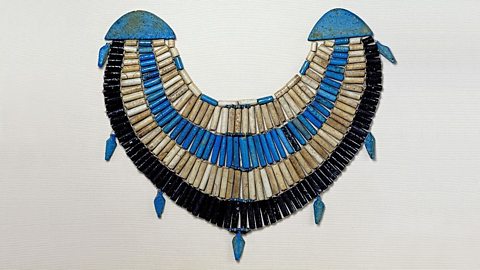
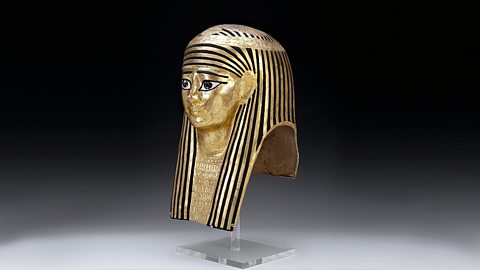
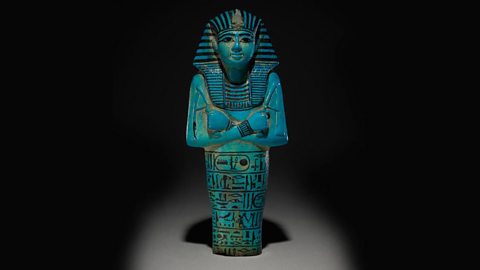
1 of 8
Activity 2: Quiz – Introduction to Ancient Egypt
Activity 3: Make your own pyramid treasure tomb
Make your own pyramid treasure tomb
Make your own pyramid treasure tomb. document
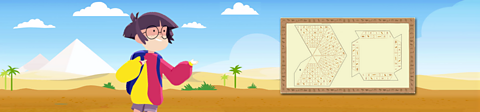
Download our pyramid treasure tomb template. Follow our step-by-step guide to make your own pyramid. What secrets will you bury inside?
Activity 4: History Explorer game
Play this game to test your knowledge and learn even more facts about Ancient Egypt.
History Explorer: Secrets through time
History Explorer: Secrets through time: KS2 History
Grown-ups corner
Are you a parent, carer or teacher?
Take a look at some of the links below on KS2 History which are packed full of knowledge, videos, quizzes and activities.
KS2 History: Ancient Egypt
BBC Bitesize for Teachers
KS2 History: Ancient Egypt - Society and culture
BBC Bitesize for Teachers
KS2 Music: Ancient Egypt
BBC Bitesize School Radio
Horrible Histories: Raid and Trade game! game
Play Horrible Histories: Raid and Trade KS2 History
More on Ancient Egypt
Find out more by working through a topic
- count2 of 9
- count3 of 9