When did the Ancient Egyptian civilisation end?
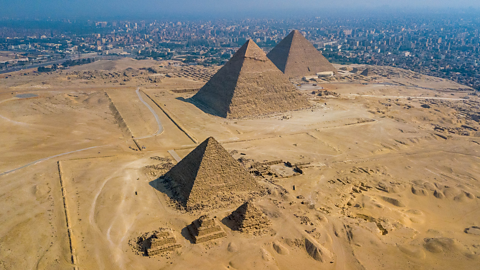
The Ancient Egyptian civilisation lasted around 3000 years and ended in AD30.
It was one of the longest early civilisations because the Egyptians were powerful, wealthy and innovative.
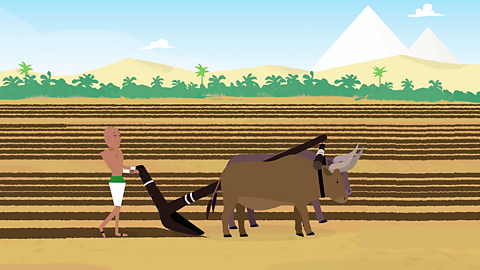
During this time, Ancient Egypt was ruled by about 170 Pharaohs, they built pyramids, invented a writing system (hieroglyphics) and became expert farmers.
They left behind a legacy.
Important words
Important words on what happened to the Ancient Egyptians.
| Keyword | Definition |
|---|---|
| Archaeologists | People who study the past. |
| Army General | A very senior military officer. |
| Bandit | A robber or thief. |
| Conquered | Take control of a place by military force. |
| Legacy | The long-lasting impact of a historical period. |
Watch: What happened to Ancient Egypt?
Watch the video to learn more about what happened to the Ancient Egyptians.
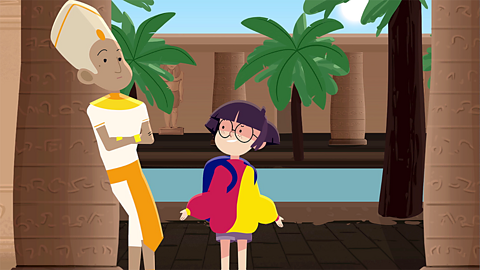
Child: Ancient Egypt is so different from the Egypt of today. Why did they stop building pyramids and huge statues and temples?
Abdul: Things have changed a great deal these last 700 years. My name is Abdul. This building is a mosque, built where a temple once stood.
Child: Oh, wow!
Abdul: After the birth of Jesus, most people became Christian, and forgot the ancient Egyptian religion that inspired the old temples and statues.
Then, 600 years later, Islam became the main religion.
Child: But why don’t you use hieroglyphs anymore?
Abdul: Greek and Latin have been used in Egypt for centuries as it is spoken by people in many different countries.
And since the Arab conquest, Arabic is spoken by most people here.
Child: I can’t imagine the ancient Egyptians being conquered by anyone!
Abdul: Oh, it’s happened before. You see, the pharaohs were at war with their neighbouring countries for centuries, and they didn’t always win!
Child: Oh dear.
Abdul: When Alexander of Macedon expanded his empire he conquered Egypt, and made himself pharaoh!
After he died, the descendants of his general, Ptolemy ruled for nearly 300 years!
The Ptolemaic dynasty ended with the death of Cleopatra, during the Roman conquest in 30BC which was 600 years ago.
Child: But don’t you miss all that stuff like the pharaohs and the huge statues and everything?
Abdul: Yes it was cool! But even though our religious beliefs have changed we’re still the same people.
Timeline: Ancient Egypt
Image caption, Click the arrows learn more about the timeline of Ancient Egypt!
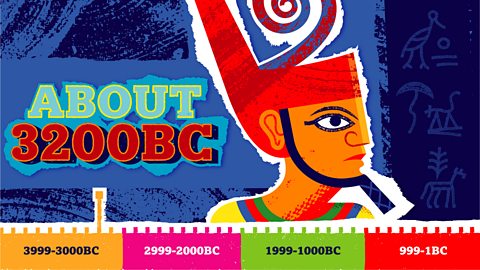
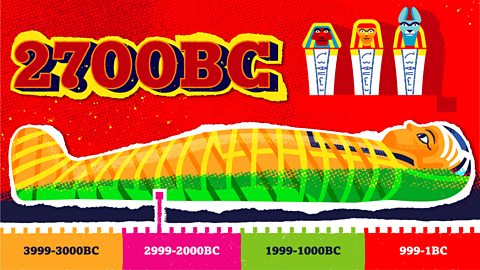
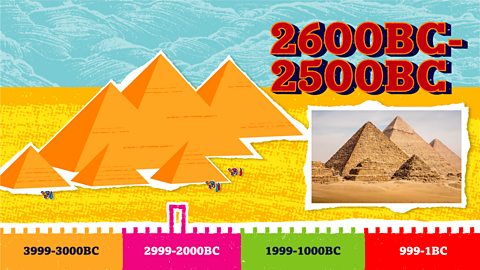
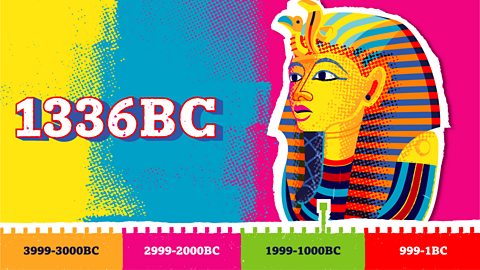
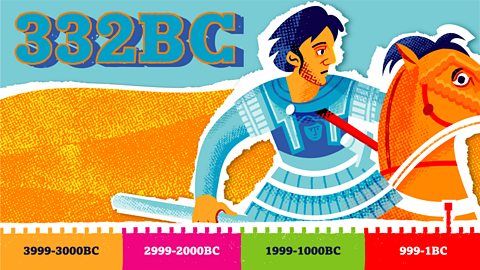
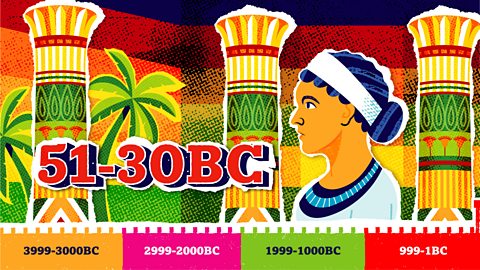
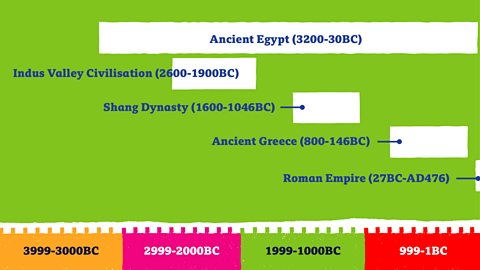
1 of 8
Why did Ancient Egypt decline?
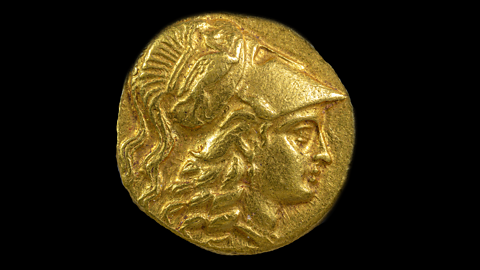
When the Pharaohs were good rulers the Ancient Egyptians enjoyed a peaceful and successful life.
When Pharaohs were not very good rulers then Ancient Egypt could suffer from famine (a shortage of food), war and invasions by other empires.
By around 1000BC, Egypt had become divided by war, the south ruled by priests from Thebes, the north by the Pharaohs.
A lot of the great tombs were raided at this time by bandits (robbers or thieves).
In 332BC, Alexander the Great and his Macedonian and Greek army conquered (take control of a place by military force) Ancient Egypt and then made himself Pharaoh.
After this, the descendants of his general (a very senior military officer), Ptolemy ruled for nearly 300 years.
When did Ancient Egypt finally disappear?
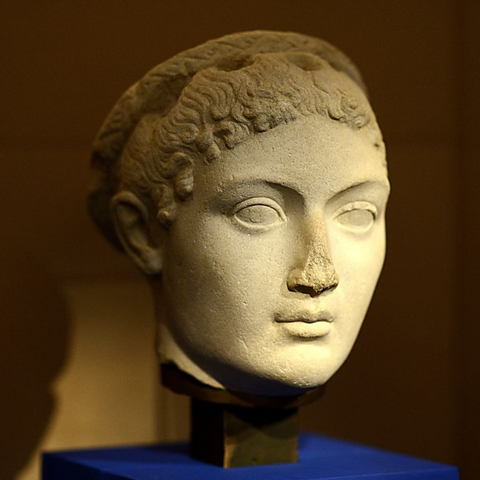
In 32BC, the Roman Emperor Augustus declared war on Cleopatra VII and her partner, the Roman general, Mark Antony.
Eventually, in 30BC, the Romans invaded Ancient Egypt.
Later that year, Augustus's forces defeated Antony and Cleopatra's combined army at the Battle of Alexandria.
Cleopatra was the last Pharaoh in Ancient Egypt.
After her rule, Egypt became part of the Roman Empire.
The Ancient Egyptians were around for over 3,000 years.
They were one of the longest surviving civilisations in history!
What is Egypt like today?
Egypt is now governed by a president.
Islam is the main religion and Arabic is the main language.
Even though their rulers and religion have changed over time, you can still see glimpses of the Ancient Egyptian civilisations today.
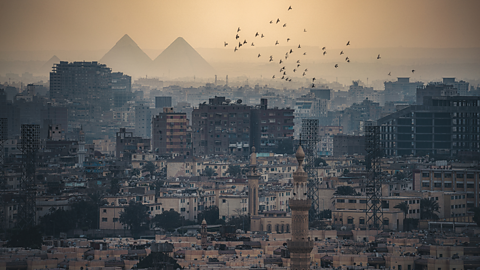
Ancient Egyptian ruins like the pyramids of Giza and the Great Sphinx are world famous landmarks.
Archaeologists (people who study the past) are still discovering new tombs in the Valley of the Kings.
Think like a historian

Have a look at the thinking points below and think about your answer to the questions. You could even write it down on a piece of paper or discuss it with somebody else if you want to.
- Would Ancient Egypt have survived if Cleopatra had won the Battle of Alexandria?
Did you think about the decline of Ancient Egypt before Cleopatra was Pharoah? By around 1000BC Egypt had already become divided by war. The south was now ruled by priests from Thebes and the north ruled by the Pharaohs.
In 332BC, Alexander the Great and his Macedonian and Greek army conquered Ancient Egypt and then made himself Pharaoh, when he died his general Ptolemy and his descendants ruled for 300 years though they never had full control.
Cleopatra inherited many of these problems and then the Romans declared war on her and her partner (the Roman general) Antony. They were defeated at the Battle of Alexandria, but even if they'd won the Roman Empire was too powerful to resist for long and they would have returned with another army.
Activities
Activity 1: Timeline of Ancient Egypt
Click on the scroll to discover the history of ancient Egypt.
Activity 2: Quiz – What happened to Ancient Egypt?
Activity 3: Colour in your own battle scene
Colour in your own battle scene. document
Print out and colour in our ancient Egyptian battle scene. You can also cut out and rearrange the characters to make your ferocious own battle ground.
Activity 4: History Explorer game
Play this game to test your knowledge and learn even more facts about Ancient Egypt.
History Explorer: Secrets through time
History Explorer: Secrets through time: KS2 History
Grown-ups corner
Are you a parent, carer or teacher?
Take a look at some of the links below on KS2 History which are packed full of knowledge, videos, quizzes and activities.
KS2 History: Ancient Egypt
BBC Bitesize for Teachers
KS2 Music: Ancient Egypt
BBC Bitesize School Radio
KS2 History: Ancient Egypt - Rames - The Engineer
BBC Bitesize for Teachers
Horrible Histories: Raid and Trade game! game
Play Horrible Histories: Raid and Trade KS2 History
More on Ancient Egypt
Find out more by working through a topic
- count6 of 9
- count7 of 9