All about The Odyssey
An epic homecoming tale about an Ancient Greek hero, The Odyssey was written thousands of years ago and has been retold many times over the centuries.
In more recent decades, it’s had several adaptations for the big screen - with a new film set to be released in 2026. You may be wondering what The Odyssey is and why it is still so popular today.
Here, BBC Bitesize takes a closer look at the famous poem, its themes and more about the Ancient Greek world so that you can feel clued up before the latest film's release.
What is The Odyssey?
The Odyssey is an Ancient Greek text that tells the story of fictional hero Odysseus and his quest to return to his homeland. It’s an epic poem - which means a long poem that describes the adventures of a hero from a long time ago.
‘Epic’ comes from the Ancient Greek word ‘epos’, which means ‘story,’ ‘word’ or ‘poem.’ The original is written in ‘blank verse,’ meaning it has a consistent rhythm but does not always rhyme.
It’s mostly told in the third person, with the narrator giving us insights into the thoughts and feelings of many different characters. Books 9-12 are also told by Odysseus in the first person.
Who wrote The Odyssey?
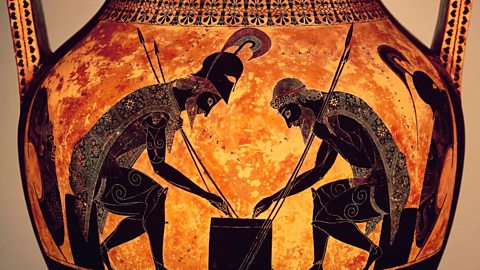
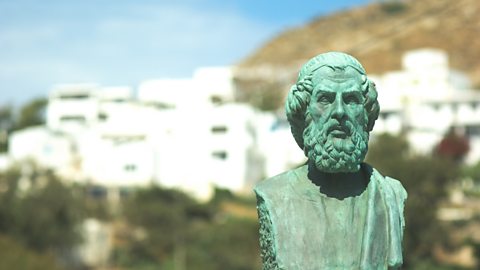
The Odyssey and another Ancient Greek epic poem, The Iliad, are both attributed to the poet Homer. The Iliad is set during a few weeks at the end of the Trojan War and focuses on Achilles, the Greeks’ greatest warrior.
However, some people argue that the texts weren’t written by the same person, and that both may have been composed by multiple authors. This debate is known as the ‘Homeric Question’.
The Odyssey has had various translations. Overall, it is believed to have been translated into English more than 100 times.
The earliest is a Latin translation by Livius Andronicus in the third century BC. It was translated into English for the first time by playwright George Chapman in the early 17th century. Many students will also be familiar with Geraldine McCaughrean's retelling of The Odyssey.
What is The Odyssey about?
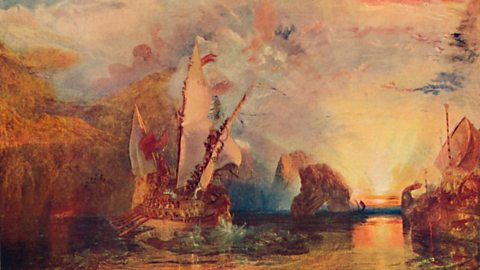
The poem begins with the end of the Trojan War, a ten-year conflict in which the Greeks fought the people of Troy in what is now modern-day Turkey. Odysseus, the king of Ithaca, has been fighting in the war the whole time and now the Greeks have won.
He starts the long journey home to reunite with his wife Penelope and son Telemachus. However, it doesn’t all go to plan.
Along the way, he faces mythical creatures, the Gods and loses his crew of soldiers. Back home in Ithaca, wife Penelope and son Telemachus face their own challenges.
Penelope is surrounded by suitors, all vying for Odysseus’ throne. Upon his return, Odysseus disguises himself as a beggar and wins Penelope’s hand against competitors, violently reclaiming his household in the epic conclusion.
How long is The Odyssey?
If you were thinking you might read this poem in one sitting, you might have to think again…
The Odyssey is made up of over 12,000 lines and roughly 121,000 words. The original is divided into 24 books and depending on your reading speed – it takes about eight hours to read.
But it’s not the longest epic poem ever written – that title belongs to The Mahabharata, an ancient Sanskrit text. Its longest version has over 200,000 individual lines and tells the story of a power struggle between two groups of cousins which causes the Kurukshetra War.
When and where was The Odyssey written?
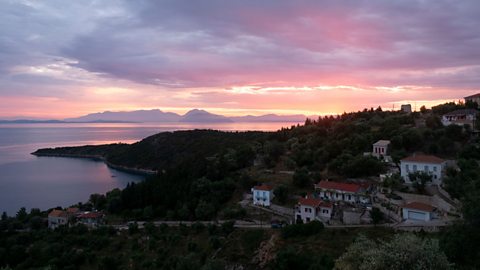
Another aspect of the ‘Homeric Question’ is that no one knows exactly when and where the poem was written. But it was likely written on mainland Greece in around 750-850 BC.
It’s set much earlier, in the late Bronze Age around the 12th or 13th century BC. It picks up where the Iliad ends and covers the ten years after the fall of Troy.
We follow Odysseus across the Aegean Sea and other nearby seas and end up in Ithaca, which is an island off northwestern Greece.
Who are the characters in The Odyssey?
In The Odyssey, we are introduced to characters Odysseus, the king of Ithaca, his wife Penelope and son Telemachus. But as we’ve already seen, it’s not just humans who feature in the poem - there are various gods and mythical creatures in the poem.
At this time, people believed that gods and goddesses controlled what happened in their lives and lived in a palace in the clouds above Mount Olympus. The epic poem also features the sea god Poseidon and his cyclops son Polyphemus, goddess of war Athene (often referred to as Athena), and god of the underworld Hades and Helios, the sun god.
Readers also meet several interesting female characters. This includes sorceress Circe, who falls in love with Odysseus and the Sirens - mythical creatures whose enchanting songs lure sailors to danger.
Man’s best friend also makes an appearance. Argos is Odysseus’ dog, who recognises his master when he gets back to Ithaca despite his disguise and all the time that has passed.
Quiz: Can you name the Olympians?
What are the main themes in The Odyssey?
There are several key themes in the poem. Odysseus’ journey shows how intelligence can win over physical strength, but the work also explores themes of separation, loyalty and staying true to yourself when pursuing a goal.
We see Odysseus sometimes give in to temptation but remain committed to his goal of coming home. Back in Ithaca, his wife Penelope outwits her greedy suitors because she believes her husband will return.
Another key theme is divine justice and the interaction between fate and free will. Gods like Poseidon, Zeus and Athene intervene to help or hinder Odysseus and his men, but our hero is also able to make his own decisions and control his own destiny.
How has The Odyssey been adapted before?
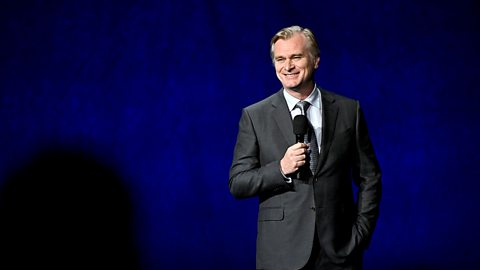
Despite being one of the most beloved and enduring tales in Western literature, only two screen adaptations have told the original story.
The first was the 1954 film ‘Ulysses’ starring famous American actor Kirk Douglas. Ulysses is another name that Odysseus is known by. Directed by Mario Camerini, the film made several cuts to the original plot and added material to Penelope’s storyline.
A 1997 TV miniseries told the story of the Iliad before recounting The Odyssey, showing all the events of both texts in chronological order. It starred Armand Assante and Christopher Lee and was directed by Andrei Konchalovsky.
One notable example of a screen adaptation that took inspiration from The Odyssey is the 2000 comedy musical ‘O Brother, Where Art Thou?,’ written and directed by Joel and Ethan Coen. It follows Ulysses Everett McGill, played by George Clooney, and two fellow convicts who escape a gang in 1930s Mississippi with a plan to find buried treasure.
What is the new film adaptation of The Odyssey about?
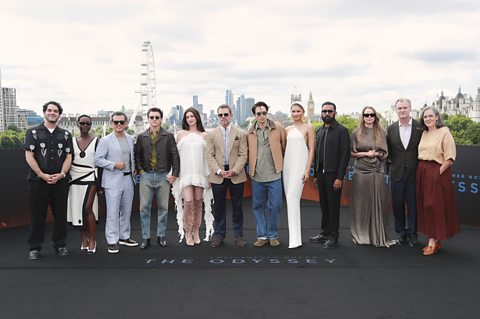
A new adaptation directed by Sir Christopher Nolan - who was behind the Dark Knight trilogy, Interstellar and Oppenheimer - is set to be released on 17 June 2026.
Matt Damon will play Odysseus, having grown a real beard for the role as Nolan worried fake facial hair wouldn’t withstand the wind and rain. Spiderman actor Tom Holland will play his son Telemachus, The Devil Wears Prada star Anne Hathaway will play Penelope and Zendaya as the goddess Athene.
The all-star cast also includes Robert Pattinson, Charlize Theron and Eliot Page. The film has a rumoured budget of around $250 million and was shot across locations including Italy, Greece, Morocco, Malta, Scotland and Ireland.
If you’ve seen the trailer, you might know it’s sparked some controversy because of the American accents and modern dialogue, which some feel clash with the ancient setting. But what do you think?
This article was written in May 2026
