
Curriculum links:
- National Curriculum, England - KS2 Citizenship, PHSE and Relationships Education
- National Curriculum, Northern Ireland - KS1 and 2 Personal Development and Mutual Understanding
- Curriculum for Excellence, Scotland - Health and Wellbeing 1st and 2nd Level
- Curriculum for Wales - Health and Wellbeing, progression step 2 and 3
What will happen in the Anti-Bullying Week Live Lesson?
Break the silence and explore how we can stand up to bullying.
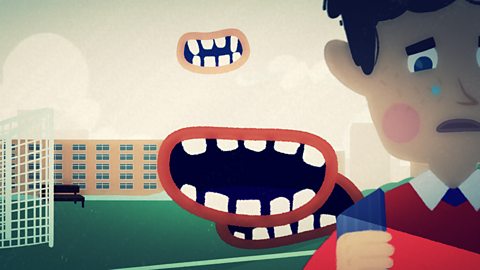
In this Live Lesson, hosted by Abby Cook and Rhys Stephenson, your class will take on challenges to help them recognise bullying behaviour, explore why people might stay silent and practise safe ways to speak up.
At the end of the lesson, we'll bring schools across the UK together to break the silence at the same time in our Upstander Uproar! We want your class to make as much noise as possible to send a powerful message to anyone experiencing bullying that they are not alone. The noise we make in the lesson is symbolic and we'll explore how speaking up doesn’t have to be loud and how we can make a big difference to someone being bullied in a quiet way too.
At the beginning of the lesson, Rhys will tell pupils they can stamp their feet, shout, bang their desks and play instruments during the Upstander Uproar. Things may get loud, and the activity could be disruptive in the classroom. Not every child will want to take part, and that’s absolutely fine. We’ll give plenty of warning before the Uproar begins, so you can prepare your class and adjust the volume if needed.
When is Anti-bullying Week in 2026?
Anti-Bullying Week 2026 will take place from Monday 16th - Friday 20th November.
Anti-Bullying Week is an annual UK event which aims to raise awareness of bullying of children and young people, in schools and elsewhere, and to highlight ways of preventing and responding to it.
This year’s theme - Break the Silence - will encourage children, young people and adults across the UK to start conversations about bullying, speak up, listen and take action together.
This Live Lesson is made in partnership with the Anti-Bullying Alliance. The Anti-Bullying Alliance (ABA) is the official organiser of Anti-Bullying Week in England, Wales and Northern Ireland.
The 30 minute Live Lesson will be available to watch on Monday 16 November at 11:00.
How to get involved:
This programme is live and will be accompanied by a live website commentary feed for schools on this page. We’ll be updating it with your comments and shout-outs live throughout the broadcast.
Email your shout-outs to live.lessons@bbc.co.uk with Anti-Bullying Week as the subject, or get in touch using the get in touch button.
If you are sending in any images or videos that feature children, please confirm in your email that you have parental or guardian permission.
Get in touch. upload
Fill out this form for a chance to receive a shout-out on our live commentary feed.


Watch again: Anti-Bullying Week 2025 – Live Lesson. video
Your class will become Anti-Bullying Agents in this Anti-Bullying Week 2025 Live Lesson.

BBC Live Lessons for 2026/2027. collection
Information about our 2026/2027 Live Lessons for 7-11 year olds.

Anti-Bullying Week - Teaching Resources. collection
A collection of teaching resources for primary and secondary schools designed to complement your Anti-Bullying Week programme.
If your students need support
Across Bitesize, we advise young people that they should always tell someone about the things they're worried about. They could tell a friend, parent, guardian, teacher, or another adult they trust. If they're struggling with their mental health, going to a GP can be a good place to find help. A GP can outline the support available, suggest different types of treatment and offer regular check-ups
If young people are in need of urgent support there are links to helpful organisations on BBC Bitesize Action Line.
