The films cover:
- the feelings a child can experience as a friendship group changes
- how to deal with difficult emotions
- some ideas children can use to cope with similar situations
The first film introduces Alys's Story. Alys feels lonely and sad when her best friend Beca became best friends with another girl. The films look at how Alys deals with this. The second film looks at suggestions for coping with difficult emotions and how to cope with a situation like this.
Themes: friends; coping with change; resilience; managing feelings; knowing yourself.
Alys's story: Film 1
Maya and I had been best friends since Year 4. We hung out all the time and would message all evening.
But when Beca arrived, Maya started spending all her time with her. They did all the things we used to do together. And they were posting pics of themselves together all the time.
I tried to act like I didn’t care, but I began thinking there was something wrong with me.
Why had Maya stopped liking me? And I hated Beca for taking Maya away. I kept on getting into fights with my mum and dad. I was sad and angry, and I found it hard to focus at school.
It went on for ages. I knew I wasn’t okay, but I didn’t know what to do about it.
Then one day, my dad gave me a lift home and asked how things were going at school?
I just started crying. I ended up telling him about everything that was going on with Maya and Beca.
He said it was really good that I’d opened up about it and said I could come and talk to him any time I’m feeling down. I agreed that keeping everything to myself hadn’t been helping.
He said there was nothing I could do to change Maya and Beca’s behaviour. They had every right to be friends. But there were some things I could do to try to change how I was feeling.
He suggested I make time to do things for myself instead of focussing on Maya and Beca all the time. Things like getting outside for a walk, meeting up with other mates or doing something I enjoy, like dancing.
All of my feelings didn’t disappear overnight but just telling someone what was going on made me feel so much less alone.
I didn’t realise how powerful feelings could be. But I’ve started to understand there are things I can do to change my mood when I’m angry or sad.
My new dance class really helps me take my mind off things, and I’ve met some nice new people there too.
Me and Dad chat about how I’m feeling most days now. We’re getting on better than we have in a long time.
It’s still hard sometimes seeing Beca and Maya hang out all the time, but I don’t feel so stuck. Things are looking up.
Alys's story: Film 2
Life can be good, but it can also be challenging.
If we don’t take time to notice how we feel, or if we can’t handle our emotions, we might find it hard to deal with stressful situations.
Sometimes we don’t really notice how we’re acting. Especially when we’re stressed or upset about something.
When this happens, we’re lacking what’s known as ‘self-awareness’.
We can get better at being self-aware by just taking a moment to recognise and understand what we’re thinking, and how we’re feeling.
We all feel emotions like anger, stress or sadness from time to time. That’s a normal part of life, and it’s okay to feel that way.
But it’s important to remember that how we feel is not who we are. A bit like the weather, feelings pass and change.
By paying attention to your emotions, by being self-aware, you can recognise when you’re not feeling great and do something about it.
Here are some tips to help improve your mood.
Number one: Make connections.Talking with people you trust and who care about you can help untangle the mess of feelings we can have when we’re upset.
But even when we feel fine, connecting with others can help us laugh and unwind, and can even make us emotionally stronger.
All of this can help us cope better when we’re facing challenging or stressful situations.
Number two: Move your body.Physical activity makes your brain release chemicals called endorphins, which make you feel happier.
It could be walking, cycling, dancing or playing a sport – moving your body is what counts.
Number three: Take notice.Try to pay attention to the things around you.
This can help you focus on the present rather than fixate on worries and anxieties.
Free mindfulness apps and videos can help with this, or you can find your own way of making time each day to relax and live in the moment.
Number four: Challenge yourself.Learning something new can give you a sense of purpose, help you meet new people, and even make you more confident.
It could be learning a craft, singing or giving skateboarding a go - any new skill!
Number five: Lend a hand.Helping others makes you feel more connected to people and feel better about yourself.
Whether it’s helping with jobs around your home, or volunteering for a local charity, acts of kindness large and small, make you feel good.
Struggling through hard times is never much fun. But it can help us understand other people and the challenges they might face.
Everyone has ups and downs – but we should never feel we have to go through difficult times alone.
If you are struggling with a situation or feeling overwhelmed, it’s important that you ask for help.
Possible activities
Activity 1 - What makes a good friend?
(Health and Well-being; Language and Literacy)
Pupils could be asked to put the names of each of the girls in the story (Alys / Maia / Beca) in a separate circle on a piece of paper. They could be asked to discuss what emotions each of these girls would have experienced during the film – and to connect the circles to that emotion.
Activity 2 - Friends and feelings: Role play
(Health and Well-being; Language and Literacy; Expressive Arts)
In groups of three, pupils could be asked to each choose a character from the story and role play the following scenario:
Scenario: Beca, Alys and Maia happen to sit together in the canteen at lunchtime. Beca and Maia ask Alys if something is wrong.
Before starting the conversation, each group member could be asked to think about the situation in terms of their character. How would this character feel? What would their character say / do?
Each group could be given three minutes to carry out the role play.
After the conversation, pupils could be asked to consider:
- Was the conversation positive / constructive? If it was – what helped that happen?
- If the conversation wasn’t a positive one – what went wrong?
- Did everyone in the group agree on what kind of conversation took place? (positive or not)
Activity 3 - Mind map: What makes a good friend?
(Health and Well-being; Language and Literacy; Mathematics and Numeracy)
Pupils could be asked, in groups, to consider the statement:
'What makes a good friend?'
Each group could be asked to create a mind map using words, sentences and/or pictures to build a visual picture of what makes a good friend. Each group could show the class their mind map and pupils could be asked to keep a tally of the characteristics common to the groups.
- Which characteristic is most common?
- Which characteristic is the second most second?
- Graphs showing the data collected could then be created.
Activity 4 - Knowing my emotions
(Health and Well-being; Language, Literacy and Communication)
- Pupils could be asked to create a table recording all the emotions Alys experiences during the film in the left hand column.
- A discussion could take place with the class about how feelings / emotions affect how we behave.
- In the right hand column of the table, pupils could be asked to identify how they might behave when they experience that emotion, for example:
| Emotion | Behaviour |
|---|---|
| Sadness | Lying on the sofa with a blanket |
| Loneliness | Being angry with mum and dad |
| Anxiousness | Going quiet |
| … | … |
| … | … |
Pupils could be asked to compare their table with that of a partner – do they experience each emotion in the same way? Are there differences in how they respond?
Activity 5 - Managing emotions
(Health and Well-being; Language, Literacy and Communication)
The second film suggests five actions to try to help manage emotions. In pairs, pupils could be asked to remember what these five actions are:
| Get in touch with someone |
| Move your body |
| Notice the things around you |
| Challenge yourself |
| Help someone else |
Pupils could be asked to think about how they could use these five actions to help them manage their feelings. They could be asked to come up with an example they could do for each one of the five, and write these down on a piece of paper.
For example:
| Get in touch with someone | talk to a friend; arrange to meet a someone at the weekend |
| Move your body | go to a football practice; do an online pilates session |
| Notice the things around you | think about slowing down my breath and concentrate on counting to ten; look at the trees and flowers in the garden or park |
| Challenge yourself | start a new hobby or project; join a new lunchtime club |
| Help someone else | start volunteering with a community group or within the school; help a grandparent with housework; help a younger sibling with their reading |
Pupils could be encouraged to draw a picture of their ideas and save them on their phone, so that they can look at them and think about doing one of these activities next time they feel full overwhelmed by an emotion.
Curriculum links
Health and Well-being
- I can identify different strategies to self-regulate my emotions in response to a range of experiences.
- I can advocate the benefits of communicating about feelings as one of a range of strategies which can help promote positive mental health and emotional well-being.
- I can identify people and groups who can help me with my mental health and emotional well-being.
- I can show a developing awareness of the complex nature of relationships.
- I can communicate my needs and feelings, and respect those of others.
Language, Literacy and Communication
- I can understand and analyse general meaning and implied ideas.
- I can listen empathetically to different people’s viewpoints on various subjects, using them to arrive at my own conclusions.
- I can make informed choices about vocabulary, idiomatic language and syntax in order to express myself with fluency, clarity and accuracy.
- I can respond to others’ points of view, summarising and evaluating what I have heard, read or seen, structuring arguments and challenging what others say with confidence and sensitivity.
Expressive Arts
- I can use my experimentation and investigation to manipulate creative work with purpose and intent when communicating my ideas.
Mathematics and Numeracy
- I can make informed choices about how to organise and represent data, using a wide range of graphs and charts, including pie charts, frequency diagrams and frequency polygons.

Where next?
Elis's story. video
Elis's mum died this year. In these films, we see how he adjusts to life without his mum and also learn how someone could help support a friend who is grieving.
Eva's story. video
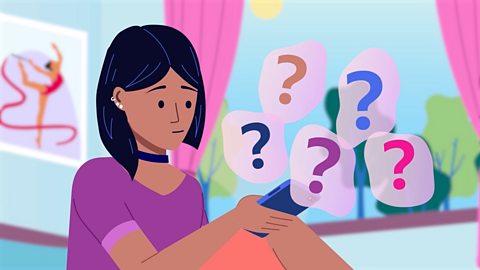
Eva finds it difficult to say 'no' to her friends - but will this mean she'll have to miss out on a special trip to Cardiff with the gymnastics team? What will Eva choose to do? How can she make better decisions from now on?
Jay's story. video
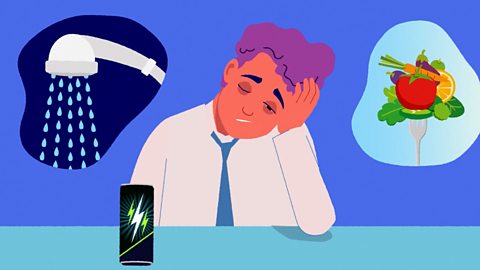
Jay feels very tired all the time. He spends a lot of his time playing on his phone and computer. Things can't carry on like this – how can Jay get things under control?