Aim
To learn about negative and positive role models through the actions of the characters in the CBBC programme Jamie Johnson FC. To consider the importance of empathy, trust and unity, and to recognise the voices that build us up and the ones that pull us down.
The video
In this assembly video for primary schools, Match of the Day presenter Kelly Cates and mental health expert Andrew Pain analyse key moments from a storyline in BBC football drama Jamie Johnson FC.
Kelly:
Hello, welcome to a special edition of Match of the Day, I’m Kelly Cates. Joining me is mental health expert and football fan, Andrew Pain who's going to help me take a dive into behaviour on – and off – the pitch at Jamie Johnson FC.
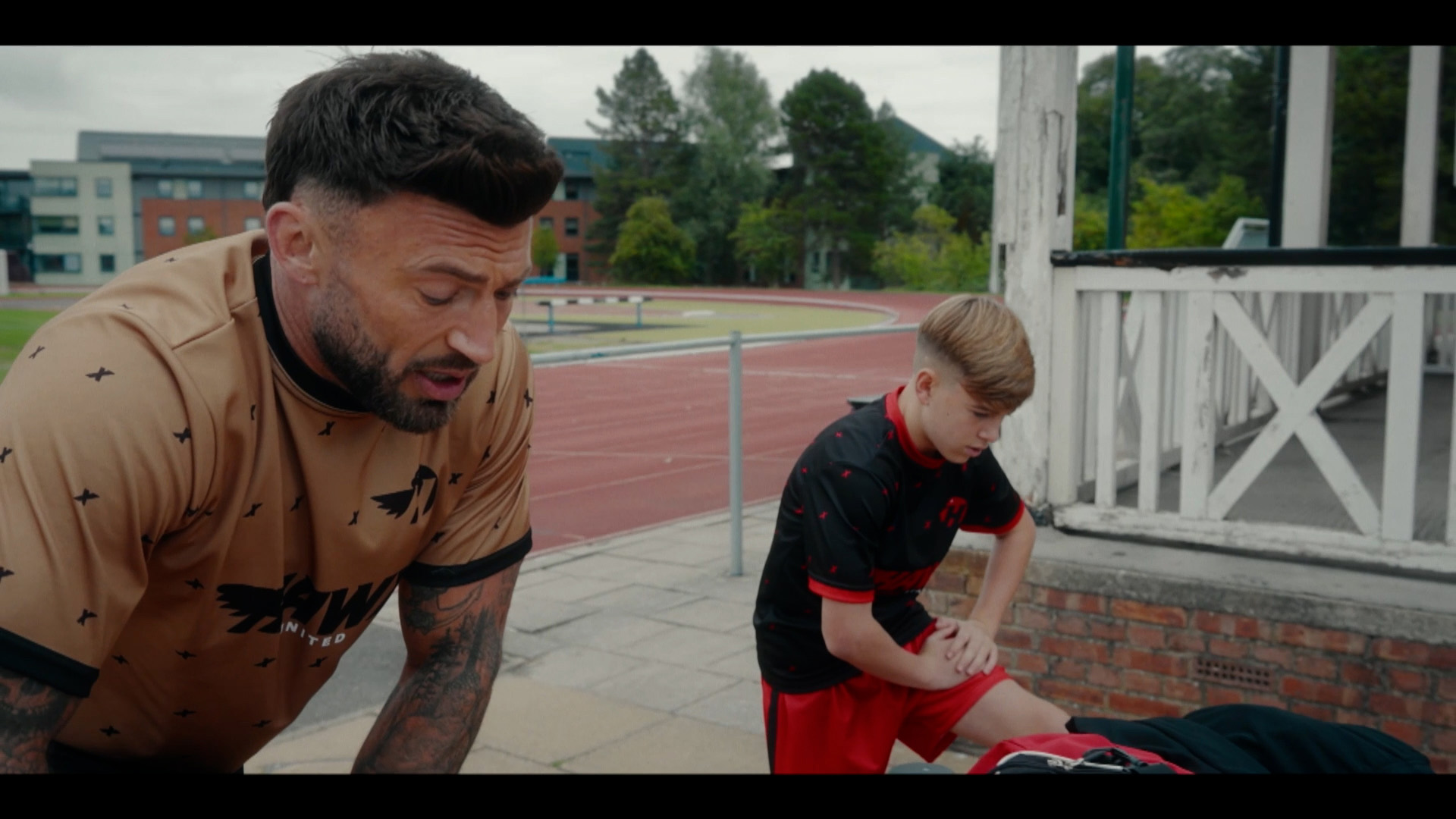
So let’s kick off with a look at the recent action, where Richie was talking with young player Baz.
Richie:
Feeling better?
Baz:
Thanks Richie, I really appreciate this.
Richie:
No problem. We have to stick together, life’s not easy for us
Baz:
‘We’?
Richie:
Us boys. We need to watch out for ourselves. Be careful about who we trust.
Baz:
What do you mean?
Richie:
That teammate of yours for a start. What’s her name, Charlie? She’s clearly got it in for you. And this Chelsea girl. Watch out for her as well.
Kelly:
So here we have Richie, the experienced pro and Baz the young player. What did that conversation look like to you?
Andrew:
Well, on the surface it seems like an everyday conversation, but this is not an everyday conversation. It is a planned conversation.
Ritchie knows that as the pro Baz is going to be looking up to him. Ritchie also knows that Baz has had a difficult home life so he's going to be looking for a role model.
He starts with comments like, “we boys need to stick together”. “It's tough for us.” We and us.
So that Baz gets the sense that they're on the same side and then he plants that seed that he knows will fester, that Charlie has it in for Baz.
And he knows Baz will mull this over.
Kelly:
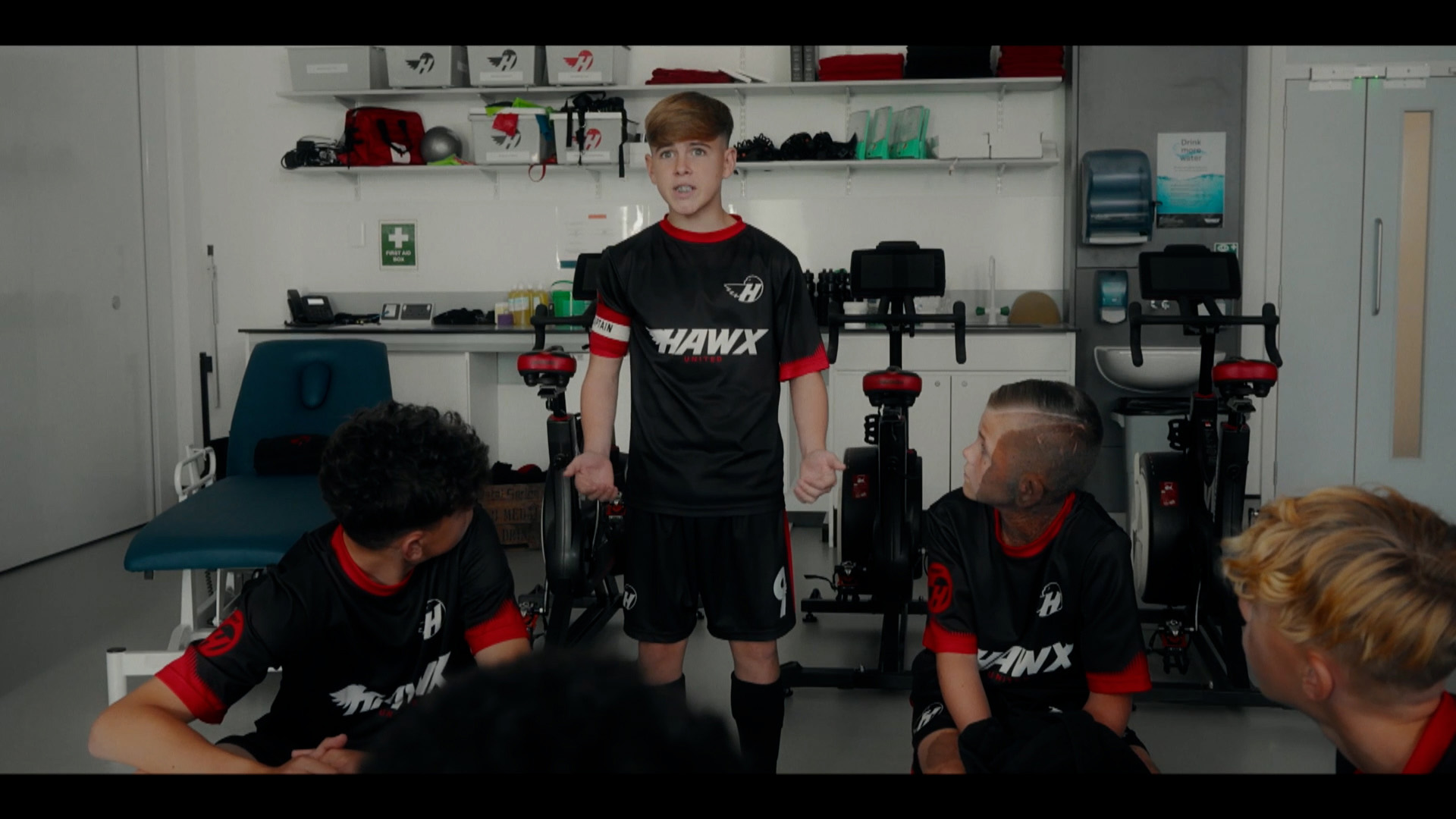
Baz tried to exclude his female team-mate, but it didn’t work out well as we can see here in this locker room showdown with Charlie.
Baz:
I know why it’s not been an easy season. There are players on this team who are stopping the rest of us from winning. Distracting us from our football.
Charlie:
Spit it out Baz. You mean me.
Baz:
Is that a confession? You nearly cost us our place here. You got me sent off against Foxborough.
Charlie:
You came at me.
Baz:
Because you provoked me.
Charlie:
So what are you saying? You want me kicked off the team?
Baz:
I just think we’d have a better chance of winning this thing if we removed our problem players. You. And Daniella. And Amelia.
Andrew:
That seed that Richie has planted has festered. Now that Baz thinks Charlie has it in for him, he's going to see signs that Charlie has it in for him, because we do that as people.
When we start to think things badly of people, we'll see signs everywhere that the people are bad.
So, for example, if Charlie didn't make a pass to Baz, for Baz, that might mean evidence that she's got it in for him.
But actually, maybe she just wanted to have a shot herself.
And that's what happens when we form negative views like this.
We can often isolate ourselves from friends and family. It does not end well for Baz.
Kelly:
Baz stormed off, missed out on the big game, saw the girls playing and realised he was wrong - and wrong about Richie.
Commentator:
…who leaves it to Wright… Charlie Wright with an absolute screamer!
Richie:
Complete fluke.
Baz:
No it wasn’t.
Richie:
Excuse me?
Baz:
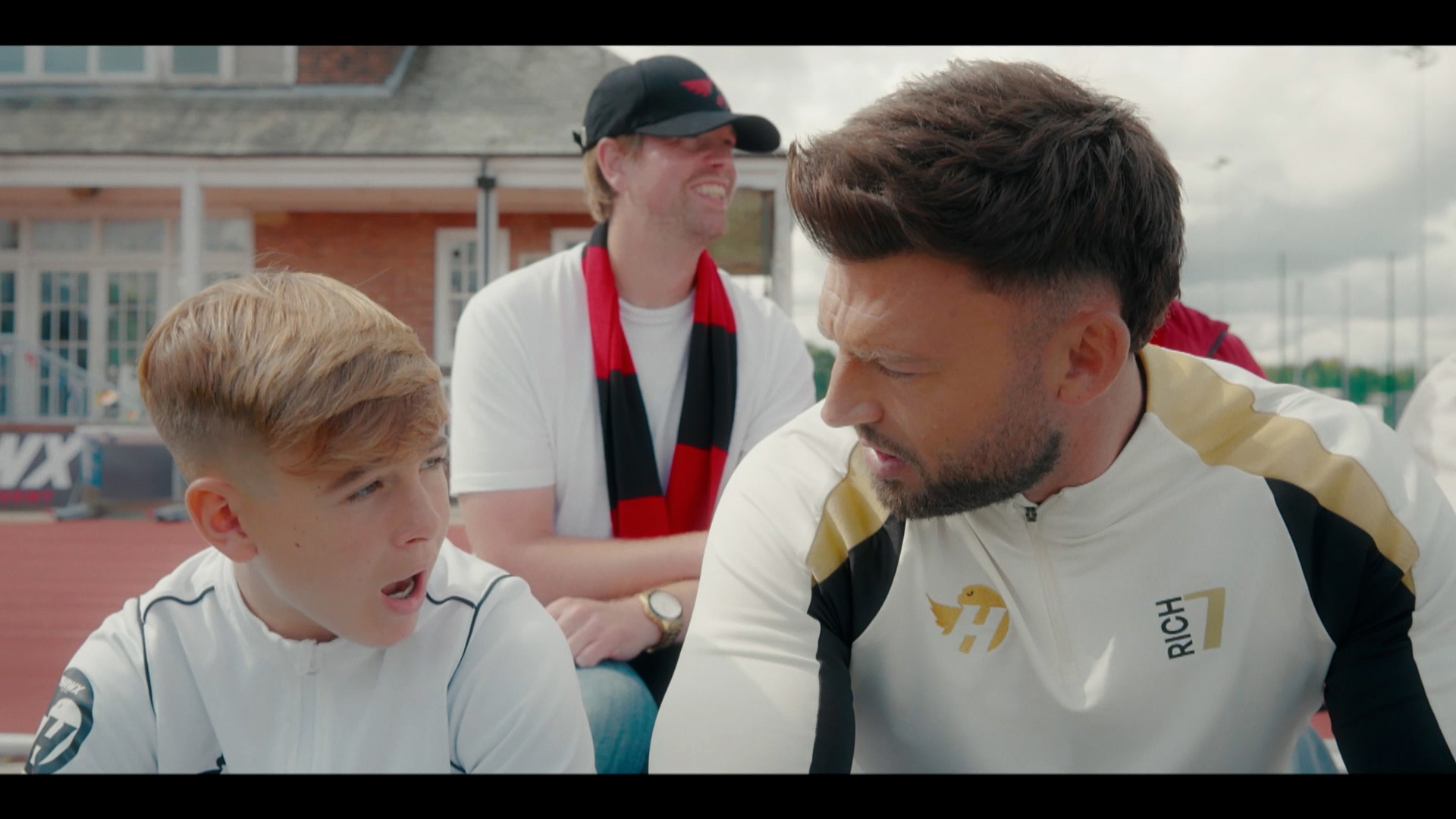
It was pure technique. She’s a good player. She’s playing well.
Richie:
She’s the reason you’re not playing in this match.
Baz:
But that’s not true, is it! I’m the reason I’m not playing. Me. It’s my fault.
Andrew:
I'm heartened. Baz sees Charlie scoring a great goal. Richie is saying it's a fluke, but Baz sees through it.
Richie doesn't like the fact now that Baz is thinking for himself because for Ritchie having control over the way Baz thinks, it's good for his ego.
And influential people, they want everyone to believe that their point is the correct point.
That is part of their ego.
And so the fact that Baz is forming his own opinions, of course Richie doesn't like that and I'm really pleased also that Baz has a great coach, Coach Byrne, who's a positive role model and gives him another chance in the team.
Byrne:
We all get angry sometimes. It’s natural. But do you want to be someone who takes their anger out on other people? Who hates them? Hurts them?
Baz:
I don’t, Coach. I’m sorry.
Kelly:
Charlie and Baz, and indeed all the players stood together and learned to recognise which voices build them up and which ones tear them down.
Andrew:
Yeah. Baz has chosen trust, inclusion, empathy. And I'm really pleased also that Baz apologises.
You know, we all get stuff wrong from time to time and when you apologise when you get something wrong, it's a sign of real strength. Baz, it's a great example for us to follow.
Kelly:
In the end Baz discovered that real strength comes when we all stand together. Teamwork empowers everyone. When we lift each other up, we all win.
In the CBBC programme Jamie Johnson FC, there is a young character called Baz.
He is impressed and influenced by an older pro player and coach called Richie.
Richie plants the seeds of division, which results in Baz seeing his female teammates in a negative light. By the end of the video, Baz learns that his actions were wrong, as well as the difference between a negative and positive role model.
This video explores the following:
- A young football player, Baz, is influenced by an older ‘pro’ player. Richie wants to turn Baz against his female teammates and uses language like ‘we have to stick together’ and ‘us boys’
- A mental health expert analyses the clips and explains how Richie has planted the seeds of division and how this has then festered
- Baz wants to exclude the female players from the team, but just ends up missing out on the match himself
- Baz realises that Charlie is a great player and that Richie is a negative role model, while Coach Byrne is a positive one. He apologises for his actions and takes responsibility for his behaviour.
Video questions
Ask the students if they have ever seen the CBBC programmes Jamie Johnson or Jamie Johnson FC? If they have, ask who their favourite characters are and why
Give the students some background on the characters who will appear in the video:
Baz: a young football player at Hawx Academy.
Richie: an older professional football player and coach.
Charlie: a female player on Baz’s team.
Coach Byrne: coach for Baz and Charlie’s team.
Ask the students to explain what they think a ‘role model’ is. Can they give any examples of any role models they have?
After watching the video
Discussion questions
Why is it important to have positive role models in your life? Who might they be?
Can you think of any ways that we can show empathy for other people?
Why are teamwork and sportsmanship so important for people playing in sports teams?
Activity ideas
Draw a stick figure picture of a positive role model who is in the sporting world, e.g. Marcus Rashford or Leah Williamson.
Do some research and then write around the picture some of the reasons they are a positive role model.
Write about a role model in your life, either someone you know in real life or a celebrity.
English/Literacy: The students write a poem or song lyrics with an uplifting message focusing on the theme of positive role models and how to recognise the voices that build us up.
Key terminology
Introduce key terminology, including
- well-being: general health and happiness
- sportsmanship: fair, generous and polite behaviour, especially when playing a sport or game
- teamwork: working well together as a team
- role model: a person that people admire and try to copy
- mental health: the state of health of somebody’s mind
- exclude somebody: prevent somebody from entering a place or taking part in something
- isolate yourself: to separate yourself from other people
- empathy: the ability to understand another person’s feelings and experiences
- ego: your sense of your own value and importance.
Resources
Focus Images
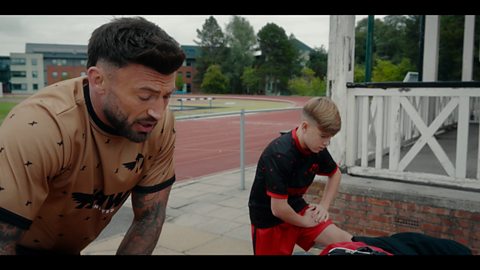
Richie tries to negatively influence Baz. image
Click to display full image size
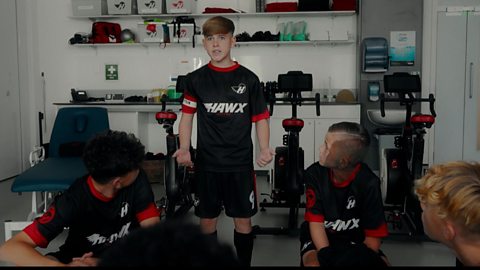
Baz targets his female teammates. image
Click to display full image size
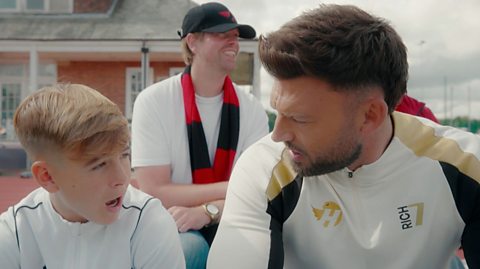
Baz forms his own opinion. image
Click to display full image size
Suggested framework
1. As pupils enter
Play the Series 4 Preview of Jamie Johnson FC on the screen. Or play a football related music track as the students enter the hall/classroom (maybe the Match of the Day theme).
2. Introduction
Potential starting questions:
- What do you think today’s assembly will be about?
- Do you play in a football team? {Ask for hands up]
- Why is teamwork important for football players?
3. Play the video
(Duration: 4min 34secs Final words: ‘…"each other up, we all win.)
You may wish to stop at relevant points during the video to pose questions and check understanding, or wait until the end.
4. After the video - Time to talk
Lead a discussion by asking some or all of the following questions:
- What is the person commenting on the videos, Andrew Pain, an expert in?
- Who does Baz see as a role model at the beginning of the video?
- What does it mean when we say: ‘Richie plants negative ideas’?
- When Baz says Charlie shouldn’t play in the team, he ‘isolates himself’. What does this mean?
- At what moment does Baz realise it’s his own fault he’s not playing in the important match?
- How does Coach Byrne show that he is a positive role model compared to Richie?
- How does Baz show strength at the end of the video?
5. Opportunity to sing
If your assembly includes a song this is an opportunity to sing it. We have lots of songs to support assemblies and Collective Worship.
6. Closing the assembly
Some reflections on the themes of the Jamie Johnson FC assembly.
- What key words or themes can we take from this assembly? [Students give ideas.]
- Have a final moment for quiet reflection, e.g. the students can think about the importance of empathy, trust and unity. The students can think about times in their lives when they have worked well in a team.
7. Music
You could play suitable music as pupils leave in silence.
Related links
Watch Jamie Johnson FC on BBC iPlayer. video
Welcome to the Hawx United Academy, where young footballers’ dreams come true - or get crushed. Who has got what it takes to make it?

FIFA 2026 Men's World Cup - primary assembly. video
An assembly framework and video to learn about the history of the tournament, and 2026 Men's World Cup held in the United States, Mexico and Canada.

Educational calendar for teachers collection
Topical collections of BBC content to mark significant events in the educational calendar – for primary and secondary schools in the UK.