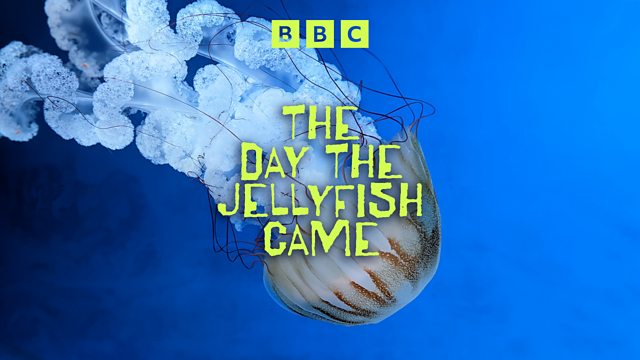
The Day the Jellyfish Came
Jellyfish - mysterious, dangerous, beautiful. But what do they have to tell us about our changing oceans?
The oceans cover more than 70 percent of our planet. And yet, most of us live unaware of what lies beneath those waters – and what impact our actions might be having there. In the summer of 2025, Gravelines Nuclear Power Station shut down after a “massive and unpredictable” bloom of jellyfish clogged its filters. Weeks later, the same thing happened at a second plant along the French coast. How could such simple creatures disrupt infrastructure – and what might they reveal about what is going on in the oceans?
Part poem, part plea, part love letter to the sea, BAFTA Games Award-nominated actor, best known for Baldur's Gate 3 and The Hitchhiker's Guide to the Galaxy, Samantha Béart explores the complex relationship between humans and jellyfish – and asks a question that sounds like video game science fiction: in the face of a global environmental crisis could jellyfish inherit the oceans?
Through conversations with science writer Juli Berwald, marine biologist Dr Cathy Lucas and endurance swimmer Lewis Pugh The Day the Jellyfish Came uncovers how jellyfish live, reproduce and form vast blooms – seasonal explosions that can disrupt industries and reshape ecosystems.
Reflecting both the concerns of the scientific community and the frustration many feel at the ongoing climate crisis and human interference in natural environments, Samantha asks what these charismatic, gelatinous creatures might be telling us about the future of our planet.
Producer: Elizabeth Ann Duffy
Researcher: Minnie Harrop
Sound Engineer: Murray Collier
Last on

Samantha Béart

Their extensive career also includes Random in “The Hitchhiker’s Guide to the Galaxy” for BBC Radio 4 and national theatre tours, Calliope in Neil Gaiman’s “The Sandman” for Audible, and Orr in “Torchwood” for Big Finish Productions. Other game roles include Cider in “Absolum,” Darth Nul in “Star Wars: The Old Republic,” One in “Fading Echo,” the “Demon’s Souls” remake and Bithell Games’ “The Solitaire Conspiracy”.
Samantha is also the creator and host of “It Takes A Village”, a streaming chat show on Twitch featuring a live audience Q&A. The show shines a spotlight on those who are so often overlooked – the people who make our games – on themes of collaboration, co-advocacy, and community. VODs can be found on Samantha’s YouTube Channel.
Broadcasts
- Wed 8 Jul 202615:30BBC Radio 4
- Tue 14 Jul 202621:00BBC Radio 4
