

Wednesday 24 Sep 2014
Programme Information
Network Radio BBC Week 3: Wednesday 19 January 2011
BBC RADIO 2 Wednesday 19 January 2011
www.bbc.co.uk/radio2
From the Sixties through to the present day, funk music reverberates all through popular culture. Whether it's in fashion, street language, TV, the movies or pop music, the far-reaching influence of funk is everywhere.
American actress Pam Grier concludes this three-part series by revealing how the scene started its inevitable decline. While funk bands such as Earth, Wind & Fire could lay claim to being one of the largest acts in the world, by the end of the Seventies the beat had changed. Disco music took over as the dance-floor music of choice and funk bands either joined the party or disappeared.
It wasn't until the emergence of hip hop that the music was introduced to a younger generation via record producers who sampled the old funk classics. The advancement of music technology also helped a new electro-funk scene develop with a certain Prince Rodgers Nelson leading the way. Pam also examines the often-overlooked female "funkateers", including one of the genre's hidden gems, Betty Davis.
The series features contributions from Earth, Wind & Fire, Kool & The Gang, Sly & The Family Stone, George Clinton, Bootsy Collins, P-Funk musicians, Average White Band, Cameo, Clyde "Funky Drummer" Stubblefield, Charles Wright, The Last Poets, Beverley Knight, Matt Fink, Acid Jazz's Eddie Piller and rapper Shock G.
Presenter/Pam Grier, Producer/James Hale for BBC Wales
BBC Radio 2 Publicity
BBC RADIO 3 Wednesday 19 January 2011
www.bbc.co.uk/radio3
Today's Lunchtime Concert comes from last summer's Lincolnshire International Chamber Music Festival, which focused on music written in Paris. Recorded at Holy Trinity Church in Tattershall and at Lincoln Performing Arts Centre, this broadcast includes two piano quartets by Camille Saint-Saëns and Gabriel Fauré.
Presenter/Katie Derham, Producer/Les Pratt
BBC Radio 3 Publicity
Katie Derham showcases some of the Ulster Orchestra's most recent recordings, with a special focus on women composers.
For many centuries, women composers and performers were kept from public view. Tradition deemed it only proper that females confine themselves to the domestic arts and leave the concert hall to the men. Considered a novelty, women's music might be heard at best in drawing rooms and recital parlours.
The programme includes some of the works which found their way into the repertoire, including those by Fanny Mendelssohn, Amy Beach and Northern Ireland composer Joan Trimble, who died in 2000. These can be heard together with some of the finest Ulster Orchestra recordings made in the past year.
Presenter/Katie Derham, Producer/Richard Yarr
BBC Radio 3 Publicity
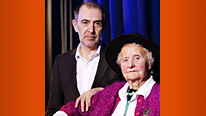
Philip Dodd talks to veteran philosopher Mary Midgley in her adopted town of Newcastle as part of BBC Radio 3's Free Thinking festival, recorded in front of an audience at The Sage Gateshead in November 2010.
At 91 years old, Mary Midgley remains one of the most combative and forthright minds in Britain today. She has been a strong critic of science's claim to answer all the most important questions about existence and in a well-known bad-tempered incident took issue with Richard Dawkins.
In this extended and wide-ranging interview she looks back at her long career with Philip and talks about science, religion, the Gaia theory, maturity and happiness.
Presenter/Philip Dodd, Producer/Fiona McLean
BBC Radio 3 Publicity
BBC RADIO 4 Wednesday 19 January 2011
www.bbc.co.uk/radio4
Red Arrow Rookies takes a look behind the scenes with the world-renowned aerobatic team, the Red Arrows.
Red Arrow pilots are considered top guns, the best the RAF has to offer. Some commentators think such resources would be better used in Afghanistan during wartime but others regard the morale-boosting and public relations benefits of the team as a vital tool in the nation's armoury.
Qualifications for Red Arrow pilots include at least one front-line tour of duty as a fast-jet pilot and a minimum of 1,500 flying hours. New technology evens up the problems of withstanding the extreme G-forces pilots have to endure. Most Red Arrow pilots are fitness fanatics in order to cope with the gruelling physical demands of this kind of flying. Every flight is a kind of extreme abdominal workout, a technique pilots use to help control blood circulation and prevent blackout.
There is, however, a cost to becoming part of such an elite. Kirsty has been married for four years and, during that time, she has never lived with her husband. Weekends and holidays are the only occasions she spends with him. On the other hand, she expects her three-year tour of duty to include a display at the 2012 Olympics.
This profile reveals fascinating detail and gives an insight to an extraordinary team that is supported by a complex culture and history.
Producer/Mary Ward Lowery for the BBC
BBC Radio 4 Publicity
Haunted is a dark psychological thriller by Sally Griffiths in which a television illusionist and a medium both have their belief systems tested when a voice from the past refuses to keep silent.
Professional illusionist Will Morgan is to front a television show in which he exposes spiritualist mediums as frauds. Hayley Taylor is the spiritualist medium who refuses to back down under Will's scrutiny – a challenge from which Will cannot walk away.
Both are to have their belief systems sorely tested when a voice from one of their pasts refuses to keep silent.
Haunted is written by Sally Griffiths and stars Steffan Rhodri as Will; Zoe Tapper as Hayley; Vineeta Rishi as Yasmina; Henry Devas as Nick; Lloyd Thomas as Callum; and Joanna Monro as the waitress.
Producer/Gemma Jenkins for the BBC
BBC Radio 4 Publicity
Showstopper Ep 1/6

Improvised musical Showstopper is a brand-new comedy in which the team creates a witty musical on the spot. The songs, plot and characters are based entirely on suggestions from the live studio audience.
The cast includes Pippa Evans, Ruth Bratt, Dylan Emery, Lucy Trodd, Sean McCann and Oliver Senton.
Producer/Sam Bryant for the BBC
BBC Radio 4 Publicity
The Moral Maze Ep 1/9
Michael Buerk chairs as The Moral Maze returns with more combative, provocative and engaging debate examining the moral issues behind one of the week's news stories.
The panel includes Melanie Phillips, Matthew Taylor, Claire Fox and Clifford Longley.
Presenter/Michael Buerk, Producer/Phil Pegum for the BBC Radio 4
BBC Radio 4 Publicity
In the final programme of this series, Rufus Hound invites Phil Nichol to read out loud embarrassing extracts from his teenage diary in public for the first time.
Presenter/Rufus Hound, Producer/Victoria Payne for Talkback Productions
BBC Radio 4 Publicity
BBC RADIO 5 LIVE Wednesday 19 January 2011
www.bbc.co.uk/5live
Mark Pougatch presents all the day's sport news and reports plus commentary on FA Cup third round replays.
Presenter/Mark Pougatch, Producer/Mike Carr
BBC Radio 5 Live Publicity
BBC RADIO 5 LIVE SPORTS EXTRA
Wednesday 19 January 2011
www.bbc.co.uk/5livesportsextra
Tennis

BBC Radio 5 Live Sports Extra brings uninterrupted commentary from the night session at the Australian Open in Melbourne.
Producer/Jen McAllister
BBC Radio 5 Live Sports Extra Publicity
BBC 6 MUSIC Wednesday 19 January 2011
www.bbc.co.uk/6music
Welsh indie rockers The Joy Formidable join Huey Morgan for a BBC 6 Music live session to play songs from their second studio album, The Big Roar.
Presenter/Huey Morgan, Producer/Gary Bales
BBC 6 Music Publicity
Gideon Coe delves into the BBC vaults to find concert tracks from Kings Of Convenience and Idlewild. Session tracks include some ace freeform from God Speed You Black Emperor and Gyratory System plus bright pop sounds from Sleepy Sun and taut guitar and mob vocals from McCarthy, who evolved into the far softer Stereolab.
Presenter/Gideon Coe, Producer/Mark Sheldon
BBC 6 Music Publicity
BBC WORLD SERVICE Wednesday 19 January 2011
www.bbc.co.uk/worldservice
Open Eye
3.05-3.30pm BBC WORLD SERVICE
Open Eye is not a series about the art of photography, but rather about the subject matter – the people and the landscapes – with which a photographer often forms a deep and visceral bond.
In part one Lebanese photographer Dalia Khamissy attempts to uncover what happened to the estimated 17,000 people kidnapped during the Lebanese civil war. Her journey takes her to a Palestinian refugee camp in Beirut where she meets 79-year-old Amina Hassan Banat. In 1981 Christian militants took four of her sons, who she was never to see again. Even after all these years, Amina still has hope that she will be reunited with her sons, but as one politician tells Dalia, "Lebanon is a country of mass graves."
Presenter/Dalia Khamissy
BBC World Service Publicity
Programme information
Network Radio
Network Radio – Days
Key
- New
- Live event/outside broadcast

- Interactive programme

- Picture available
BBC iD
BBC iDBBC navigation
BBC links

BBC © 2014The BBC is not responsible for the content of external sites. Read more.
This page is best viewed in an up-to-date web browser with style sheets (CSS) enabled. While you will be able to view the content of this page in your current browser, you will not be able to get the full visual experience. Please consider upgrading your browser software or enabling style sheets (CSS) if you are able to do so.
