Which kain weapon US fit don put for space?

Wia dis foto come from, Getty Images
- Author, Bernd Debusmann Jr
- Author, Chris Graham
- Published
- Read am in 5 mins
United States don confam say dem deploy space weapon for Earth orbit.
Dis na di first time US go acknowledge say dem get dis kain offensive capability for space.
US Secretary of di Air Force Troy Meink tok say di "on orbit" weapon dey necessary to safeguard US forces against hostile enemy action.
For one Air, Space and Cyber Conference on Monday, Meink say di US dey ready for "evolving threats" but dem no provide much informate on di weapon capabilities or wen dem put am for orbit.
Senior military leaders bin previously tok say dem plan to boost military capabilities for space. Dem use Russian and Chinese programmes as example, say dem dey develop ways to attack and disrupt US satellites for future conflict.

Wia dis foto come from, Getty Images
Dis announcement don raise questions about wetin be di weaponry wey actually dey for space, and which role e fit play in efforts by great powers to dominate dat arena.
So wetin dis weapon fit be, and wetin be di wider picture be like for military developments in space? Who else fit get similar weaponry?
Advanced militaries don already deploy satellites in space for different purposes, from supplying secure communications to exploration, and providing precise location information for targeted strikes and detecting missile launches.
As warfare bicom more technologically advanced, analysts dey expect di use of military hardware for space to increase.
Dr Bleddyn Bowen, one associate fellow in military sciences for di Royal United Services Institute and associate professor in astropolitics for Durham University, say im fit only guess di weapon wey US announce.
"I go expect am to be some kain electronic warfare or radio-jamming platform, possibly, dis fit be non-destructive kind of anti-satellite weapon," e tell BBC Radio 4 Today programme.
China bin respond on Tuesday as dem sama warning against "arms race" for space.
"We advise di US side to stop to dey expand dia military capabilities and to dey prepare for war for outer space," AFP quote wetin one foreign ministry tok-tok pesin tok.
US neva disclose details of how di weapon dey operate.
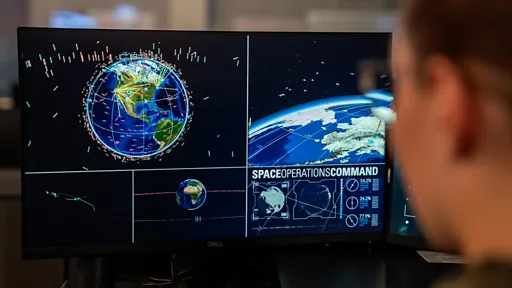
One US Space Force tok-tok pesin say: "Space control capture di mission areas wey dey required to contest and control di space domain - dis one fit involve kinetic and non-kinetic methods to affect enemy capabilities by disrupting dem, reduce dia effectiveness, and even destroy dem if e bicom necessary.
"Dem fit employ dis capabilities for offensive and defensive purposes at di direction of combatant commands."
One expert on military uses of outer space note say na veri little informate pipo sabi about dis technology, and e tell BBC say "whole range of different weapons systems" fit dey.
"Theoretically, dis RPO sats fit bicom hunter-killer satellites by physically colliding wit dem or by nudging dem out of orbit," Dr Rod Thornton, reader in Russian Defence and Security Studies for King's College, London, tell BBC.
Bowen add say di Chinese don demonstrate "space tug capability". E say: "Vehicle fit go up satellite, hold am and move am go different orbit."
Dis, e say, fit be positive development - one way of removing space junk as well as knocking out working satellites.
Trump administration don tok say space-based capabilities - and interceptor missiles – na important part of dia planned "Golden Dome" defence system to protect di US from missiles plus oda airborne threats.
Last year, President Donald Trump bin sign one executive order wey emphasise say US Space Force role no be only to defend assets, but also na attacking force.
Dem launch di US Space Force for 2019 as way to protect American assets for space wey include hundreds of satellites wey dem dey use for communication and surveillance. E be di first new branch of di US military for more dan 70 years.
One 1967 treaty bin ban weapons of mass destruction for orbit. Since den, key powers wey include US, Russia, and China don explore oda capabilities outside of di treaty, such as targeting rivals satellites - wey be key for military communications, surveillance and navigation.
For early February, dem reveal say e dey possible say two Russian satellites likely intercept di communications of at least a dozen European ones since Russia invasion of Ukraine for 2022.
Such interceptions fit don allow Russian intelligence services to read di sensitive data dem transmit, or hypothetically, even to take control of di satellites.
For 2024, US say Russia bin launch one satellite wey dem believe dey capable of attacking oda such probes. Russia no publicly comment on di issue.
US Space Force say China dey "develop and operate space and counterspace capabilities as part of one military modernisation strategy," while Russia "see space as warfighting domain and believe say space supremacy go be decisive factor for future conflicts".