Scientists uncover lasting damage for children brains - na malaria cause am?
Wia dis foto come from, Maria Natembo
- Author, Isabel Shaw
- Role, Global Digital Health
- Published
- Read am in 6 mins
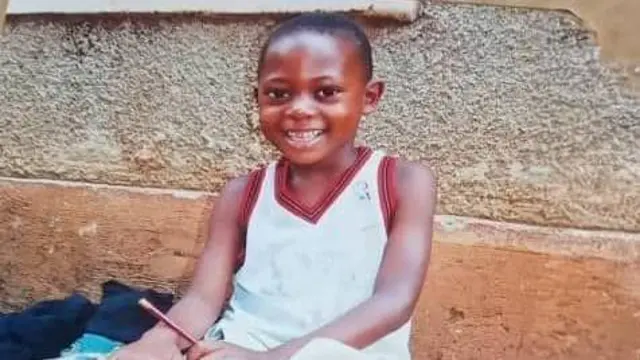
Joseph Natembo bin just toddler wen e survive malaria. At di time, im mama Maria, 54, bin dey relieved and convinced say di worst don pass.
But nearly two decades later, di 18-year-old from Uganda dey deal wit learning difficulties wey doctors believe fit dey linked to di infection e bin get as a child.
E dey find maths especially difficult, and describe numbers as "confusing", and since dat time, don lose one school year. Im mother dey wori about im future, dey fear say im struggles for school fit limit im job prospects.
Joseph na one of more dan 1400 children for Uganda wey researchers follow for one long-term Malarial Impact on Neurobehavioral Development (MIND) study, wey examine di effects of severe malaria.
Di new research wey dem publish for di Journal of di American Medical Association (JAMA) suggest say, Joseph experience - especially wit maths - fit no dey unusual and fit reflect a wider pattern among children wey survive severe forms of di disease.
A "hidden scar"
Malaria dey caused by parasites wey dey transmitted by mosquitoes, and until now, di long-term effects on learning for those wey survive malaria no dey well-studied.
But di study find say children wey develop severe malaria fit suffer brain damage wey fit affect how dem dey learn years after di initial infection.
Di damage dey act as a "hidden scar", na so Prof Chandy John, di study lead author and professor of paediatrics for Indiana University for di US tok.



End of Di one wey oda users dey read well well
"Di pikin fit dey like say e dey do well at first," e tok. "But testing fit reveal underlying brain injury wey go only show for classroom."
Di study wey Dr Paul Bangirana, Associate Professor of Psychiatry for Makerere University for Kampala, dey lead, follow children wey don dey treated for two types of severe malaria.
Dem follow di children from 2008, and earlier follow-ups find say some of dem show signs of cognitive impairment, wey dey affect thinking and learning, within one to two years of severe malaria infection.
But di latest analysis suggest say dis effects fit last much longer.
A total of 939 children bin dey assessed again, some up to 15 years after dem develop cerebral malaria or severe anaemia caused by malaria.
Cerebral malaria na di most severe form of di condition. E dey occur wen infected blood cells dey lodged in small blood vessels for di brain, wey go restrict blood flow and cause swelling.
E fit lead to a coma and, in some cases, death. Alongside severe anaemia, wey dey hapun wen di body no dey produce enof red blood cells, e fit affect up to two million children each year, mostly for sub-Saharan Africa.
Lower IQ

Wia dis foto come from, Getty Images
Children for di study bin dey tested on maths, reading, attention and overall thinking ability.
On average, di ones wey don survive severe malaria, score di equivalent of around three to seven IQ points lower, compared with dos wey never get di infection.
"For one pikin, e fit no massively change wetin dem fit do," na so Dr Audrey John, Chief of Infectious Diseases for di Children Hospital of Philadelphia tok, though e bin no dey involved in di study and e no dey related to Dr Chandy John.
"But wen you translate dat to hundreds of thousands of children, di cognitive hit dey massive."
Even small changes in learning fit affect future job opportunities and, at a wider level, economic productivity of a household and even an entire country.
"And half di world children dey live in a malaria endemic area, so half of di world children dey at risk to get am," she add.
While di researchers adjust for factors like socioeconomic status and education and note say differences in access to healthcare fit also go don influence di results, dem find say di children perform significantly worse in maths dan those wey neva get di disease.
Reading ability however dey largely unaffected.
"Maths skills na sometin wey kids need to advance to di next level [of education]," Chandy John tok.
"So [malaria] fit get consequences for dia ability to go on to college or even secondary school."
Struggling at school
Wia dis foto come from, Andrew Mbowa
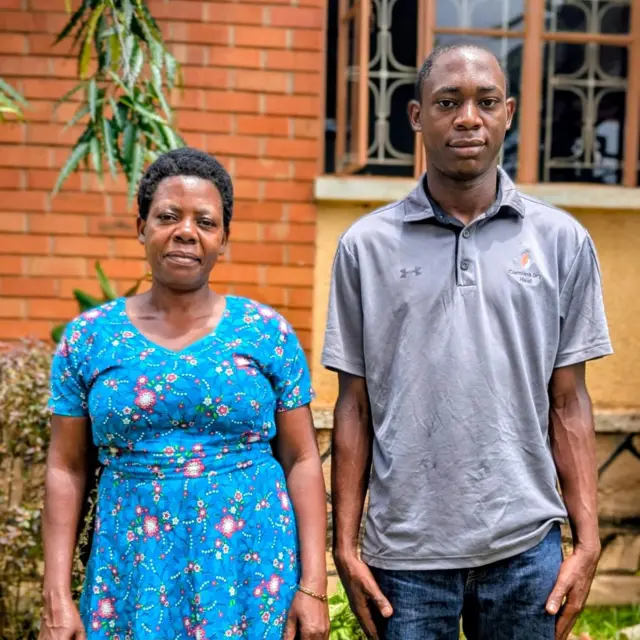
Before Joseph fall ill, Maria, a mum-of-four, say e bin be a "normal child" wey "love to play wit im siblings".
For 2009, at age two, Joseph develop high fever and begin vomit bifor dem diagnose am wit cerebral malaria.
At di time, Maria fear say e fit no survive, knowing say children wey sick like dat often dey "pass on".
After weeks in and out of hospital, Joseph recover.
But by di age of seven, wen e bin dey primary school, problems begin show.
"E no dey perform well in mathematics," Maria tok. "Addition, subtraction – all of dem na problem."
Joseph believe say dis fit be why e also dey find number-based subjects, such as chemistry and physics, difficult.
"Compared to im siblings, wey dey perform really well, e no dey so," she tok.
Teachers wey dey concerned about Joseph performance don call Maria to school several times over di years. Even wen she hire extra teaching help at home e continue to fall behind as im focus reduce.
"E no go settle… im attention no dey dia," she tok.
Some of im siblings dey expected to go to university, but Maria say Joseph fit struggle to follow di same path.
Despite dis, Joseph say e hope to start a small business to dey sell car parts wen e leave school.
Scientists neva fully understand how cerebral malaria or severe anaemia fit lead to cognitive impairment.
Di study no fit definitively prove say severe malaria dey cause brain injury. Instead, e show a strong link between di illness and long-term problems wit thinking and learning.
Di next phase of dia study go use MRI brain scans to examine how di infection dey affect different parts of di brain.
Previous studies don show say severe malaria dey lead to paralysis, impaired motor skills and visual coordination.
E also dey linked to seizures, vision loss, behavioural issues and attention deficit hyperactivity disorder (ADHD).
A global problem
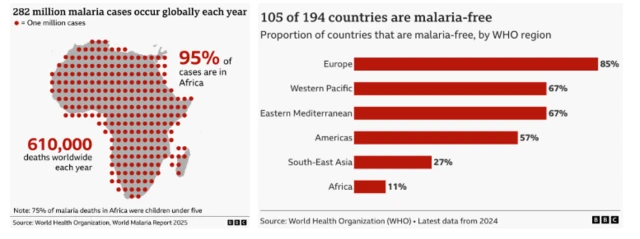
In 2024, malaria cause an estimated 282 million cases and 610,000 deaths worldwide, up from 598,000 di previous year, according to di World Health Organization (WHO).
Most deaths dey among young children for Africa. Early symptoms of malaria include fever, headache and chills.
Severe symptoms like extreme tiredness and fatigue, convulsions, impaired consciousness, dark urine, yellowing of di eyes and skin. WHO advise seeking emergency care right away if you experience any of dis.
Although dem don make progress in reducing di global death toll since di turn of di century, progress also don stop in recent years.
While 47 kontris don dey certified as malaria-free, odas - including Ethiopia, Madagascar, Afghanistan, and Yemen - dey see a jump in cases.
WHO don attribute di resurgence of di disease in part to climate change, wey don create di hot, wet conditions wey dey make mosquitoes thrive and push disease-carrying insects into previously unaffected areas.
Growing resistance to common drugs dem dey use treat malaria and kill di parasite as well as global cuts to funding also get blame, WHO tok.
As malaria dey spread into new regions, sabi pipo dey warn say dis fit leave larger populations wey neva build-up immunity to malaria, to dey vulnerable to more severe forms of di disease.
"In some parts of South East Asia, we dey see more severe malaria in teenagers and young adults," Chandy John tok.
"Dem neva develop di same level of immunity."
Wetin go hapun next?
Two malaria vaccines, including di RTS S vaccine, dey introduced, wey aim to prevent di severe forms of di disease in children for sub-Saharan Africa.
As of November 2025, dem don deliver over 40 million doses to 24 African kontris , according to UNICEF.
"E dey amazing say we get dis new preventative treatments and we dey save kids lives," Audrey John tok.
"But e no dey enof, we no fit stop am. We clearly need to do beta to protect and treat di millions wey already get am."