Summary

  1. Thank you for readingpublished at 18:59 BST

    We're bringing our live coverage to a close now after putting adult social care in the spotlight today.

    As demand rises and council budgets in England come under more pressure, there is no doubt that social care is - and will continue to be - one of the most pressing issues in society.

    We've heard voices from across the spectrum, from people struggling to care for family members and access support, to those going above and beyond to help look after others.

    One message that has been consistent throughout is that people take care of their families and friends out of love, and that love is what keeps them going even when times are tough.

    If you have a story about social care or another topic that you'd like to share, you can use the Your Voice contact form to get in touch with us.

  2. Faith, fish & chips and Facebook - life at 103published at 18:48 BST

    Simon Thake
    BBC Radio Sheffield

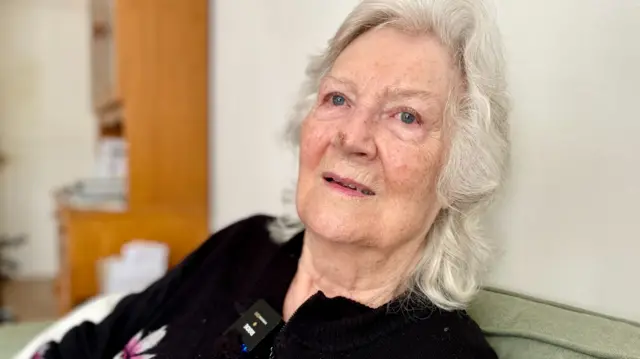
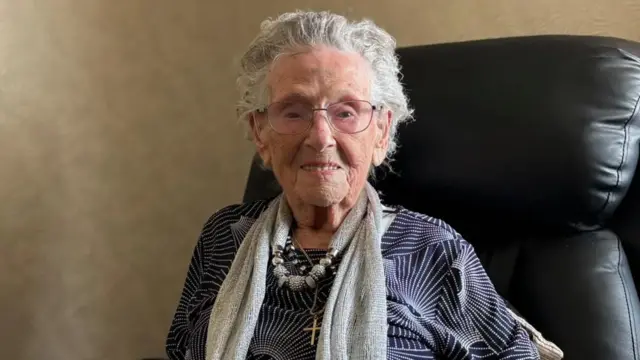
    An elderly woman with short grey hair and bright eyes, smiles as she sits in a leather chair. She wears a patterned navy shirt and grey scarf, a necklace with a cross and another chunky necklace on top.Image source, Simon Thake/BBC

    The family of a 103-year-old woman say community nursing has allowed her to stay remarkably independent in her own home.

    As part of a day focused on social care stories, the BBC has been to visit Margaret Norris in Rotherham, South Yorkshire.

    She enjoys sharing fish and chips and having a Facebook scroll with her 74-year-old daughter, Jean.

    "Mum likes doing online shopping - she buys a lot of clothes," Jean chuckles. "I do have to rein her in a bit."

    The pair also like going to church together every Sunday.

    Margaret admits she was reluctant to accept the help of district nurses at first.

    "I like to do things my own way," she says. "But they come in and do a good job and I really appreciate it."

  3. Community centre gives breathing space for carer and husbandpublished at 18:39 BST

    A community centre is providing crucial respite for a full-time carer and her husband.

    Beverley Shortland, from Coventry, cares for her husband Ken who suffered a brain injury when he had a cardiac arrest three and a half years ago.

    She said visits to the Foleshill Community Centre in Coventry give them both a chance to recharge.

    "Ken's grateful for it as well — as in, you know, he needs a break from me too. He's always with me. So it's good for him," she told BBC Coventry and Warwickshire.

    The informal and community support made a significant difference alongside her caring responsibilities, though she added that statutory government provision remained insufficient for people in Ken's position.

    “If there were more suitable day centres and things like that I do think that would be so helpful,” she added.

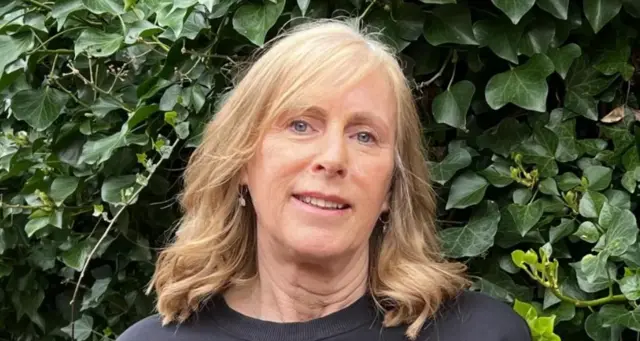
    A woman looks into the camera smiling. She has long, blonde hair and blue eyes, and is wearing a dark blue top. Behind her are dark green ivy leaves
  4. 'Simple changes could massively improve quality of life'published at 18:30 BST

    David Gregory-Kumar
    West Midlands science, environment, and rural affairs correspondent

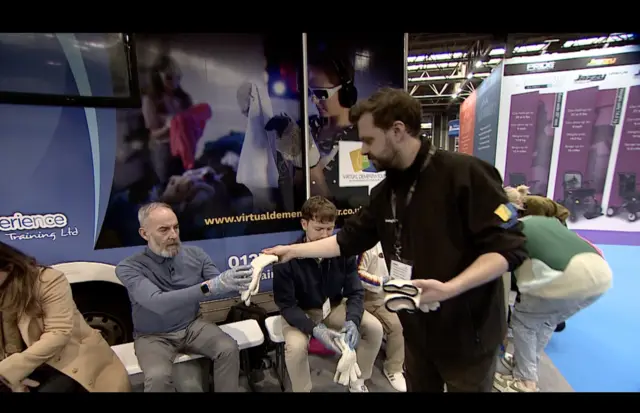
    David Gregory-Kumar is wearing a blue top and grey trousers and is passed a pair of gloves while sitting down. He looks on with trepidation.
    Image caption,

    David Gregory-Kumar puts on the gloves as part of simulator experience for social care workers

    I was at the NEC in Birmingham recently to explore some of the technology being used to help those in social care.

    In one case I was shown a simulator, designed to help carers understand how they can make simple changes to bring relief to those they look after.

    I was led in by the team at Training2Care and - with headphones on, insoles in my feet, wearing thick gloves with some of the fingers sewn together, and goggles to reduce my vision - I was given simple tasks to do such as folding laundry.

    But it's impossible. My vision and touch are compromised. I'm in some pain in my feet. And the sounds played through the headphones are overwhelming. It is hard to deal with this simple task.

    Michael Peachey has short dark brown hair and wears a black top and zip-up jacket. He is holding his hands in front of him as though he is demonstrating.
    Image caption,

    Michael Peachey said easy and cheap changes could boost people's quality of life

    I find it all overwhelming and even upsetting, but Training2Care's Michael Peachey said it helped carers understand how the people they looked after experience the world.

    He said: "Everything you went through in there, all the challenges you had, there are some really easy things we can do which don't cost money, don't take time, which could massively improve the quality of your life."

  5. Betty sees the benefits as hosts open up their homespublished at 18:21 BST

    Alastair Fee
    South of England health correspondent

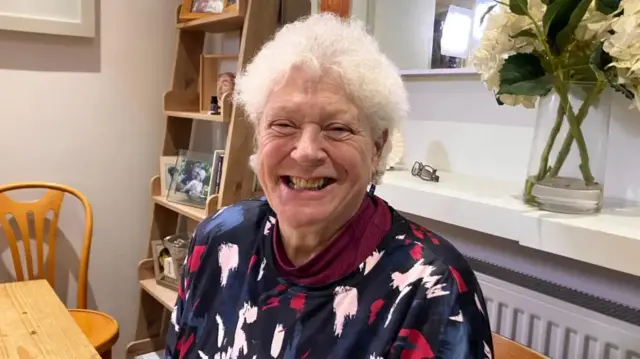
    Betty Ruffel, a woman with short, white hair, smiles broadly at the camera, eyes creased up. This is an enormous, animated smile with teeth. She wears a long-sleeved top with splodges of light pink and dark pink on blue and is sitting at what looks like a kitchen table. A shelf to her left has photos on, a pair of glasses is on a shelf behind her and to the right of them, a vase of white flowers.

    "I'm not very good at remembering things and my husband says I'm getting forgetful," says 78-year-old Betty Ruffel, who has early-stage dementia.

    Betty attends a day care service once a week in Poole in Dorset. Along with three other clients, she plays games, does arts and crafts, and shares a meal.

    The Filo Project offers a different kind of day care. Trained and paid hosts welcome clients with early to moderate dementia into their homes.

    The hope is personalised and regular care like this can help people grow in confidence, renew old hobbies and interests, and make friends.

    So far, the not-for-profit company has three hosts in Bournemouth, Christchurch and Poole and is looking for at least 10 more to meet demand.

    Betty says she is seeing the benefits. "My husband said only a couple of days ago, 'you're getting better', because he said 'you remembered something', so I thought, something must be right!"

  6. Woman who suddenly went deaf 'eternally grateful' to care teampublished at 18:10 BST

    Joanne Writtle
    West Midlands health correspondent

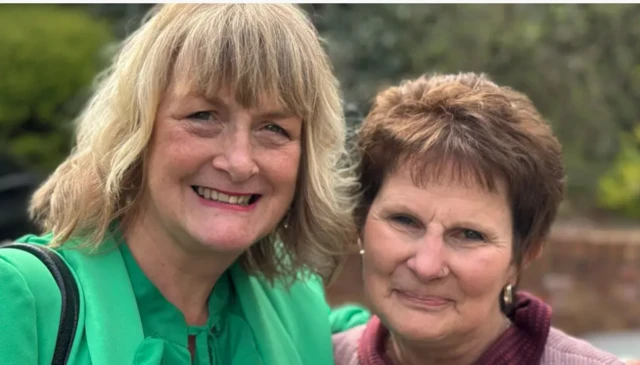
    Ali France has blonde wavy shoulder-length hair and is wearing a bright green jacket and top. She has her arm round Sarah Forsyth, who has a nose ring and gold earring and has short brown hair.
    Image caption,

    Ali France (left), who is profoundly deaf, has helped Sarah Forsyth, who suddenly lost her hearing

    A woman who felt as though she didn't belong in the world after going deaf says she was given her life back by a team of social care workers.

    Sarah Forsyth, who lives near Leek in Staffordshire, had worn hearing aids for 20 years but suddenly lost all her hearing in 2021.

    "The kids were saying things and they were laughing and joking and I thought, 'I can't join in' and it was a feeling of fear - it was awful," she said.

    Sarah was helped by Ali France, the leader of an NHS sensory social care work team who help deaf and blind people.

    Ali grew up in a profoundly deaf family, losing her own hearing at the age of four due to German measles, in the same way as her mother.

    She helped Sarah learn sign language, introduced her to interpreters, and supported her to have a cochlear implant and return to work.

    Fighting back tears, Sarah said of Ali's help: "I will be eternally grateful for that gift that she gave me to say, 'Yes it's fine'. Deafness is beautiful."

  7. ‘I began caring for my mother aged nine’published at 18:01 BST

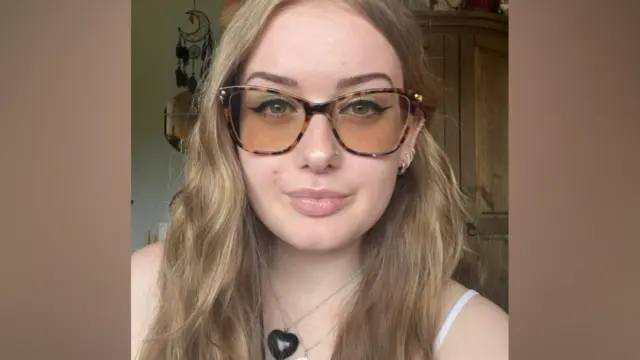
    Phoebe, from Stockwood in Bristol, has been an unpaid carer for her mother for more than 10 years.

    It started when her parents divorced and her sister, who is autistic, was unable to help.

    A young woman with long wavy blonde hair and tinted glasses, she has winged eyeliner and a nose piercing.

    "I did it out of love. It wasn't something that I thought was too much or something because I was helping her. That's why I did it," she told BBC Radio Bristol.

    It wasn't until she was at a GP appointment about her own mental health aged 13 that she was first identified as a young carer. She received some support, but said it was limited.

    Now in her final year of university, she said finding time for herself had made a significant difference.

    "It took until I went to uni to actually say no, I need time for myself," she said. "And it made a massive, massive difference."

    Phoebe works with Carers Support Bristol which has given her support while she attends university.

  8. The 'stench' of poor care: Listeners share harrowing care home experiencespublished at 17:51 BST

    BBC Radio Manchester

    Listeners to local radio in Manchester have shared emotional and often shocking stories about the reality of finding residential care for their loved ones.

    BBC Radio Manchester presenter Mike Sweeney shared his own story finding a suitable home for his partner’s father, Don. While they eventually found a "great place," Sweeney recalled one visit to a facility so overwhelming they couldn't stay to view the rooms.

    A man with short white hair standing in front of a purple backdrop which says BBC Radio Manchester

    "I looked at (my partner) Viv, she looked at me, and I mean it stunk, and we just walked back out to the car".

    His account was echoed by a message from a listener whose mother spent her final weeks in a facility that failed to meet basic standards. "My mother had to spend several weeks in a care home and sadly died there," the listener wrote. "It broke my heart that her last moment was in a disgraceful place."

    The listener added that the facility was subsequently rated "inadequate" by the Care Quality Commission (CQC) and noted that the "guilt over that never leaves me".

    These stories highlight a "postcode lottery," where the quality of residential care fluctuates wildly. While some families described finding "fantastic" homes with "wonderful staff" who treated residents like friends, others spoke of the trauma of seeing loved ones in environments they felt were unsafe or undignified.

  9. What is the Care Quality Commission and what does it do?published at 17:40 BST

    Alison Holt
    Social affairs editor

    The Care Quality Commission (CQC) is a watchdog with a huge job. It monitors the quality of care in hospitals, GPs, mental health services, dentists, ambulances, hospices, council adult social care departments and care providers in England.

    In adult social care alone, it oversees more than 16,000 residential and nursing homes, and about 11,000 providers of care for people in their own homes. All have to be registered with and inspected by the CQC.

    Inspections are carried out to assess the quality of services being provided. For instance, when inspectors visit a care home, they speak to residents, their families, staff, managers and study paperwork.

    The aim is to answer five key questions. Is the service safe, effective, caring, responsive to people’s needs and well-led? Based on that the home is rated as either outstanding, good, requires improvement or inadequate.

    That rating can be an important guide for families and professionals when making decisions about care for someone who is older or disabled.

  10. Care home residents helped by AI trialpublished at 17:29 BST

    Tristan Pascoe
    Political Reporter, Dorset

    Brian Gundry has short grey hair and a beard. He is sitting in a beige armchair.

    Fewer care home residents ended up having falls and needing ambulances due to a government-funded AI trial.

    Six care homes across Dorset took part in the pilot, with resident Brian Gundry among those who was quickly helped when he fell out of bed after it was picked up by sound and motion sensors.

    "When I fell, I must have been trying to get out of bed, I don't know if I tried to get up," said Brian.

    "Next minute there's a carer here. And the next minute, I'm in hospital.

    "Without them I don't know how long I might have been on the floor."

    The pilot, which finished in March 2025, saw ambulance callouts reduce by two-thirds, with the need for hospital transfers down by almost 80%.

    The sensors were developed by Ally, whose CEO Thomas Tredinnick said the system "wasn't about replacing care teams", but gave them "better visibility at night, so they could respond earlier, reduce harm and protect residents' rest".

  11. 'A weight has been lifted off my shoulders'published at 17:20 BST

    Lauren Hirst
    BBC North West

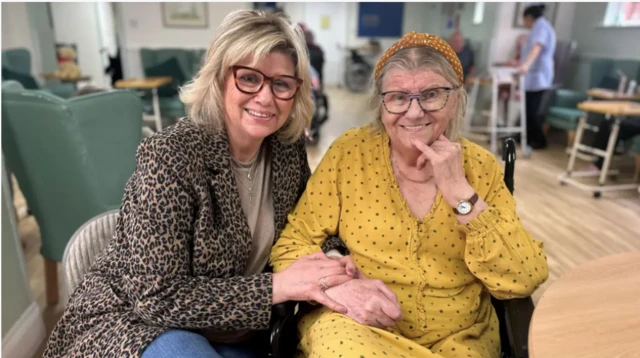
    Leonie Williams has blonde shoulder-length hair and is wearing a taupe top and leopard print jacket and is holding onto her mother. Angela Martens is wearing a yellow and black spotted dress and a yellow headband. They are sitting down.
    Image caption,

    Leonie Williams says she feels much more relaxed now she knows her mum is settled at a care home with thoughtful staff

    Tea served in a china cup and being offered a favourite meal have made all the difference to Angela Martens, who moved into a care home two months ago.

    It was an anxious time for daughter Leonie Williams, but with Angela enjoying life as Cambridge Court Care Home in Liverpool, Leonie now feels as if a "weight has been lifted off my shoulders".

    Robotic toy cats and dogs for the residents to enjoy as well as a purpose-built hairdressing salon where drinks are poured into wine glasses are among the other thoughtful touches at the home, rated as good by the Care Quality Commission (CQC).

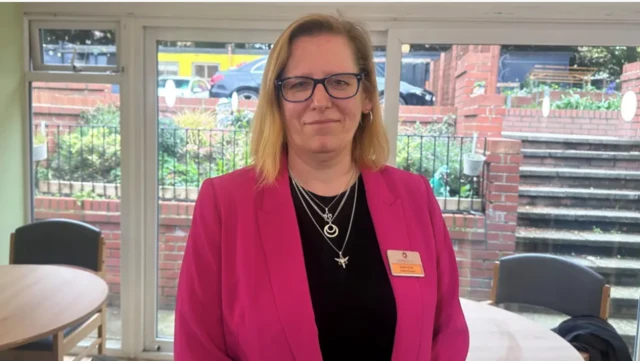
    Alena Petrie has blonde shoulder-length hair and is wearing a black top, with four silver necklaces and a bright pink jacket.
    Image caption,

    Care home group manager Alena Petrie says the residences provide lots of positive experiences which get overlooked

    Alena Petrie, regional manager for operator Unity Homes, said the image of social care needed to change.

    "No-one is looking at how important is it. I feel like we are forgotten and there is no positivity about care homes," she said.

    "We often hear negative stories... and there are loads of positive things in care homes."

  12. What do the different political parties say on social care?published at 17:13 BST

    Alix Hattenstone
    Journalist, BBC England

    Labour: The party has pledged more than £4.6bn extra available for adult social care in 2028-29 and £9bn of shared funding available to join health and care services, helping people out of hospital. It wants a National Care Service. A spokesperson said unpaid carers could get support through the Better Care Fund.

    Conservatives: Stuart Andrew MP, Shadow Health Secretary, says the party had previously invested £8.6bn in adult social care, sped up hospital discharge, and built a long-term workforce plan.

    Liberal Democrats: The party's spokesperson for Health and Social Care, Helen Morgan MP, says more social care support and guaranteed respite care is needed. The party plans to free up 5,000 extra hospital beds a day and fill carer vacancies through funding a new higher carers minimum wage.

    Reform UK: The party said it was committed to meaningful national reform to close the funding gap, including making careers in health and social care more attractive to tackle workforce shortages.

    Green Party: The party said it would push for a £20bn investment to address social care and fund free personal care, increase pay rates and introduce a carer structure to rebuild the workforce.

  13. ‘NHS discharge planning starts when it is too late,’ says carer charitypublished at 17:00 BST

    BBC Radio Bristol

    Hospitals routinely fail to gather patients' social histories when they are admitted, meaning discharge planning only starts at the point when patients are ready to leave, said the CEO of Bristol Black Carers, external.

    Anndeloris Chacon, a former registered nurse of more than 40 years, told BBC Radio Bristol the consequences were significant for patients, carers and the wider health service.

    "We do not get people's history right; we do not get their situation right so that we can plan proper discharge," she said.

    "We wait until the moment they are to be discharged to find out: 'Oh, they have no one at home' or 'there is no-one there to care for them'."

    She added her former father-in-law had been in hospital for three months before being discharged to a care home.

    She said if hospitals included the social circumstances of patients at the point of admission, discharge could be planned far more effectively and safely.

  14. 'Hospital bed blocking has got worse over 10 years'published at 16:47 BST

    Hannah Miller
    BBC Bristol political reporter

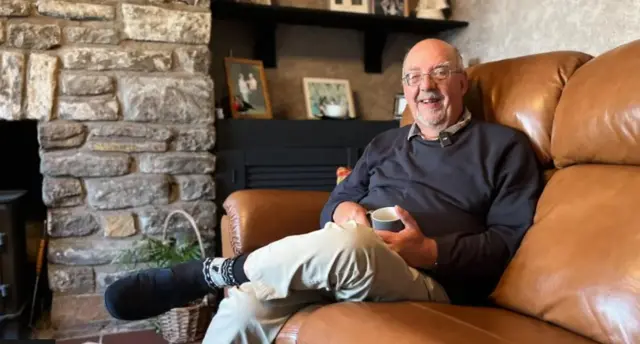
    John Sibley is smiling at the camera and has one leg crossed over the other while sitting on a brown leather sofa. He has grey hair and a beard and is wearing a navy sweatshirt and cream chinos.

    A volunteer who has spent nearly a decade trying to improve social care says the situation has got worse, despite repeated government promises of extra funding.

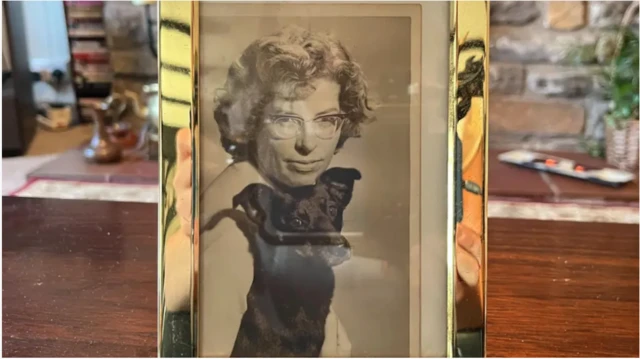
    John Sibley became a volunteer governor at University Hospitals Bristol NHS Foundation Trust after his mother, Iris, waited seven months fora care home place 10 years ago.

    "There are more and more people stuck in a hospital - classed as having no criteria to reside - just waiting for placement. And it is a scandal on a massive scale,” he said.

    A black and white photo of Iris, holding a small terrier-type dog. It is in a silver frame on top of a wooden piece of furniture and in front of a fireplace.

    BBC research shows councils in England are spending roughly two-thirds of their budgets on social care.

    The government has said it is putting billions of pounds of extra funding into social care over the next few years.

  15. Delayed discharges a significant costpublished at 16:37 BST

    Nick Triggle
    Health correspondent

    The BBC is reporting about delayed discharges today. There are two different sets of data in England. One covering intermediate care and one hospitals.

    Intermediate care covers a range of community settings – including community hospitals, rehabilitation centres and step-down services from hospital. People cared for in these settings tend to be the most frail and complex to manage, which is why delays discharging them are higher as an overall proportion than in hospital.

    Hospital delays are greater in absolute number though, totalling over 13,000. That equates to around one in eight beds. The unavailability of social care is a big factor in these delays in both hospital and intermediate care settings.

    This comes at huge cost. The average hospital bed takes £562 a day to staff and maintain, according to NHS England, meaning the health service in England is losing more than £225m a month supporting patients who could be elsewhere.

  16. Care staff shortages for ageing population affecting hospital dischargespublished at 16:25 BST

    Alison Holt
    Social affairs editor

    Time spent in a busy acute hospital may be vital for someone when they are ill, have an accident or need an operation - but it can also leave older people, in particular, much frailer.

    When a patient no longer needs significant medical intervention, but is not well enough to return home safely, they may be sent to a specially set-up local hospital or care home for short-term support.

    The idea of intermediate care is that it helps people regain as much strength as possible for everyday tasks, such as getting about and preparing meals.

    Some patients will need high levels of social care - for instance, two care workers visiting them at home four times a day - and finding that can be very difficult.

    Shortages of the care staff needed to support an ageing population is an ongoing problem. It is likely to be a key reason why BBC data has found nearly all people leaving intermediate care face delays.

    That, in turn, has a knock-on effect on the ability of an acute hospital to move people on, so it can meet the needs of new patients arriving at its front door.

  17. Figures show most community bed patients cannot be discharged when readypublished at 16:15 BST

    Lauren Woodhead
    England Data Unit

    Hospitals and social care are closely linked, particularly for patients leaving intermediate care settings.

    These are community beds, many of which are within hospitals.

    According to NHS guidance, external they are used for "rehabilitation, reablement and recovery".

    A fairly small proportion of patients require intermediate care and they can often have complex needs, creating a close relationship between social care and intermediate care settings.

    Almost two-thirds of people discharged from intermediate settings in March 2026 required new or additional care. One in 10 were discharged to a care home as a new admission.

    However, on an average day across England in 2025-26, 88% of intermediate care patients ready to leave were not discharged.

    Based on snapshot data, the most common reason for this across England was "awaiting availability of a bed in a care home as a permanent placement".

  18. How community teams are trying to keep people out of hospitalpublished at 15:59 BST

    Mark Norman
    Health Correspondent, BBC South East

    Enid Ford has white shoulder length hair and is relaxing back on a green sofa.Image source, Mark Norman/BBC

    Enid Ford is counting down the weeks to her knee surgery - all the while, desperate to avoid a fall which could mean a trip to A&E.

    She is frank as to the reasons why.

    "I wouldn't like to go in after a fall because I don't think my chances of getting out would be very good," she says.

    A community therapy team, run by Sussex Community NHS Foundation Trust, is visiting Enid in her home in the village of Yapton, near Bognor Regis.

    The team wants to know Enid can live safely and well at home before her surgery - and that she is able to quickly leave hospital after her knee is fixed.

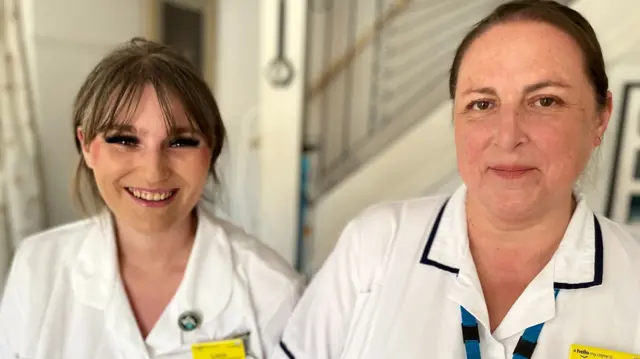
    Laura Mills is smiling at the camera and is wearing a white uniform. Debbie Smith has brown hair, in a ponytail, and is also wearing a white uniform.Image source, Mark Norman/BBC

    Nationally, there are thousands of people stuck in a hospital bed who don't need to be there - something which is known as bed blocking.

    Most of these people are waiting for some form of social care, and trying to fix that problem is a huge priority for the NHS.

    Community teams, like the one Enid sees, are a key part of how they are trying to deal with the challenge.

  19. ‘Kinship carers face isolation and financial strain’published at 15:46 BST

    BBC Radio Tees

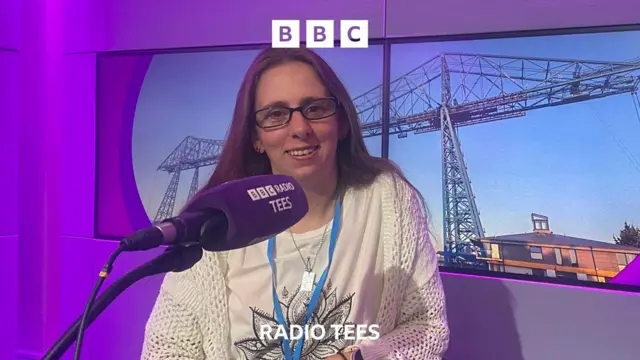
    A woman with long brown hair and glasses smiles at the camera, she wears a white top with a black and white flower on and sits in a BBC Radio Tees purple studio. The microphone in front of her says 'BBC Radio Tees' and the backdrop shows a bridge.

    A Darlington woman who stepped in overnight to care for her newborn niece has set up a new support network for kinship carers who she says are falling through the gaps of the social care system.

    Collette Howe is the founder of Dalton Kinship Connect, a community group supporting relatives who take on children when parents are no longer able to cope.

    “You can just one minute have this job working full-time, and next you'll have to leave this job with no support and look after this child,” she told BBC Radio Tees. “Then your whole life’s turned upside down.”

    Howe said many kinship carers face isolation, financial strain and trauma.

    The government said it was addressing the adult social care sector's urgent need for support, with over £4.6bn funding available for adult social care in 2028-29 compared to 2025-26.

  20. 'How will I look after my wife and daughter if I can't cope any longer?'published at 15:37 BST

    Crispin Rolfe
    Reporter, BBC Look North

    David Chapman is 73 and retired, but is still caring for his wife and daughter - and says financial and practical support has "slowly eroded" over two decades.

    David, from Beverley in East Yorkshire, no longer receives Carer's Allowance after reaching pension age.

    He is awaiting treatment for a serious illness and worries about what will happen to them all if he can no longer cope.

    "I have to look after my wife with effectively no financial support," he says.

    "So if I go down, then what happens? Does the council look after her, or does family have to step in?"

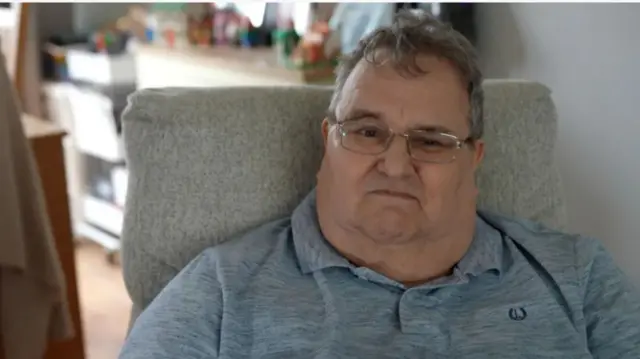
    David Chapman wears glasses, a grey polo shirt and has greying short hair. He is sitting back in a chair.