Summary

Are you out of work or education?

  1. UK not alone in high Neet rates, nor is it the highestpublished at 12:00 BST

    Emer Moreau
    BBC News

    The UK isn't the only country grappling with high youth unemployment. According to OECD figures, France, Finland and Spain all have higher rates than we do.

    One country which has drastically reduced the number of young Neets is Ireland.

    Neet rates in Ireland went from 14.3% in 2015 to 6.1% in 2025.

    Alan Milburn, the former Labour minister who is leading a review of youth unemployment in the UK, recently travelled there to find out how they did it.

    He visited a school which receives extra government funding because its pupils are at a higher risk of poverty, social exclusion and educational disadvantage.

    The school's guidance counsellor told Milburn that they are "agnostic" about whether a student goes to university, instead focusing on technical education and preparing them for the world of work.

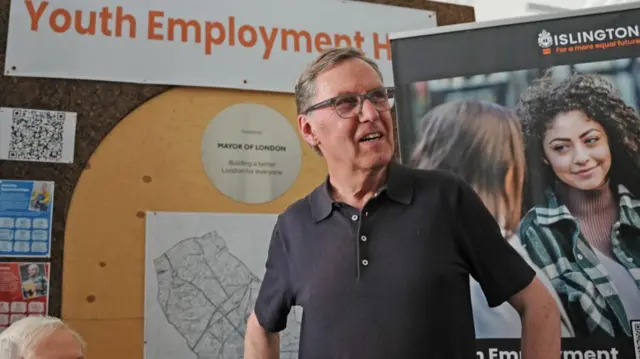
    An older man in a dark polo shirt and glasses.Image source, PA Media
    Image caption,

    Milburn recently went to Ireland to investigate its fall in Neet rates among young people

  2. Figures highlight urgency of government's task - Resolution Foundationpublished at 11:54 BST

    Think tank Resolution Foundation says the nearly one million young people who are Neet highlights the urgency of the government's task.

    It says while the number of those Neet fell to 981,000 in the second quarter of 2026, down from just over one million in the first quarter, the number is higher than a year ago.

    Tackling the crisis it says, includes early intervention on young people's mental health, more engaged employment support, and a renewed focus on high-quality further and vocational education.

    The UK continues to have the third highest rate of Neets aged 18 to 24 in Europe, and the Resolution Foundation warns that serious fiscal commitments could be required to tackle the crisis.

  3. Today's rise in Neet numbers is largely among menpublished at 11:39 BST

    Hazel Shearing
    Education correspondent

    We’ve been reporting this morning that there’s been a 3% rise in the number of young people who are Neet - from 951,000 between April and June 2025, to 981,000 over the same period this year.

    That’s an additional 30,000 young people - and the increase was largely among men.

    An extra 25,000 men were estimated to be Neet between April and June, compared to the same time last year. There were another 4,000 young women.

    In the first part of his major report into Neets, former minister Alan Milburn said the reasons for the rise in rates among men were “complex” but could be down to more health issues, the “erosion of traditional employment routes” and “a growing gap in educational outcomes”.

    He also said the “Neet problem is grounded in social disadvantage” and highlighted higher rates among certain groups, including young people who:

    • have grown up in poverty
    • have Special Educational Needs or Disabilities (SEND)
    • don’t have a GCSE-level qualification
    • are Black, African and Caribbean

    This Flourish post cannot be displayed in your browser. Please enable Javascript or try a different browser.

  4. Barney is autistic, has ADHD and is deaf. Without an internship, he'd still be looking for workpublished at 11:30 BST

    Erica Witherington
    Disability reporter

    Barney smiling at the camera while using a computer at a desk

    Barney Konneh, 22, loves his job and the team he works with. But if it wasn’t for an internship, he believes he’d still be at home applying for work.

    Barney is autistic, has ADHD and is deaf.

    Now a business support officer at Liverpool City Council, he started out on supported placements with them five years ago. A job coach helped him with practical skills like writing a CV and adjusting to the workplace.

    "I’m hoping that I can get more experience and gain new skills in the future," he tells me, and "possibly get a promotion".

    The former Labour minister, Alan Milburn, who’s investigating the Neet issue, has said he wants internships for young people with special educational needs and disabilities to be "turbocharged".

  5. 'There's no winning for us': Mental health struggles worsen the job searchpublished at 11:24 BST

    Erica Witherington
    Disability reporter

    Should young people with mental health problems just get a job? It’s a question that frustrates the increasing numbers who are struggling.

    I’m in touch with someone in Yorkshire who’s not been in work or training since he was 19. Ten years later, he relies entirely on benefits.

    He’s suffered depression and anxiety since 14, and told me nobody chooses this sort of isolation:

    "It’s tedious as hell watching the world move on as we have to sit and watch."

    He says he’s tried to get psychiatric help many times, but that "there’s no way to see anyone anymore".

    "All they do is give you phone numbers to charities and palm you off. There’s no winning for us," he added, "and most don’t seem to care".

    The proportion of disabled Neets who said their main condition is mental health has nearly doubled since 2011.

    Mental health charity Mind said young people are being "let down" - stuck on long waiting lists or "bounced" between services, while "their problems become worse and more entrenched".

  6. What is the Youth Guarantee scheme - and is it working?published at 11:18 BST

    Kate McGough, education reporter & Emer Moreau, business reporter

    The government has already taken steps to tackle the Neet crisis.

    In 2024, it launched the Youth Guarantee scheme, which is a commitment to ensure that every 18 to 21-year-old in England gets access to education, training, or help to find a job or an apprenticeship.

    There are a number of parts to the Guarantee, including incentives to employers to take on young people, and short, fully-funded training courses in specific sectors like construction and hospitality.

    Another part is the Jobs Guarantee which aims to help long-term unemployed young people by providing six months of paid work to eligible 18 to 24-year-olds who have been receiving Universal Credit for 18 months without earning or learning.This is intended to create employment for 90,000 young people over three years.

    Eight areas in England are part of a trial for the Youth Guarantee trailblazer scheme, which was created to test local ways of reaching vulnerable young people who were out of work and education.

    But the mayor of the West of England, one of the trial areas, said the initial results were "not good enough" after it reached only 300 people so far.

    "There's some really good stories, there's some really good outcomes, but I would like to see a much bigger impact," Helen Godwin said.

  7. 'Labour have destroyed job opportunities for young people' - oppositionpublished at 11:14 BST

    The Shadow Work and Pensions, Helen Whately MPImage source, PA Media

    The Shadow Work and Pensions Secretary, Helen Whately, says "the opportunities that previous generations took for granted are not there in the way they once were".

    She says “Labour have destroyed job opportunities for young people" through taxes that affect employers' ability to hire.

    “The Conservatives will back businesses to create jobs with tax cuts, boost apprenticeships, and reform welfare so young people are better off in work and we can get Britain working again," she says.

    Earlier, Work and Pensions Secretary Pat McFadden quoted figures saying number of young people not in education, employment or training rose by 248,000 between 2021 and 2024.

  8. 'I spent two years looking for work before I got a job,' says Neala, 20published at 11:08 BST

    David Henderson
    Scotland news correspondent

    Neala Sheils was one of growing number of young people classed as Neet
    Image caption,

    Neala Sheils was one of growing number of young people classed as Neet

    Neala Sheils spent two years applying for jobs with little success before finally securing work in a hotel last month.

    The 20-year-old, from Glasgow, says she wanted to work but the support she received from the job centre was hampered by seeing a different work coach at almost every appointment.

    It was only after a referral to a service run by mental health charity SAMH that Neala's fortunes began to change.

    It offered support with confidence-building, teamwork, interview skills and applying for jobs.

    Three months later, she secured employment.

    Neala says the support took account of her autism, which she says had contributed to difficult experiences in previous job interviews.

    "Some places were basically saying, 'we can't give you the job, you've not got good confidence, your eye contact's not good', stuff like that," she says. "But obviously that's not easy when you've got autism and those are the traits."

    She is now preparing to start college, where she hopes to pursue a career supporting older people with dementia.

  9. Scotland does not collect Neet figures in the same waypublished at 11:05 BST

    David Henderson
    Scotland news correspondent

    Scotland no longer publishes Neet statistics in the same form as the rest of the UK.

    Instead, it uses a different measure that stops tracking young people once they turn 19 - just as many are entering the age range where problems tend to emerge.

    Those who are between 20 and 24 are more likely to be Neet than those aged 16 to 19 in the UK.

    Allison Catalano

    Allison Catalano, an economist at the Fraser of Allander Institute, says the lack of comparable data makes it difficult to assess Scotland's performance.

    "They don't make that data publicly available, so we can't really suss it out on our own," she says.

    "We know that 16 to 19-year-olds in Scotland look better than the rest of the UK.

    "We don't really know what's going on with those 20 to 24-year-olds."

    She says this age group is less likely to remain in education and more likely to be navigating the transition into work.

  10. One in eight young people out of work, training or education - a recappublished at 11:02 BST

    Pat McFadden chatting to a young worker in an aisle in BootsImage source, PA Media

    The number of young people not in work or education (Neet) from April to June has slightly reduced from the first quarter of this year, but has risen compared to this time last year.

    Some 981,000 people aged 16 to 24 - or 13% of that age group - are thought to be Neet, compared to last year's 12.8%.

    It means about one in eight young people in the UK are currently out of work, education or training.

    In the first quarter of the year, 13.5% of young people were Neet - the highest in 12 years.

    According to the figures released by the Office for National Statistics (ONS), there were 30,000 less Neets in April to June than there were in January to March.

    Work and Pensions Secretary Pat McFadden says the government is determined to "turn the tide" on what it calls the "youth unemployment crisis".

    He says an investment of £2.5 billion will help create "almost a million" opportunities to "earn or learn" and that further reform will come after the Milburn Review - its second part is due in Autumn.

    Alan Milburn, who published a report on Neets back in May, and is set to deliver is final recommendations in weeks, says "young people are desperate for an opportunity to learn or earn".

  11. El says she likes to meet potential employers face to face - 'they get an idea of your personality'published at 10:57 BST

    Branwen Jeffreys, education editor and Hope Rhodes, education reporter

    Person with short red hair in the foreground, wearing a black T-shirt, black over-ear headphones around the neck, a cross-body strap, a nose ring and earrings. The person is facing the camera on a pavement outside a building. Behind the person is a dark tiled wall and metal security shutter, with a turquoise-framed doorway visible on the left and part of a street scene on the right. No bags, bins or markers are visible.
    Image caption,

    El Cousins was spotted handing in her CV at bars in Leeds city centre.

    While we were at North Bar in Leeds for a story about the key skills employers want, El Cousins walked in to hand in her CV in person.

    El says she likes to meet potential employers face to face because "they get an idea of your personality".

    "I think that matters quite a lot and that doesn't always come across on a piece of paper or online," she told us.

    Jake Readman, North Bar’s general manager, says communication skills, an outgoing personality and thinking on the go are what he looks for when hiring.

    He was impressed by El and her approach, and later offered her some trial shifts.

  12. What you need to stand out in the job hunt - according to employerspublished at 10:53 BST

    Branwen Jeffreys, education editor and Hope Rhodes, education reporter

    A major five-year study from the National Foundation for Educational Research identified six key skills that employers want to see.

    But it can feel hard to show you have these skills when you don’t have lots of work experience.

    One HR specialist we spoke with advises thinking about how your experiences from other areas of your life - such as in school or extra-curricular activities - could apply to a work setting.

    For more advice on how to stand out while job hunting, you can read our article here.

    This Flourish post cannot be displayed in your browser. Please enable Javascript or try a different browser.

  13. Number of Neets a 'scar on this country', says author of key government reportpublished at 10:48 BST

    Milburn speaking at a lecturn in front of a screen which says 'young people and work, alan milburn'Image source, PA Media

    Alan Milburn, who published a report on Neets back in May, and is set to deliver is final recommendations in weeks, says "young people are desperate for an opportunity to learn or earn".

    "Instead, we're creating a lost generation. They want to work - they just need a chance," the former Labour minister says.

    He calls the number of Neets in the UK "a scar on this country" and says his review, the latter part of which is due in Autumn, will "set out how that can be achieved so that young people get their futures back".

  14. Number of Neet young men up compared to same time last yearpublished at 10:41 BST

    Today's figures show that the estimated number of young people that are Neet is down across both men and women from the previous quarter, but are either up or the same when compared to the same time last year.

    The latest data shows an estimated 13.7% of young men not in employment, education or training, up by 0.4 percentage points on the year, but down 0.6 percentage points on the quarter.

    Of young women, an estimated 12.3% are Neet, largely the same on the year but down 0.3 percentage points on the quarter.

    This Flourish post cannot be displayed in your browser. Please enable Javascript or try a different browser.

  15. 'I felt like I was the only person still looking for a job,' Rebecca, 19, sayspublished at 10:36 BST

    Rebecca looking at the camera smiling. She's wearing glasses, wearing a pink dressImage source, Rebecca Rice

    Rebecca Rice, 19, from York, spent around five months not in employment, education or training after leaving college.

    She knew she wanted to work, but had no job lined up and wasn’t going into further education.

    "I felt quite stuck," she says. "Most of my friends had moved on after college. Some of them got jobs quite easily, while others went to university or continued with their education."

    Rebecca was applying for several jobs a day, but says she rarely received feedback from employers when she was unsuccessful.

    "Sometimes they'd say they had found someone with more experience. You start thinking, 'What am I supposed to do if I can’t get the experience in the first place?'"

    She was introduced to the youth employment charity Spear, which helped her build confidence and with job applications.

    One of the jobs she applied for while on the programme was a housekeeping role at Travelodge in York, where she now works.

    "It's nice to finally have that stability after spending months applying for jobs and not knowing when somebody was going to give me an opportunity."

  16. Analysis

    The figures look like an improvement - but not necessarilypublished at 10:34 BST

    Hazel Shearing
    Education correspondent

    The number of people aged 16 to 24 who are Neet crept back under a million between April and June, having surpassed that point during the first three months of the year.

    On the face of it, that could look like an improvement.

    But it’s not, necessarily - and that’s because of how the data is gathered.

    The statistics we’re seeing today are based on information from a sample of households, rather than from the whole population.

    When we look at individual groups, like Neets, we’re looking at an even smaller sample, and the ONS says there’s more “variability” in the estimates.

    It says that can explain small changes from quarter to quarter, and we’re best off looking at long-term, rather than short-term, changes.

    So, looking at the year-on-year change instead, we can see a rise today compared to the same period last year.

    In fact, by that measure, the number of people aged 16 to 24 who are Neet has reached a 13-year high.

  17. 'Young people need someone to give them that first chance,' says aspiring DJ Matthewpublished at 10:26 BST

    Matthew Wane with his father at his graduation ceremony. Matthew is on the right, wearing his graduation gown, while his father is sat on the left, with his arm on Matthew's shoulder while wearing Matthew's graduation hatImage source, Matthew Wane
    Image caption,

    Matthew Wane (R) with his father at his graduation ceremony

    Matthew Wane, 26, from Stalybridge, became a full-time carer after his dad was diagnosed with terminal motor neurone disease in 2023.

    Matthew supported his dad, alongside his mum, until he died in 2024.

    He then spent months out of work, education or training while grieving, dealing with paperwork and trying to look after his own mental health.

    "You go from being in that caring phase for such a prolonged period of time to suddenly having nothing," he says. “It’s a complete day-and-night situation.”

    While Matthew was Neet, he saw an advert on social media for a DJing course.

    He joined the programme, run by The King’s Trust, and says it helped him build his confidence and explore DJing as something more than a hobby.

    Matthew says young people often need someone to give them that first opportunity.

    He is now looking to build on his interest in DJing and live events as he considers his next steps.

    "Everyone has to start somewhere, and sometimes young people just need someone to give them that first chance."

  18. Are you out of work or education? Share your thoughtspublished at 10:22 BST

    You can get in touch in the following ways:

    Please read ourterms & conditions andprivacy policy

    In some cases a selection of your comments and questions will be published, displaying your name and location as you provide it unless you state otherwise. Your contact details will never be published.

    Purple banner with white writing saying Your Voice.
  19. We are determined to 'turn the tide' on the youth unemployment - work and pensions secretarypublished at 10:19 BST

    An older man with glasses and suit sitting in a room, talking.Image source, PA Media

    The Secretary for Work and Pensions says that the government is determined to "turn the tide" on the youth unemployment crisis, which he says has been "years in the making".

    Pat McFadden says the number of young people not in education, employment or training rose by 248,000 between 2021 and 2024.

    “These latest figures underline why we are addressing youth inactivity as a priority," he says.

    He adds that the job guarantee is supporting those "most in need" with the first young people to be supported by the scheme now in work.

    "Our wider £2.5 billion investment will help create almost a million opportunities to earn or learn. Further reform will follow the Milburn Review, which will report shortly.”

  20. 'I know where I want to go. I just need that first opportunity,' says Muhammed, 22published at 10:05 BST

    Muhammed Khan, 22, has been looking for work for more than three years.

    He finished college in 2023 and says he has been applying for jobs and looking for opportunities ever since.

    He joined the Restart programme, which provides a year's employment support, in 2025 and was referred to courses linked to the industry he hopes to enter, but says they did not lead to employment.

    More recently, he has been supported by a programme run by the charity Spear, which he says has helped improve his confidence, communication and interview skills.

    For Muhammed, a lack of experience is one of the biggest barriers to finding work. He says repeated applications and rejection emails, often without feedback, have become "really demotivating".

    "I don't think it's because I don’t want to work," he says. "The problem is getting somebody to give me that first opportunity."

    He hopes to start in a front-of-house or receptionist role before eventually moving into IT.

    "I know where I want to go. I just need that first opportunity to get started."