Summary

Do you have any questions about the Budget? 

  1. Analysis

    A flotilla of small measures as Healey unveils his first Budgetpublished at 19:44 GMT
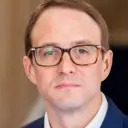
    Chris Mason
    Political editor

    This was a Budget I would describe as a flotilla of small measures.

    But, depending on your circumstances, those measures may still feel noticeable - as either a gain or a loss.

    The central challenge for the Chancellor John Healey, which he shares with his recent predecessors, is the public finances are in a mess and so are the personal finances of so, so many households.

    And it is very difficult to do much about one of those things if the other one is in a mess. What we heard today was a cautious acknowledgement of both of these things.

    One critical friend of the government suggested to me this would be a "Mr Sensible Budget" - their hope and expectation that it might be shorn of bells and whistles, but shorn of timebombs too.

    Let’s see. It has allowed Labour’s critics to point to what they see as the vast gulf between the prime minister’s vision and the chancellor’s numbers.

    The Conservative leader Kemi Badenoch said Burnham came to power promising to end 40 years of neoliberalism and "instead, we got 4p off gherkins".

    The central truth tonight is this government’s biggest visible challenges remain: the long term funding of defence, shaking up the benefits system, our relationship with the European Union.

    And, after years of economic turmoil - abroad and at home - the realistic prospect of more to come, squeezing incomes, living standards and, recent years suggest, squeezing patience with government too.

    We're pausing our live coverage now, you can read more in our news story here.

  2. How the day unfolded: Healey offers 'breathing space' in first Budgetpublished at 19:40 GMT

    Joe Coughlan
    Live reporter

    This year's Budget day kicked off with the government's announcement on standing charges being removed from household gas bills, a move which could see 60% of households gaining £45 a year but higher users paying higher bills.

    Healey continued the time-honoured tradition of standing outside No 11 with the iconic red box, containing his Budget, before a PMQs session largely dominated by Burnham and Badenoch clashing over the UK's relationship with the EU.

    Britain's Chancellor of the Exchequer John Healey holds his red dispatch box outside Number 11 Downing Street alongside government ministers.Image source, EPA/Shutterstock

    The chancellor then stood in the Commons for just under an hour, saying the Budget was built on "fiscal discipline" to give people "breathing space". He announced millions of households in England will receive a £100 payment to help with energy bills this winter - we've recapped some of the other measures announced.

    It was then the turn of the government financial watchdog, the Office for Budget Responsibility (OBR), which described a "challenging" fiscal background, and forecasted increased government borrowing for the next few years, and a rise in interest rates by the middle of next year.

    Our senior business and economics reporter Dearbail Jordan called it a "sobering" forecast - we've recapped the OBR's numbers here.

    Tory leader Kemi Badenoch criticised Healey's first Budget as being "not good enough", while other parties focused on relations with Europe and defence spending - see our last two posts for how opposition parties and the devolved governments reacted.

    We will be pausing our live coverage shortly with some analysis from our political editor Chris Mason. We've got more on this story here:

  3. 'Not good enough': Opposition parties react to the Budget - recappublished at 19:22 GMT

    Kemi Badenoch wears a white blouse while speaking in the House of CommonsImage source, PA Media
    Image caption,

    Badenoch said today's Budget is "not good enough, not strong enough, not bold enough"

    • Kemi Badenoch called it "not good enough" and said Healey had to clean up the "mess" made by Rachel Reeves, and accused the government of having U-turned on removing "discriminatory age bands" for the minimum wage
    • The Lib Dems’ Ed Davey focused his Budget criticism on the government’s relationship with the European Union, saying the biggest thing it could do to improve the economy would be to "fix our trading relationship with Europe"
    • Nigel Farage of Reform UK labelled called it "deeply cynical" and aimed at "hiding the truth from everybody that they are all going to get poorer"
    • Green Party leader Zack Polanski said the Budget "all felt very familiar", accusing the government of being unwilling to give the country the investment "we so desperately need"
    • Leaders in Wales, Scotland and Northern Ireland have also responded with criticism of the measures - see our last post
  4. 'Real-terms cut' and 'missed opportunity' - devolved nations react to Budgetpublished at 19:05 GMT

    Jack Grey
    Live reporter

    Composite image of Elin Jones, Jenny Gilruth, and John O'DowdImage source, PA Media
    Image caption,

    Wales Finance Minister Elin Jones, Scotland's Deputy First Minsiter Jenny Gilruth and Northern Ireland Finance Minister John O'Dowd have reacted to the chancellor's Budget

    In his Budget speech, Chancellor John Healey announced millions of pounds worth of investment in "high-growth industries" in Wales, Scotland and Northern Ireland.

    However, the devolved governments have complained that the Budget does not go far enough:

    Wales

    Finance Minister Elin Jones has described John Haley's Budget as a "real-terms cut dressed up as a windfall".

    In a statement, Jones says the Budget "hasn't shifted the dial" for Wales, adding that "on rail, fiscal flexibilities and public services, Wales has been ignored again".

    "Once you account for inflation, this is still a real-terms cut to our funding, not new money that improves our position," she adds.

    Scotland

    The Budget "completely fails to meet the moment," First Minister John Swinney says.

    He says "yet again, Scotland has been treated as an afterthought," but pledged to match the £100 energy bill support that was announced for some in England.

    Northern Ireland

    Stormont's Finance Minister John O'Dowd says the Budget will be of "cold comfort to workers and families facing cost of living pressures".

    He says the financial package currently being offered by Westminster leaves a "significant gap" and additional investment was urgently needed in areas such as critical infrastructure and social housing.

    "The chancellor’s Budget has done little to close the gap on the pressures we face," O'Dowd says.

  5. BBC Verify

    How radical are the chancellor’s energy reforms?published at 18:58 GMT

    By Mark Poynting

    As well as measures to help households this winter, the chancellor said he would begin “radical reform” to bring energy bills down in future and the government would “further break the grip of international gas prices on bills”.

    Currently, wholesale electricity prices are often set by the cost of gas even if renewables might be generating more power for the grid. So when gas prices spike, bills do too.

    Healey said the government would look to switch more of the contracts held by some renewable energy projects onto fixed-price deals, rather than being paid a variable price often linked to gas.

    But many analysts believe the policy, first planned under former prime minister Sir Keir Starmer in April, will only have a modest impact on bills.

    The chancellor also said he wouldn’t add any new environmental or social levies onto bills until a “cost control framework” was in place.

    But last month more than 100 organisations, external - including energy firms, food producers and consumer advocacy groups - signed a joint letter calling for the government to go further and move all levies currently on bills to general taxation instead, which they said would make electricity cheaper.

  6. Remind me, what else was announced in today's Budget?published at 18:48 GMT

    A fruit machine showing spinning wheels.Image source, PA Media
    Image caption,

    Higher-risk gambling machines are set to be impacted within this year's Budget

    Highlights from John Healey's first Budget speech include 20 million households receiving a "household energy payment" and changes to business rates, but here's a reminder of some of the other announcements.

    Gambling rates increase

    Healey said his decision to take 70,000 businesses out of paying business rates will be funded by raising taxes on gambling.

    This will be funded through the Machine Games Duty rising from 20% to 25% on higher-risk gambling machines, with the government saying lower-stake machines in pubs and seaside arcades will have their existing rate maintained.

    National Wealth Fund investment

    Public financial institutions are also set to benefit, with £20.4bn being announced for the National Wealth Fund (NWF) and British Business Bank.

    This is expected to create or support more than 140,000 jobs between the two institutions.

    The figure includes a £2bn investment in the Energy Wealth Fund, within the NWF, which will be used to support the country's transition to renewable and low-carbon energy infrastructure.

    Neets response by end of the year

    Healey said he refused to write off young people not in employment, education and training (Neets) during his Budget speech.

    He said the government is looking forward to the final report of Alan Milburn's review into Neets, adding it will respond by the end of the year.

  7. Not everyone is happy about the £100 energy paymentpublished at 18:39 GMT

    Mitch Labiak
    Business reporter

    The chancellor would have hoped a £100 payment directly into millions of people’s bank accounts funded by a tax hike on banks would be a big crowd pleaser.

    However, critics have been quick to highlight the flaws they see in the plan.

    In short, they say the money is not enough to tackle the energy bill rises on the horizon, which some forecast could be as much as £400, and won't solve the underlying issues.

    Learning disability charity Mencap said the payment will "barely scratch the surface of today’s energy costs for many people with a learning disability and falls far short of the support they need".

    Meanwhile, Scott Gardner, investment strategist at JP Morgan Personal Investing, pointed out the payment comes alongside official projections of inflation peaking at 3.8% next year “suggesting cost-of-living pressures are here to stay”.

    And Maike Currie, vice president of personal Finance at PensionBee, said the real test is whether households see “lasting reductions in their bills rather than another temporary reprieve”.

    "Subsidising energy bills isn't the same as making energy cheaper," she added.

  8. Increase in property income tax supported by renters' coalition, but 'mystifying' for landlordspublished at 18:36 GMT

    Tara Mewawalla

    To Let sign in front of homeImage source, Getty Images

    The chancellor announced that tax on income from property rental will increase by a further 2% from April next year.

    It was already due to go up to 22% from 1 April next year and will now go up to 24%.

    The OBR - the Budget watchdog - says measures over the past 10 years have reduced landlord returns, and together with these measures, “collectively risk leading to a steady rise in rents”.

    Chris Norris from the National Residential Landlords' Association describe the levy as "mystifying" and tells the BBC landlords do not have the margins to absorb these additional costs.

    The government "keep restating their commitment to dealing with the cost of living", he says and this is going to increase it because landlords are going to pass on the costs as "they don’t have any choice".

    Clara Collingwood, the director of the Renters' Rights Coalition, says it is "right that landlords' income from assets should be taxed higher than what renters earn from working for a living", and believes the rise gives homeowners more leverage to compete against investors when buying homes.

    However, she says the "cost of renting crisis dwarfs any benefits people might feel" from today's changes, insisting that a cap on rent is needed to reduce poverty and prevent homelessness.

  9. Split in taxi industry reaction over new plans for VATpublished at 18:31 GMT

    Simon Browning
    Business reporter

    An Uber carImage source, PA Media

    John Healey said during the budget that VAT for taxis would be introduced whilst protecting smaller firms.

    Further details published by government lay out that "larger operators with annual fare turnover above a certain threshold liable for 20% VAT on the full value of their fares from 2 January 2028".

    A consultation by the government will decide what that threshold is, and its current lead option is £50million annual fare turnover. This will target larger taxi and private hire firms.

    Uber has warned essential taxi journeys may become less affordable across the UK following the changes.

    An Uber spokesperson tells the BBC "any changes must be fair to all passengers and drivers. While we await the full details of the Government’s proposals, we are concerned they could create a two-tier tax system and make essential journeys less affordable for riders who need them most".

    Industry figures argue the new proposals could mean the UK public face paying a higher price if they choose a larger operator for a taxi ride.

    But the licensed taxi industry welcomes the government’s changes.

    Steve McNamara from the Licensed Taxi Drivers Association has told the BBC "this is not just good news for me but for all the taxi industry. This is putting right things that haven’t been right for so long".

    McNamara says fares for short journeys across London are now much closer between ride-hailing apps, local private hire firms and black cabs since VAT was applied to taxi fares in the capital. He said licensed operators that had struggled following Uber's arrival were now thriving again as a result.

  10. Council tax band checker struggles with 'high demand'published at 18:27 GMT

    Hours after John Healey announced a £100 energy payment for people in England in council tax bands A to D, it appears people are still trying to find out what council band they reside in.

    The government website tool used for checking this currently reads a message: "The service is currently experiencing high demand.

    "It remains available, but you may experience slower response times than usual. Thank you for your patience."

    The service was also struggling shortly after the announcement was made, our cost of living correspondent Kevin Peachey said earlier.

    A screen showing the error message quoted above on a white webpageImage source, GOV.UK
  11. How is the Budget going down with Labour MPs?published at 18:19 GMT

    Iain Watson
    Political correspondent

    So far, the mood ranges from positive to... well, acceptance.

    Some would have liked a bolder approach to taxing the banks - not just a temporary doubling of the bank levy - but are understanding of the chancellor's position.

    "Now is not the time to spook the markets," said an MP on the party's centre left.

    A leadership loyalist expressed his relief that at this stage market reaction was calm.

    Rather than an over-arching vision, there was "a whole range of nuggets" said another but added that this might be the right approach - for now.

    Small measures here and there "weren't nothing - they will mean something to people".

    Fiscal devolution - such as giving mayors access to tax and business rate revenue - is seen as a genuine radical measure but some feel that dry phrase needs to communicated in a different way - by tying it more explicitly to projects it could fund.

    One MP though added an important caveat - "it is only as radical as the mayors are willing to be"

    The left-wing group Momentum said the budget measures were "welcome" but the government needed to be more willing to "tax extreme wealth".

  12. Farmer left with 'empty feeling' after lack of reversal on inheritance taxpublished at 18:16 GMT

    Jenny Kumah
    Rural Affairs correspondent

    Ahead of today’s budget, the National Farmers’ Union called for a reversal in inheritance tax for agricultural estates. Farming assets worth more than £2.5m face 20% inheritance tax.

    The £2.5m allowance can be transferred between spouses and civil partners, meaning in some cases £5m of value is protected.

    Richard Payne is an arable farmer in Taunton, Somerset and says inheritance tax is a big reason why he has sold his 700-acre farm and is due to move out next summer.

    Payne, 63, says his heirs faced a £2m tax bill. This, coupled with the rising costs of fuel and fertiliser and a succession of record poor harvests, led to his decision to sell up.

    "I can't see farming getting any better," he says, adding "with the level of investment that we had in the farm, the risk was just too high".

    "If I went under and I had no money left, I wouldn't get a job at my age.”

    He says the Budget - which did not reverse the policy - had left him with "an empty feeling" because nothing major had changed and there wasn’t much that was "positive for business".

    Richard PayneImage source, Richard Payne
  13. Rural representatives say business owners and households feel let downpublished at 18:09 GMT

    Malcolm Prior
    Rural affairs producer

    For many countryside organisations, today's Budget was a missed opportunity for the government to show it was listening to - and acting on - the concerns of rural communities.

    Campaign groups the Rural Services Network and Action with Communities in Rural England said they were “very disappointed” with the support offered rural households reliant on heating oil.

    Despite the tariffs on kerosene being temporarily suspended, families would still be facing rising prices and hundreds of pounds in additional costs to refill their tanks, the organisations warned.

    "Future tariff and market reforms will not help households pay those bills today. Rural communities need immediate, practical support to keep their homes warm this winter," they said in a joint statement.

    Meanwhile, Gavin Lane, who is president of the Country Land and Business Association (CLA), which represents around 26,000 rural landowners and businesses in England and Wales, said the “challenges rural areas face have been overlooked” by the Budget.

    "At a time when nine out of ten CLA members are cancelling investment in their business, it is hard to see what in this budget will change their mind," he said.

    That was a view shared by political campaign group the Countryside Alliance, which said that rises in employment costs meant it "remained to be seen" whether rural business owners would see "any real benefit" from the increase to the small business rates relief threshold.

    Gavin Lane
    Image caption,

    Gavin Lane, president of the Country Land and Business Association

  14. Analysis

    Political opponents could say chancellor dodged the trickier decisionspublished at 18:04 GMT

    Alex Forsyth
    Political correspondent

    Sometimes what’s not in a Budget can be as significant as what is.

    The chancellor mentioned both defence and welfare spending, but detail about the government’s longer-term plans for both is yet to come.

    John Healey did say the government planned to fully fund the defence investment plan that was drawn up when Keir Starmer was Prime Minister, but he said decisions on how to reach much bigger defence spending targets would be made at the spending review which isn’t until next year.

    On welfare, he said the government would come up with plans to reform welfare only after it had the results of ongoing reviews into youth unemployment and health and disability benefits.

    The government claims it’s laying the ground for big structural changes to come. The danger is it allows political opponents to say the chancellor’s dodged some of the big - and tricky - decisions he faces.

  15. What are the main takeaways from the Budget?published at 17:56 GMT

    Felicity Hannah says people should think about their "own personal budget", seeing where they can cut back and being aware of where their money goes each month.

    She says things could "stay tough" despite the measures put in place by the government.

    This year's announcement was a "small steps Budget", says Nick Eardley.

    He says the government still needs to make big decisions on subjects such as defence despite there being plenty of MPs who will be happy with the "friendly measures on the cost of living".

    The Your Questions Answered programme has now ended, but we will continue to bring you the latest reaction and insights to the Budget on this page.

    A purple banner with Your Voice in white writing
  16. Do all pensioners get their tax allowance raised?published at 17:53 GMT

    Financial journalist Felicity Hannah says the measure will kick in from April next year when the state pension goes up, and if your only income is the state pension or less than you won't pay tax on that.

    But after that the allowance is going to taper off. She says for every £3 you earn above the state pension amount, you will lose £1 of the extra allowance.

    Essentially that means if you earn more than £13,319 in the tax year then you won't get any extra allowance and at that point you will just pay tax like any other taxpayer, she says.

    A purple banner with Your Voice on it in white writing
  17. What about social care?published at 17:51 GMT

    Nick Eardley, political correspondent, says it's a fair question, and many MPs are asking similar questions about what wasn't in the Budget.

    He says he thinks what Burnham would say in response is that they are working on a "long term plan" to reform the service England.

    He adds that most watching the Budget today would not have taken away anything "significant" on social care, saying that the review is on going and we're "going to have to wait a bit longer".

    A purple banner that says Your Voice in white writing
  18. How does the government plan to support apprenticeships and businesses?published at 17:50 GMT

    BBC political correspondent Nick Eardly says Andy Burnham has often spoken rhetorically about encouraging more people into apprenticeship schemes.

    In terms of getting younger people into jobs, he says that while the minimum wage was raised today, it did not go up as much as it has in previous years which could mean the government hopes pressure on businesses "isn't as significant".

    A purple background with white letters
  19. Will all households in A to D council tax bands get the energy payment?published at 17:43 GMT

    Economic correspondent Andy Verity says the scheme will not be "means tested" beyond the council tax bands.

    He adds that the Institute for Fiscal Studies says the payment "isn't very well targeted", but the government wants to get the money "out the door quick".

    Verity says the payment is separate to the winter fuel payment, with financial journalist Felicity Hannah saying: "This should be an automatic payment going into your account in January."

    She adds it should be paid into the account that pays the council tax bill and is not something you need to apply for - warning scammers may try and ask for people's bank details.

    Purple banner which says Your Voice on it in white writing
  20. Questions on this year's Budget answeredpublished at 17:34 GMT

    We will shortly be answering questions on today's Budget in a special programme of Your Questions Answered with our panel of experts.

    Stay with us for all the latest updates and you can also watch live on the stream at the top of this page.