Summary

  • The former top civil servant at the Foreign Office says he was "worried" that Lord Mandelson's links to Jeffrey Epstein "could be a problem in the future", and they could be a "potentially difficult issue"

  • But - giving evidence to the Foreign Affairs Committee - Philip Barton says he wasn't consulted before Keir Starmer announced Mandelson's appointment as US ambassador in 2024

  • "At no point did anyone consult me," he says, adding: "There was no space for dialogue" - Barton's suggesting his expertise was overlooked, despite how potentially controversial the appointment was, writes the BBC's Chris Mason

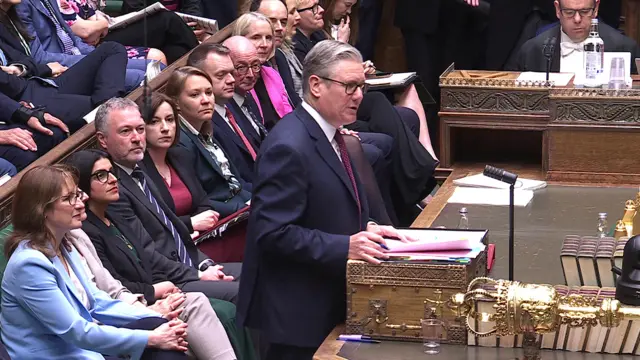
  • MPs will vote later on if there should be an inquiry into whether Starmer misled Parliament over the vetting process for Mandelson

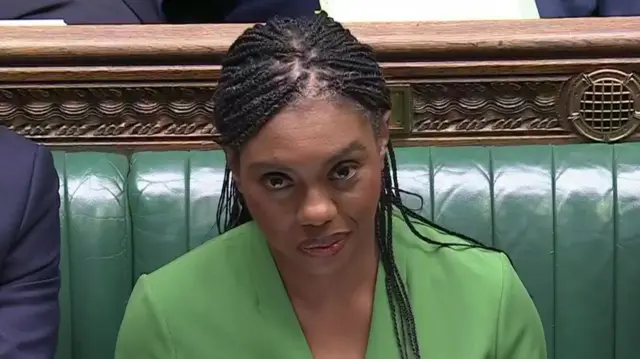
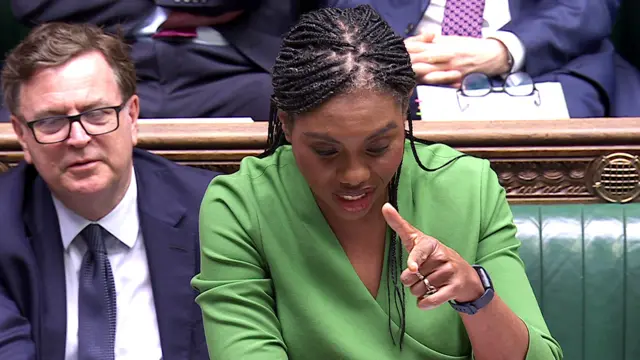
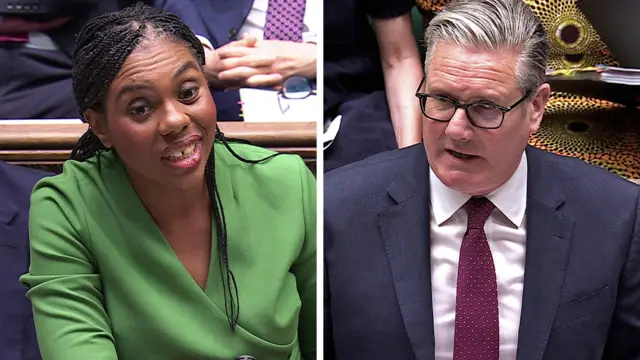
  • Tory leader Kemi Badenoch says Starmer misled MPs "multiple times" over Mandelson's appointment - the PM has called the vote a "stunt" and "pure politics"

  • Labour has a huge majority in the Commons - but cabinet ministers have been ringing MPs to convince them to back the PM

  • After Barton, Starmer's ex-chief of staff Morgan McSweeney will give evidence - you can watch all of today's proceedings live at the top of the page

  1. Timing of Mandelson announcement decided and driven by Downing Street, Barton sayspublished at 10:12 BST

    Barton says there are two possible questions relating to pressure being placed on the Foreign Office during the vetting of Lord Mandelson: whether pressure was placed on the substance of the case, and whether there was pressure to get it done in a particular time frame.

    He tells the committee: "During my tenure, I was not aware of any pressure on the substance of the Mandelson DV [developed vetting] case."

    He adds that there "absolutely" was pressure to get the case done "as soon as possible", which he claims everybody in the department was aware of.

    Barton says the normal order for the appointment of an ambassador is for vetting to be carried out before the appointment is announced, and he says he was not sure why this occurred the other way round in this case.

    He says the timing of Mandelson's announcement was decided and driven by No 10.

  2. Analysis

    Barton pressed on McSweeney swearing claimpublished at 10:04 BST

    Chris Mason
    Political editor

    Morgan McSweeneyImage source, Reuters
    Image caption,

    Morgan McSweeney stepped down as Keir Starmer's chief of staff in February, after advising Starmer to appoint Mandelson in 2024

    A key moment just now.

    Headlines have been flying around for a while, and particularly in the last week, that Morgan McSweeney, the prime minister’s former chief of staff, had told the Foreign Office to “just [expletive] approve" the vetting of Lord Mandelson.

    Addressing that, Sir Philip has just said "I didn’t receive any direct calls from the chief of staff" and "I cannot recall him swearing at a meeting at me, or in general".

    The wider question, which is absolutely key to the Commons debate coming this afternoon, is the extent to which there was pressure being exerted on the Foreign Office during the rushed few weeks between announcing Lord Mandelson had been given the job, and the inauguration of President Trump a few weeks later.

    Sir Philip attempted to draw a distinction between being “not aware” of any pressure on the substance of Lord Mandelson’s developed vetting, with the wider pressure they were all aware of given how quickly the government wanted him in Washington.

  3. No 10 'uninterested' in Barton's concerns over appointment, he claimspublished at 09:55 BST

    MP Richard Foord now asks Barton for more detail about why he initially had reservations around Lord Mandelson's appointment.

    Barton responds that it was because of Mandelson’s known associations with Jeffrey Epstein, which he suggests was a "toxic hot potato" topic in the US, particularly as the election there was approaching.

    He is then pushed on whether No 10 was dismissive about these concerns.

    "The word I would use is uninterested," he replies, explaining that people wanted to make sure that all the practical steps required for Mandelson to be appointed before Trump's inauguration date were completed in time.

    "No one said to me, 'look Philip the prime minister knows there's some risks around this, can you really, really make sure the vetting is done rigorously'", he explains.

    Instead, he says, the demands were simply around making sure the vetting was done in time.

    On whether there was an atmosphere of pressure, Barton says he didn't receive any direct calls from Starmer's former chief of staff Morgan McSweeney, and "cannot recall" him swearing at him at all over Mandelson.

    Barton confirms that he received a letter on 18 December, which told him that Starmer had decided on Mandelson, and therefore could arrangements be put in place for a handover before Trump's inauguration - "a very compressed timescale".

    Trump was inaugurated for his second term as president on 20 January 2025.

    "That is what creates the pressure," he adds, stressing that no one was in any doubt around the importance Starmer attached to having Mandelson in DC "in very short order".

    Barton
  4. Barton's answer on 'pressure' could be helpful for the prime ministerpublished at 09:47 BST

    Henry Zeffman
    Chief political correspondent

    Sir Philip Barton is partially backing up the claim made by Sir Olly Robbins, his successor, last week that the Foreign Office was under pressure over the appointment of Lord Mandelson.

    He is drawing a distinction between pressure to ensure Mandelson was in Washington as ambassador as soon as possible – ie time pressure – and pressure on the substance of the vetting process.

    On the former, Barton says there was pressure. On the latter, he says that he did not experience any when he was in the Foreign Office.

    This is helpful for the prime minister because it is similar to the distinction he drew in an interview with the Sunday Times at the weekend.

    Starmer said in that interview that when he said in the House of Commons that there was "no pressure whatsoever" exerted by No 10, that did not include "the everyday pressure of government" to get it done quickly.

    What is less helpful for the prime minister is that he did not specify that distinction in the House of Commons last week.

  5. Trump would have been happy for Karen Pierce to stay in role, Barton claimspublished at 09:47 BST

    Barton is asked about Mandelson being given access to information "that would usually require developed vetting" to have been completed.

    "I signed off on it, I think it was the right thing to do to make sure... that the prime minister's choice for ambassador is properly prepared when he started his job," he says.

    He is then asked if he believes the concerns he had about the appointment had any influence on the decision to let him go from the Foreign Office.

    He says no, adding this his departure was down to a "timing reason".

    "I announced to the department I was leaving on the 4 November 2025. I didn't know anything about Mandelson until the middle of December," he says.

    Barton says he had heard that those around US President Donald Trump felt "blindsided" by the announcement of Mandelson as new US ambassador, and Trump had said he would have been "happy" for Karen Pierce to stay.

    Karen Pierce in red dress speaking at conferenceImage source, Getty Images
    Image caption,

    Karen Pierce was the UK's ambassador to the US before Mandelson's appointment

  6. Barton suggests Downing Street uninterested in vetting processpublished at 09:45 BST

    Chris Mason
    Political editor

    Sir Philip is now backing up the testimony from Sir Olly Robbins last week, in saying Downing Street was "uninterested" about the vetting process.

    "No one said to me, 'look Philip, the prime minister knows the risks, can you make sure it’s done rigorously'."

    Sir Philip added that it would be done rigorously anyway, but any sense of its importance — which the prime minister attaches huge significance to now — was not articulated then, he claims.

    This matters in the context of whether it was justified or not for the PM to have sacked Sir Olly Robbins, Sir Philip’s successor as the Permanent Under Secretary at the Foreign Office.

  7. Analysis

    'I was worried... [but] there was no mechanism for me to put that on the table'published at 09:38 BST

    Harry Farley
    Political correspondent

    The former head of the Foreign Office is at pains to stress how little he knew about the appointment of Mandelson as US ambassador before the decision was announced.

    "At no point did anyone consult me," he has told the committee. "There was no space for dialogue."

    He’s said he did have concerns at the time, particularly around Mandelson's friendship with Jeffrey Epstein.

    He didn't expect then that "were going to find out more", but "I just thought that it was a potentially difficult issue politically in the United States".

    "I was worried this could be a problem in the future," he said, adding: "There was no space or avenue or mechanism for me to put that on the table."

    In other words, Barton says, the responsibility for the decision lies squarely with the prime minister.

  8. Analysis

    Barton is suggesting his expertise was overlookedpublished at 09:31 BST

    Chris Mason
    Political editor

    Philip Barton has now told the committee that over Lord Mandelson’s appointment he was "presented with a decision…and told get on with it".

    He had, he pointed out, spent time in America as the UK’s deputy ambassador in Washington, but was not consulted about the appointment.

    He added that he was worried about how Lord Mandelson doing the job might play out, but "there was no space, avenue or mechanism to put that on the table. A decision had been taken and it was a political decision".

    In essence, he is suggesting that his expertise and judgement was overlooked, despite how high profile and potentially controversial the appointment was.

  9. Cabinet Office claim no vetting required struck Barton as ‘odd and insufficient’published at 09:29 BST

    Barton had no information on discussions taking place to appoint a new ambassador to Washington, or that a decision had been made, before he was told about Mandelson being appointed on 15 December, he says.

    A due diligence process had been carried out, he continues, and there had also been a conversation held on the practical steps needed to meet the PM's decision to appoint Mandelson to the role of ambassador.

    Barton says that vetting had not taken place at the time of Mandelson being announced, adding that the Cabinet Office said later that week that because Mandelson was deemed "fit and proper" as a member of the House of Lords, he did not require vetting.

    This struck him as "odd and insufficient", he says, adding that the Cabinet Office agreed vetting was necessary following further consideration.

  10. It's quite something Barton didn't know about Mandelson's appointment soonerpublished at 09:19 BST

    Chris Mason
    Political editor

    An interesting early insight into what Philip Barton knew — or more to the point didn’t — about the appointment of Lord Mandelson.

    Barton has told the committee he knew nothing about Lord Mandelson’s appointment until days before it was announced — quite something given he, Barton, was at the time the head of the diplomatic service.

  11. 'An appointment to the most senior job in our foreign office' - Bartonpublished at 09:19 BST

    Emily Thornberry asks Barton whether he was ever asked for his opinion on Mandelson as a candidate for the role. He replies to this saying he "wasn't involved".

    Barton says he was first made aware of the decision to appoint Mandelson on 15 December and was later made aware of the advice received by the prime minister in the humble address release papers.

    Barton adds that ideally, there would be a "tight and small circle" of people consulted on the matter.

    He continues saying that given this was a political appointment, he thinks it is "reasonable" for civil servants to not be directly involved in these discussions.

    Ultimately, he says, it was "an appointment to the most senior job in our foreign office".

  12. Barton says he didn't leave role through choicepublished at 09:14 BST

    Philip Barton, former permanent under-secretary at the Foreign Office, begins his testimony by responding to a question about why he left his role in January last year.

    He tells the committee it was not his choice to leave the role, and he was asked to do so by David Lammy, who he says wanted somebody to lead the team in the long term.

    On Lord Mandelson's appointment as US ambassador, Barton describes how he was first involved in the process in mid-December, when he was told of the prime minister's ambition to make a political appointment for the role.

  13. Philip Barton speaking to MPs - watch livepublished at 09:03 BST

    Sir Philip Barton has just started speaking to MPs on the Foreign Affairs Committee.

    You can watch live above and we will be bringing you all the key developments as the they happen.

    Barton giving evidence to committee. He is wearing a suit and purple tie
  14. Who is Sir Philip Barton?published at 08:54 BST

    Philip Barton walks in Downing Street. He wears a grey suit, white shirt and green tie. A rainbow patterned lanyard hangs round his neckImage source, Reuters

    Before Morgan McSweeney gives his evidence later this morning, the committee will hear from Sir Philip Barton, former permanent under-secretary at the Foreign Office (the most senior civil servant in the department).

    He'll likely be grilled by MPs on the processes behind Peter Mandelson's appointment as British ambassador to the US - Barton had worked through the formal niceties of confirming Mandelson's role, such as writing to the King about it on 18 December.

    This meant that Sir Olly Robbins took over on finalising Mandelson's appointment after Barton stepped down in January 2025.

    Robbins was sacked after No 10 confirmed that the PM was not told that Mandelson had failed the vetting process. He spoke to MPs on the committee last week.

    Robbins told the committee that by the time he had succeeded Barton, there was "already a very, very strong expectation" from No 10 that Mandelson "needed to be in post and in America as quickly as possible".

    Barton took up the post in 2020, but was strongly criticised by MPs in 2022 for his handling of the chaotic withdrawal of UK staff after the fall of Kabul to the Taliban, during which he took a 17-day holiday - which he previously said he regretted.

  15. No 10 held concerted operation yesterday to ensure MPs are onsidepublished at 08:48 BST

    Henry Zeffman
    Chief political correspondent

    As of this morning, it looks very unlikely that this motion will pass. It would require a mass rebellion from Labour MPs and there is no evidence that one is brewing.

    There was a concerted operation from No 10 yesterday to ensure that MPs were onside.

    The prime minister turned up at the weekly Parliamentary Labour Party meeting and gave an impassioned speech which went down pretty well, saying that the motion "is pure politics and we need to stand together against it".

    And all the signs are that Labour MPs will. There was a massive "ring-round" of MPs yesterday to make sure. One MP I spoke to who gave a slightly equivocal answer to their whip about how they would vote then got a phone call from a cabinet minister minutes afterwards.

    The argument prevailing in private is the same argument that the government is making in public, namely that this is a political stunt.

    The one caveat, though, is that this debate will take place after evidence at the Foreign Affairs Select Committee from Philip Barton and Morgan McSweeney - so there is always a chance that what they say could change the mood.

  16. Starmer accused of misleading Parliament in three key wayspublished at 08:48 BST

    Henry Zeffman
    Chief political correspondent

    Keir Starmer talking to a reporter slightly off cameraImage source, Getty Images

    Overnight the precise privileges committee motion, which will be voted on later, has been published.

    It is spearheaded by Kemi Badenoch and the Conservatives but the motion is also signed by Ed Davey of the Liberal Democrats as well as SNP, DUP and independent MPs.

    The motion identifies three possible areas where the prime minister may have misled the House of Commons.

    The first is in saying on various occasions that “full due process” was followed in Lord Mandelson’s appointment as ambassador to the US.

    The second area of the motion is on the question of pressure, and whether it was applied to the Foreign Office to approve the appointment. Sir Keir Starmer said at PMQs last week that “no pressure existed whatsoever in relation to this case”.

    The third area concerns the PM’s claim in the Commons last week that Mandelson’s position was “subject to developed vetting” - that presumably will be an area where the Conservatives make arguments about the sequencing of vetting, coming as it did after the public announcement that Mandelson would be appointed.

    The government’s defence overall is that this is a "political stunt". But on the specifics, it is likely to be that:

    • Sir Chris Wormald, the former cabinet secretary, said in September that "appropriate processes" had been followed
    • The prime minister was talking about pressure for a specific outcome, which he denies, rather than pressure for a decision to be made quickly, which he does not
    • Even though the vetting outcome is now controversial, it was carried out before Mandelson went out to the US as ambassador

  17. Putting pressure on officials is 'perfectly reasonable', says education secretarypublished at 08:44 BST

    Bridget Phillipson sits in front of the Today programme logo. She is wearing headphones and is sitting in front of a microphone

    More now from Education Secretary Bridget Phillipson, who has been speaking to Radio 4's Today programme.

    She says while it is likely there was pressure put on the Foreign Office to process Lord Mandelson's security vetting, there was "no undue influence".

    She says it is "perfectly reasonable" for government ministers to put pressure on officials to make sure things are done "in a timely way".

    She says: "Was there a chasing to make sure the vetting had happened and that the outcome came forward? Yes, I would imagine so."

    The education secretary adds that any would "categorically not" have been exerted to make sure the vetting was overridden.

  18. Analysis

    Next week's elections across Britain are the crucial context herepublished at 08:25 BST

    Chris Mason
    Political editor

    Good morning from the Scottish Borders. Sweeps of rolling hills and dense evergreen patches of woodland are zipping past the train windows to both the left and the right.

    Yes, you read that right on this day of high drama at Westminster. I’m not there.

    Bad timing, etc etc, but it is also a reminder of the crucial political context of today’s events — a pivotal set of elections a week on Thursday across Britain. I spent yesterday in Falkirk and Edinburgh and I’ll spend today and tomorrow in Cardiff and Caerphilly, compiling reports you’ll be able to see, listen to and read over the weekend.

    The elections to Holyrood and the Senedd matter hugely in Scotland and Wales respectively and there are local elections in many parts of England too.

    All the contests matter for their own sake but they matter too for Keir Starmer’s future.

    He and the government are arguing today’s debate in the Commons has to be seen through the prism of the elections – they see the whole thing as a political stunt from the Conservatives.

    But remember the evidence of Philip Barton, the former lead civil servant at the Foreign Office, and Morgan McSweeney, the prime minister’s former chief of staff, was already scheduled for today.

    They will each appear in front of the Foreign Affairs Select Committee. From the perspective of Labour MPs, the Lord Mandelson saga never seems to go away – and that, for them, is bad news – and doubly so given next week’s elections.

  19. Commons vote is a 'political stunt', says education secretarypublished at 08:04 BST

    Bridget Phillpson appearing in front of the BBC Breakfast background, with the Palace of Westminster visible. She is wearing a navy dress and a silver necklace.

    The House of Commons vote today on whether Keir Starmer misled Parliament is a "political stunt", the education secretary says - echoing earlier comments from Starmer himself.

    Bridget Phillipson tells BBC Breakfast the vote has been scheduled by the Conservatives to bring Lord Mandelson's security vetting "to the fore" ahead of the local elections in England, and national elections in Scotland and Wales, which take place next week.

    The education secretary says processes are already in place in Parliament to address the Mandelson issue, such as the Foreign Affairs Committee hearings taking place this morning.

    She adds there is a "world of difference" between the actions of Boris Johnson - who faced the privileges committee following the Partygate scandal - and the vote being considered by MPs today.

  20. Telling MPs how to vote suggests PM is worried, says Lib Dem leaderpublished at 07:56 BST

    Ed Davey

    Liberal Democrat leader Ed Davey is backing a vote for Keir Starmer to face a Parliamentary investigation into whether he misled Parliament over Lord Mandelson’s appointment as US ambassador.

    "What Parliament needs to do today is to allow a few MPs to go away in a committee and look at all the details," he tells BBC Breakfast.

    Pushed on whether this means he believes Keir Starmer has misled Parliament, Davey says: "That’s what this committee of MPs would go away and look at" - but adds "there’s certainly a whole set of issues where he hasn’t given straight answers".

    The BBC understands that Labour MPs will be whipped - i.e. told - to vote against the investigation, and Davey says this order "does suggest there is something the PM is worried about".

    "If he had nothing to worry about, surely he would either allow it to go straight to this committee and get on with the business of tackling the cost of living, or he wouldn’t whip the vote," Davey says.