Summary

  1. Iran's foreign minister meets Pakistan's head of armed forcespublished at 07:20 BST

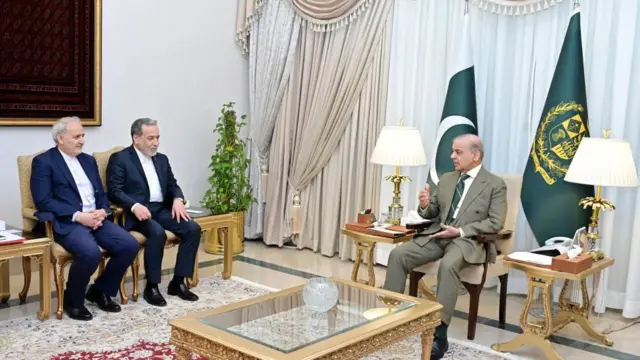
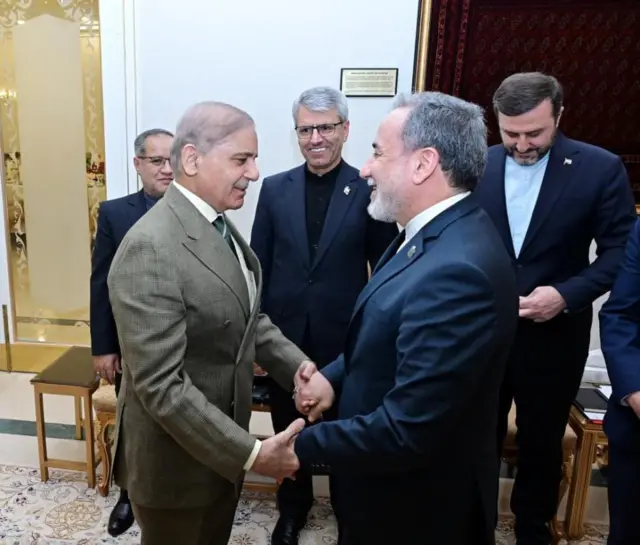
    Abbas Araghchi meets Asim MunirImage source, Iranian Ministry of Foreign Affairs

    Iran's Foreign Minister Abbas Araghchi is meeting Pakistan's Field Marshal Asim Munir, who leads the country's armed forces.

    Araghchi said that after his meetings in Pakistan, he will travel to Oman and Russia. The aim, he said in a post on social media, is to "coordinate with our partners on bilateral matters and consult on regional developments."

  2. In pictures: Pakistan increases security for peace talkspublished at 06:56 BST

    Tehran says there are no direct talks planned between the US and Iran, but Iranian officials are in Islamabad for discussions with Pakistan. US negotiators are also heading to the capital.

    Pakistan has increased its security since Donald Trump said on 19 April that his representatives would return for talks. Here are some photos taken in Islamabad this morning.

    Four police officers stand in a line in the middle of the roadImage source, Reuters
    Police officers stand guard near the Serena Hotel, the venue for expected US-Iran talks, in Islamabad's Red ZoneImage source, AFP via Getty Images
    Aerial view of a road that has been cordoned off with orange conesImage source, AFP via Getty Images
  3. Analysis

    Breakthrough remains highly unlikelypublished at 06:34 BST

    David Willis
    North America correspondent

    Peace talks that were due to take place between the United States and Iran on Tuesday were cancelled after Iran - incensed by the US blockade of its ports - indicated it was no longer ready to press ahead.

    At Pakistan's request, Donald Trump then extended a two-week ceasefire to give the Iranians more time to come up with their own plan to end the conflict, and the White House press secretary Karoline Leavitt told reporters that Iran had since reached out, adding that the last few days had seen "some progress" towards negotiations.

    Steve Witkoff and Jared Kushner are due to leave Washington for Pakistan later today but it’s unclear how much - if anything - they’ll be able to achieve.

    Shortly after Iran's Foreign Minister Abbas Araghchi arrived in the Pakistani capital, his government made clear he was purely there for bilateral talks with Pakistan and would not be taking part in direct negotiations with the US.

    Any communication from the Iranian side would therefore have to be conveyed through Pakistani mediators, making the imminent chance of a breakthrough highly unlikely.

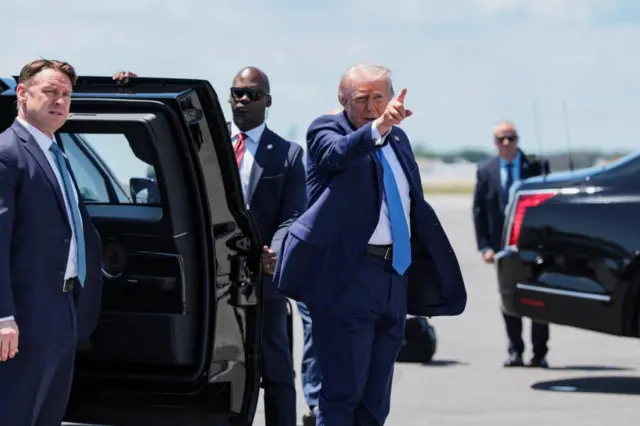
    Trump has said he's in no hurry to strike a deal to end the war, but with petrol prices rising, and his approval rating falling, the pressure for an agreement is growing.

  4. Pakistan can act as 'bridge' as Iran does not plan to meet US - Iranian state mediapublished at 05:48 BST

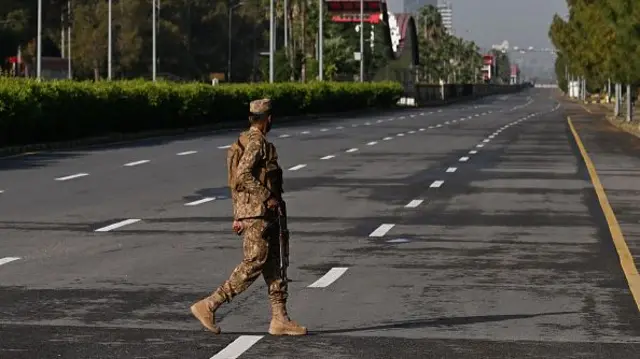
    An army soldier walks past posters highlighting Pakistan's mediation of IranUS peace talks near the Serena Hotel at the Red Zone area in Islamabad on April 22, 2026.Image source, Getty Images

    Iran's state broadcaster IRIB writes on Telegram that Foreign Minister Abbas Araghchi does not plan to meet with the US in Pakistan.

    Islamabad can act as a "bridge" to "convey Iran's consideration for ending the conflict", it says.

    Meanwhile, the White House said earlier that it was sending envoys Steve Witkoff and Jared Kushner to Islamabad because the Iranians wanted to talk "in person".

    Araghchi arrived in Pakistan on Friday evening – the Iranian embassy in Pakistan says he plans to "review bilateral matters" between Iran and Pakistan.

    Citing a senior Pakistani government official, ABC News is reporting that US and Iranian delegations will have separate meetings with Pakistani officials this weekend.

    It adds that if they go well, the US and Iranian officials will then meet directly on Sunday.

  5. IDF and Hezbollah accuse each other of ceasefire breachespublished at 05:24 BST

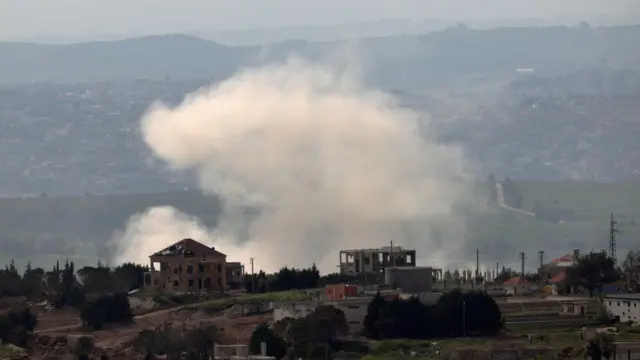
    In the days since Donald Trump announced a three-week extension to a ceasefire between Israel and Lebanon, the Israeli military and Hezbollah have accused each other several times of violating the truce.

    The Israel Defense Forces (IDF) says the latest breach came when Hezbollah launched explosive drones towards soldiers in southern Lebanon.

    "This incident constitutes an additional blatant violation of the ceasefire understandings," the IDF says, adding no injuries were reported.

    Hezbollah said it had attacked Israeli soldiers and drones five times throughout Friday afternoon and evening, "in response" to Israel's "violation of the ceasefire".

  6. Analysis

    The open question now is how much progress the countries can make in Pakistanpublished at 05:01 BST

    Daniel Bush
    Washington correspondent

    President Donald Trump and Defence Secretary Pete Hegseth have insisted this week that the US isn’t feeling pressure to end the war with Iran.

    But news that the US-Iran talks are continuing this weekend underscores yet again the divide between the administration’s public pronouncements and behind-the-scenes push by the White House to find a way to wind down the war.

    The latest sign came Friday when the White House said that special envoy Steve Witkoff and Trump’s son-in-law Jared Kushner are heading back to Islamabad to continue peace talks with Iran.

    The news suggests both sides are seeking a path forward, despite the continued mixed messages from Trump and aggressive posturing from Tehran.

    The open question now is how much progress the countries can make in Pakistan. Vice-President JD Vance led the US delegation in the first round of talks but so far is not confirmed to be going to the negotiations this weekend. The White House said Vance was on "stand by" to go if needed.

    Vance’s absence - if he doesn’t go - might mean the countries don’t expect a major breakthrough. But the fact that the talks are continuing shows both the US and Iran are interested in a deal.

  7. A week of speculation over the next round of talkspublished at 05:01 BST

    There has been speculation this week surrounding whether a second round of peace talks between Iran and the US will go ahead in Islamabad.

    Pakistan, which is acting as a mediator, has had road closures in place for six days, as it prepares to host the peace talks. Here's a reminder of how things have unfolded so far:

    11 April: Senior US and Iranian officials meet in Pakistan for talks which last more than 21 hours but end without agreement, despite both sides reporting progress.

    19 April: US President Donald Trump says his representatives will return to Pakistan for talks. However, this does not happen, as Iran says it's not yet decided whether to take part.

    21 April: Trump agrees to extend the ceasefire with Iran for an unspecified time so negotiations can continue.

    24 April: White House Press Secretary Karoline Leavitt says US special envoy Steve Witkoff and Jared Kushner will head to Islamabad on Saturday for further talks with Iran.

    Foreign Minister Abbas Araghchi arrives in Islamabad as part of a wider regional trip, but foreign ministry spokesman Esmail Baqaei says he will only be meeting "Pakistani high-level officials".

    Baqaei says no direct meeting between Iran and the US is planned, while earlier Iranian state media said there were no negotiations with the US on the agenda.

  8. Pakistan prepares for peace talkspublished at 05:01 BST

    Iranian Foreign Minister Abbas Araghchi (C) walking with Pakistan's Deputy Prime Minister Ishaq Dar (R) and Field Marshal Asim Munir at Nur Khan Airbase in Rawalpindi, Pakistan, 24 April 2026.Image source, EPA

    We are resuming our live coverage of the conflict in the Middle East.

    Iran's Foreign Minister Abbas Araghchi has arrived in Pakistan and the White House says it is sending US special envoys Steve Witkoff and Jared Kushner to Islamabad on Saturday because the Iranians wanted to talk "in person".

    A different message has emerged from Iran's foreign ministry spokesperson Esmail Baqaei, who says Araghchi would be meeting only "Pakistani high-level officials".

    "No meeting is planned to take place between Iran and the US. Iran's observations would be conveyed to Pakistan," he said.

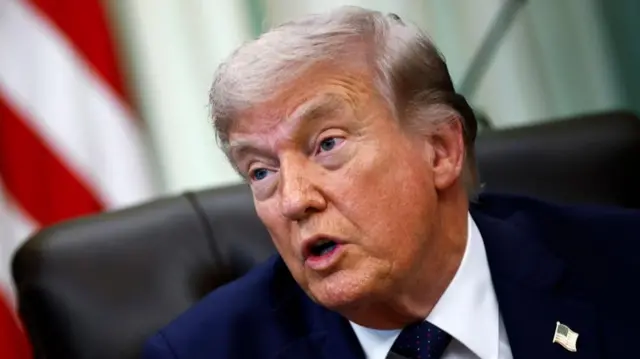
    US President Donald Trump earlier said officials were negotiating "with the people who are in charge now" in Iran.

    He said Iran is "making an offer and we'll have to see", but he didn't yet know what the offer was.

    Tight security is in place across Islamabad, with major roads closed and public transport suspended as Pakistan prepares to host a second round of US–Iran peace talks.