Summary

  1. Burden of proof is lower in a civil case than a criminal onepublished at 15:21 BST

    The judgment also talks the responsibility of the claimants - Prince Harry, Elton John, Elizabeth Hurley and more - to show that they have the evidence to support their accusations against the Mail publisher.

    Because this was a civil case, the "burden lies on each claimant to prove the facts", and establish each part of their claim "on the balance of probabilities".

    In non-legal speak, this means the claimants had to show that an event was more likely to have occurred than not.

    In a criminal case, the burden of proof is higher, and the prosecution must prove the allegations "beyond reasonable doubt".

  2. Judgment accepts some details of Harry's private life may have been leaked by social circlepublished at 15:07 BST

    One of the articles relied on by Prince Harry in his claim was a 2002 Mail on Sunday piece titled, "Harry's older woman", bylined to journalist Katie Nicholl.

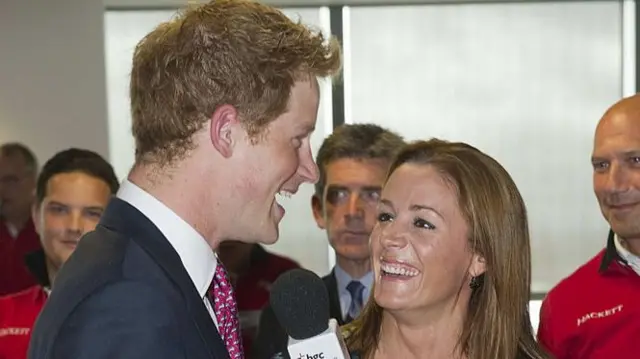
    The article reported that he had "set his sights" on TV presenter Natalie Pinkham.

    Prince Harry alleged information in the article was gathered unlawfully, claiming Nicholl had got hold of Pinkham's phone number and hired a blagger to obtain billing data to show contact between the two.

    Nicholl said a flirtatious relationship between the two was well known, that Pinkham would sometimes speak to her off the record, and that she had several sources who knew both Pinkham and Prince Harry well.

    She said one of these included a source in Harry's circle who was sometimes present when he was on the phone, and who had been shown some of his text messages on at least one occasion.

    "I accept that evidence as to the sourcing of the article," the judgment says.

  3. Judge says suspicion is not proofpublished at 14:55 BST

    Tom Symonds
    Correspondent

    In his full judgment Mr Justice Nicklin examines each claimed breach of privacy, and often noted that there was suspicion about how information was obtained by the journalists.

    In one article, the Daily Mail's royal editor wrote in 2013 that Prince Harry faced a lonely New Year’s Eve without his girlfriend Cressida Bonas.

    It was claimed a freelance journalist was asked to "blag" travel details for Ms Bonas.

    Prince Harry says in a witness statement this was "creepy" and he did not know how the newspaper could have obtained the information about the couple's separate whereabouts.

    Mr Justice Nicklin says: "I accept that he found the article intrusive and was genuinely concerned by how journalists appeared to know private information concerning his relationships. But suspicion, even understandable suspicion, is not proof."

  4. 'Memories have faded', says judge, as some claims dated back 20 yearspublished at 14:48 BST

    The judge in the case - Mr Justice Nicklin - has stated the reasons why the claims have been dismissed.

    One is that the claims had been brought to court too late - or that too much time had passed.

    Many of the events in the trial dated back 20 or 30 years, which limited the amount of evidence that still existed.

    "Put shortly, memories have faded - in some cases entirely - and many documents are no longer available," the judge says.

    Civil claims are legally subjected to a six-year limitation period, and ANL argued that the claims made by Prince Harry and others had exceeded that.

    But the claimants argued that relevant facts had been deliberately concealed by ANL, and therefore the six-year period should begin when the information was discovered.

    The judge only considered this for specific claims relating to Sadie Frost's voicemail being intercepted - but decided that Frost had enough facts to make a claim in 2016, and therefore that too much time had passed.

  5. Harry in the UK, but not expected to give a response on camera about rulingpublished at 14:39 BST

    Daniela Relph
    Senior royal correspondent

    As we've been reporting, Prince Harry is in the UK today and arrived at an event for the Invictus Games shortly before today's judgment dropped.

    We currently don't expect the duke to give a response on camera to the ruling - we've got an eye out for any other reaction.

  6. Today's judgment is over 400 pagespublished at 14:37 BST

    The written judgment handed down by the High Court today is lengthy - at over 400 pages.

    There are dozens of sections, that go through the evidence discussed during the trial in detail.

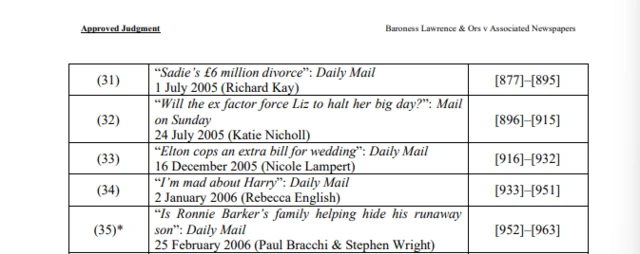
    As part of this, it goes through the articles referenced by the claimants in the trial one by one, laying out the issues raised about them, the evidence given to the court, as well as the discussion and the court's conclusions about it.

    A screenshot of the appendix of the judgment, listing different article names and the page numbers you can find the detail about them on.Image source, Royal Courts of Justice
  7. Harry sticks to the script during a chaotic weekpublished at 14:34 BST

    Sean Coughlan
    Royal correspondent, at Chatham House

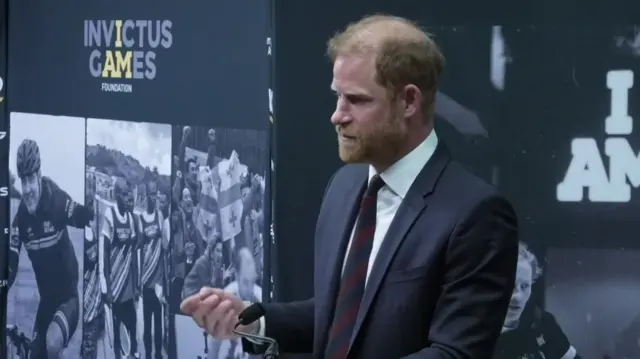
    Prince Harry speaking in front of Invictus Games promotional banner

    Prince Harry has welcomed people to this Invictus Games event, it's clearly a cause that means very much to him.

    He's sticking to the script of the speech and clearly wants to make this about supporting the work of those helping injured veterans.

    But what a week it's been for him so far. While he talks, people are sharing his court defeat.

    The result in his court case against Associated Newspapers has gone very much against him. There's no sign of a straw to clutch at.

    And that follows a chaotic start to the week, when he was very publicly not allowed to stay in Buckingham Palace.

  8. Daily Mail publisher welcomes ruling as 'overwhelming victory'published at 14:27 BST

    Associated Newspapers Limited (ANL) has welcomed the High Court's ruling as an "overwhelming victory for the Daily Mail and its journalists" in a lengthy statement.

    "This is a magnificent vindication of the Daily Mail’s journalism," a spokesperson says.

    "The reputations of our decent and hard-working journalists were terribly impugned, and today they have been exonerated," they go on to say.

    "As the judgment clearly shows, every single article was legitimately sourced."

    They add: "We will look to resolve outstanding issues, including the recovery of the costs we have incurred while defending ourselves against this egregious litigation."

  9. Judge says allegations 'serious' but refused to make finding on whether unlawful information gathering 'widespread'published at 14:23 BST

    Tom Symonds
    Correspondent

    In a summary of his ruling, Mr Justice Nicklin concludes the allegations were serious and therefore required more convincing evidence before being proven.

    He says the seven claimants could not rely on "suspicion, even where understandable". They had to prove information had been obtained unlawfully.

    He refuses to make a finding as to whether what became known as unlawful information gathering had become “widespread and habitual” and instead decided the merits of each individual claim.

    He says he accepted the denials of Associated Newspaper journalists "who gave lawful explanations for the sourcing of the disputed articles and incidents."

    He rules that the claimants had also failed to prove three senior Associated executives - former editors Paul Dacre and Peter Wright, as well as the current senior lawyer at the company Elizabeth Hartley - had lied in their evidence to the Leveson Inquiry where they said there was no unlawful activity at the Mail and Mail on Sunday.

  10. Claims dismissed as claimants unable to prove unlawful information gatheringpublished at 14:21 BST

    Prince Harry and the six other claimants have failed to prove allegations of unlawful information gathering, today's judgment rules.

    The court has rejected their attempt to prove the claims through "broad inference" in cases where there was a "legitimate and realistic" possibility lawful sources were used.

    The full judgment runs to over 400 pages, and a summary of the document says: "The Court rejected the attempt to prove the claims by broad inference where there remained a legitimate and realistic possible lawful source pathway, or where the article-specific evidence did not prove that the relevant information must have been obtained unlawfully."

    Their claims have been dismissed.

  11. A split screen moment as Harry arrives to talk about Invictus Gamespublished at 14:12 BST

    Sean Coughlan
    Royal correspondent, at Chatham House

    Prince Harry is in the room and cameras are trained on him as he heads for his seat.

    But a large number of press in the room are also looking at their phones as the first results of the Associated Newspaper court case begin to land in email inboxes.

    It's a split screen moment.

  12. All claims in Prince Harry High Court case dismissedpublished at 14:10 BST
    Breaking

    Tom Symonds
    Correspondent

    Prince Harry and six other defendants have lost their High Court privacy case against the publisher of the Daily Mail and Mail on Sunday.

    All of the claims have been dismissed after the claimants failed to prove the allegations.

  13. Judgment released in Prince Harry case against Daily Mail publisherpublished at 14:08 BST

    A judgment has now been published in the civil case Prince Harry and six other claimants, including Elton John, Elizabeth Hurley and Baroness Lawrence, brought against Associated Newspapers Limited (ANL).

    It's a written judgment, external - we're currently reading through it and will bring you the details shortly.

  14. Inside Chatham House, an audience awaits the Dukepublished at 13:59 BST

    Sean Coughlan
    Royal correspondent, at Chatham House

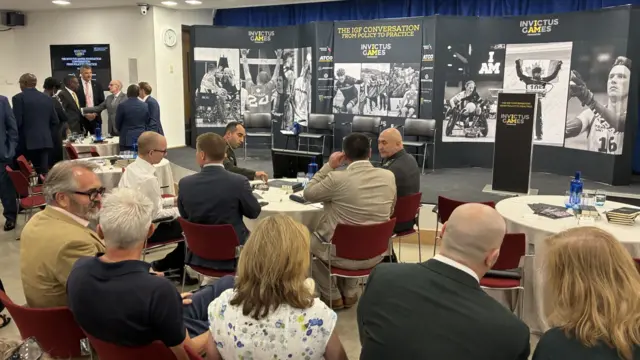
    People sat around tables in front of Invictus Games signage

    We're inside Chatham House, the international affairs think tank, where an audience is gathering to hear Prince Harry and others talk about his Invictus Games.

    There are a few military uniforms dotted among the suits.

    We've had an early glimpse of what Harry will say about the games for injured service men and women.

    "Not simply a week of sport every few years, but a community united by one belief: that the unconquered human spirit exists in every nation and that our shared responsibility is to create the conditions in which it can flourish," he will say.

  15. What the court heard from the defendantspublished at 13:52 BST

    Dacre walking in front of a fence outside in a large blazerImage source, PA Media

    Associated Newspapers Limited (ANL) has consistently denied any wrongdoing. Its barrister, Antony White KC, told the court the articles were generally the continuation of ongoing, widespread reporting.

    ANL has admitted commissioning private investigators while Mail journalists gave evidence that they believed private investigators (PIs) had access to legitimate databases allowing them to get public information more quickly.

    Katie Nicholl, the former Mail on Sunday royal editor, and Rebecca English, the Daily Mail's current royal editor, were repeatedly asked specifically where information about Prince Harry had come from.

    They said they, or their sources, were on the fringes of his social circle.

    Former Daily Mail editor Paul Dacre told the court he "brought the shutters down" on any unlawful newsgathering at the paper when he found out about it while he accepted there may be evidence private investigators working on behalf of the paper may have used unlawful techniques.

    He said he "utterly refutes" allegations of unlawful newsgathering by journalists and told the court that he stopped the use of PIs.

  16. What the court heard from the claimantspublished at 13:47 BST

    Doreen Lawrence walking in between a man and woman on a streetImage source, Getty Images
    Image caption,

    Doreen Lawrence arrives to court

    In this and the next post, we will talk you through some of the arguments we heard in court during the trial at the start of the year. Firstly, the claimants.

    There are seven claimants in this case jointly suing Associated Newspapers Limited (ANL) over claims it misused their private information.

    At times, the evidence they gave was emotional.

    • Elizabeth Hurley was reduced to tears after describing the effect of the reporting of the paternity row about her son with the American businessman Steve Bing
    • Prince Harry flew in to give evidence in person - his anger was plain to see as he argued there were 14 articles written using unlawfully gathered information about his private life
    • Sadie Frost's claims cover 11 articles including a draft story about Frost's ectopic pregnancy
    • Doreen Lawrence alleged five articles relied on information "stolen" about her and the investigation into her son Stephen's murder
    • On Elton John and his husband David Furnish, barrister David Sherborne said details were published about the birth of their surrogate son - including his birth certificate before the couple had received their own copy
    • For Simon Hughes, the barrister said the Mail was "prepared to exploit his sexuality", also citing a moment in 2006 when Hughes was "outed on the front page of the Sun"

    ANL denies all the allegations.

  17. Analysis

    A high-stakes case for Harry and for publisher ANLpublished at 13:39 BST

    Tom Symonds
    News correspondent

    Prince Harry departs the Royal Courts of Justice in LondonImage source, EPA/Shutterstock

    In previous legal battles with the press, Prince Harry won 15 claims in his case against Mirror Group Newspapers and separately received "substantial" damages and an apology in a settlement with the publisher of the Sun.

    The case against ANL was potentially his last major court challenge to a newspaper publisher, but his most difficult.

    ANL has always maintained it wasn't involved in unlawful information gathering.

    The publisher said it used what it calls "inquiry agents" until 2007 to get publicly listed addresses and phone numbers.

    This "all or nothing" defence, plus an aggressive public response to Prince Harry's claims, mean this is a high-stakes case for both the prince and the publisher.

    If he loses badly, an already critical Daily Mail could well hit back at him in its coverage of this trial and other aspects of his life.

    But he has always showed a determination for these battles, borne partly of an ongoing concern for his privacy, and a feeling that the Royal Family was wrong to advise him when younger not to take legal action.

  18. Prince Harry arrives at Chatham Housepublished at 13:25 BST

    Prince Harry is this afternoon attending an event in London for the Invictus Games - his charity for injured military veterans.

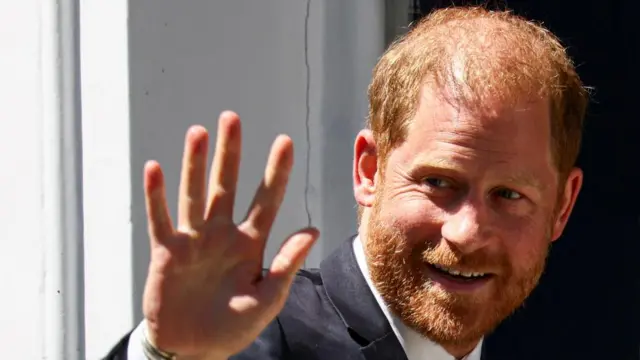
    He was pictured arriving at Chatham House a few moments ago.

    Prince Harry wears a suit and walks through a door, he waves at the cameraImage source, Reuters
  19. ANL judgment expected to be handed down remotely shortlypublished at 13:23 BST

    Helena Wilkinson
    Reporting from the Royal Courts of Justice

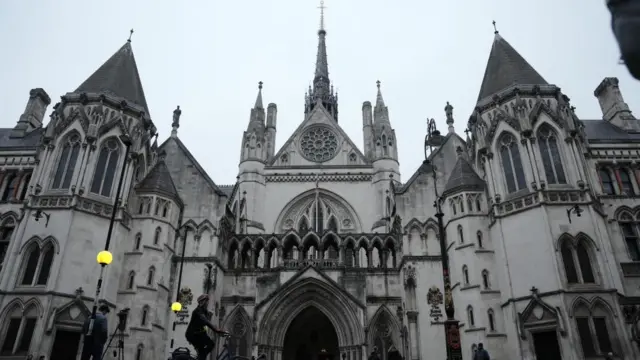
    I’m outside the Royal Courts of Justice in London.

    We're expecting the written judgment to be handed down remotely at 14:00 BST.

    There won’t be a hearing in court.

    We should get a press summary along with the full ruling - that will allow us to bring you the main findings quickly.

    When the judgment is handed down Prince Harry won't be far from court - about two miles - for an event related to the Invictus Games.

    Whichever way the judgment goes I'd expect Harry to give his reaction at some stage.

  20. ANL denies 'lurid' and 'preposterous' allegationspublished at 13:18 BST

    Publisher ANL has been accused in this case of "grave breaches of privacy" by the seven claimants.

    The organisation has repeatedly denied the allegations - which it calls "lurid" and "preposterous" - and has strenuously defended its journalists.

    It was unsuccessful in its attempt to get the case thrown out in 2023, where it had argued the claims had been brought "far too late".

    Lawyers for the claimants successfully argued that new evidence had come to light, and they did not know how information was being covertly acquired at the time.