Summary

  • Keir Starmer says under-16s will be banned from social media by spring 2027 - key points from the announcement

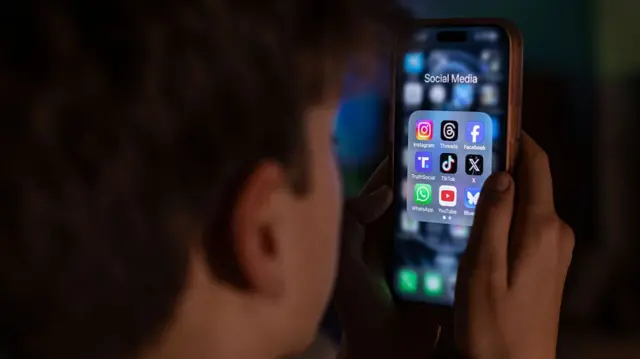
  • Snapchat, TikTok, YouTube, Instagram, Facebook and X are among the platforms affected - but not WhatsApp or Signal, the government says

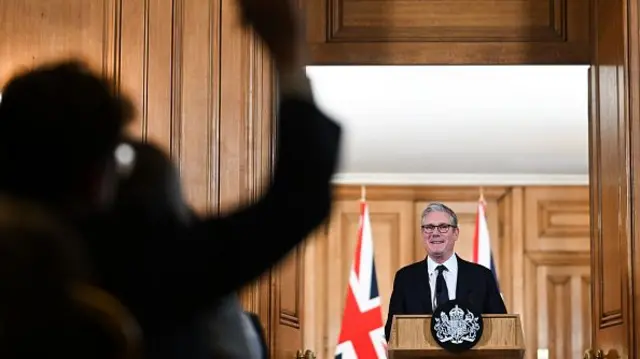
  • "A full ban is the right choice... I am not prepared to compromise on the safety and happiness of our children," Starmer says in a televised statement

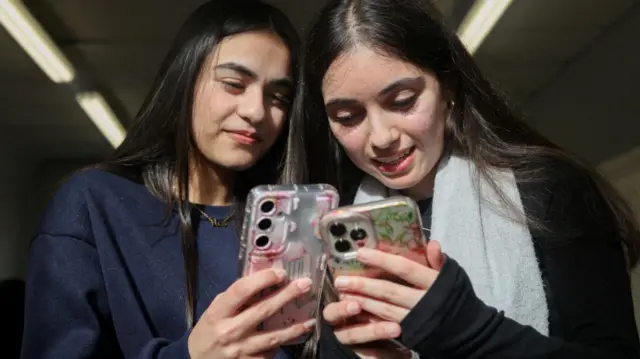
  • At a school in Wythenshawe, Manchester, Year 8 and 9 pupils have their say on social media: Sean, 13, says "it's a bad place" while Isaac, also 13, says he's "disappointed" ministers opted for a ban instead of trying to make platforms "safer"

  • Meanwhile, Louise Gibson, the mother of 11-year-old Noah who is alleged to have died after attempting an online challenge, says "this is right for children and it's right for parents" - here's what other bereaved families told the BBC

  • In Australia, which became the first country in the world to introduce a similar ban in December, our reporter says little has changed and teenagers are bypassing age restriction systems

  1. Our experts answer your questions on the under-16s social media ban - watch livepublished at 15:25 BST

    BBC Your Voice banner. White writing saying 'Your Voice' sits on top of purple background with darker purple paintbrush strokes

    How will the under-16s social media ban work? When will it start? How will it be enforced? Which apps will it hit?

    There are a lot of questions surrounding the social media ban for under-16s announced by the government this morning.

    The BBC's Joe Pike and Chris Vallance will be answering your questions from 15:30 BST.

    You can follow along by clicking watch live at the top of this page, and we'll be bringing you text updates right here.

  2. What will be banned, and what won’t be?published at 15:17 BST

    Graham Fraser
    Technology reporter

    Details are still emerging following the prime minister’s speech this morning, but what we do know is that the social media ban for under-16s will apply to Snapchat, TikTok, YouTube, Instagram, Facebook and X.

    The government stated the ban will also apply to a "wider range of online services, including on gaming sites".

    One of the big questions, therefore, is what about Roblox? The hugely popular platform is the biggest gaming site in the UK for players aged eight to 12. No confirmation yet from the government, and we await a response from the platform.

    What won’t be banned? WhatsApp and Signal were specifically named as "messaging services" that won’t be affected.

  3. 'The government is full of adults - this doesn't affect them'published at 15:09 BST

    Hayley Clarke
    Education reporter

    School pupil Aliyyah wearing uniform sits in classroom setting and smiles at camera

    We’ve been speaking to some students and staff at a school in Barnsley to get their reaction to the ban.

    Aliyyah, who's 14, only got her first phone a month ago. The thought of social media now being banned is not something she’s happy about.

    "If you ask me, it’s just a waste of time," she says. "First of all, it's just unnecessary. Sometimes some apps are safe spaces for people."

    She says her six-and-a-half hours of daily social media use is "moderate", and that she manages to put her phone down by 22:00 BST each night.

    Aliyyah thinks if she is able to manage her screen time, it shouldn't be the government doing that for her. "I should be able to do that myself, or my parents. Not the government."

    School pupil Alex wearing uniform sits in classroom setting and smiles at camera

    Aliyyah's classmate Alex, who's also 14, believes a ban is "never the way to go".

    He thinks restrictions should be placed on under-13s instead, who might not be as resilient to harmful content online.

    While he shares some of the concerns over the effects that sort of content can have, he thinks social media is also important for teenagers to "find their community".

    And he shares Aliyyah's view that it shouldn't be down to the government to manage what teenagers can do online.

    "The government is full of adults - this doesn’t affect them," he says. "They only see the bad stuff, not the good stuff that comes out of it."

  4. Teenagers in Australia 'staying online' despite ban - are there lessons to be learned?published at 15:04 BST

    Katy Watson
    Australia correspondent

    Kanishka Narayan.Image source, Getty Images
    Image caption,

    Kanishka Narayan, the UK Minister for AI and Online Safety, visited Australia ahead of today's announcement

    The UK's social media ban for under-16s has been tipped as 'Australia plus' and clearly the government taken on board some of the challenges faced by their Australian counterparts in bringing in sweeping legislation to keep young people off social media.

    When Kanishka Narayan, the UK Minister for AI and Online Safety, came to Canberra and Sydney a few weeks ago, he told me that they were particularly concerned about how the ban would be implemented and said they would focus on ensuring that age verification and restrictions on the apps actually worked.

    Certainly that's been heavily criticised here, with teens proudly telling us how easy it's been for them to stay online.

    "This is not a silver bullet," said Narayan, echoing the views from here in Australia. Canberra says it's in it for the long-game - changing attitudes, not overnight social media use.

    But that means in the short-term, governments are somewhat in the dark - yet determined to pass legislation regardless.

  5. Political reaction to under-16s social media ban - what we've heardpublished at 14:36 BST

    Kemi Badenoch.Image source, Getty Images

    This morning, Prime Minister Keir Starmer said under-16s will be banned from social media by spring 2027.

    In the hours since, we've been hearing some political reaction:

    Conservative Party leader Kemi Badenoch says the move is an "important step in helping parents protect childhood for children" but describes the government’s announcement as the "latest Labour U-turn".

    "It is fantastic news that the government has finally woken up to the dangers of social media for young people," she wrote on X.

    Reform UK leader Nigel Farage describes the ban as "well-intentioned" but says it is unlikely to work because of the "mass adoption" of virtual private networks (VPNs).

    VPNs allow users to have a private, secure internet connection that could bypass age-checks by hiding your location and identity. Farage says he believes the ban "will mean the introduction of digital ID via the back door".

    The Liberal Democrats say that "after months of delay, the government have cobbled together a hodgepodge of social media restrictions which don't keep children safe, nor hold big tech's feet to the fire".

    Earlier this year, the party proposed the introduction of film-style age ratings to limit which social media apps children can access.

    The Green Party says stronger safeguards against online harm "are clearly needed" but cautions against a blanket ban. It cites concerns from groups such as the NSPCC and the Molly Rose Foundation that some young people, particularly disabled and LGBTQIA+ people, will be more isolated and cut off from support following the ban.

  6. Many adults won't need to complete age checks, government sayspublished at 14:27 BST

    Liv McMahon
    Technology reporter

    The government has published a fact sheet, external addressing questions about its plans - in particular, what introducing "highly effective age assurance" to enforce its social media ban will mean for people in the UK.

    The plans have concerned some, including digital rights campaigners, because these kinds of checks could involve asking people to confirm their age with face scans (known as facial age estimation technology) or by uploading a form of ID.

    Concerns about such checks arose earlier this year after Discord announced – then delayed - plans to start checking the age of users.

    However, the government says "many adults won't need to complete checks" because their social media accounts may have been open for more than 16 years, have a credit card linked, or be registered with an email address verified through other means.

    It added that some people may have also complied with existing age verification requirements rolled out across sites in the UK with adult content, ranging from Reddit to Pornhub, last year.

    A screen which shows the Pornhub website with a note that says 'Sign up for free to verify your age'Image source, Getty Images
    Image caption,

    Last year, the Online Safety Act says sites must make it harder for under-18s to see explicit material

  7. Analysis

    How likely is it the ban will actually happen?published at 14:21 BST

    The broad support across the political spectrum makes the social media ban very likely, our chief political correspondent Henry Zeffman says.

    Though the pressure over the prime minister's position means the timing of the policy has taken on more significance.

  8. 'How are under-16s going to contact their friends?'published at 14:01 BST

    Eleanor Doyle and Naomi de Souza, BBC Newsbeat

    BBC Newsbeat has been hearing from young people this morning, including friends Jay and Tyrell.

    Both in their early twenties, they were in their teens when apps like Instagram and Snapchat were at the height of their popularity and when there were fewer safeguards in place.

    "It is good in some ways to keep them away from predators, but I think that’s what growing up is, on social media," says Jay.

    But the 20-year-old says that cutting access to apps could isolate young people from their friends.

    "If they ban social media for under-16s how are they going to contact their friends?" he says.

    "They want kids to go out and play more, but how are they going to do that if they don’t have social media?"

    While WhatsApp will still be available to use for the under-16 age group, Snapchat and Instagram are often used as a way of communicating.

    Jay, aged 20Image source, BBC newsbeat
    Image caption,

    Jay, 20, says that cutting access to apps could isolate young people from their friends

    Tyrell says the fact that most children are on social media now means the ban will have a far-reaching impact.

    "A few years ago it wouldn’t have mattered, but now everyone’s got it," he says.

    The 21-year-old has siblings under the age of 16 who don’t use the internet – and says it’s a good thing they will have limited exposure as they grow up.

    "I think I’m happy that they’ll be slightly clueless about certain things, you don’t want them seeing too much, especially at that age."

    Tyrell, aged 21Image source, BBC Newsbeat
    Image caption,

    Tyrell, 21, says the ban will have a far-reaching impact

  9. Social media a 'lifeline' to disabled childrenpublished at 13:46 BST

    Beth Rose
    Disability affairs reporter

    While many are applauding the ban, some organisations that represent young disabled people have voiced concerns around how it could erode the "lifelines" young people have found on social platforms.

    The Royal Society for Blind Children says social media can become a place where friendships can be made and where young people "express themselves, and feel less alone".

    While the organisation supports "better age appropriate protections and action" against platforms which flout guidelines, its CEO Julie Davis fears the impact an all-out ban could do on the young people it supports.

    "We are mindful that this ban risks cutting off vital routes to connection for children who are already too often excluded. We are actively looking at ways to counter the impact this could have."

    It's a similar concern held by the National Deaf Children's Society.

    Simon Want, Head of Policy and Influencing (England) said: "We want to see action that keeps children safe from harm while still allowing deaf young people to stay connected, express themselves and access support.

    "This means working closely with families, experts and deaf young people themselves to get the balance right.”

  10. 'Almost like a warzone in some houses' to control social media - NI ministerpublished at 13:30 BST

    Northern Ireland Education Minister Paul Givan has been giving his view on the social media ban, saying: “This is needed, I believe it can work, I think it can be effective."

    “It’s almost like a warzone in some houses to try and control the amount of access our young people have to the mobile phone technology," he told BBC Radio Ulster's Talkback programme.

    Givan says the responsibility lies with technology companies to bring in effective measures to stop young people from getting access to social media.

    The education minister has previously expressed his support for action on and began a phone-ban pilot in nine schools across Northern Ireland last September which ran until earlier this year.

    For context, legislation covering telecommunications, including the regulation of social media platforms in Northern Ireland, is the responsibility of the UK government.

  11. Australia’s social media ban - what counts as success?published at 13:20 BST

    Katy Watson
    Australia correspondent

    Media caption,

    Watch: How is Australia's under-16 social media ban working out?

    I’m often asked whether the social media ban here is working but it’s an impossible question to answer perfectly.

    If you were to ask Australia’s teens, then it would be a resounding no - most anecdotally seem to still be on it.

    If you were to ask tech experts, I’d say most would agree with the teens’ viewpoint, arguing improving digital literacy is a better path than stopping kids from going online.

    Parents may be more split - while some think they should be the ones deciding about their children’s online activity, others think at least the ban has started a conversation around how to keep young people safe.

    But the big question is - how do we define the legislation's success? Is it mental health outcomes? Is it less time spent scrolling? Or the number of accounts shut down?

    With only six months since the legislation came into force, we don’t have any of that data - the real picture of what this ban has achieved - or not - will take several years to understand.

  12. The questions that remain unansweredpublished at 13:12 BST

    Your voice

    We've been receiving your questions about the announcement of a social media ban for under-16s. Here are a selection:

    Liam, 38, Manchester, says he's kept both his children off social media for their entire lives. He says "it hasn't been easy" and had to withstand significant social pressure. He says: "The ban changes that landscape and I think it is the right call. The thing the coverage is missing is what children do instead?"

    Marcel, 48, in Cambridgeshire says he has no issue with a social media ban for children, but feels it contradicts another major change. "Isn't the government going to make 16-year-olds eligible to vote? If so, then where are they supposed to discuss their political beliefs or listen to other opinions/debates etc? If a social media ban is enforced, then the voting age has to stay at 18."

    Hilary says tech companies could "push a simple phone" that would just allow you to message or call. "Why do children have smart phones at all? They say they need phones to get in touch with friends and family. A simple phone is all they need in that case!"

    Chris says he is glad about the ban, but says adults should also be considered. "Has anyone collated the damage done to vulnerable adults? How many suicides in total are due to these platforms? We need control over what's being put out by these money hungry platforms."

    Karen in Arbroath, says: "Is nobody investigating why PARENTS can't properly supervise their kids?"

    Daniel, 36, in Newcastle says "I have younger children and YouTube Kids is something we use a lot for educational purposes - there is some good content on there. How will the ban affect the access to that useful platform?"

    Sam, 17, in Eastbourne says the ban seems "rushed" and "ineffective". "The online safety act was not effective at stopping children seeing harmful content, how will this new law be any better?"

    Have a question? You can get in touch in the following ways:

    Please read ourterms & conditions andprivacy policy.

    In some cases a selection of your comments and questions will be published, displaying your name and location as you provide it unless you state otherwise. Your contact details will never be published.

  13. Big Tech firms give their reaction to banpublished at 13:00 BST

    Popular social media platforms like Snapchat, TikTok, YouTube, Instagram, Facebook and X will be included in the proposed social media ban. It covers platforms that allow users to post material and interact with algorithms, meaning messaging services like WhatsApp and Signal would not be covered.

    A spokesperson from YouTube says it is a "vital resource" for young people, and that a blanket ban would push children away from these "curated, supervised, beneficial experiences" towards less safe services.

    That's echoed by Snapchat, a messaging service that allows users to post disappearing photos in the form of 'stories' online. It says the majority of time spent on Snapchat is for "private messaging" between friends and family - and an outright ban doesn't necessarily make teens safer.

    Meta, which owns Instagram, Facebook and WhatsApp, says a ban risks driving young people “to unregulated alternatives that lack built-in protections and parental controls”.

    It says any restrictions must be underpinned by an age verification system on devices “so people aren't asked to hand over ID to dozens of individual services to prove their age”.

  14. 'I'm 50/50 on the ban', teen influencer tells BBCpublished at 12:50 BST

    Tiffanie Turnbull
    BBC News

    A blonde girl wearing a yellow tracksuit looks at the cameraImage source, Supplied

    Miley Williams has really conflicting feelings about the social media ban.

    "I'm a bit 50/50," she tells the BBC.

    For her, social media isn't just a hobby, it's a job.

    The fashion-obsessed 15-year-old built a platform off a viral video three years ago, and now earns a modest income of about £400 a month.

    Her social media career has built her confidence, helped her connect with others, and left her with a sense of purpose and ambition, she adds.

    She's now worried this policy will leave her out of work and undermine her future in the influencing industry. Most of her followers are under-16.

    On the other hand, Williams says she understands some of the reasoning behind the government's proposal.

    Her account is heavily monitored by her parents who shield her from the worst of the online world, but she knows strangers send her inappropriate messages. Sometimes, fans even follow her around in real life.

    Doom-scrolling and some of the pressures around posting also often take the fun out of social media for her.

    "It can get a little bit too much at times."

    Williams agrees with a ban, but thinks the age limit is a few years too high, arguing she's an example of how allowing teens to use social media in moderation can be a good thing.

    "It's changed my life," she says.

    "[But] I have a lot more better things to do than just social media. I have family and friends and school and cheer[leading] and boxing."

  15. 'Better the government does something than nothing', but ban gets mixed reaction from schoolchildrenpublished at 12:43 BST

  16. Age checks an 'enormous privacy intrusion', says campaign grouppublished at 12:34 BST

    A photo of Silkie Carlo speaking to her webcam in an office room

    Campaign group Big Brother Watch has raised privacy concerns about the ban, saying any age verification on platforms will "incur an enormous privacy intrusion".

    Director Silkie Carlo tells BBC News that checks will mean "anonymity is dead for the whole of the British public" - and that checks that require bank details, face scans, or identification are "really intrusive methods".

    "Effectively social media sites will become digital ID checkpoints," Carlo claims.

    She also claims it is "risky" to teach children to send photos of themselves for age verification checks when companies ask them to, and that rather the focus should be on teaching "healthy behaviours" online.

  17. Age verification for 16-year-olds - how will it work?published at 12:23 BST

    Graham Fraser
    Technology reporter

    Credit card checks, email-based age estimation and facial-age estimation. Just some of the methods of age verification which were suggested when the Online Safety Act determined that over 18s would have to prove their age to access adult material, including pornography.

    So how could it work for someone trying to prove they are over the age 16? The government said Ofcom will set this out in the coming months.

    What could be included? Iain Corby is from the Age Verification Providers Association, the trade body of companies who provide ways to prove your age.

    “Establishing a minimum age of 16 presents additional challenges because some younger people have fewer sources of authoritative age data available to them than adults.

    “Fewer minors hold passports, for example. However, other sources of age evidence are available, including bank accounts, electoral registration records and provisional driving licences.”

    The minimum voting age is already 16 for local council elections in Scotland and Wales, as well as elections to the Scottish Parliament and the Senedd.

    Legislation to allow 16 and 17-year-olds across the UK to vote at the next general election is currently going through Parliament.

  18. Greens say blanket ban could leave some people more isolatedpublished at 12:17 BST

    The Green Party has responded to the social media ban by saying that "stronger safeguards are clearly needed" for mental health and online safety, but highlights the risk of "potentially more dangerous platforms setting up".

    In a statement, the Greens reference warnings from groups such as the NSPCC and the Molly Rose Foundation that a blanket ban “could leave some young people, particularly disabled and LGBTQIA people, more isolated and cut off from support”.

    The party wants to see more investment in youth services and creative activities for young people “to fill the void that will be created by this ban”.

    It says “social media companies that profit from addictive algorithms targeted at children must not be let off the hook” and that their owners must be held accountable.

  19. Under-16 social media ban announced, as PM says he won't compromise on child safetypublished at 12:10 BST

    Katie Williams
    Live reporter

    Under-16s will be banned from social media platforms as soon as spring 2027, Keir Starmer announced this morning.

    Platforms like Snapchat, TikTok, YouTube, Instagram, Facebook and X are in scope, while messaging services like WhatsApp are not - here's a summary of key changes.

    The PM says he will not compromise on the "safety and happiness of our children", accusing platforms of being "designed to be addictive" with features that "lock you in for hours".

    Australia was the first country in the world to introduce a similar ban last December - Starmer says the government has learned from Australia and calls new UK measures "world leading".

    Australian PM Anthony Albanese congratulated the PM on an "important step".

    But six months on from the Australian ban, BBC reporter Tiffanie Turnbull says implementing it remains "incredibly difficult" with 70% of parents in a recent survey saying their children were still on banned platforms.

    YouTube, Meta and Snapchat have responded saying the ban could push young people towards "less safe" platforms.

    "If that's the best they've got, then I think they're in trouble," says bereaved father Mark Dowey in response.

  20. Analysis

    Starmer's delicate balancing actpublished at 11:58 BST

    Zoe Kleinman
    Technology editor

    On the one hand the prime minister must be tough on the tech giants and force them to comply with a ban on their own products.

    On the other, he continues to promote the UK as a great place for the tech and AI industry to grow and thrive - and spend money.

    The same US tech companies under the shadow of the ban have invested millions of dollars in their UK operations. Is there a tipping point at which they decide to cut back on their British commitments?

    And there’s another challenge ahead, in the form of US president Donald Trump, who is fiercely protective of those same firms - Keir Starmer admitted that he has not yet discussed the announcement with his fiery counterpart and will do so at the G7, his next destination.