Summary

  1. International teams heading to help Venezuelapublished at 14:35 BST
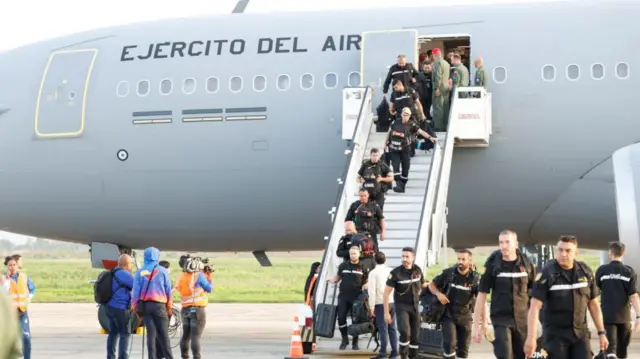
    Rescue personnel of Spain’s Emergency Military Unit (UME) arrive in Venezuela to provide assistance in rescue efforts after earthquakesImage source, Reuters
    Image caption,

    Spain's Emergency Military Unit arrives in Venezuela

    Spanish rescue workers have been pictured arriving in Venezuela, after Swiss workers were reported to have arrived earlier today.

    Many other international teams are on their way or preparing to help.

    These include Italy, Czechia, France, Germany, Luxembourg, Portugal and the Netherlands - which we saw depart a short while ago. They are all sending search and rescue teams, according to European Commission President Ursula von der Leyen.

    The UK Foreign Office said on Thursday that the UK's International Search and Rescue team "stands ready for deployment".

    The UN humanitarian chief Tom Fletcher said on Thursday that his team in Venezuela was co-ordinating a "surge of urban search and rescue teams from across the world with more on the way".

    And World Health Organization (WHO) chief Tedros Adhanom Ghebreyesus also said on Thursday that teams are "on standby to deploy additional staff" and supplies.
  2. Hard-hit La Guaira is an economically important part of Venezuela that's suffered beforepublished at 14:27 BST

    Daniel Gonzalez Cappa

    Acting President Delcy Rodríguez says La Guaira state has been "militarised" for emergency response. Images and videos circulating on social media in recent days show many collapsed buildings and devastation.

    La Guaira is one of Venezuela's smallest states, but it's economically important. It sits on the central northern coast on the Caribbean Sea, north of Caracas, and is a popular destination for visitors from the capital.

    The state is also home to one of the country's two main ports and to Simón Bolívar International Airport in Maiquetía - Venezuela's main airport.

    The images coming out of the area are a reminder of another catastrophe in December 1999, when torrential rains triggered a series of landslides. The death toll then was in the thousands.

    La Guaira never fully recovered from those landslides. Even today, the enormous rocks that destroyed buildings are still there.

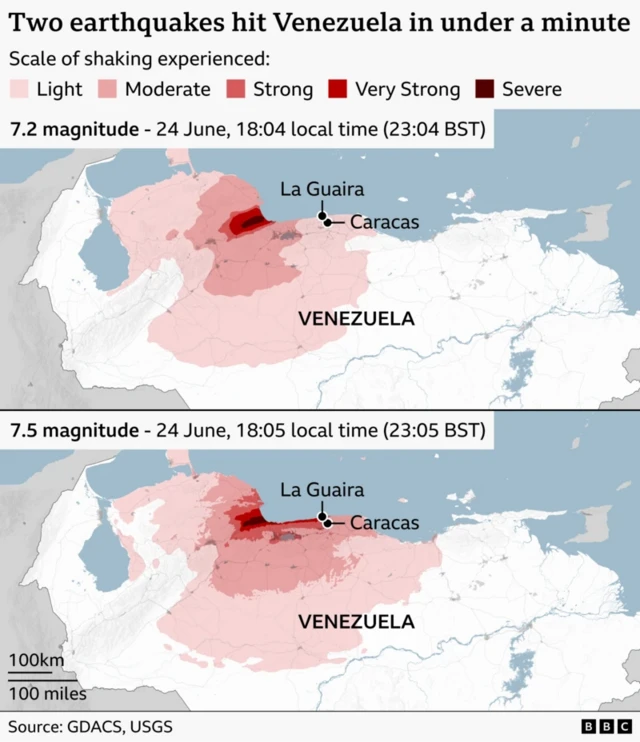
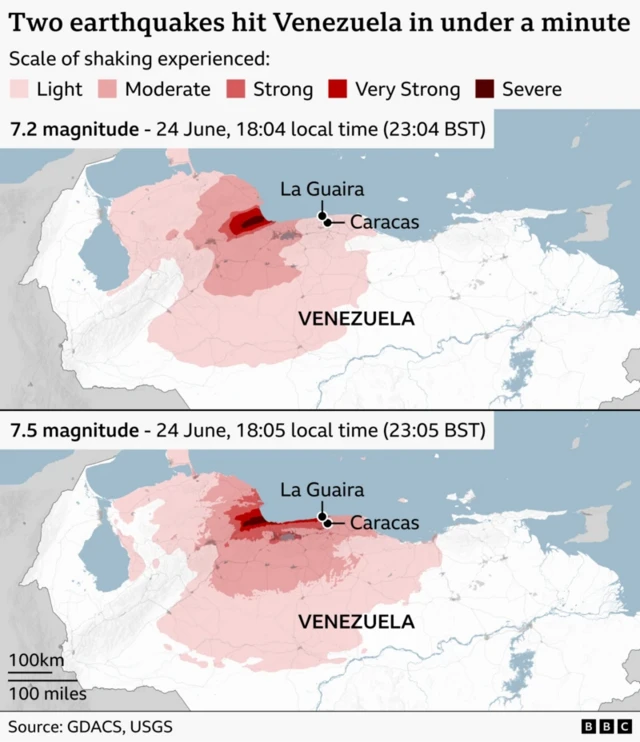
    Two maps showing powerful earthquakes striking northern Venezuela less than a minute apart on 24 June. The first, magnitude 7.2 at 18:04 local time, produced strong to severe shaking concentrated inland near the coast, while the second, slightly larger magnitude 7.5 at 18:05, spread more intense shaking across a wider area particularly along the northern coast. The maps use a colour scale from light to severe to illustrate shaking intensity, highlighting heavily affected zones around La Guaira and Caracas, with broader regions experiencing moderate to strong tremors. The source is GDACS and the USGS
  3. La Guaira state 'militarised' for emergency response, Venezuela leader sayspublished at 14:13 BST

    A bit more now from acting President of Venezuela Delcy Rodríguez, whose comments have been reported by local media outlets and Reuters news agency.

    Rodríguez says dozens of people have been rescued alive.

    "It brings us joy that they can embrace their families and loved ones," she says.

    She says there have been 214 aftershocks so far. "This demonstrates and reflects the seismic activity in our territory."

    She also says the state of La Guaira will be "militarised" to help the emergency response.

    La Guaira is one of the areas worst affected by the twin earthquakes.

  4. Death toll rises to 589 - acting President Rodríguezpublished at 13:41 BST
    Breaking

    The death toll in Venezuela has risen to 589, and the number of injured is now 2,980, acting President Delcy Rodríguez has said.

    The previous official update put the death toll at 235 people and 4,300 injured.

    We will bring you more from her updates soon.

  5. Venezuelans desperately try to contact loved ones amid disasterpublished at 13:31 BST

    Jorge Pérez
    BBC News Mundo

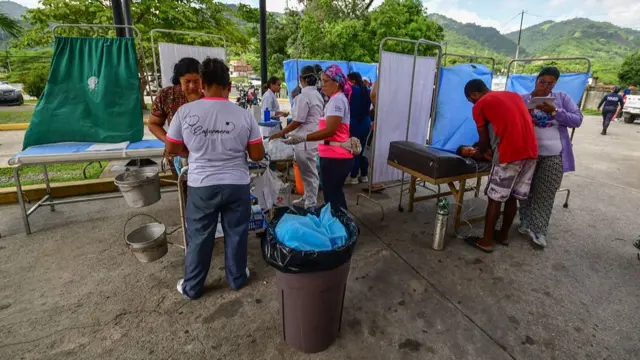
    Several people treating injured patients ina makeshift care centre in VenezuelaImage source, Getty Images
    Image caption,

    Care centres are being set up in affected areas to treat the injured

    I am chatting with several people I know in Venezuela who have missing relatives in La Guaira, the most affected area after the twin earthquakes.

    They know the buildings where their relatives lived have collapsed, and despite their best efforts, they cannot get any information. Phones are going unanswered. And official information for them feels virtually non-existent.

    One of them told me she finally found her aunt, who had left her apartment to walk her dog minutes before it collapsed. Both her aunt and the pet have lost their home, but they are unharmed.

    Another person I have been chatting with - who lives in Europe - told me yesterday they had two close relatives trapped in the rubble in a neighbourhood also close to the coast.

    They were trying to do what they could from miles away, and across a five-hour time difference. People in the area told them they heard voices from the rubble. They thought it was one of their relatives.

    This morning I woke up to her message confirming that both of her relatives were found, but they did not survive.

  6. BBC Verify

    Why is there earthquake damage so far from the epicentre?published at 13:25 BST

    By Thomas Copeland

    BBC Verify has consulted seismologists to understand why satellite imagery and social media videos show such significant damage to cities along Venezuela's coast, some more than 100 miles away from the earthquakes' epicentre.

    "Instead of imagining an earthquake as a point, it's like a line on the map. It'll start at that epicentral region and then extend," says Dr Laura Gregory, an associate professor of earthquake geology at the University of Leeds.

    This is because earthquakes are caused by movements of fault lines, the geological term for fractures in the earth’s crust.

    These movements, Gregory says, are called ruptures and the "closer that you are to that earthquake rupture, the worse the shaking is going to be".

    Scientists say preliminary data indicates these earthquakes caused ruptures in the San Sebastián Fault, which extends from the epicentre of these quakes along Venezuela's coast.

    "These earthquakes were large, so we'd expect the length of the fault that ruptured to be between 100km and 200km long," according to Dr Amy Gilligan, a lecturer in geophysics at the University of Aberdeen.

    Geology can play a role too, Gilligan adds, with places built on soft sediments like sand likely to experience "more shaking than if you're on hard bedrock like granite".

  7. Dutch rescue team heading to Venezuelapublished at 13:16 BST

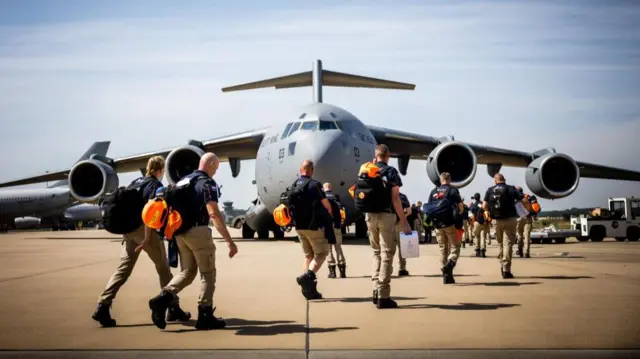
    Emergency workers in brown trousers and blue shirts with orange helmets slung over their backs walk across the tarmac onto a plane.Image source, EPA/Shutterstock

    A Dutch rescue team has departed Eindhoven Air Base for Venezuela to assist with recovery efforts.

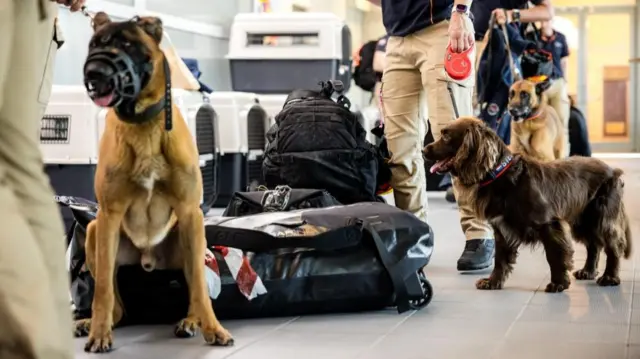
    The team is made up of 65 rescue workers and eight dogs, according to the European Press Agency.

    A team from El Salvador has also arrived in the country, alongside rescue personnel from Mexico and Switzerland.

    Earlier, the UN's humanitarian chief Tom Fletcher told BBC Radio 4's Today programme that this disaster "needs an international global response and we'll co-ordinate that and we will deliver".

    "I want people to know in Venezuela that help is coming," he said.

    Three rescue dogs held on leads by Dutch workers by kennels at an airportImage source, EPA/Shutterstock
    Image caption,

    Search dogs among the Dutch rescue team heading to Venezuela

  8. 'The parallel collapse of infrastructure and incapacity of the state,' opposition leader sayspublished at 12:55 BST

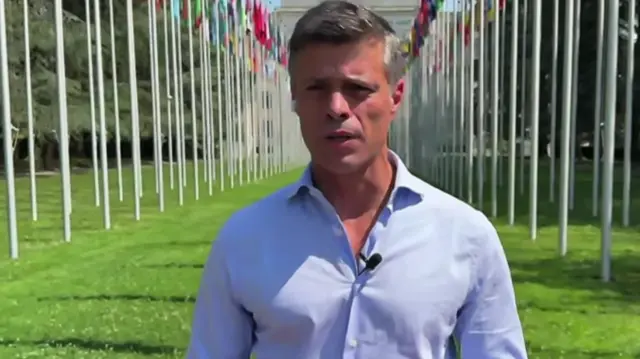
    Leopoldo Lopez speaking on a patch of grass

    Leopoldo Lopez, a Venezuelan opposition leader currently living in exile in Spain, tells the BBC News channel the devastation has been "huge" and people are in "shock".

    "Unfortunately, we are seeing a parallel collapse of the infrastructure, and also the incapacity of the state to provide timely rescue support for the people in the devastated areas," he says, describing the country as a "failed state".

    He says there is an "absence" of firefighters, civil protection and "timely rescue missions", but says "fortunately there is an opening to international support".

    He says there has not yet been a "massive deployment" of the Venezuelan military, but says there has been "tremendous support by the civil society in Venezuela".

    "It's also very important to point out the importance of opening the news," he says. "Venezuela has been under a severe blockade... X has been opened, but there are still many, many news portals that are closed."

  9. Analysis

    Earthquake is devastating blow to Venezuela at time of uncertaintypublished at 12:36 BST

    Vanessa Buschschlüter
    Latin America and Caribbean editor

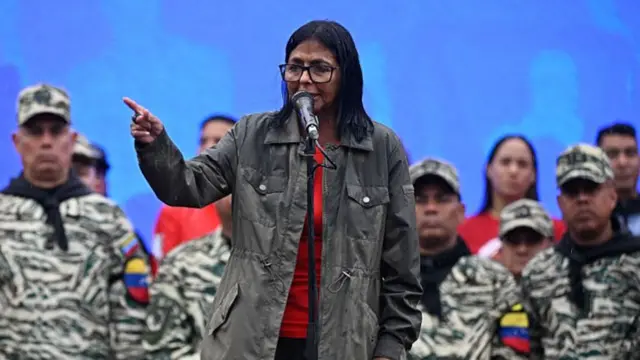
    Delcy Rodríguez speaking into a microphone with men in military clothing behind herImage source, Getty Images
    Image caption,

    Delcy Rodríguez speaking at a civil-military parade in April

    There is no doubt that this natural disaster is a devastating blow to a country already mired in uncertainty.

    It has been less than six months since Nicolás Maduro, the left-wing leader who had ruled the country since 2013, was seized by US forces in a dawn raid on his presidential compound in the capital, Caracas, and taken to New York to stand trial on drug-trafficking charges.

    Venezuela has since been governed by Maduro's ally and former vice-president, Delcy Rodríguez, much to the chagrin of opposition supporters who had hoped the Trump administration would put opposition leader María Corina Machado in charge.

    Rodríguez's response to the quake has revealed some of the things which have - and have not - changed since the January raid, as well as the many challenges facing the country's battered infrastructure.

    Read Vanessa Buschschlüter's full analysis piece here.

  10. 'Truly a chaotic scene': Eyewitness describes moments after earthquakes hitpublished at 12:30 BST

    The BBC has spoken to a man who was on a family outing to the coastal city of La Guaira when the earthquakes struck.

    He tells Radio 4's Today programme he and his family felt "incredibly strong" tremors as they were getting into their car to go back to Caracas. "And the earth started to shake."

    “Many roads were closed, with a lot of rubble on them,” he says, describing "truly a chaotic scene" as they travelled back to the capital.

    "There were no first responders anywhere to be seen. All the neighbours were just trying to get their loved ones out of the rubble and calling them, and it was very grim."

    He says mobile phone communications went down and he couldn't get hold of his extended family: "I didn't know if my parents were alive or whatever because I could not get hold of them, either my sister and my nephews."

    He explains that six hours later he was relieved to discover his loved ones in Caracas were safe, saying he feels "super lucky".

    He adds that in the capital: "I was gladly surprised how well people were actually helping each other and doing what first responders were supposed to do."

  11. Eighty rescue workers arrive in Venezuela from Switzerlandpublished at 12:05 BST

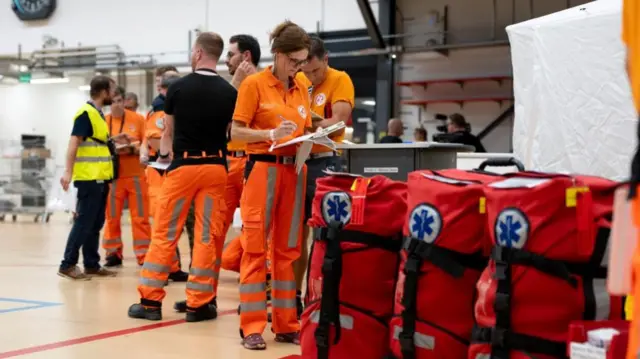
    A woman in an orange emergency response uniform looks at a clipboard and stands next to a row of huge red duffel bagsImage source, EPA/Shutterstock
    Image caption,

    Members of the Swiss rescue team pictured on Thursday at Zurich Airport, preparing to travel to Venezuela

    Eighty rescue workers and 18 tonnes of supplies have arrived from Switzerland, according to Venezuela's state broadcaster.

    They arrived in the early hours of Friday morning, and the team also includes eight search dogs, reports Venezolana de Televisión.

    It adds that Switzerland was "one of the first" countries to offer an emergency response after the earthquakes.

    Rescue personnel with supplies have also arrived from Mexico, according to Venezuela's acting President Delcy Rodríguez.

    US Southern Command said earlier that one of its senior military officials had arrived to oversee its support efforts.

  12. Foreign nationals among those reported missing and killedpublished at 11:48 BST

    Foreign nationals are among those confirmed to have died, although as with much of the information coming out of the country since Wednesday's earthquakes, we still do not know the full picture - and search efforts are continuing.

    The Spanish foreign minister, José Manuel Albares, says the number of Spanish nationals confirmed dead has risen to three, and 99 are now missing.

    A Brazilian man and a Brazilian woman have died, according to the country's foreign ministry.

    Chinese state media cites the Chinese embassy in Caracas as saying last night that two Chinese nationals had been confirmed dead.

    An Italian-Venezuelan has been confirmed dead, Italian media reports, citing the foreign ministry, which adds there is a large Italian community in Venezuela and it is "very difficult" at this time to estimate how many are missing.

    Nine Portuguese nationals have died, the AFP news agency reports, citing the country's foreign ministry.

  13. Search dog organisation sending teams to Venezuelapublished at 11:15 BST

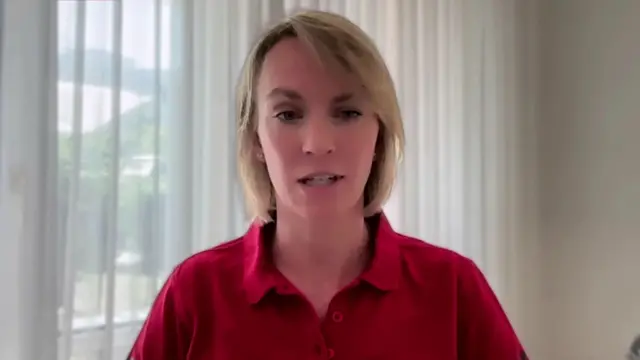
    Nicola Puchelt from the IRO,wearing a dark red polo shirt
    Image caption,

    Nicola Puchelt works for the IRO, the International Search and Rescue Dog Organisation

    A spokesperson for the International Search and Rescue Dog Organisation (IRO) tells the BBC that six teams of dogs and handlers are heading to Venezuela to help find survivors.

    Nicola Puchelt explains that the first 72 hours of an operation are crucial but insists there is "always hope" of finding people alive after several days.

    She explains that two dogs are used in each search, the first barks to signal that a person is in the rubble; a second dog will then be sent to confirm the finding before the site is excavated.

    Puchelt pays tribute to the highly trained dogs and their handlers who she says need "very strong physical and emotional strength".

  14. Spanish foreign ministry confirms deaths of two nationalspublished at 10:52 BST

    Guy Hedgecoe
    Reporting from Madrid

    Spain’s foreign ministry has confirmed two Spanish nationals have died in the earthquake, while another 80 are missing.

    According to Spanish media, citing family sources, one of the victims with Spanish nationality is Alazne Solabarrieta Lecea, a 65-year-old who was born in Caracas.

    Her grandfather was José María Solabarrieta, the mayor of the Basque town of Ondarroa during Spain’s Second Republic and who later went into exile in Venezuela, Spanish media reports.

    Her husband, Luis María Olalde Quintela, described by Spanish media as a former member of the Basque separatist group ETA who fled to Venezuela in the late 1970s, is reportedly recovering in hospital after being injured in the earthquake.

    He is named in the Civil Guards database as someone the judiciary is attempting to bring to justice.

    The Spanish authorities have set up telephone help lines in Spain and Venezuela for its nationals who are looking for loved ones.

    Spain has sent a military aircraft to Venezuela with personnel who will help with rescue efforts.

    The Spanish foreign ministry told the BBC it could not at this time confirm the identities of those killed.

  15. BBC Verify

    Satellite photos show scale of damage in La Guairapublished at 10:43 BST

    By Emma Pengelly

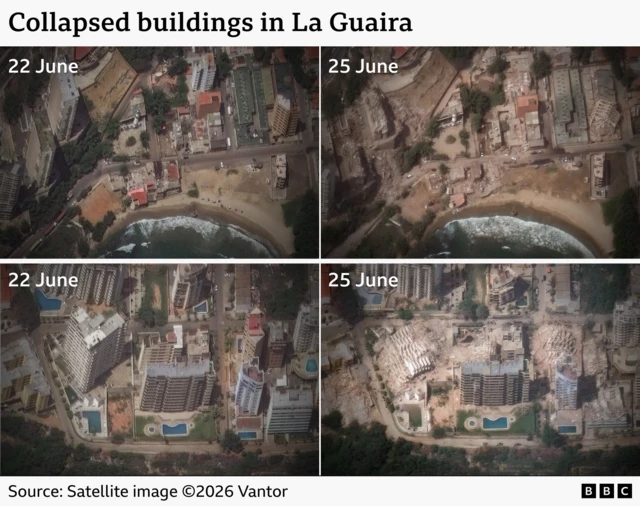
    New satellite photos reveal the extent of the damage to La Guaira, more than 100 miles (160km) from the epicentres of the devastating double earthquakes.

    The images were captured by the US spatial intelligence firm Vantor and show some of the worst-hit parts of the port city just north of Venezuela’s capital Caracas.

    One photo shows a cluster of six buildings flattened, most of them were high-rise apartment complexes with outdoor pools. Some of the surrounding roads have become blocked with debris and collapsed buildings.

    Another image also shows how multi-storey blocks which once overlooked the Caribbean Sea have been reduced to rubble.

    Two sets of before and after satellite images of two areas of La Guaira from 22 June and 25 June. In the first after you can see enormous damage to many buildings, including some which have been totally flattened. In the second there are two high-rise blocks which have collapsed entirely. Source: Satellite image 2026 Vantor.
  16. Images show search and rescue operations continuing overnightpublished at 10:20 BST

    It's currently 05:20 in Caracas and not yet light.

    Rescue teams have continued their searches through the night. You can see some of the latest pictures below.

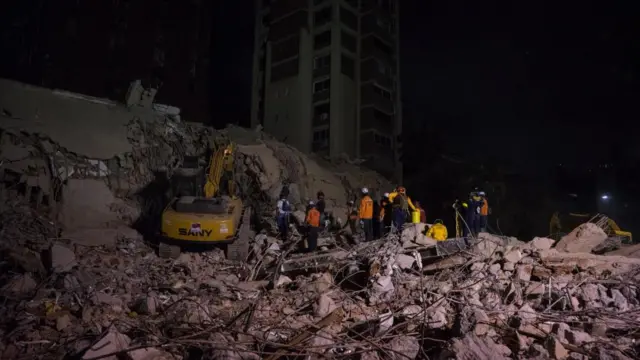
    Several rescue workers stand on top of a pile of rubble next to a yellow diggerImage source, EPA
    Image caption,

    Rescue workers at the site of a building damaged in the Altamira area of Caracas

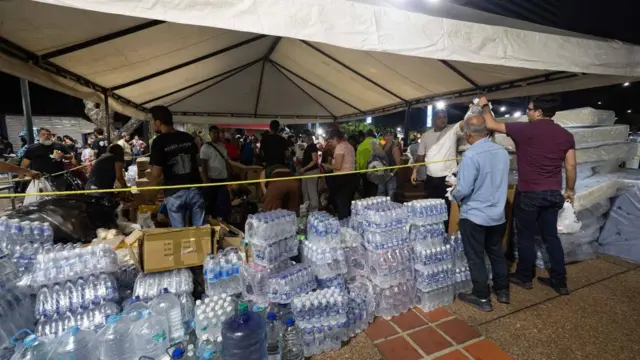
    Two men stand outside a tent filled with crates of bottled water. Several people stand below the structure.Image source, EPA
    Image caption,

    People make donations in Caracas

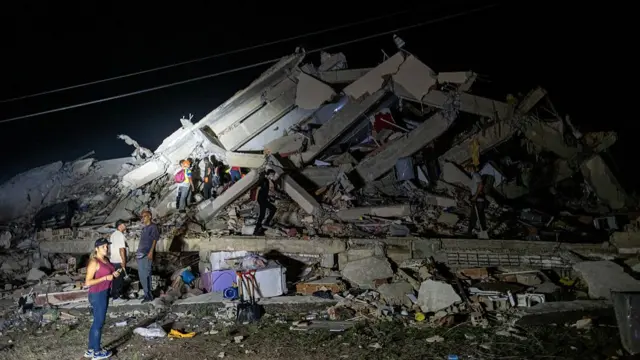
    People stand next to - and on - the remains of a destroyed buildingImage source, Getty Images
    Image caption,

    Rescuers at the site of a destroyed building in Caraballeda, La Guaira

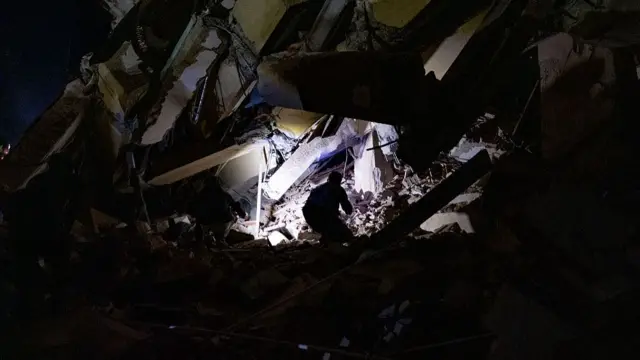
    The silhouette of a person illuminated in a destroyed buildingImage source, Getty Images
    Image caption,

    A person searches the rubble in Caraballeda

  17. What to know about the earthquakes that hit Venezuelapublished at 09:55 BST

    The 7.2-magnitude and 7.5-magnitude quakes hit less than a minute apart at around 18:00 local time (23:00 BST) on Wednesday, according to the US Geological Survey (USGS).

    The second was the strongest earthquake to hit the country since 1900.

    The so-called doublet sequence of earthquakes is different to the typical scenario, where a larger quake is followed by much smaller aftershocks.

    Two maps showing powerful earthquakes striking northern Venezuela less than a minute apart on 24 June. The first, magnitude 7.2 at 18:04 local time, produced strong to severe shaking concentrated inland near the coast, while the second, slightly larger magnitude 7.5 at 18:05, spread more intense shaking across a wider area particularly along the northern coast. The maps use a colour scale from light to severe to illustrate shaking intensity, highlighting heavily affected zones around La Guaira and Caracas, with broader regions experiencing moderate to strong tremors. The source is GDACS and the USGS

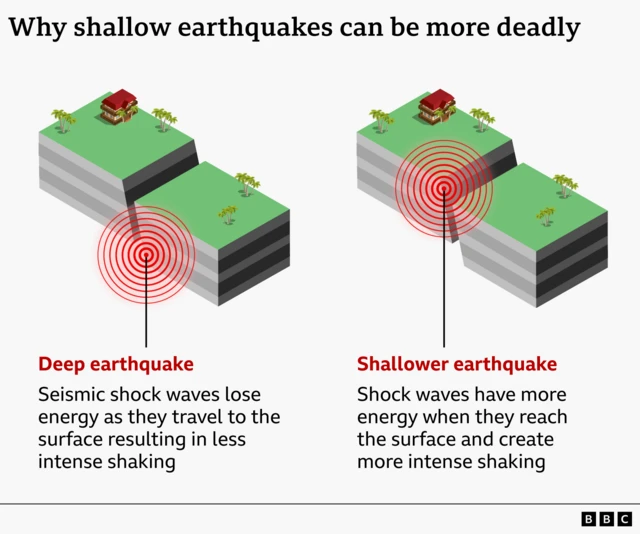
    Both were very shallow at less than 30km below ground, potentially adding to the damage. We have seen footage of the moment the earthquake shook a BBC journalist's home in Caracas.

    An earthquake occurs when two parts of the Earth suddenly move past each other, which releases a lot of energy. When this energy reaches the surface it causes the ground to shake.

    The closer it is to the surface, typically the more shaking and potential damage.

    Graphic titled “Why shallow earthquakes can be more deadly” comparing deep and shallow earthquakes. On the left, a deep earthquake is shown beneath the surface, with red shockwave circles spreading upward and losing energy before reaching a block of land with a house and trees, resulting in less intense shaking. On the right, a shallower earthquake occurs closer to the surface, with shockwaves reaching the ground with more energy beneath a similar block, causing stronger shaking.

    Read more explainer posts:

    How is earthquake magnitude measured?

    A brief guide to aftershocks

    What is a 'doublet' earthquake?

    What causes an earthquake?

  18. Senior US military official arrives in Caracas to aid relief effortpublished at 09:23 BST

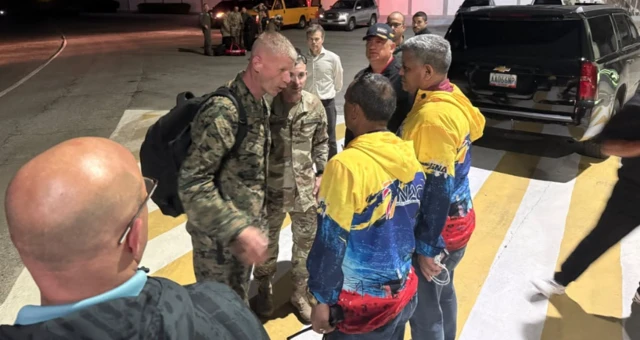
    US Marine Corps Major General Kevin J Jarrard arrives in Caracas wearing army fatiguesImage source, SOUTHCOM

    US Southern Command (Southcom), which oversees US forces activity in South America, says Major General Kevin Jarrard has arrived in Caracas to oversee the Department of Defence's support for relief efforts.

    In a post on social media, it says it will help "support the rapid, life-saving movement of response personnel, equipment, and humanitarian assistance into affected areas".

    The US set out more details yesterday about how it plans to support Venezuela after the earthquakes.

  19. Watch: Woman gives interview as she's pulled from rubblepublished at 09:08 BST

    Graciela Mora was conscious as she was pulled from the rubble of a collapsed building in La Guaira by emergency workers and volunteers.

    "When the earthquake started, I clung as tightly as I could to the doorframe," she says, "so tightly that I broke my finger."

    She was rescued with injuries, including a broken finger, but a friend she was with at the time died.

    She told the Associated Press that she held her friend's hand while waiting to be rescued so she would not have to die alone.

    Speaking to camera moments after her rescue, and while still on a stretcher, she says she held onto the doorframe "until all the floors collapsed".

    "And then I saw her hand like that and grabbed it," she says.

    Watch the full clip below. Warning: it contains distressing content.

  20. Disaster response comes amid 'humanitarian, complex emergency' - Venezuelan doctorpublished at 08:40 BST

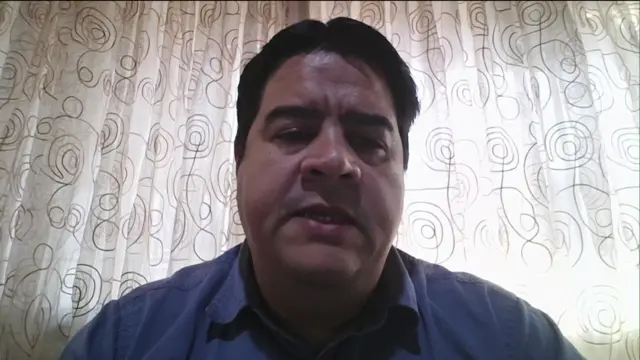
    Pedro Javier Fernandez

    We've just reported on a doctor who has travelled from Caracas to La Guaira who describes the healthcare system there as being "completely overwhelmed" after the quakes.

    Last night, another Venezuelan doctor, Pedro Javier Fernandez, a member of the medical group Medicos Unidos Venezuela, told the BBC the challenging economic and humanitarian circumstances in the country that preceded the earthquakes makes it even harder to respond.

    "The problem is not only this is a natural tragedy, but we have to realise and we have to remember that Venezuela is in the context of a humanitarian, complex emergency," he says.

    "All our hospitals lack supplies, lack medicines, we are not able to provide medical attention to our people in a normal day. Now with this tragedy, the emergency is even bigger and it's more difficult to face than in other countries."