Summary

  • Scotland's six larger political parties have been on the campaign trail across the country highlighting a range of issues

  • Strike action over cuts at Aberdeen University resumed today, and senior figures in the sector have called for changes in higher education

  • We asked party leaders and politicians how they would tackle the issues and whether Scotland can continue to offer free university tuition

  • Voters will go to the polls on 7 May to elect 129 members of the Scottish Parliament

  1. Scottish Parliament election 2026: Today's headlinespublished at 16:51 BST 22 April

    As today's coverage of the Holyrood election campaign draws to a close, here are the key lines that emerged:

    Thank you for joining us today. The live page editor was Graeme Esson and the writer was Craig Hutchison.

  2. How much do you know about Holyrood's powers?published at 16:41 BST 22 April

    This Riddle post cannot be displayed in your browser. Please enable Javascript or try a different browser.

  3. When is the election - and when will we know the result?published at 16:28 BST 22 April

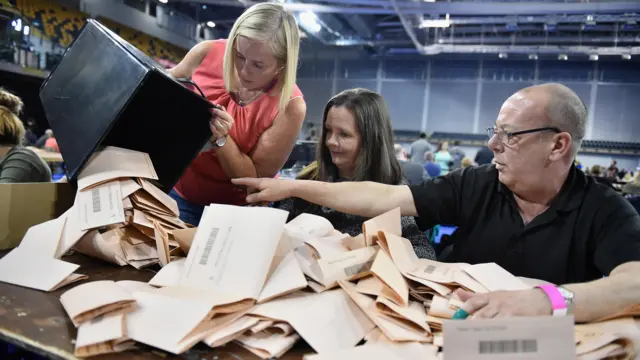
    People count votes which are being emptied out of a ballot boxImage source, getty
    Image caption,

    Counting will start on the Friday morning, rather than when the polls close on Thursday night

    The Scottish Parliament election will take place on Thursday 7 May.

    Polling stations will open at 07:00 and close at 22:00.

    A total of 129 MSPs will be elected to the parliament, often referred to as Holyrood after the area of Edinburgh where the parliament building stands.

    Votes used to be counted as soon as the polls closed at 22:00 on Thursday, with the results being announced overnight and into Friday morning.

    This time, however, the count will begin on Friday morning. The first declarations are expected at lunchtime, with most results in by the evening.

    There was also a daytime count at the last Holyrood election in 2021 due to Covid restrictions, with the process being staggered over two days.

  4. Do I need to bring ID to vote?published at 16:14 BST 22 April

    It's not just voters in Scotland that will take to the polls this May - local and mayoral elections are also happening in England, and Wales will elect representatives to its national parliament.

    Voters in England are being reminded by the Electoral Commission that they must bring an accepted form of ID, like a passport or driver's license, to the polling station.

    However, this does not apply in Scotland.

    Voters do not need to provide photo ID to vote in a Scottish Parliament election, and neither do those voting in the Senedd election in Wales.

    You can find out more about the different rules here.

  5. How should Scotland’s deer population be controlled?published at 15:56 BST 22 April

    Phil Sim
    Scotland political correspondent

    The Scottish Greens and the Conservatives are not on the same side of many issues, but they do appear to have a shared concern about Scotland’s growing population of deer.

    The Scottish government shared an estimate in , external2024, external that there were about one million wild deer in the country, with the figure having doubled since 1990.

    The population has grown quickly due to a lack of natural predators, which causes problems with natural habitats where they overgraze the land and eat young trees.

    The Scottish Greens have called for the re-introduction of wild lynx, external, saying there are enough deer in the Highlands to support around 400 of the predators.

    The Lynx to Scotland Partnership has put that figure closer to 250, and has been consulting with local communities about such a move.

    Last year, First Minister John Swinney ruled out bringing back the big cats following the illegal release of four lynx in the Cairngorms.

    The Scottish Conservatives, meanwhile, are keen to promote venison, including as school meals, with the party’s rural manifesto, external advocating the donation of meat to schools.

  6. Cole-Hamilton calls on voters to trust the Lib Dems during phone-inpublished at 15:43 BST 22 April

    Media caption,

    Watch: Alex Cole-Hamilton on why voters should trust the Lib Dems

    Alex Cole-Hamilton took listeners' questions while appearing on Call the Leader on Radio Scotland's Mornings with Connie.

  7. Lib Dems focus on drug deaths and homelessnesspublished at 15:26 BST 22 April

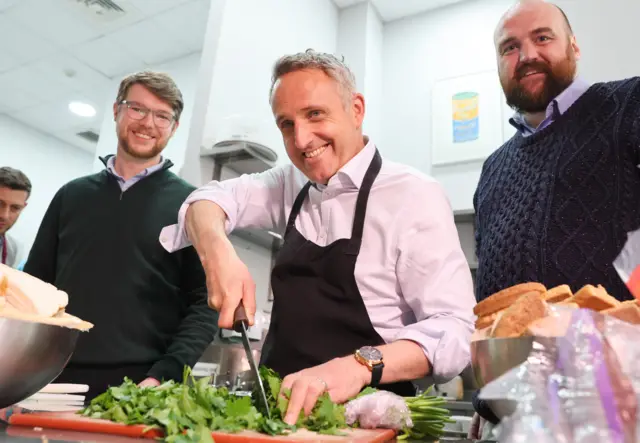
    Alex Cole-Hamilton chopping salad in a kitchen, standing between two other men.Image source, PA Media
    Image caption,

    Alex Cole-Hamilton visited Glasgow City Mission to highlight the policies

    Scottish Liberal Democrat leader Alex Cole-Hamilton set out his party’s plans for tackling drugs deaths and homelessness on a visit to Glasgow City Mission.

    He said the Lib Dems would help people "live close to where you need to be, whether it’s for work, family or because it’s where you belong.

    “We will also invest in finally creating world-class drug services for Scotland by 2030."

    The Lib Dem manifesto includes plans for a young homeless guarantee to recognise the additional challenges faced by young homeless people, and the creation of a Scotland-wide network of safer drug consumption facilities.

  8. Reform UK candidate tells pubs in Scotland his party is on their sidepublished at 15:16 BST 22 April

    Jenni Davidson
    BBC Scotland senior politics reporter

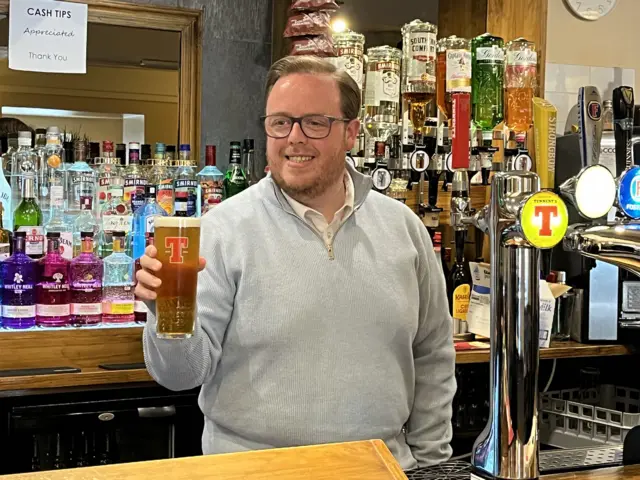
    Thomas Kerr in the Woodend pub in Mount Vernon, Glasgow holds a pint
    Image caption,

    Thomas Kerr in the Woodend pub in Mount Vernon, Glasgow

    Thomas Kerr says his party wants to send a message to hospitality businesses that Reform UK will always be on their side.

    Pulling a pint in a bar in the east end of Glasgow, Kerr says pubs support entrepreneurship, give people their first jobs and the opportunity to get out of poverty, as well as being hubs for the local community.

    He says two pubs a week are closing due to high rates and income tax and his party would reform business rates as well as reducing income tax, which would give people more money to spend.

  9. Analysis

    Could three nations be led by pro-independence politicians?published at 14:57 BST 22 April

    Lynsey Bews
    BBC Scotland political correspondent

    At the SNP's press call, John Swinney addressed the intriguing prospect of three UK nations being led by first ministers who want to exit the union.

    The SNP leader has his sights on a Holyrood majority, while polling suggests that the pro-independence Plaid Cymru is vying with Reform UK to take power in Wales.

    In Northern Ireland, Sinn Féin's Michelle O'Neill is Stormont's first nationalist first minister.

    Swinney says he would "enjoy the cooperation" of counterparts in Wales and Northern Ireland, and would "appreciate collaboration" in achieving his aim of Scottish independence.

    He went on to say the situation would change the UK "irreversibly" - and suggests it would dramatically alter relationships between the UK and devolved governments.

    It's clear Mr Swinney believes that his argument for a second independence referendum could be bolstered if he returns to power alongside fellow nationalists in Wales and Northern Ireland.

    There's already been talk of a "progressive alliance"between the SNP and Plaid, but the prospect of collaboration with Sinn Fein is likely to raise eyebrows.

    The context of the case for independence from the UK is of course distinct in the different home nations - and the government at Westminster will need to carefully consider its approach to dealing with each devolved administration if the above scenario comes true.

  10. How do the peach and lilac ballots work?published at 14:43 BST 22 April

    Media caption,

    Peach and lilac? The Scottish ballots explained

    There are two ballots in the Scottish election - one peach and one lilac.

    Watch our video to find out the difference.

  11. Your Questions Answered

    Why do parties have more than one candidate listed?published at 14:25 BST 22 April

    You have been getting in touch with questions on the issues that are important to you ahead of the Scottish Parliament election. Our team of experts are providing the answers.

    Why do many of the parties have more than one candidate on the white voting paper? The name of the candidate I want for my area appears third so very confused. Anne Craig, from Edinburgh.

    Phil Sim, political correspondent, says:

    A postal voting pack contains a number of items, which can make the process a little confusing.

    There's a constituency ballot paper - usually lilac-coloured - which includes individual candidates for your local seat.

    There's a regional ballot paper - usually peach-coloured - which includes parties standing in your wider region. In the case of Edinburgh and Lothians East, this will include 18 different parties and four independent candidates.

    And, crucially for this question, there is a separate sheet with the names of the candidates each party has included on their regional lists. I think this is probably the white paper Anne is referring to.

    So you mark a single candidate on the constituency paper, a single party (or independent) on the regional paper, and seal them in the included envelope A.

    Then you fill out the "postal voting statement" form, pop that and the ballot paper envelope inside the other included envelope, marked B, and head off to the post box.

    Red banner with Your Voice written in white
  12. Scottish Greens argue free tuition fees are a 'great leveller'published at 14:06 BST 22 April

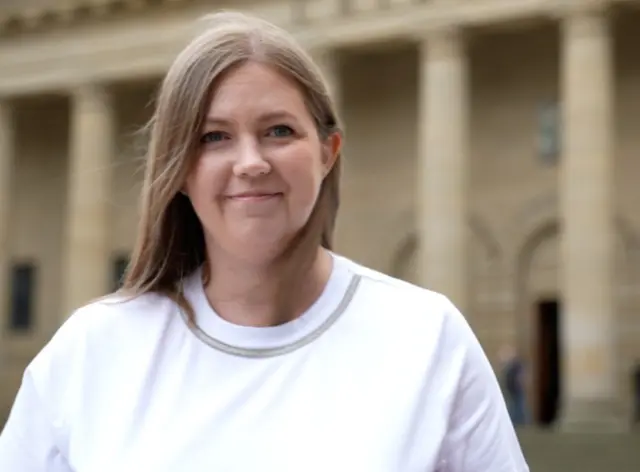
    Scottish Greens co-leader Gillian Mackay
    Image caption,

    Scottish Greens co-leader Gillian Mackay is campaiging in Dundee today

    Speaking ahead of addressing the STUC conference in Dundee, Scottish Greens co-leader Gillian Mackay says free tuition fees are "a great leveller" and are "not something that we would be seeking to cut".

    She adds: "In fact it’s a great investment in the next generation of workers across the country."

    Asked about the funding crisis in Scottish universities, Mackay say: "There an awful lot of principals across the country who can’t even tell Scottish Parliament committees how much they earn for their work.

    "And there are obviously governance issues at certain institutions that need to be learned from to make sure it doesn’t happen anywhere else.

    "Young people should have that ability to go to university and get those qualifications and come out into the workplace, no matter their background, not matter where they come from in Scotland."

  13. Cole-Hamilton says Lib Dems are committed to funding free tuitionpublished at 13:46 BST 22 April

    Scottish Lib Dem leader Alex Cole-Hamilton says his party is committed to funding free tuition for Scottish students.

    He says universities have to be put on a secure financial footing because of issues around volatility of funding - especially those, like Dundee University, which rely on significant income from foreign students.

    Cole-Hamilton added that universities were a big asset for Scotland, but would not be drawn on whether there were too many of them.

  14. University system 'needs to be fair', says Findlaypublished at 13:26 BST 22 April

    Louise Hosie
    BBC Scotland reporter

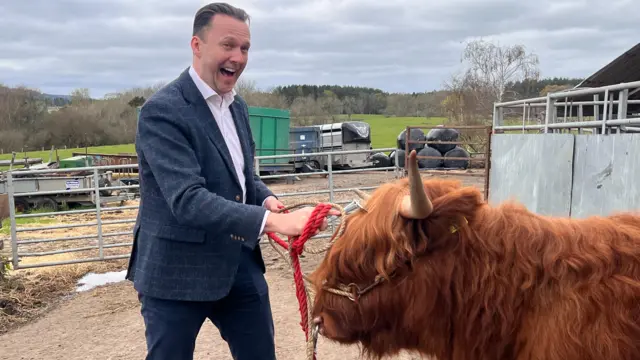
    Russell Findlay standing next to a Highland cow on a farm
    Image caption,

    Russell Findlay was speaking during the launch of the party’s rural manifesto in Aberdeenshire

    Speaking during the launch of his party’s rural manifesto at a farm in Aberdeenshire, Scottish Conservative leader Russell Findlay said free university tuition was their starting position, but the system wasn’t functioning as it should be.

    “It’s not helping students and it’s not fair on taxpayers," he said.

    “Right now there’s discrimination taking place due to the fact there’s a cap on the number of Scottish students due to the financial arrangements.

    “There needs to be a system that is fair and is worthwhile.”

    He added that the current situation was a “mess created by the SNP” and that the Conservatives were taking part in cross-party talks about the future of university funding.

  15. Maintaining free university tuition fees is a 'red line', says Sarwarpublished at 13:03 BST 22 April

    David Wallace Lockhart
    Political correspondent

    As strike action resumes at Aberdeen University in a dispute over cuts, we're asking politicians for their views on funding for higher education.

    Scottish Labour leader Anas Sarwar says it is a “red line” to maintain free university tuition in Scotland, but that there has to be “proper funding” for institutions.

    On a visit to an apprentice training centre, he says a government run by him would create 9,000 more apprentice places.Sarwar also says that further claims he had previously approached Reform politicians to talk about working together to defeat the SNP were “nonsense”.

  16. Reform calls for 'genuine conversation' about free university tuitionpublished at 12:45 BST 22 April

    Jenni Davidson
    BBC Scotland senior politics reporter

    There needs to be a genuine conversation about whether free university tuition is feasible in the long term, according to Reform UK candidate Thomas Kerr.

    Visiting a pub in the east end of Glasgow, he says his party would keep tuition free and would not impose fees - but that it needs to be reviewed.

    Kerr says one of the issues at the moment is that working class kids can’t get a place at university.

    However, he believes education should be kept outside of party politics and any review should be carried out by experts rather than politicians.

    Kerr also criticises the current education system for being too tailored towards going to university and says there should be more emphasis on jobs, skills and apprenticeships to give people the skills they need and the country the skills it needs.

  17. Swinney says SNP is committed to free university tuitionpublished at 12:35 BST 22 April

    Lynsey Bews
    BBC Scotland political correspondent

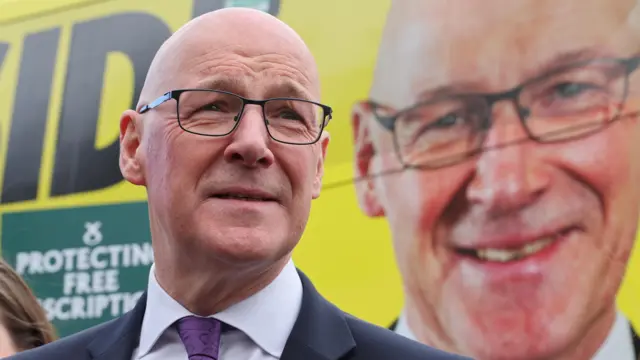
    John Swinney standing in front of the SNP's campaign bus, which has his face on the sideImage source, PA Media

    We've been asking all the parties for their views on university funding and the affordability of free tuition.

    John Swinney says he wants to see further talks between Aberdeen University bosses and staff to prevent further industrial action.

    Speaking on the election campaign train in Edinburgh, the SNP leader also said the budget for universities had been increased, and that work was under way to look at reforms to ensure financial sustainability.

    He also reiterated his party’s commitment to free tuition.

  18. Union says free tuition for Scottish students isn't fully paid forpublished at 12:21 BST 22 April

    Kirsten Campbell
    BBC Scotland political correspondent

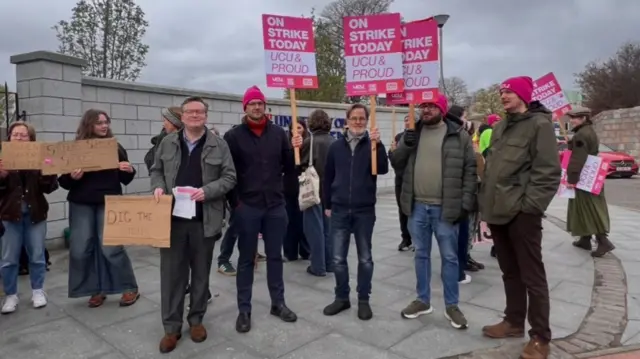
    Aberdeen University strike action by UCU
    Image caption,

    The UCU union is taking strike action today at Aberdeen University

    The University and College Union represents 9,000 staff in Scotland.

    Its manifesto for the election claims that more than a decade of underinvestment and marketisation means that universities, the staff who work in them and students are facing challenges as never before.

    It highlights a number of reasons for the funding crisis, including bad management decisions, changes to immigration law and external global factors.

    But it claims underpinning all that is underfunding and argues that the promise of free tuition for Scottish students isn't fully paid for.

    It calls for fair and sustainable funding, enhanced governance, with students and workers at the centre, and for professional autonomy and academic freedom to be respected.

  19. Where do the parties stand on university funding?published at 12:14 BST 22 April

    Strike action by staff at Aberdeen University resumed today after talks aimed at ending an ongoing dispute over cuts failed to reach an agreement.

    The former principal of Glasgow University, Anton Muscatelli, has called for a major review of higher education, and the principal of Edinburgh University, Sir Peter Mathieson, says the current system is unsustainable.

    We have been asking the party leaders and representatives how they would tackle the issues with university funding, and whether they think we can afford to continue offering so many Scottish students free tuition.

  20. Sarwar stands by his call for PM to resignpublished at 11:53 BST 22 April

    David Wallace Lockhart
    Political correspondent

    Scottish Labour leader Anas Sarwar says a vote for Scottish Labour at the Holyrood election “is not an endorsement of Keir Starmer”.

    Sarwar stood by his call for the prime minister to resign over his handling of the appointment of Peter Mandelson as US ambassador.

    But he refused to answer whether or not it was right for the PM to sack Olly Robbins, saying: “I don’t know the ins and outs of the conversations.”

    SNP leader John Swinney also repeated his call for Starmer to resign, claiming that the PM had demonstrated “appalling judgement”.

    He said evidence given to a Westminster committee yesterday by the sacked Foreign Office official Olly Robbins had revealed that the political drive to appoint Mandelson came from the prime minister and his team.