Summary

  • Our live coverage has now paused, but we'll be back on Friday with regular updates

  • A second walkout by RMT drivers on the Tube began at midday, bringing further transport disruption to London

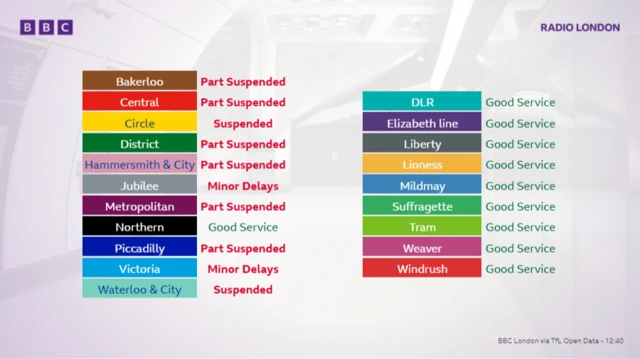
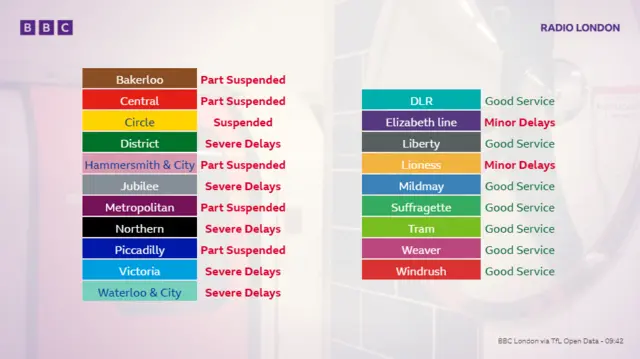
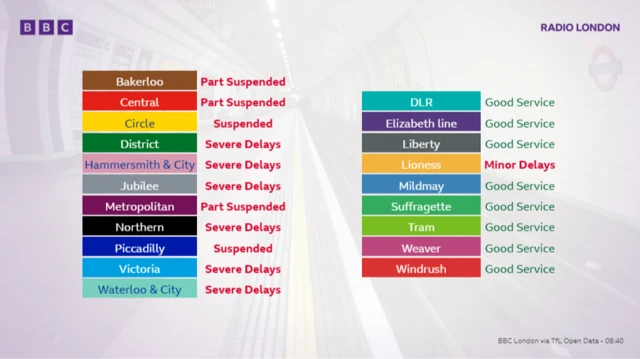
  • The Circle line and Waterloo & City line are both completely suspended, while some routes are part suspended and others are reporting severe or minor delays

  • TfL advises people to complete their journeys by 20:00 as services will finish early, while they won't start again until around 07:30 on Friday. Find the latest Tube status here, external

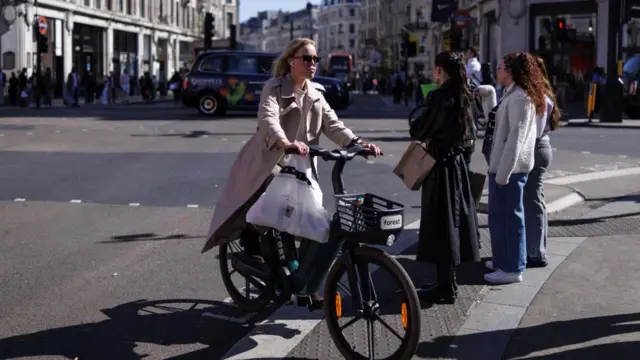
  • There has been a surge in people taking to bikes to get around the capital, while others appear to have just stayed at home

  • The 24-hour long strike will end at 11:59 on Friday

  • The action is part of a series of six strikes over a dispute about proposals for a four-day working week - here's what you need to know

  1. Fewer passengers use Underground as London's businesses feel Tube strike's impactpublished at 19:55 BST

    Victoria Hollins
    BBC London

    A woman walks along a Tube platform with her wired headphones in while carrying her phone and sunglasses. A Tube train with its doors closed can be seen behind herImage source, EPA/Shutterstock

    This strike is different to previous industrial disputes on the London Underground, not least because there are so many different ways of getting around the capital.

    More people are able to work from home as well, and crucially only one of the main unions, the RMT, are involved in this dispute.

    Nonetheless it is having a major impact, not least reputationally.

    We know from recent data that around half of Tube services were affected during the first 24 hour strike this week.

    Oyster data also shows a 21% drop in tap-ins, so there have been a lot fewer people using London Underground services.

    But it is businesses that are really feeling the impact around London, particularly in the hospitality sector.

    We're pausing our live coverage there, but we'll be back on Friday with regular updates before the second strike comes to an end at 11:59.

    Remember, Underground services are not expected to resume until 07:30 on Friday, with delays and cancellations expected through the morning.

  2. How Thursday's Tube strikes have hit people in the capital - in five quotespublished at 19:38 BST

    A row of Tube trains are seen in a depot at the Cockfosters Depot on TuesdayImage source, EPA/Shutterstock

    We have been hearing from a wide variety of voices today as the BBC travelled around London looking at how the city is coping with the strikes.

    Here's a summary of what we have heard around the capital:

    "We’re proud to be helping so many Londoners get to where they need to be this week," says Lime's UK policy chief, Hal Stevenson after the bike company reported a 23% increase in usage on Tuesday.

    “We heard about the strikes, so we’ve been getting Ubers everywhere,” a tourist in Westminster tells the BBC.

    “The buses get too full. It doesn’t stop at the stop, and then you’ve got to wait for the next one,” one city worker tells the BBC as she tries to show her friends visiting the sights in central London.

    "I wouldn't be able to afford to stay open. It needs to change," says a coffee shop owner after losing thousands in revenue due to strikes this week and back in September.

    “We’ll be celebrating soon!” Resolute LondonerKaty tells the BBC of her alternative plans to take a taxi and the Uber Boat to get to Mamma Mia! The Party.

  3. Coffee shop owner warns continued strikes could force him to closepublished at 19:14 BST

    Peter Dore-Smith speaks to the BBC inside one of his Kaffeine coffee shops in Fitzrovia

    A coffee shop owner in Fitzrovia has described the latest round of Tube strikes as "just ridiculous" and warns the industrial action is a "massive concern for hospitality across the whole capital".

    Peter Dore-Smith, who first opened Kaffeine in 2009 before opening a second shop, says he has lost at least 10% of his revenue so far during the two strikes this week.

    He tells the BBC the strikes have been worse for businesses trading in the evening.

    Dore-Smith explains during the last wave of strikes in September he lost thousands in revenue in one of his shops after he was forced to close its doors for four days.

    "That's a real big effect for a small, independent business," he says. "You just can't continue with that. If that happened three times this year I would be very close to closing this shop down. I wouldn't be able to afford to stay open.

    "It needs to change."

  4. Unions split on decision to strike over proposed four-day working weekpublished at 18:50 BST

    A travel information sign near a Tube barrier displays information about how the RMT strikes are affecting the London UndergroundImage source, EPA/Shutterstock

    Around half of Tube drivers are taking part in the latest round of Tube strikes after the Rail, Maritime and Transport union (RMT) voted to oppose the introduction of a four-day working week with condensed hours.

    As we explained in an earlier post, the union is concerned about shift lengths, unacceptable working times and the impact fatigue can have on safety.

    A spokesperson for the RMT argues the "imposed 'fake four-day week'... amounts to five days' work compressed into four".

    But drivers who are part of the Aslef union are not taking part in this round of strikes.

    A spokesperson for Aslef, the union representing a slightly larger share of Tube drivers, said on Monday they were "surprised that the RMT has decided to take this action".

    Aslef has agreed to the voluntary compressed four day week, saying it gives participating drivers an extra 35 days off a year "in return for some fairly minor changes to working conditions".

    "It will be the first strike in the history of the trade union movement designed to stop people having a shorter working week and more time off," Aslef's spokesperson added.

    Both Aslef and the RMT went on strike together in September nearly halting all Underground services.

  5. Remind me, why are Tube drivers on strike?published at 18:27 BST

    A London Underground Tube station, with the entrance closed off as it is shutImage source, AFP via Getty Images

    Members of the Rail, Maritime and Transport union (RMT) are in the midst of six 24-hour strikes over plans to introduce a voluntary compressed four-day working week.

    Under the proposals, most drivers would see their working week reduced from 36 hours to 35 hours - meaning longer shifts at work, but fewer days per week. Their contractual hours would remain the same because paid meal breaks would be introduced.

    The union argues the proposed longer shifts could lead to fatigue and compromise safety.

    Transport for London says the changes are optional and would give drivers more days off without reducing pay.

    Two major unions represent Tube drivers: the RMT and Aslef. In September, both unions took industrial action as part of a different dispute - but this time it's just the RMT, which means there are fewer drivers on strike.

  6. Both Circle and Waterloo & City lines suspended six hours into strikepublished at 18:00 BST

    If you're planning on heading home from the office, here's how the Underground network is looking six hours into the strike.

    A reminder, TfL is advising that passengers complete their journeys by 20:00 this evening - and if you're back in the office again on Friday morning, expect services to only resume from 07:30.

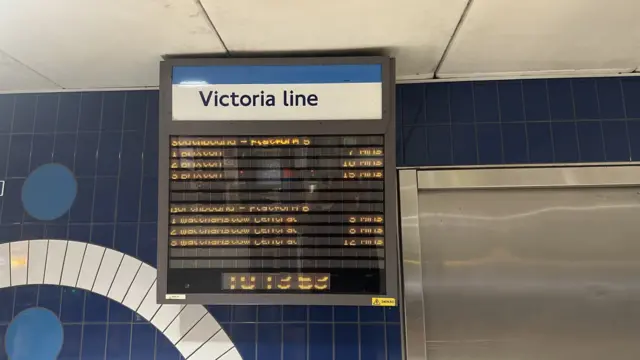
    TfL tube board showing live disruption
  7. Lime reports 23% increase in e-bike and e-scooter hirepublished at 17:42 BST

    Lots of Lime bikes parked on a pavementImage source, Reuters
    Image caption,

    Lime e-bikes were popular during the September tube strike

    Lime has reported a 23% increase in usage on Tuesday, compared to the number of trips made on the same day last week.

    The popular e-scooter and e-bike provider says it's increasing the number of staff on standby during the strike action, to replace batteries and clear e-bike parking bays.

    During the September strike, e-bike usage surged during rush hour, as commuters found other ways to navigate the city.

    "We’re proud to be helping so many Londoners get to where they need to be this week," says Lime's UK policy chief, Hal Stevenson. He also reminds users to "ride safely and park responsibly".

    And another e-bike hire firm, Forest, said it had experienced a 50% increase in rides during the Wednesday morning peak compared to the same time last week, with a 35% increase during the afternoon peak.

  8. Tube disruption affecting lines to Heathrow Airportpublished at 17:18 BST

    Planes waiting at Heathrow AirportImage source, Getty Images

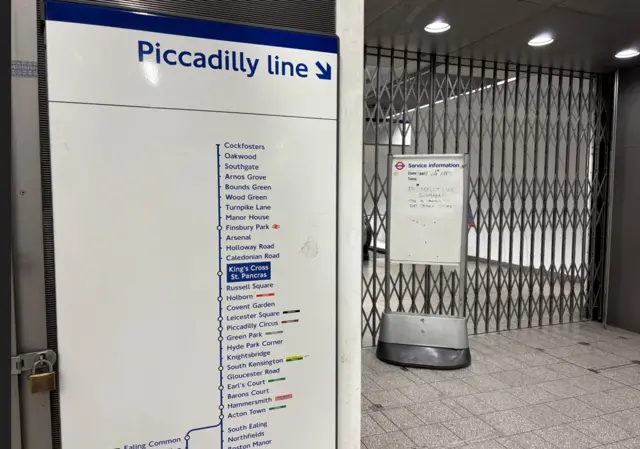
    Among the Tube lines part suspended is the Piccadilly line which is not running between Heathrow Terminals 2 & 3 and Heathrow Terminal 5.

    It's also running a reduced service to the Heathrow terminals from Acton Town, with Tubes coming every 20 minutes.

    When posting about the disruption on Monday, Heathrow Airport reminded customers that Heathrow Express, the Elizabeth line, and bus services will run as normal for those affected by the disruption.

    "Please plan your journey before travelling to Heathrow and allow extra time where necessary, as these services will be busier than usual," Heathrow Airport said on X.

  9. French House hit by strikes on Tuesday but 'busier than usual' in the Thursday sunpublished at 16:58 BST

    Jacob Phillips
    Live reporter

    The blue front of The French House can be seen with the door closed. Several French and Union Flags can be seen hanging above the barImage source, Getty Images
    Image caption,

    The French House remains one of Soho's most popular pubs

    One of Soho's most famous pubs says it had around half as many customers in its bar on Tuesday during the first Tube strike earlier this week.

    Lesley Lewis, who owns the French House in central London, tells me the bar has also been quieter during lunch hours but the seven tables of its upstairs restaurant remained booked out.

    But Lewis says the pub is busier than usual and there is a "lovely atmosphere" on Thursday afternoon as the sun has been shining and the Elizabeth line is still running nearby at Tottenham Court Road station.

    "It was difficult for the staff coming in because there was some traffic on the roads," she says. "But everyone was here more or less on time."

    Earlier the chair of UK Hospitality told BBC Radio London that the Tube strikes are particularly damaging in the city centre and tend to lead to a 40% cut in sales.

  10. A reminder of the strike action as we head towards rush hourpublished at 16:41 BST

    Jacob Phillips
    Live reporter

    A woman wearing a red coat and orange sunglasses walks next to a Tube train on ThursdayImage source, EPA/Shutterstock

    Tube drivers walked out for the second time this week at midday bringing the Circle line to a standstill and causing disruption on other lines.

    The 24-hour strike means that some London Underground lines will close earlier than usual while other services such as the Elizabeth line, London Overground and trams are expected to be busy.

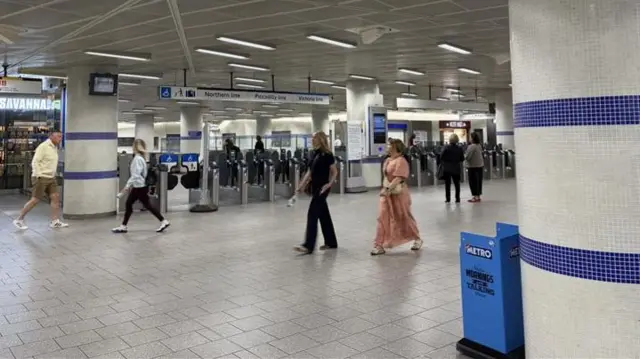
    Londoners appear to be working from home today to avoid the strikes, writes our reporter at a quiet Liverpool Street station, while cycle paths have been absolutely rammed as other commuters take to two wheels to get to work.

    Around half of Tube drivers are taking part in the strike after the Rail, Maritime and Transport union (RMT) voted to oppose the introduction of a four-day working week with condensed hours.

    The union said it was concerned about shift lengths, unacceptable working times and the impact fatigue can have on safety.

    But Transport for London (TfL) has described the strike action and future plans in May and June as "completely unnecessary".

    A diagram shows the latest update on the Tube maps
  11. When are the other planned strikes?published at 16:18 BST

    A reminder that once this strike is over, there are still another four walkouts due to take place in May and June - although negotiations between the RMT and TfL could always happen before them.

    If any talks fail they are set to happen on:

    • 19–20 May (12:00 Tuesday - 11:59 Wednesday)
    • 21–22 May (12:00 Thursday - 11:59 Friday)
    • 16–17 June (12:00 Tuesday - 11:59 Wednesday)
    • 18–19 June (12:00 Thursday - 11:59 Friday)
  12. What's running, and what isn't?published at 15:54 BST

    A graphic shows the Tube strikes will be worse during the early afternoon and evening on Thursday and on the morning and late morning on Friday

    The second in a series of 24-hour strikes by London Underground drivers began at midday on Thursday.

    The strike by members of the Rail, Maritime and Transport union (RMT), which represents roughly half of drivers on the Tube network, is expected to cause travel disruption across the capital.

    The union is in a dispute with Transport for London (TfL) over changes to the working week and says it is concerned about the safety impact of proposed shifts lengths. It says it has planned four more 24-hour strikes in May and June if the row is not resolved.

    TfL says the industrial action is "completely unnecessary" and the proposed working week pattern was optional.

    Here's what's going on:

    • The industrial action began at 12:00 on Thursday and is scheduled to last for 24 hours
    • The Circle line will be closed entirely
    • The Metropolitan line will be closed between Baker Street and Aldgate
    • Central line services will not run between White City and Liverpool Street
    • Other lines that do run will be offering a significantly reduced service
    • Latest status updates here, external
  13. Visitor turns to Ubers to get around during strike actionpublished at 15:39 BST

    Elliot Burrin
    In Westminster

    Dylan wears a red Ferrari jacket and sits next to a friend in orange glasses and a pink and blue top

    Several Londoners I’ve spoken to today are trying their best to adapt to the strikes.

    The chaos from September is all too familiar, particularly for me. They fell on my first day working at the BBC, leaving me with an hour-long walk to Broadcasting House, over dressed on a hot day.

    But for those visiting London, it can be difficult to plan to overcome the delays and congestion.

    “We heard about the strikes, so we’ve been getting Ubers everywhere,” Dylan tells me. He’s been visiting London with friends over the last few days.

    That’s not the story for all. I’ve spoken to several tourists who had no idea there were strikes today.

    As a reminder, industrial action began at 12:00 BST and is scheduled to last for 24 hours.

  14. Some businesses lose up to 80% of trade on strike days, says industry leaderpublished at 15:09 BST

    Five Tube trains are seen parked up from a bird's eye viewImage source, EPA/Shutterstock
    Image caption,

    Tube trains lined up at the Cockfosters Depot earlier this week

    London's restaurants, bars and pubs have been "collateral damage" during this strike action, the Chair of UK Hospitality warns.

    Speaking to BBC Radio London, Kate Nicholls says the Tube strikes are "hugely damaging," particularly in the city centre as many office staff are working from home instead of travelling into central London.

    Tube strikes tend to cause a 40% reduction in sales, Nicholls says. But she adds some businesses in travel hubs, like grab and go coffee shops, can lose up to 80% of their business on strike days.

    The rolling strikes have "effectively taken out four days of this week" for businesses, she continues.

    She goes on to say that there has been train and tube strikes impacting London since the capital opened up after the Covid-19 pandemic and calls for all sides to get around the table to negotiate.

  15. Tourists turn to the White Cliffs of Dover to avoid disruptionpublished at 14:55 BST

    Elliot Burrin
    In Westminster

    Anne and Richard pose for a photo in central London

    Richard and Anne thought they’d missed the strikes by taking a guided bus tour yesterday, but now they’re wondering how to get back to their hotel today after realising there’s another day of disruption.

    The couple say their trip from the US has definitely been “interrupted” by the lack of service on the Tube.

    “We did get stuck in a tremendous amount of traffic yesterday,” they tell me. “It took us an hour and a half to travel six miles.”

    But what is a sure-fire way to just avoid the disruption completely? Leave the capital.

    Richard and Anne tell me that one way they chose to avoid the strikes was to head southeast to visit the White Cliffs of Dover on Tuesday.

  16. E-scooter and e-bike provider offers free travel during strikepublished at 14:28 BST

    E-scooter and e-bike provider Voi has offered free travel for the remainder of RMT's strike this week.

    It comes as other e-bike and e-scooter operators, along with TfL hire bikes, saw big surges in demand during the industrial action.

    Voi says day passes would be free and inclusive of journeys up to 30 minutes for Voi app users. The company has about 4,000 bikes and thousands of scooters in 10 London boroughs.

    For Wednesday it reported that the overall number of rides on its services was 66% higher than average, while new user registrations surged 148%.

    Trip distances were also found to be 10–15% above average, with the biggest spikes in Lambeth and Southwark, according to the firm.

  17. More people turning to bikes during walkoutpublished at 14:09 BST

    Tom Edwards
    Transport Correspondent, BBC London

    People cycling along a cycle lane in London

    One of the most striking developments in these strikes is the increase in cyclists in part due to the good spring weather.

    The cycle paths are absolutely rammed first thing in rush hour.

    That's led to cycle campaigners to say the bike lanes need expanding, while City Hall insiders say it shows how bike lanes actually build resilience.

    Yesterday cycle hire increased by a whopping 60% in London.

    There's also a bit of a difference emerging between the e-bikes and conventional bikes and how they interact - e-bikes are much faster and heavier and that can lead to some conflict.

    And some rider behaviour around red light jumping is not good but it does show cycling can be a serious transport option for some.

  18. How is the Tube strike affecting you? What questions do you have?published at 13:59 BST

    Your Voice written on purple background

    You can get in touch in the following ways:

    Please read ourterms & conditions andprivacy policy

    In some cases a selection of your comments and questions will be published, displaying your name and location as you provide it unless you state otherwise. Your contact details will never be published.

  19. City worker's journey took over two hours during last strikepublished at 13:43 BST

    Elliot Burrin
    In Westminster

    Camille and her two friends Jessica and Arnold stand in Parliament Square outside Westminster Abbey
    Image caption,

    Camille and her two friends Jessica and Arnold

    I’ve just taken a surprisingly empty bus to Westminster, where I’ve been speaking to people visiting London.

    Camille, who works in the city, told me that it took her two hours to get home on Tuesday because of the strike. It usually takes her 30 minutes.

    “The buses get too full, so it doesn’t stop at the stop, and then you’ve got to wait for the next one,” she says.

    Her two friends had been planning to visit her in London for a year now, but their trip has been interrupted by the action.

    "Something that could have taken 20 minutes is now taking a lot longer,” she says, but the group tell me they support the workers on strike.

  20. UK's busiest station much quieter as workers appear to work from homepublished at 13:20 BST

    Nisha Patel
    BBC Radio London, at Liverpool Street Station

    A poster at a Tube station shows a sign explaining that the RMT Tube drivers are striking. It shows that the strikes will cause disruption on Thursday from early afternoon into the late morning on FridayImage source, EPA/Shutterstock

    Liverpool Street, the UK's busiest station, appeared quiet this morning despite rush hour being in full flow.

    It appears that people have been choosing to work from home today, suggesting that the impact of the strikes is most likely going to be felt by businesses.

    One Londoner who was planning to travel on the Elizabeth Line tells me they "expect it to be absolutely packed," adding that the city "should not be held to ransom".

    But another commuter says they did not even realise there was a Tube strike happening, explaining they are "one of the lucky few".

    Another man who is visiting the city says the strike is "going to be a bit problematic" and could make him late for a booking to visit the Horizon 22 viewing platform in the City of London.