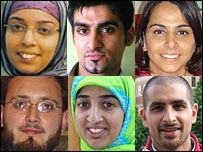
As you walk through the streets of Leicester, more than likely you will be greeted with an array of faces that will, historically, paint a unique picture. Keep walking, and you'll notice the distinctive culture that these faces have brought with them; the colourful clothes; the delicious food; the unique religious buildings; the language. | "Melton Road, or 'The Golden Mile', will spoil you for choice with the countless gold jewellery shops, Indian restaurants and colourful sari shops" | | Jeevan Panesar |
Today more than a third of people living in Leicester are migrants or second generation migrants, who have a fruitful and diverse history; a history that shapes Leicester today. Some migrants have been here for decades; others were forced here as refugees more recently. The South Asian population form a mosaic of groups, whose stories start in the world's post WWII resettlement boom. Fast forward a few years to 2012, and Leicester is set to be the first city in the UK where the ethnic minority groups will make up the majority. How did Leicester come to be such a vibrant multi-cultural city? On 15 August 1947 India affirmed independence from the British Empire. In June that year, under the provisions of the India Independence Act, the Congress Party and Muslim League agreed to part northern India along religious lines. Subsequently, India and Pakistan were established as independent dominions with predominantly Hindu areas allocated to India and predominantly Muslim areas to Pakistan. 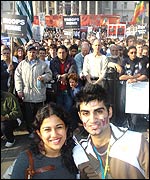 | | Different faces in Leicester |
The division of the subcontinent caused tremendous upset, especially in the Northern province of Punjab where many Muslims, Sikhs and Hindus had lived together harmoniously. Over ten million people suffered dislocation; inter-communal violence cost more than one million lives and tensions still dominate the region today. The Punjab had a history of outward migration since the nineteenth century. Given their central role in the Indian Army, many former soldiers from the province having been appointed overseas, decided to start new lives in foreign countries. Another key factor, and probably the most significant, in migration to the UK was the British Nationality Act 1948. This legislation technically gave every Commonwealth citizen the right to move to Britain. Given the post war demand for workers in Britain there was a considerable incentive to migrate; Indians and Pakistanis moved to properties in the Spinney Hill and Belgrave areas of Leicester, where affordable private housing was available. Migration Boom The later arrival of Asians from East Africa marked a substantial time in Leicester's migration history; East African Asians now constitute the dominant sub-group in the Leicester Asian community. 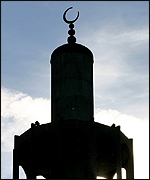 | | A Mosque |
Their arrival also demonstrated the difference in culture from their predecessors; namely that the majority of East African Asians were refugees and involuntary migrants. In 1972 General Idi Amin of Uganda began to expel the country's Asian population as part of his 'Africanization' policy, which also seeped into neighbouring countries in the region, namely Kenya. As a result, from 1968-1978, Leicester received more than 20,000 displaced East African Asians, more than anywhere else in the country. The emergence of the Belgrave, Melton Road and Rushey Mead parts of the city as areas of mainly South Asian settlement can be attributed to this arrival. By 1981, the new Commonwealth population of Leicester increased three-fold to 59,709. Asian Life In Leicester you will not escape the culture Asian migrants have brought with them. Melton Road, infamously referred to as The Golden Mile, will spoil you for choice with the countless gold jewellery shops, Indian restaurants and colourful sari shops. 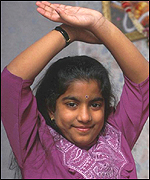 | | Leicester girl Nesha |
In the heart of Evington you will find one of the city's biggest Mosques; merging distinct Eastern architecture to the English buildings that have their own unique history. Asians have brought their passion for sport with them too; the madness when India are playing in a cricket match, the hockey clubs and even kabaddi! This culture is never more present than at the time of the Asian festivals; Diwali, Eid and Vaisakhi. The strength and community in these celebrations shows that no matter where they go, they will take their identity with them. |