| 24 September 2014 |

| |
| BBC Homepage | | |
| |||
| Contact Us | | |
AbolitionYou are in: Dorset > Abolition > Slavery and reconciliation 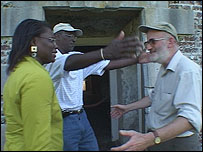 Bill meets his cousins Slavery and reconciliationBy Claire Price Bill Drayton from Christchurch is descended from two slave owning families. This year he steps up his mission to address the legacy of slavery, to reconcile today’s descendants to their past and to each other. Bill Drayton is driven by a mission to address the legacy of slavery - not to apologise for it but to reconcile those still affected. “If we are serious about racial and communal harmony, then we need to face up to the inequalities, which still exist today because of the historical legacy of slavery.” Last year BBC South Today followed Bill on a remarkable journey back to his family's roots in South Carolina. Going back to Bill's rootsHe met people whose ancestors had been connected with the two plantations, as well as family members, African American as well as Caucasian. 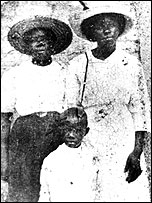 Enslaved Africans brought over from Barbados As a result of the visit, Bill is organising a reciprocal trip for a group of African Americans to the UK. They will visit Christchurch Baptist Church for an evening service and presentation on 25 March. The group will include two descendants of Drayton slaves, two of Bill’s African American cousins and a lady of 90 who was involved in the civil rights movement and attended the rally in Washington DC where Martin Luther King gave his "I have a dream" speech. Telling stories, building relationshipsBill has also launched a website to bring together those working for reconciliation, and is planning a speaking tour in this country and the US. Another project will take him to West Africa to research the roots of two slave descendants from his family’s plantation. “We need to tell our respective stories without trying to justify ourselves. Only then can we move on and build relationships. It starts with individuals and moves on to communities.” 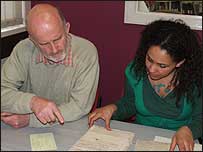 Bill researching with Louisa Parker Encouraging descendants of slave-owners to 'come out'Bill urges other former slave-owning families in the county to take part in the commemorations marking the bicentenary of the abolition of the slave trade. “There’s a fear among the descendants of slave-owners that they’ll be forced to pay reparations. But to me, reparations should be about repairing relationships.” “I’m sure there are families in the Dorset area who don’t want to get involved because they think it will cause them grief. And I wouldn’t want to force them into something they feel uncomfortable with.” “But in the long-run, people will respect you for ‘coming out’. We, as descendants of slave-owners and slaves, should look back to the dark periods of our collective history with honesty and a desire to seek out the truth, however uncomfortable it may be for us.” As he points out, it isn’t just the descendants of slave owners who need to examine their consciences. “All of us are prejudiced in some way. We all need to deal with that. The best way is to learn from each other’s stories – to learn to walk in the shoes of someone else.” Listen to Bill Drayton talk to Claire Price about guilt and reconciliation. Audio and Video links on this page require Realplayer last updated: 03/10/07 Have Your SayIs your family linked to the slave trade? How do you work towards reconciliation?
|
| | About the BBC | Help | Terms of Use | Privacy & Cookies Policy |